
Weekend Cleaning Schedule for Studio Apartments: Morning to Night
How to structure a weekend cleaning schedule for studio apartments with timed tasks that prevent rework, prioritize order, and make deep cleaning efficient a…
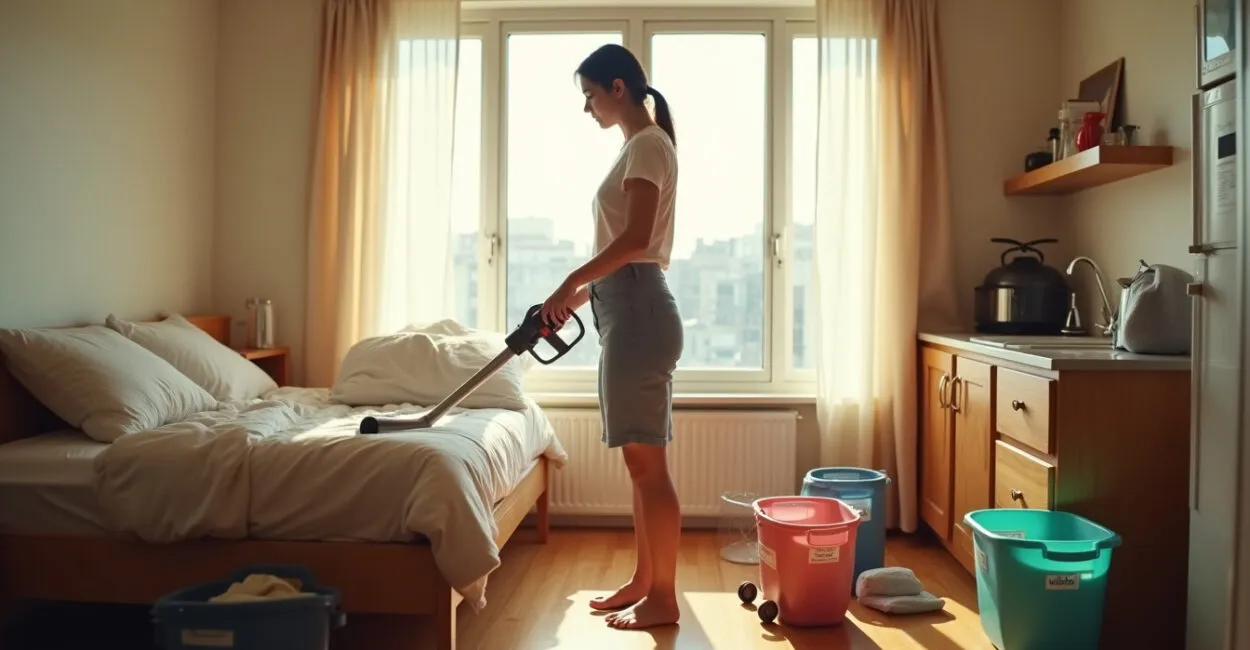 Woman follows a morning cleaning routine in studio apartment
A weekend cleaning schedule for studio apartments works best when every hour has a job.
That’s the difference between a reset that feels doable and a Sunday that disappears into piles, dust, and half-finished laundry. In a studio, one cluttered corner can make the whole place feel messy, so timing matters more than ambition.
The trick is not cleaning harder. It’s cleaning in the right order.
Why a Timed Weekend Reset Beats “Cleaning Until You’re Done”
In a studio, your living room, bedroom, and sometimes office are the same few square feet. That means a weekend cleaning schedule for studio apartments has to respect overlap: if you vacuum first and then shake out bedding, you’ll redo work. If you wipe counters before clearing surfaces, you’ll move dust twice.
A timed sequence keeps deep cleaning realistic because each block protects the next one from getting dirty again. Start with laundry and clutter, then surfaces, then floors, then the details. That order is what makes the whole apartment feel different by night.
Read also: Eco Cleaning Methods That Cut Toxins and Costs in 2025
Here’s the logic I’d use:
- Morning: reset laundry, trash, dishes, and visible clutter.
- Midday: disinfect kitchen and bathroom touchpoints.
- Afternoon: dust, vacuum, mop, and refresh textiles.
- Evening: finish with the tiny stuff that changes the mood.
That’s also why a studio can look “clean” from the doorway while still feeling sticky or stale up close. The eye forgives surface clutter; your nose and hands do not. The schedule fixes both.
Read also: How to Clean and Organize a Small Apartment in One Weekend
Morning Block: Clear the Studio Before You Scrub It
For the first two hours, do not chase perfection. Focus on the stuff that blocks everything else. Bag trash, move laundry, load the dishwasher or wash dishes, and put every loose item into a single “sort later” basket.
If you want one clean comparison, it’s this: before, your studio is a pile of interruptions; after, it becomes a work zone. That shift matters more than any fancy cleaner. A weekend cleaning schedule for studio apartments should always begin with clearing visual noise.
- Make the bed or fold away bedding.
- Pick up clothes, cords, and papers.
- Wipe the kitchen sink and counters.
- Take out trash and recycling.
Mini-story: I’ve seen people spend 40 minutes scrubbing a bathroom only to drag dust across the floor afterward because the laundry basket was still blocking the hallway. One small reset fixed the whole routine. The bathroom got faster, the floor stayed cleaner, and the apartment felt finished instead of half-done.
Next comes the part people usually underestimate: the surfaces that collect the week’s residue.
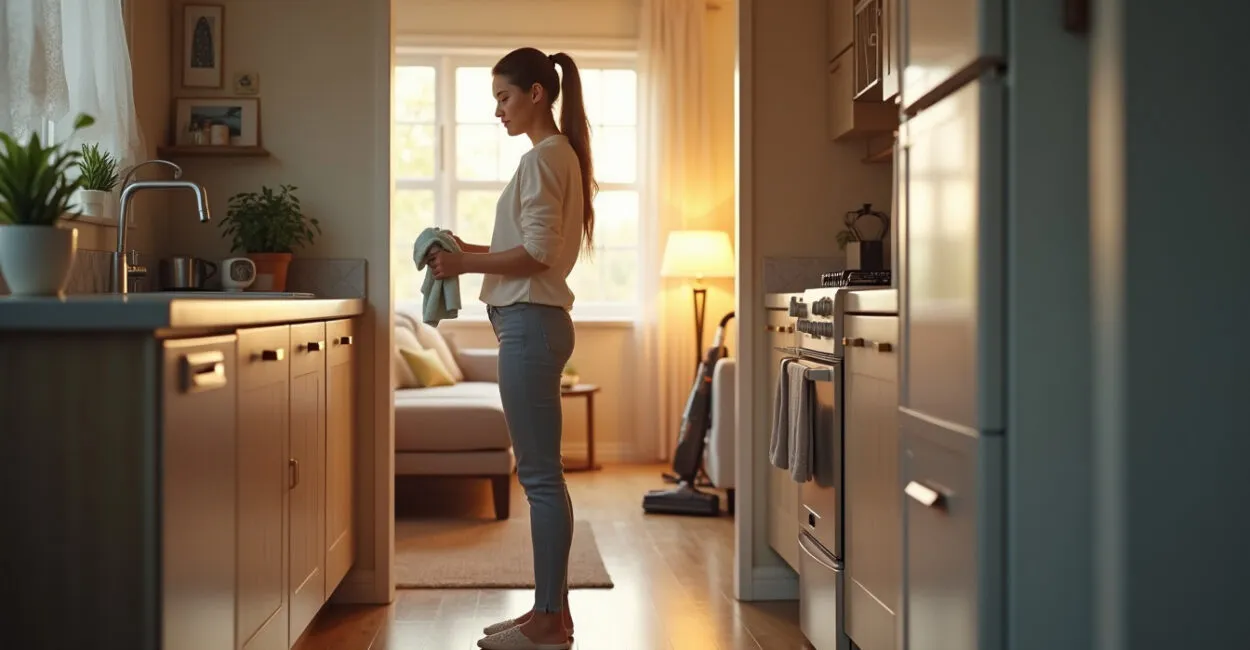
Midday to Night: The Deep-Clean Order That Actually Finishes
This is where the weekend cleaning schedule for studio apartments pays off. Clean from highest-touch to lowest-touch: bathroom sink and toilet, kitchen handles, light switches, then dust, then vacuum, then mop. If you skip the order, you’ll end up cleaning dust off a wet floor or re-touching handles you already wiped.
A practical block looks like this:
12:00–12:30 Bathroom wipe-down 12:30–1:00 Kitchen counters, appliance fronts, sink 1:00–1:30 Dust shelves, windowsills, and decor 1:30–2:00 Vacuum and mop
For background on ventilation and indoor particles, the EPA’s indoor air quality guidance is a solid reference. And for a realistic view of home cleaning routines and hygiene basics, the NHS home-cleaning guidance is straightforward and practical.
One honest limit: this method works beautifully for regular maintenance, but it falls apart if you’re already behind by weeks. In that case, split the studio into zones and keep each block shorter. That’s still better than trying to “win” the whole apartment in one pass.
Finish the day by resetting the room you see at night: fresh sheets, cleared nightstand, emptied trash, and one final scent check. That last 15 minutes changes how Monday feels.
How Long Should Each Block Take?
For most studio apartments, 30 to 60 minutes per block is enough if you stay strict about order. If your place is under 400 square feet, you can often finish the whole weekend cleaning schedule in 3 to 4 hours total. The point is not speed for its own sake. It’s avoiding the all-day drag that makes people quit halfway through and live with the mess until next weekend.
What Should You Skip First When You’re Short on Time?
Skip decorative extras, drawer organization, and anything that requires “making it pretty” before it is clean. Keep the basics: trash, dishes, bathroom, kitchen surfaces, and floors. In a studio, those five things do 90% of the visible work. If you only have one hour, spend it where smell, grime, and clutter intersect.
How Do You Keep a Studio from Getting Messy Again by Tuesday?
Use a nightly five-minute reset: dishes away, laundry contained, counters cleared, and one surface wiped. That tiny routine is what protects your weekend cleaning schedule for studio apartments from collapsing. A studio gets messy fast because there’s nowhere for clutter to hide, so the fix is not a bigger Saturday. It’s smaller daily containment.
Should You Clean the Bedroom Area Before the Kitchen?
Only if the bedroom area is actually the dirtiest zone. In most studios, the kitchen and bathroom create the real buildup, so they go first after clutter is removed. That said, if changing sheets or handling laundry will free up space for the rest of the cleaning, do that early. The best order is the one that prevents rework.
What’s the Most Common Mistake People Make?
They clean in the order they notice things, not the order that saves time. That means dusting before decluttering, mopping before vacuuming, or scrubbing the bathroom before clearing laundry. The result is a clean-looking apartment that still feels unfinished. A timed sequence keeps deep cleaning realistic, and in a studio, realism beats perfection every single time.
The best studio routine is not the one that feels heroic. It’s the one that still works when you’re tired, busy, and not in the mood to negotiate with your own mess. That’s why timing beats motivation.
A clean studio should feel like breathing room, not a weekend punishment.
📱 See this content as a Web Story