

📅 Updated on 06/14/2026
A pouf can look effortless for months, then one spill, a little body oil, and a few weeks of dust turn it dull fast. Good pouf care is not about heavy cleaning; it is about knowing the material, using the least aggressive method that works, and keeping moisture, friction, and sun exposure under control.
If you know how to clean a pouf the right way, you can remove stains, neutralize odors, and preserve the shape without damaging the filling or the cover. That matters because poufs are decorative and functional at the same time: they sit close to the floor, collect debris quickly, and get used as footrests, extra seating, and side tables.
Quick Summary
- The safest pouf cleaning method depends on the outer material and on whether the cover is removable.
- Dry soil removal should happen first, because rubbing grit into fabric or leather creates permanent wear.
- Most stains respond better to blotting, mild detergent, and controlled drying than to aggressive scrubbing.
- Machine washing works only for certain removable covers, and the care label should decide that call.
- Shape retention depends on even drying, gentle reshaping, and avoiding overloading the pouf with weight or moisture.
What Pouf Care Includes and Why It Matters for a Clean, Fresh Ottoman
Pouf care is the routine of cleaning, protecting, and reshaping a pouf so the cover, seams, and filling stay presentable and functional. In practice, that means removing dust before it becomes embedded, treating spills before they set, and matching each cleaning step to the material rather than using a one-size-fits-all method.
The reason this matters is simple: poufs sit in high-contact, low-clearance zones where dust, skin oils, pet hair, and drink spills accumulate faster than people expect. I have seen well-made poufs ruined not by one major accident, but by repeated “quick fixes” such as soaking, harsh degreasers, and over-wetting the filling. Once the inner structure holds odor or loses loft, the repair cost rises fast.
The safest way to care for a pouf is to clean the outer surface first, use as little liquid as possible, and dry it fully before it is used again.
This is also why material awareness matters. A cotton-blend slipcover can often handle more moisture than a leather pouf. Outdoor poufs may resist water better, but they still need mildew prevention and UV protection. The right method is less about effort and more about restraint.
Identify Your Pouf Material Before You Start Cleaning
Before you touch a cleaner, identify the outer material and check whether the pouf has a removable cover. That decision determines almost everything else: water use, drying time, stain treatment, and whether machine washing is safe. If the care tag is missing, test any cleaner on a hidden seam first.
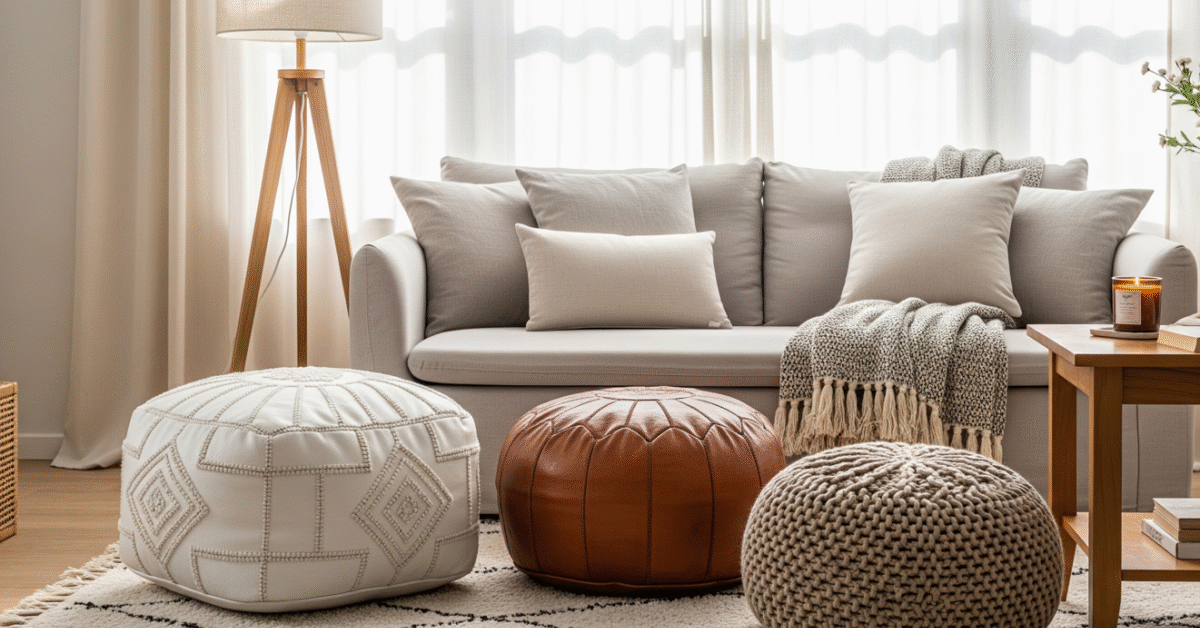
Common Pouf Materials and What They Usually Need
- Fabric: Mild detergent, blotting, and careful drying.
- Leather: A dry cloth, pH-balanced leather cleaner, and conditioning.
- Faux leather: Gentle soap and water, no abrasives or solvents.
- Knit or crochet: Low-moisture spot cleaning and shape support while drying.
- Outdoor fabric: Soap, water, mildew prevention, and full drying in open air.
If you are dealing with an ottoman pouf that looks like it has “generic upholstery,” do not guess. A chenille cover, velvet finish, or coated textile can react very differently to the same cleaner. The care label is the first source to trust, and for upholstery classification, the guidance published by the U.S. General Services Administration on textile care is a useful reference point for matching cleaning method to fabric behavior: GSA fabric care guidance.
Daily and Weekly Pouf Maintenance That Prevents Bigger Problems
Most pouf maintenance is boring, which is why it works. A few minutes of prevention each week reduces the need for aggressive stain removal later. The goal is to keep surface dirt from settling into fibers and to stop moisture from lingering inside seams or filling.
A Simple Maintenance Routine
- Vacuum the surface with an upholstery attachment once a week.
- Flip or rotate the pouf if one side gets more use than the others.
- Brush off pet hair with a lint brush or a rubber pet-hair tool.
- Wipe spills within minutes, not hours.
- Keep the pouf away from direct sun when possible.
For odor control, air circulation matters more than fragrance sprays. A pouf that sits against a wall in a humid room can trap musty smells even when the surface looks clean. If the room is damp, move the pouf to open air periodically and make sure the floor beneath it is dry.
That advice lines up with general indoor air quality and moisture guidance from the U.S. Environmental Protection Agency on mold and moisture. Moisture problems are not just about visible mold; they also create persistent odors in upholstery and fillings.
How to Clean a Pouf by Material Without Damaging It
The best way to clean a pouf is to use the mildest method that removes the soil. For everyday upkeep, that means dry vacuuming first, then spot treatment, then controlled drying. The same principle applies across materials, but the cleaning agent and moisture level should change.
Fabric Pouf Care
For fabric pouf care, start by vacuuming with a soft upholstery head. For small stains, mix a few drops of mild dish soap or laundry detergent with cool water, dampen a microfiber cloth, and blot from the outside of the stain inward. Use a second cloth with plain water to lift any soap residue, then air-dry fully.
If the cover is removable and the label allows machine washing, wash it on a gentle cycle in cold water, then reshape it before drying. Do not assume every removable cover is washer-safe; some covers shrink, warp, or lose texture after laundering. If the tag says “dry clean only,” follow that instruction.
Leather Pouf Care
Leather pouf care should stay dry. Dust it with a soft cloth, then use a leather cleaner made for finished leather if there is grime or transfer marks. Wipe with a barely damp cloth afterward, and condition the leather occasionally to reduce cracking.
Never soak leather, use bleach, or scrub with a sponge that has an abrasive side. Leather can look tough and still be vulnerable to finish damage, color loss, and stiffness after over-cleaning.
Faux Leather Pouf Care
Faux leather pouf care is easier, but it is not bulletproof. Wipe it with diluted mild soap and water, then dry immediately with a soft towel. That is enough for most smudges, fingerprints, and light food marks.
Avoid alcohol-heavy sprays, acetone, and harsh degreasers. Those products can dry out the coating and cause peeling over time, especially around seams and stitched edges.
Knit and Woven Poufs
Knit poufs need the gentlest touch because the looped structure can stretch or snag. Use a vacuum with low suction, spot clean with a barely damp cloth, and support the shape while it dries by stuffing it lightly with a towel if needed. Never wring or twist the cover.
Outdoor Pouf Care
Outdoor pouf care focuses on dirt, mildew, and sun exposure. Brush off debris, wash with mild soap and water, rinse carefully if the construction allows it, and let it dry in open air until the stuffing or inner lining is fully dry. If the pouf has been left outside after rain, check the underside and seams first.
Outdoor fabrics often resist water, but “resistant” does not mean “maintenance-free.” For weatherproof textiles and mildew prevention, consumer guidance from textile care resources used by the upholstery industry aligns with the same core rule: keep the fabric clean, dry, and protected from prolonged moisture.
| Material | Safe first step | Avoid |
|---|---|---|
| Fabric | Vacuum and blot with mild soap solution | Soaking and hard scrubbing |
| Leather | Dry dusting and leather cleaner | Excess water and bleach |
| Faux leather | Soap-and-water wipe-down | Solvents and abrasives |
| Knit | Low-suction vacuum and spot cleaning | Twisting, wringing, machine drying |
| Outdoor | Soap, air drying, seam inspection | Leaving damp for long periods |
How to Remove Common Stains and Odors from a Pouf
How to remove stains from a pouf depends on what caused the mark and how long it has been there. Fresh spills are easier because the stain has not bonded deeply with the fibers. Old stains usually need more patience, not more force.
Food and Drink Stains
Blot the spill immediately with a dry cloth. If residue remains, apply a small amount of mild soap solution and blot again. For coffee, tea, or juice, repeat with clean water to lift color left behind, then dry the area with a fan or a cool hairdryer setting held at a distance.
Oil and Body Marks
Powdery absorbents can help on fabric, but use them sparingly and vacuum them away fully afterward. On leather or faux leather, a gentle cleaner works better than powders. Body oils often collect where people rest their feet or hands, so repeated cleaning of those contact points prevents dark patches from forming.
Pet Odors and General Mustiness
Odor control starts with drying. If a pouf smells stale, air it out in a dry, shaded area and check whether the smell is in the cover or inside the filling. A removable cover may need separate washing, while a non-removable pouf may need a baking-soda treatment on the surface followed by thorough vacuuming.
Stain removal works best when you treat the source of the stain, not just the visible mark.
A short example: a family room pouf developed a dark ring after a child placed a cold drink on it and it dripped for 20 minutes. The fix was not bleach or soaking. The stain lifted after blotting, a mild detergent solution, two clean-water passes, and overnight drying with air circulation. The cover looked even again, and the filling never picked up an odor.
Drying, Reshaping, and Restoring a Pouf After Cleaning
Drying is part of cleaning, not an optional extra. A pouf that feels “almost dry” can still hold moisture in the seams or inner filling, and that is when odor, deformation, and mildew start. The safest approach is room-temperature drying with good airflow.
How to Restore the Shape
- Pat the surface into an even form with clean hands after cleaning.
- Rotate the pouf every few hours while it dries.
- Use towels inside or around a removable cover to support rounded edges.
- Avoid sitting on it again until it is fully dry and firm.
If the pouf has a foam or fiber filling, check for clumping after cleaning. Lightly massage the sides to redistribute the fill. If the filling stays misshapen, the pouf may have been over-wet and may need longer drying time than the cover itself.
What to Avoid When Caring for a Pouf
The most common mistakes are aggressive, not complicated. Over-wetting, harsh chemicals, heat, and scrubbing can damage a pouf faster than daily use. That is why many failures in pouf cleaning come from “trying harder” instead of choosing better methods.
- Do not soak the pouf unless the manufacturer explicitly allows it.
- Do not use bleach, ammonia, or undiluted vinegar on delicate materials.
- Do not scrub with stiff brushes that raise the nap or scuff the finish.
- Do not use high heat on leather, faux leather, knit, or glued seams.
- Do not put a damp pouf back into service before it is fully dry.
There is one important exception: some outdoor covers tolerate more water than indoor upholstery, but the filling and stitching still may not. That is the nuance many general cleaning guides miss. A material can be weather-resistant and still fail if the inside stays wet too long.
Extra Tips to Make a Pouf Last Longer
Long-lasting pouf maintenance is mostly about reducing stress on the cover and filling. Keep sharp objects, wet swimsuits, and rough shoes off the surface. If the pouf doubles as a footrest, use a tray or throw in high-traffic homes to reduce direct abrasion on the fabric.
Rotate the pouf’s position in the room every few weeks so one side does not fade faster in sunlight. For households with pets or kids, a removable cover is worth its weight in time saved because it turns future cleaning into a wash cycle instead of a spot-cleaning session. That is one of the few cases where buying for maintenance pays off quickly.
If you need a practical rule for how to clean an ottoman pouf, use this: dry soil first, spot clean second, protect the material third. That order protects texture, color, and structure better than any single cleaner ever will.
Next Steps for Smarter Pouf Maintenance
The best pouf care plan is the one you can repeat without overthinking it. Check the material, clean in the smallest effective step, and dry it completely every time. If you make those three habits automatic, the pouf will stay fresh far longer than one cleaned only after visible damage appears.
Start with one inspection today: identify the fabric, confirm whether the cover is removable, and note the safest cleaning method on a small card or in your phone. That small step prevents the most common mistakes before they happen.
Frequently Asked Questions
Can You Machine Wash a Pouf Cover?
Sometimes, but only if the care label says it is machine washable. Many removable covers can handle a gentle, cold cycle, while others will shrink, distort, or lose texture. If the tag is missing, treat it as non-washable until you can test a hidden area.
How Do You Clean a Pouf Without Damaging It?
Use the least aggressive method that removes the dirt: vacuum first, spot clean with a mild solution, then dry thoroughly. Match the method to the material, because leather, faux leather, knit, and fabric each respond differently to moisture and friction.
What is the Best Way to Remove Stains from a Pouf?
The best method is blotting with a clean cloth and a mild cleaner, not scrubbing. Fresh stains lift more easily than old ones, and repeated gentle passes work better than one harsh attempt. Always test cleaners on a hidden area first.
How Do You Keep a Pouf from Losing Its Shape?
Do not over-wet it, and do not use it until it is fully dry after cleaning. Rotate it regularly, support it while drying, and redistribute the filling if it feels lumpy. Sun and excess weight also speed up shape loss.
What Should You Do If a Pouf Starts to Smell Musty?
Air it out in a dry, shaded space and check for trapped moisture in the seams or filling. If the cover is removable, clean it according to the label. Persistent odor usually means the inside needs more drying time than the surface does.
Are Outdoor Poufs Easier to Care For?
They are usually easier to wipe clean, but they still need moisture control and mildew prevention. Outdoor fabrics handle weather better, yet damp stuffing, dirty seams, and long sun exposure can still damage them. Cleaning them promptly keeps them from becoming brittle or smelly.