

📅 Updated on 06/13/2026
The fastest way to make a home feel modern and responsible is not to buy more things—it is to buy better ones. A guide to sustainable home décor is a practical framework for choosing furnishings, finishes, and accents that reduce waste, limit toxic materials, and hold up over time without sacrificing style.
That matters because décor choices are not just aesthetic. They affect indoor air quality, product lifespan, landfill volume, and the demand for certified materials such as FSC wood, OEKO-TEX textiles, and low-VOC paints. This article breaks down what sustainable décor actually means, how to shop with more confidence, and where the trade-offs are real.
What You Need to Know
- Sustainable décor is a design approach, not a look; it prioritizes durability, repairability, safer materials, and lower waste.
- The best starting point is often what you already own, because reuse almost always beats replacement on carbon and cost.
- Certifications matter most when they verify material sourcing, emissions, or chemical safety, not when they are used as vague marketing language.
- Secondhand, vintage, and refurbished pieces can be more sustainable than “green” new products if they are built to last.
- Style and sustainability work best together when you buy fewer items with better structure, finish, and maintenance needs.
How Sustainable Home Décor Works and Why It Changes the Way You Design a Room
Sustainable home décor is the practice of furnishing and styling a space with products that use fewer virgin resources, contain safer materials, last longer, and can be reused, repaired, or recycled more easily at end of life. In plain terms: it is décor designed to look good now and create less damage later.
What separates this from ordinary “eco-friendly” marketing is the supply chain. A bamboo lamp is not automatically sustainable. A cotton throw is not automatically ethical. The real test is how the material was sourced, how much energy and chemistry went into making it, and whether the item will still be useful in five or ten years.
Sustainable décor works best when design decisions are made in this order: keep, repair, buy secondhand, then buy new only when the product is durable, certified, and likely to stay in use for years.
The three design goals behind the concept
- Lower environmental impact: less waste, fewer emissions, and less dependence on high-impact materials.
- Healthier indoor spaces: reduced exposure to VOCs, formaldehyde, flame retardants, and other unnecessary chemicals.
- Longer product life: furniture and accessories that can be maintained instead of replaced.
For a practical baseline on emissions and material choices, the U.S. Environmental Protection Agency has guidance on indoor air quality and common household pollutants at EPA Indoor Air Quality. That is one of the clearest places to understand why paint, adhesives, and finishes matter as much as the visible design.
Start with What You Own Before You Shop for Anything New
The most sustainable room update is often a better arrangement, not a new purchase. Replacing a table, shelf, or chair just because the style feels dated creates waste even when the replacement is labeled “eco.” In practice, the best results come from editing, repairing, reupholstering, and reusing existing pieces before adding anything else.
Vi cases in which a room felt brand new after three moves: a sofa rotated to catch natural light, two lamps swapped between rooms, and one inherited sideboard refinished with a low-VOC coating. No new décor budget was needed. The space looked intentional because the owners treated the room as a system, not a shopping list.
Questions worth asking before you replace a piece
- Can it be repaired, tightened, cleaned, or refinished?
- Would a slipcover, new hardware, or reupholstery solve the problem?
- Does the item work in another room if it no longer fits here?
- Is the issue quality, or is it just trend fatigue?
This is where a lot of sustainability advice fails: it assumes all old pieces deserve a second life. They do not. A warped particleboard bookshelf with loose joints and damaged veneer may be better recycled or discarded responsibly than kept out of guilt. Sustainability is not about keeping everything forever; it is about extending useful life where it still makes sense.
Materials That Hold Up Better Over Time
The smartest material choices are usually the ones that combine durability with lower toxicity. Solid wood from Forest Stewardship Council (FSC)-certified sources, recycled metal, glass, natural latex, wool, and organic cotton can perform well when they are used in the right application. The goal is not to chase the most natural option in every case, but to choose the material that does the job with the least waste and the fewest compromises.
What to look for in core categories
- Furniture: solid frames, replaceable parts, and joinery that can be tightened or repaired.
- Textiles: OEKO-TEX or similar testing for harmful substances, especially for bedding and upholstery.
- Paint and finishes: low-VOC or zero-VOC formulas that reduce off-gassing after installation.
- Rugs and cushions: natural or recycled fibers with clear care instructions and durable backing.
For textiles, the Textile Exchange publishes widely used standards and reports on preferred fibers and material sourcing; its research is useful for separating real fiber improvements from vague claims. One practical takeaway: a natural fiber is not automatically low-impact if it requires intensive water, pesticide, or chemical processing.
A “green” material is only sustainable when it is appropriate for the product’s lifespan, maintenance needs, and disposal path; otherwise, it just shifts the problem somewhere else.
Certifications That Actually Help You Shop Better
Certifications are useful because they compress complicated information into something a shopper can verify quickly. They are not perfect, but they are far better than color-coded eco language on a box. The strongest labels tend to focus on sourcing, emissions, or chemical safety rather than generic claims about being “natural” or “earth-friendly.”
| Certification | What It Typically Signals | Best Use Case |
|---|---|---|
| FSC | Responsibly managed forest materials | Wood furniture, shelves, frames |
| OEKO-TEX | Testing for harmful substances in textiles | Sheets, curtains, upholstery, pillows |
| GREENGUARD | Low chemical emissions | Furniture, finishes, indoor furnishings |
| ENERGY STAR | Energy-efficient appliances and lighting | Lamps, smart controls, adjacent home products |
For low-emission products, GREENGUARD certification can be especially helpful in bedrooms, nurseries, and smaller apartments where ventilation is limited. The certification does not make a product “perfect,” but it does raise the bar above untested alternatives.
There is one limit worth saying plainly: certifications do not replace judgment. A certified item that is poorly made, impossible to repair, or bought too often is still a weak choice. Labels help most when they support a disciplined buying habit, not when they justify impulse shopping.
How to Build a Sustainable Palette Without Making the Room Feel Clinical
Eco-friendly design does not have to look spare, beige, or academic. Color, texture, and contrast still matter. In fact, the most livable sustainable interiors usually feel warmer because they rely on wood grain, woven textiles, ceramic, metal, and natural light instead of glossy surfaces and disposable accents.
A simple way to keep the room interesting
- Use one durable anchor material, such as oak, walnut, or powder-coated steel.
- Layer texture through linen, wool, jute, or recycled fiber blends.
- Limit novelty pieces to small accents that can be replaced cheaply and responsibly.
- Choose fewer colors, but vary tone and texture so the room still feels alive.
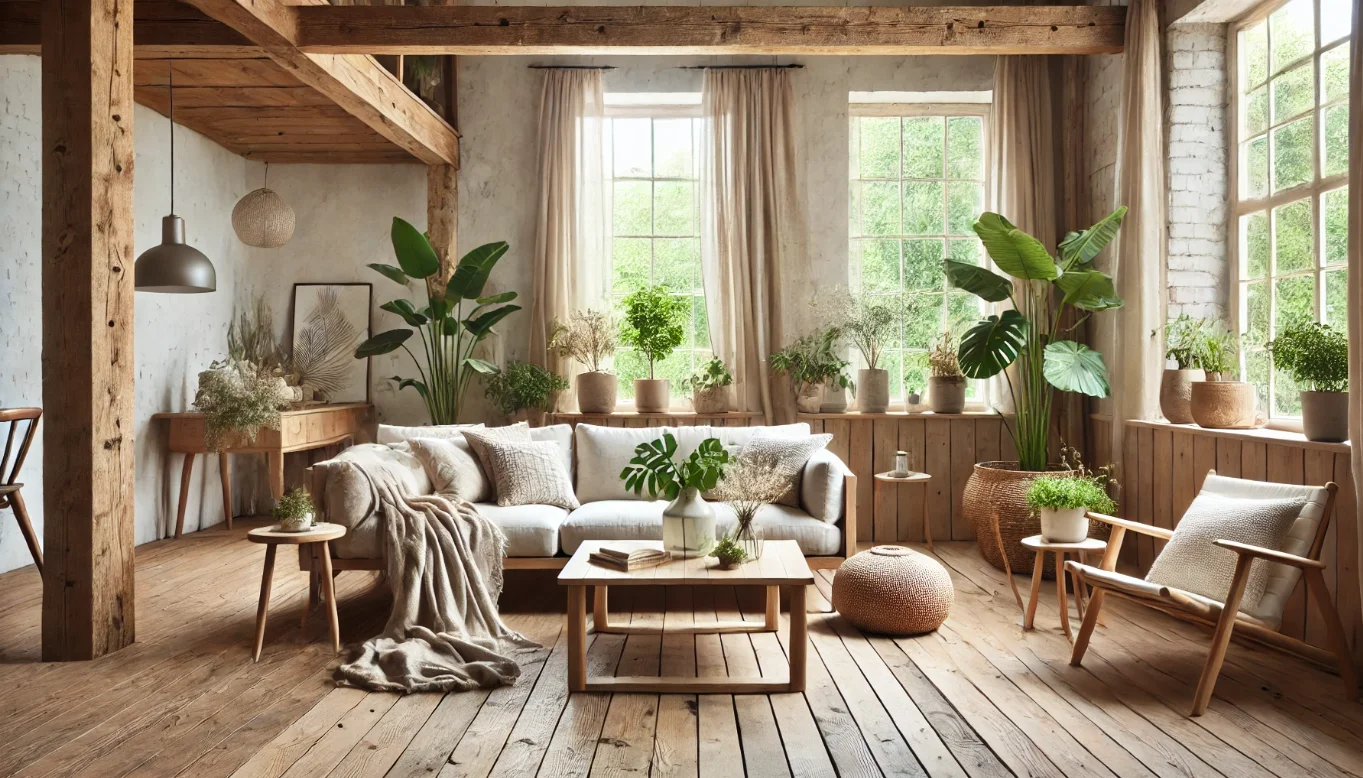
Think of a living room with a secondhand oak coffee table, a reclaimed wool rug, and two ceramic lamps from a local studio. The room feels personal because the objects have character and history, not because they were bought as a matching set. That is one of the strongest habits in sustainable décor: buy for contrast, not for uniformity.
Where Ethical Brands Make a Real Difference
Ethical brands matter most in categories where transparency is hard to verify as a consumer: upholstery, mattresses, coatings, and custom furniture. In those markets, a good brand will disclose materials, manufacturing location, chemical standards, and repair policies without making the buyer decode vague marketing copy.
What to check before trusting a brand
- Does it publish material details and origin information?
- Are its emissions, sourcing, or labor claims backed by third-party standards?
- Can the product be repaired, re-covered, or serviced?
- Does the company offer spare parts or replacement components?
For broader context on circular design and waste reduction, the Ellen MacArthur Foundation’s work on the circular economy is worth reading because it explains why repairability and reuse outperform short product cycles. That perspective is especially useful in décor, where “new” often gets mistaken for “better.”
Room-by-Room Moves That Create the Biggest Impact
Not every room gives you the same return. Bedrooms and living rooms usually offer the biggest payoff because they contain the most textiles, upholstered items, and paint surfaces—the exact places where emissions and material choices matter most. Kitchens and entryways matter too, but their sustainability gains often come from organization and longevity rather than decorative replacement.
Highest-impact updates by space
- Bedroom: upgrade bedding, mattress materials, curtains, and paint quality.
- Living room: prioritize the sofa, rug, coffee table, and lighting.
- Entryway: choose durable mats, hooks, and storage that can handle heavy use.
- Home office: focus on chair ergonomics, desk durability, and lighting efficiency.
Lighting deserves its own mention. ENERGY STAR-rated LEDs use far less energy than older bulbs and usually last much longer, which means fewer replacements and less packaging waste over time. That is one of the rare décor upgrades that improves both atmosphere and operating cost.
Buying Less, Buying Better, and Keeping the Style Fresh
The real skill in sustainable decorating is not restraint for its own sake. It is choosing pieces that can evolve with you. A neutral sofa with a washable cover, a timber table that can be refinished, or modular storage that adapts to a new apartment all reduce the need to start over every few years.
Where people get stuck is thinking sustainable design means giving up personality. It does not. It means saving your budget for the pieces that matter, then changing the room through art, plants, books, mirrors, and textiles instead of constant furniture turnover.
The most sustainable room is not the one with the fewest objects; it is the one where every object earns its place through function, durability, and emotional staying power.
What to Do Next if You Want a More Sustainable Home
Pick one room and make a single rule: replace nothing for 30 days unless the item is broken, unsafe, or irreparable. During that month, note what actually bothers you—storage, light, comfort, color, or clutter. That small audit usually reveals that the biggest gains come from reusing what is already there, then upgrading only the pieces that have the most daily impact.
If you are building a more intentional home, start with one purchase standard and stick to it. For example: certified wood, low-emission finishes, or secondhand-first for all large furniture. That kind of rule is easier to maintain than chasing every label, and it creates a home that feels coherent rather than crowded with good intentions.
Frequently Asked Questions
What makes home décor sustainable?
Home décor is sustainable when it reduces waste, uses safer or responsibly sourced materials, and lasts long enough to avoid frequent replacement. Repairability and reuse matter just as much as the raw material itself. A durable secondhand piece can be more sustainable than a new item with an eco label.
Are secondhand and vintage pieces always the best choice?
Not always, but they are often the best starting point. A secondhand item only helps if it is structurally sound, safe to use, and likely to stay in service for years. If it needs heavy restoration with toxic products or will fail soon, the benefit shrinks fast.
Which certifications are most useful for furniture and textiles?
FSC, OEKO-TEX, GREENGUARD, and ENERGY STAR are among the most practical labels to know. They address sourcing, chemical safety, emissions, and energy use in ways that are easier to verify than vague green claims. Still, the label should support your judgment, not replace it.
Is sustainable décor more expensive?
It can be upfront, especially for well-made furniture and certified materials. Over time, though, the math often improves because durable items do not need to be replaced as often. Buying less, buying secondhand, and repairing what you own usually lowers the total cost.
How do I avoid greenwashing when shopping?
Look for specific claims, named certifications, and transparent material disclosures. Avoid products that rely on words like “natural,” “clean,” or “eco-friendly” without evidence. If the brand cannot explain what makes the item better, treat the claim as weak.
What is the easiest first step for beginners?
Start by redesigning one room with no new purchases for two weeks. Rearrange what you own, repair what is broken, and identify one item that truly needs replacing. That approach builds better habits than buying a cart full of “sustainable” accents.