
Tiny Pantry Tips: How to Make the Most of 2 Sq. Ft. of Space
How to organize a tiny pantry by measuring shelves, arranging items by use and accessibility, choosing proper containers, and rotating stock for safe, effici…
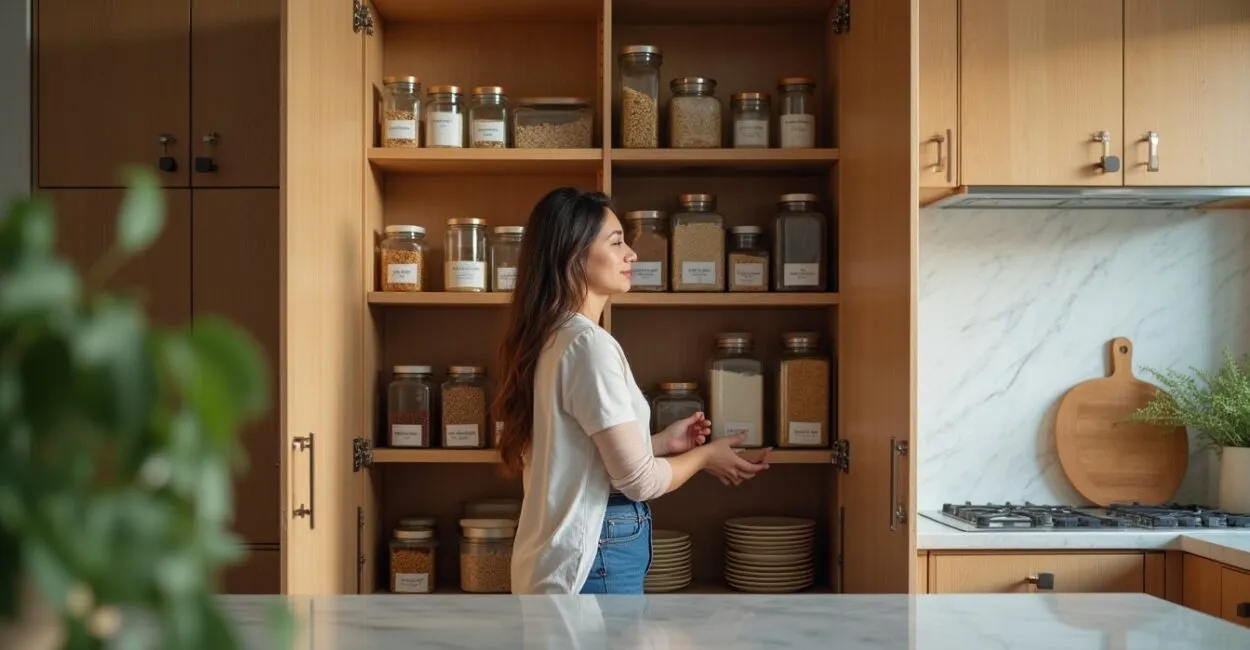 Carefully organized staples in a compact pantry
📅 Updated on 10/10/2026
A tiny pantry can work well when every item has a clear place and the foods you use most are easy to reach. These tiny pantry tips start with measuring the space, then build a layout around your cooking habits, safe storage, and simple stock rotation.
In a pantry with only about two square feet of floor space, adding more containers does not automatically add useful capacity. The shelves, door clearance, food packages, and your reach all shape what fits. A good setup makes supplies visible and accessible without stacking heavy items where they can fall.
Quick Takeaways
- Measure shelf width, depth, height, and door clearance before buying organizers.
- Keep everyday ingredients at eye level and reserve high or low shelves for occasional use.
- Choose containers that fit the shelf and the food, with secure lids for pest-sensitive staples.
- Rotate food by moving older, still-usable items to the front when you restock.
Tiny Pantry Tips Start With a Space Check
Small pantry organization works best when it accounts for the usable shelf area, not just the pantry’s floor dimensions. Measure each shelf’s width, depth, and vertical clearance, then note hinges, pipes, and the space needed to open the door. Remove expired food and anything your household no longer uses; group what remains by how often you reach for it. This gives you a practical layout before you spend money on storage.
Set aside a short list of essentials that need to stay within easy reach, such as breakfast staples, cooking oil, or the ingredients you use most often. Less-used baking supplies and backup packages can go higher or farther back, as long as you can retrieve them safely. If a shelf is too high for comfortable access, avoid treating it as everyday storage.
Build Zones Around Your Cooking Routine
Zones reduce searching and help prevent duplicate purchases. Assign areas for categories such as breakfast, baking, grains and pasta, snacks, and unopened backups. In a narrow pantry, categories can share a shelf; a labeled bin or a consistent left-to-right arrangement can keep them distinct.
Use shelf height as well as width. A short riser can make cans or jars behind the front row visible, while a shallow bin can corral small packets. Leave enough room to pull a bin out without hitting the door. Deep shelves are often where food disappears, so reserve their back portion for clearly grouped backups rather than loose items.
Choose Containers That Fit and Stack Safely
The best containers for a 2-square-foot pantry depend on the shelf dimensions and the weight of the food. Square or rectangular containers often use shelf space more efficiently than round ones, while shallow bins make small items easier to retrieve. For heavy foods, use sturdy containers on a low shelf and stack only when the base is stable and the lids are designed to support another container.
Keep food in its original packaging if it already seals well and fits the shelf. Transfer only what benefits from an airtight container or a more useful shape. A frequent nuisance is buying a set of tall containers that fits the shelf but leaves too little room to lift them out. Measure the container’s full height, including the lid, and leave clearance for your hand.
Glass canisters are easy to clean but add weight and can break. Lightweight food-safe plastic is easier to handle, though it may scratch or retain odors over time. Match the material and size to the food, your cleaning routine, and who needs to reach it.
Read also: Tiny Kitchen Organization: 11 Genius Space-Saving Hacks
Label Categories and Rotate What You Own
Pantry labels should make contents easy to identify at a glance. Label the front or lid with the food name; add an opening date when it helps you track a product you use slowly. If you transfer food from its package, keep the package or record its cooking instructions and allergen information before discarding it.
A pantry rotation system follows “first to expire, first to use”: place the item with the nearer best-by or use-by date in front of a newer one. Check dates and package condition when you restock, and follow the storage directions on the label. Date labels are useful reminders, but they do not replace package guidance or a check for damage, moisture, or unusual odors.
Read also: Decluttering Tips That Stick: Simple Habits for 2025
The USDA FoodKeeper resource offers storage guidance for many foods. Recommendations can vary by product and storage conditions, so use the manufacturer’s instructions when they are more specific.
Store Bulk Food Without Losing Shelf Space
Buying in bulk saves pantry space only when the quantity matches how quickly your household uses it. Keep a working amount in a reachable container and store the remainder in a sealed, clearly labeled package elsewhere in a cool, dry location if suitable storage is available. If there is no safe overflow space, buy a smaller quantity rather than squeezing bags into an unstable stack.
For grains, flour, and other dry goods, check that containers are clean and fully dry before filling them. Moisture can damage food, and mixing a new purchase with old product makes it harder to track freshness. Keep the original label or note the product name and relevant date on the storage container.
Reduce Pest Risks and Avoid Common Setups That Fail
Pest-proof pantry storage begins with clean shelves and intact packaging. Wipe up crumbs and spills, inspect packages before putting them away, and move vulnerable dry foods into containers with tight-fitting lids when appropriate. The U.S. Environmental Protection Agency’s safer pest control guidance recommends prevention as part of managing household pests.
Do not block a pantry vent or store food against a damp wall. If you find insects, webbing, or damaged packages, discard affected food and inspect nearby items; cleaning the shelf alone may not address the source. Follow product labels and local guidance before using any pesticide around food.
Common organizing mistakes often come from prioritizing appearance over access. Avoid these fixes:
- Buying organizers before measuring: A turntable or riser can reduce usable space if it is too wide or tall.
- Stacking heavy containers overhead: Put dense foods low to reduce the chance of spills or injury.
- Decanting everything: Extra containers add work and can separate food from its instructions or identity.
- Filling every gap: A tightly packed shelf hides food and makes routine cleaning harder.
Keep the System Working With a Weekly Reset
A brief reset once a week is usually enough for a small pantry: return misplaced items, bring older products forward, and check for crumbs or leaks. Do a more careful date and package check when you bring home groceries. The right frequency depends on how often you shop and how quickly your household uses its supplies.
For example, a household that cooks several dinners at home might keep pasta, canned tomatoes, and cooking oil at eye level, with snacks in one shallow bin. A newly purchased can goes behind the older can, while a backup bag of rice stays sealed on a lower shelf. If the bin becomes hard to pull out, reduce its contents rather than forcing the arrangement.
Before the next grocery trip, take a quick look at what is already open and what needs using soon. Adjust one shelf at a time; a small pantry is easier to maintain when the system reflects your actual shopping and cooking routine.
Frequently Asked Questions
How often should I rotate pantry items?
Rotate items whenever you restock, moving older products with earlier dates to the front. Check packages and dates during that same reset, with closer checks for foods you use slowly or buy in larger quantities.
What containers work best in a 2-square-foot pantry?
Choose containers only after measuring the shelves. Rectangular, stackable containers can use space efficiently, while shallow bins help with packets and small items; heavy containers belong on lower shelves.
How do I store bulk items without losing space?
Keep a manageable working quantity in the pantry and store the sealed remainder in a suitable cool, dry place. If you lack safe overflow storage or use the food slowly, buy less at a time.
Can a small pantry be pest-proofed effectively?
You can lower pest risks by keeping shelves clean, inspecting packages, and sealing susceptible dry foods in tight-fitting containers. No storage setup guarantees pests will never appear, so check for damage and signs of insects during restocking.
How do I prioritize items when space is extremely limited?
Give the easiest-to-reach space to foods you use often and need for regular meals. Move occasional ingredients and unopened backups to higher or lower shelves, and keep items you rarely use outside the pantry if you have another suitable storage spot.