
2025 Mountain Home Trends That Blend Technology and Nature
How modern mountain home trends integrate architecture, insulation, solar design, and heating controls to enhance comfort and energy efficiency in harsh clim…
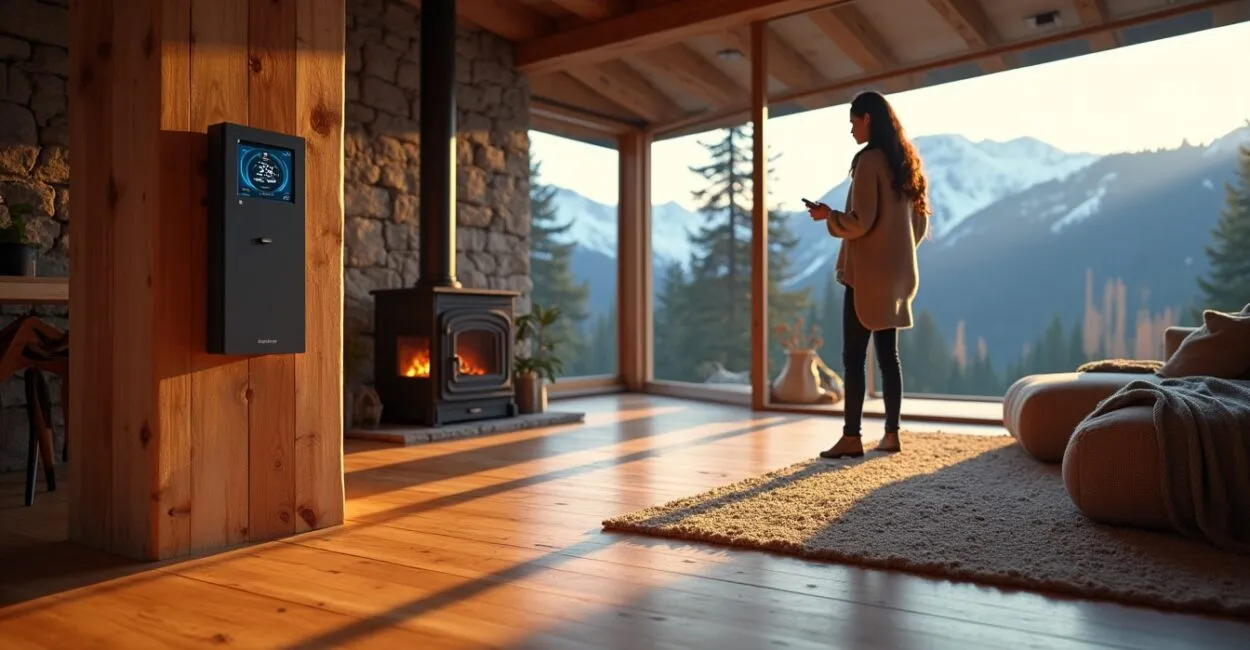 Smart mountain cabin with radiant floors and solar views
📅 Updated on 10/11/2026
A cabin can have a beautiful solar roof and still lose heat through leaky windows, drift over its panels, or go cold when the internet drops. Today’s mountain house trends bring architecture, energy systems, and controls together so a home fits its weather, site, and routine. The best choices depend on local conditions, not on how advanced a product looks.
Mountain house design now often pairs familiar materials such as timber and stone with high-performance insulation, carefully planned solar, and heating controls that work locally. The decisions are connected: roof shape affects snow shedding and solar access, while insulation changes the size and operating demands of the heating system.
What Defines Mountain House Trends Today?
Current mountain house trends are design and building choices that improve comfort, energy performance, and resilience in a cold, exposed, or remote setting while preserving a home’s relationship to its landscape. In practical terms, that means planning the building envelope, heating, power, and controls as one system, then choosing finishes and technology that suit the site.
Modern mountain homes may use large windows to frame a view, but glazing needs to be balanced against heat loss, glare, and summer overheating. Deep roof overhangs, durable cladding, and sheltered entrances can matter as much as connected devices. A restrained mix of local stone, wood, and metal can keep technology visually quiet without compromising access for repairs.
The design brief should start with the property: elevation, sun exposure, prevailing wind, snowfall, utility access, and how often the home is occupied. A full-time residence and a cabin left vacant for weeks have different demands for freeze protection, remote monitoring, and backup power.
How Should You Plan Solar Roofing and Battery Storage?
Solar roofing and battery storage can supply useful power in alpine settings when the roof, sun exposure, snow conditions, electrical design, and backup plan work together. Solar tiles can preserve a roof’s appearance, while conventional panels may offer different installation and service options; neither choice guarantees winter production or uninterrupted power.
Snow can cover an array and reduce output until it slides or melts. Roof pitch, panel placement, nearby trees, ridge vents, and safe access all affect performance. High altitude alone does not determine whether a system is worthwhile. Seasonal shading and the household’s electricity use matter more than a simple elevation label.
Products such as Tesla Solar Roof should be assessed as a complete roofing and electrical project. Ask installers for site-specific production estimates that account for shading and snow, and confirm how they model winter output. A battery can store available electricity and support selected circuits during an outage, but its usable capacity, cold-weather location, and compatibility with the inverter all need review.
The U.S. Department of Energy’s solar energy resources provide a starting point for understanding residential solar. Before signing, request a written scope covering roof work, electrical upgrades, monitoring, warranty responsibilities, snow-related maintenance, and the assumptions behind projected production. Savings and payback vary by utility rates, incentives, system design, and use; avoid treating a sales estimate as a promise.
Which Heating Controls Stay Reliable in Cold Weather?
Smart heating controls manage heat delivery through thermostats, sensors, and equipment schedules. Zoned heating divides a home into areas with separate temperature controls, which can help match heat to how rooms are used, provided the heating system and building layout support those zones.
Voice commands are convenient, but they should not be the only way to control heat. Many systems rely on a cloud connection for voice services or remote access, and an internet outage can interrupt those features. Choose controls with a usable local thermostat or manual override, and ask whether schedules, freeze alerts, and essential heating continue when the network is down.
Read also: 7 Home Comfort Upgrades Shaping 2025 Living Spaces
For a house that sits empty between visits, set conservative minimum temperatures and use independent low-temperature alerts where appropriate. Sensors need sensible placement: a thermostat beside a drafty door or in direct sun may misread the conditions that matter elsewhere. Ask the HVAC contractor to verify that zoning will not create airflow or equipment problems.
How Do Insulation and Passive Design Reduce Mountain Risks?
A high-performance building envelope limits unwanted heat transfer and air leakage through the roof, walls, foundation, windows, and doors. Passive design uses orientation, shading, glazing, and thermal mass to shape indoor comfort with less reliance on mechanical heating and cooling.
Read also: Cat breeds shaping pet trends for 2025 and beyond today
In a cold climate, insulation alone does not prevent moisture problems. Air sealing, vapor control, ventilation, and careful flashing must work together; the correct assembly depends on climate and materials. A common field issue is warm indoor air leaking into a cold roof cavity, where it can condense and damage sheathing. Adding insulation without addressing air leakage can hide the source rather than solve it.
Durable mountain home materials should tolerate wet snow, freeze-thaw cycles, ultraviolet exposure, and limited access for repairs. Metal roofing, properly detailed wood siding, and stone can all be appropriate, but installation details and maintenance vary. The Department of Energy’s guidance on air sealing explains why sealing leaks is part of an energy upgrade, not a substitute for planned ventilation.
What Limits Off-Grid Readiness and Resilience?
An off-grid mountain home must generate, store, and manage its own energy while accounting for periods when solar production falls or equipment fails. A resilient design begins with the loads that must remain available, then sizes generation, storage, backup, and fuel or service access around those needs.
List essential loads separately from optional ones. A well pump, refrigeration, communications, and freeze protection may take priority over a hot tub or an electric vehicle charger. Batteries do not create energy, and winter conditions can constrain both charging and generation. A generator may provide backup, but it brings fuel storage, noise, maintenance, and safe-operation requirements.
Consider a cabin used on weekends with a steep, tree-shaded roof and a private well. A roof-mounted array may produce less in winter than an unshaded location, while the well pump draws a short, high startup load. The owner’s plan should account for both seasonal production and that surge, rather than selecting a battery by its advertised capacity alone.
Site constraints can outweigh equipment specifications. Remote service access, wildfire exposure, snow-clearing routes, and local utility rules all affect the plan. No single off-grid configuration suits every property, and professional load calculations are particularly important when water, heating, or medical equipment depends on continuous power.
How Should You Plan Installation, Permits, and Maintenance?
Before buying equipment, coordinate the architect or designer, electrician, HVAC contractor, roofer, and local permitting office. Solar, batteries, structural changes, and heating upgrades may trigger separate permits or inspections. Applicable requirements depend on the jurisdiction and project scope, so confirm current rules locally rather than relying on a generic checklist.
Ask the installer to identify the adopted electrical and building codes, inspection stages, utility interconnection requirements, and any equipment approvals that apply. Tell your insurer about material changes to the roof, electrical system, heating equipment, or battery location. Coverage terms differ, and the insurer may request documentation or specify installation conditions.
Commissioning deserves as much attention as installation. Confirm that thermostats, backup circuits, battery controls, alerts, and manual overrides work as intended. Keep equipment manuals, permits, warranties, system diagrams, and installer contacts in one accessible place; remote properties are harder to troubleshoot when records are scattered.
Maintenance is site-specific. Snow and ice may require a safe roof-access plan, while batteries and inverters need inspection according to manufacturer instructions. Do not climb onto an icy roof to clear panels. Have a qualified professional address electrical faults, roof leaks, unusual battery behavior, or heating systems that cannot maintain safe temperatures.
Practical FAQs About Modern Mountain Homes
Do solar tiles work well in snowy, high-altitude locations?
They can work where the roof has adequate solar access and the system is designed for local snow, shade, and electrical conditions. Snow cover can temporarily reduce output, and performance depends on roof geometry, installation, and weather. Ask for a site-specific estimate and a safe maintenance plan.
Will voice-controlled heating work without internet?
That depends on the system. Cloud-based voice features may stop during an outage, so choose equipment with local controls, stored schedules, and a manual override for essential heating.
What long-term costs should I compare before adding solar and smart features?
Look beyond purchase price to roof work, electrical upgrades, batteries, monitoring subscriptions, service access, replacement components, and maintenance. Compare written estimates using the same assumptions for utility rates, incentives, winter production, and backup needs.
How can technology fit a rustic interior?
Use controls with simple finishes, place screens where they are useful rather than prominent, and coordinate wiring and equipment locations during design. Timber, stone, and modern systems can coexist when the technology is planned into the architecture.
Which permits or insurance changes might apply?
Solar arrays, batteries, electrical work, structural changes, and heating upgrades may require permits, inspections, utility approval, or notice to an insurer. Requirements vary by jurisdiction and policy, so confirm them with the local building department, utility, and insurance carrier before installation.
Start with a site assessment and a list of essential loads before choosing products. That sequence helps keep alpine home design grounded in the conditions the house must handle every day.