

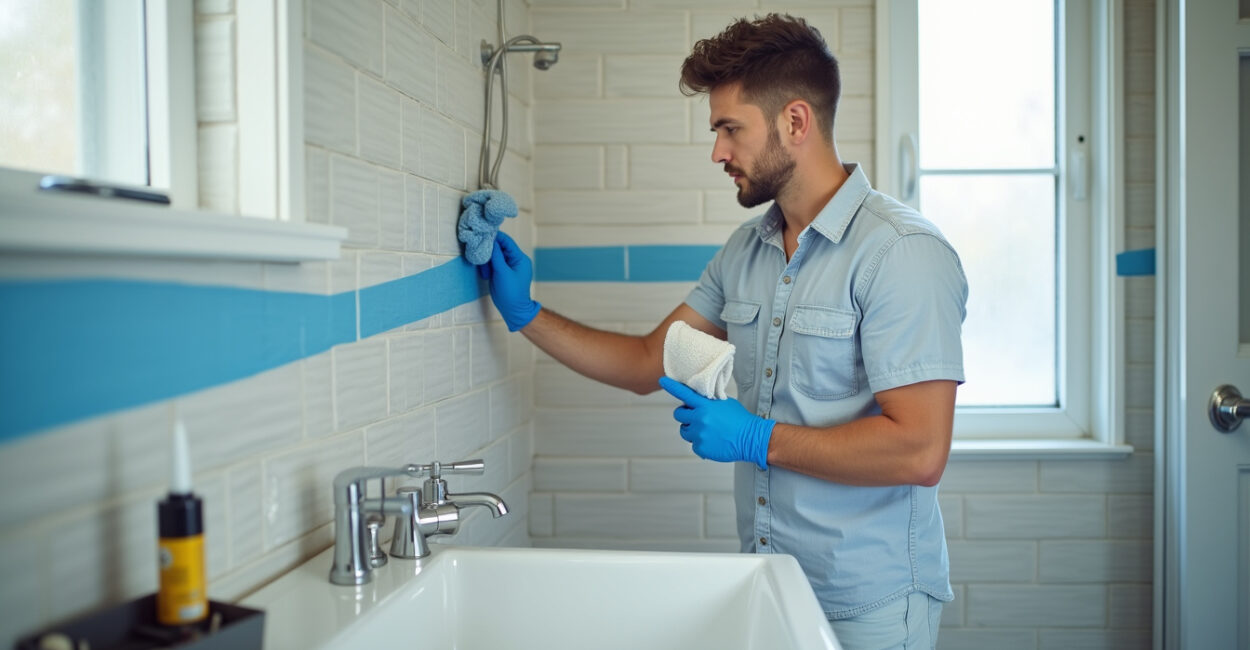
Clean, dry, and tape the joint first — that’s the part that decides whether your bathroom caulking prep before sealing looks pro or sloppy.
The bead itself is only half the job. If the edge still has soap film, trapped moisture, or old silicone crumbs, the caulk may look smooth for a day and fail later. The good line comes from small prep decisions.
The Surface Has to Be Truly Clean, Not “Looks Clean”
Bathroom caulking is a sealant joint, not paint. That means the bond depends on direct contact between the caulk and a sound, dry surface. Wipe away dust, soap scum, mildew, and any leftover old caulk. If you’re working over silicone residue, that’s where a lot of beginners lose the bond before they even start.
Bathroom caulking prep before sealing starts with removal, not application. A sharp scraper or utility knife helps lift old material, but don’t gouge the tub, tile, or vanity. Then clean with a non-oily cleaner and let the joint fully dry. In practice, the “dry” part matters more than people think. A joint that feels almost dry can still hold moisture in the corner.
A good rule: if the area smells musty, feels cool and damp, or leaves water on a paper towel, it is not ready yet.
Dry Time and Tape Change the Result More Than Most People Expect
Here’s the part beginners skip: tape. Painter’s tape gives you a visual lane and keeps the bead narrow where tile meets tub or countertop. That matters because a narrow bead tends to look cleaner and cures more evenly. It is not magic, and it will not fix a dirty joint, but it does make the line easier to control.
The smoothest caulk line usually comes from the least dramatic step: masking the joint before you squeeze the tube.
Mini-story: a homeowner I saw had already cut the nozzle, loaded the gun, and was ready to go. The bead kept dragging and tearing. The problem wasn’t the caulk. It was humidity trapped at the seam and no tape on the edge. After drying the area overnight and masking both sides, the second bead looked like a different job.
Bathroom caulking prep before sealing also means checking the room itself. If the bathroom is humid from a shower, wait. A fan helps, and so does time. The joint should be dry to the touch and cool, not damp or slick.

The Last Five Minutes Decide Whether the Bond Holds
Right before sealing, inspect the joint again. This is where the small mistakes hide: a loose tile edge, a hairline gap full of dust, or old caulk tucked in a corner. Beginners often rush here because the tube is already open. Don’t.
- Trim loose old caulk completely.
- Remove dust with a dry cloth or vacuum.
- Wipe off cleaner residue.
- Let the joint dry again if you touched it with wet hands.
- Mask the edge only after the surface is ready.
Clean surface plus dry joint plus tape equals the kind of bead that cures with a stronger bond and a straighter edge. That formula is boring, but it works. And it works better than trying to “fix” a bad joint with more caulk.
For moisture and mold control around bathrooms, the EPA’s guidance on cleaning and drying wet areas is worth a look: EPA mold cleanup and drying guidance. For a practical home-sealing overview, this extension resource is useful too: University extension advice on caulking and sealing gaps.
Do I Need to Remove All Old Caulk Before Applying New Caulk?
Yes, if the old bead is cracked, peeling, moldy, or silicone-based and you’re changing product types. New caulk bonds poorly to damaged residue, and that usually shows up later as lifting edges or tiny leaks. If the old material is still sound and the label allows re-caulking, you can sometimes clean and overlay, but bathroom joints usually perform better after full removal.
How Dry Does the Joint Need to Be Before Sealing?
Dry to the touch is not always enough. The seam should be free of visible moisture, condensation, and cleaner residue. If the bathroom was recently used, give it more time or run ventilation first. A joint that traps hidden water can weaken adhesion and slow curing, even if the bead looks perfect on day one.
Should I Tape Both Sides of the Joint?
Yes, for beginners, taping both sides makes bathroom caulking prep before sealing much easier. It creates a cleaner channel for the bead and reduces the chance of smearing on tile or tub edges. Leave a small gap between the tape lines, apply the caulk, smooth it, and pull the tape before the bead skins over.
What Cleaner Should I Use Before Caulking?
Use a cleaner that removes soap film, grease, and residue without leaving an oily film behind. Avoid anything that leaves a waxy finish unless the product says it is safe for sealing surfaces. After cleaning, wipe the joint with a dry cloth and let it air out. The cleaner matters less than the final rinse and dry time.
Why Does My Caulk Bead Fail Even When It Looks Neat?
Because neat and bonded are not the same thing. A bead can look smooth while sitting on dust, moisture, or old silicone residue. That usually leads to edge lift, tiny gaps, or mold sneaking behind the line. The best-looking bead in the world still fails if bathroom caulking prep before sealing was rushed.
If you want the seal to last, treat the prep like the real job. The bead is only the finish. The bond is built before the tube ever touches the joint.