

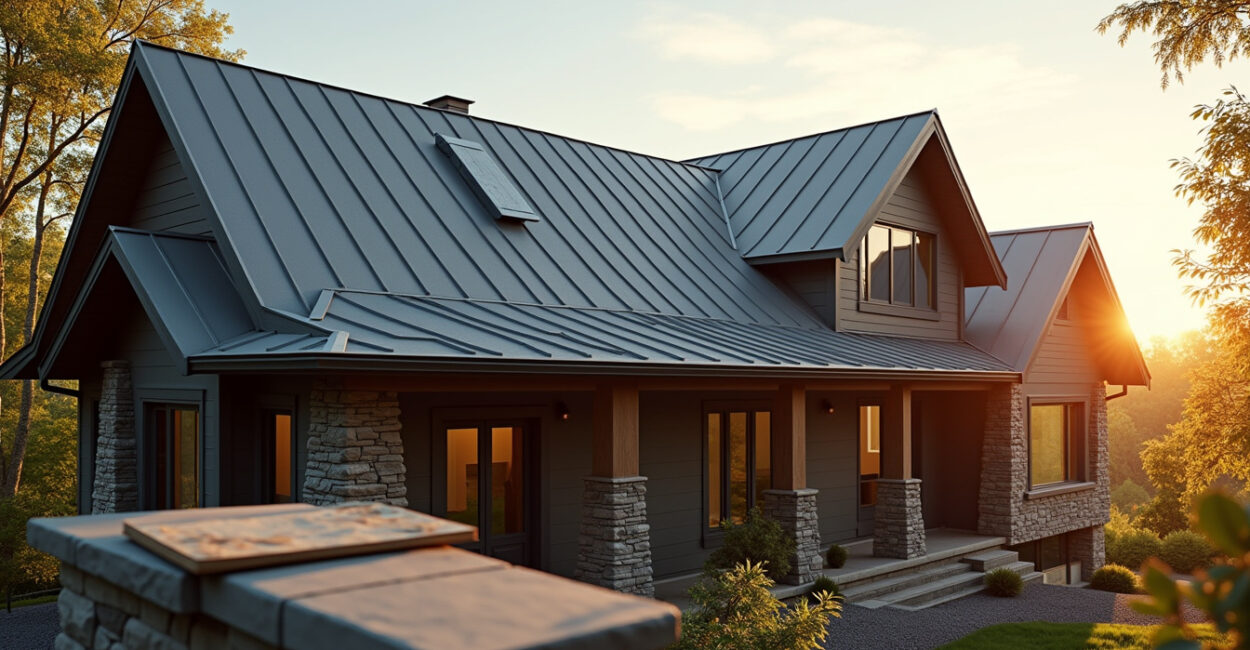
Metal roofing earns its reputation the hard way: in wind, hail, heat, snow, and years of UV exposure. For homeowners comparing metal roofing choices for low upkeep, the real question is not whether metal lasts, but which profile, coating, and fastening system will keep maintenance low without creating problems later. The best option depends on roof slope, climate, architectural style, and how much future service access you want.
This article breaks down the metal roof styles that make the most sense when low maintenance is the goal. You’ll see where standing seam shines, when corrugated panels are the smarter tradeoff, why galvalume and factory-applied finishes matter, and where even a durable roof can become annoying if the detailing is wrong. The goal is a roof you can mostly ignore for decades, not one that just looks tough on day one.
In a Nutshell
- Standing seam metal roofing is usually the lowest-maintenance choice because concealed fasteners reduce leak points and make long-term service easier.
- Factory-finished steel, especially Galvalume with a quality paint system, tends to outlast bare or field-painted metal in real residential conditions.
- Low upkeep is driven as much by installation details as by material choice; flashing, underlayment, and fasteners often determine whether the roof ages cleanly.
- Metal roofing is not maintenance-free. It still needs periodic inspections, debris removal, and attention to sealants, penetrations, and roof accessories.
- The right profile depends on the house: steep rooflines, coastal exposure, snow loads, and historic styles all point to different best-fit systems.
Metal Roofing Choices for Low Upkeep: What Actually Stays Simple over Time
The lowest-maintenance metal roof is usually a standing seam steel roof with concealed fasteners and a factory-applied finish. That combination reduces exposed screw failure, limits water intrusion points, and holds up well in the long run. In plain English: fewer holes, fewer rust risks, fewer callbacks, fewer headaches.
That said, “low upkeep” does not mean the same thing as “never touch it again.” A roof can stay durable for 40 to 70 years and still need occasional inspections after major storms, especially at flashings, valleys, vents, and ridge details. Who works on roofs for a living knows the material matters, but the detailing matters more.
What separates a low-maintenance metal roof from a problem roof is not the panel shape alone — it is the combination of concealed fastening, corrosion-resistant coating, and clean flashing details.
One useful way to think about the decision is to separate the roof into three layers: the structural panel, the finish system, and the installation method. A strong panel with weak fasteners can fail early. A premium coating with sloppy trimming can still leak. The whole system has to work together.
Standing Seam Vs. Exposed-Fastener Panels
Standing seam is the best-known low-maintenance metal roof because the fasteners are hidden under the seams. Exposed-fastener panels cost less upfront, but every screw is a long-term inspection point. If your priority is fewer leaks and less seasonal fuss, standing seam usually wins.
Why Standing Seam Ages Better
Concealed clips allow the panels to expand and contract without stressing the fastener holes as much. That matters because temperature movement is one of the main causes of seal failure on metal roofs. In practice, a roof that moves cleanly tends to stay quieter, tighter, and easier to maintain.
For homes in hail-prone or high-wind areas, standing seam also has a better track record when installed to code. The FEMA building guidance repeatedly emphasizes proper roof attachment and detailing in storm-prone regions, which is exactly where concealed-fastener systems have an advantage.
Where Exposed-Fastener Panels Still Make Sense
Exposed-fastener panels can be a rational choice for barns, garages, cabins, and budget-conscious additions. They are faster to install and cheaper to buy. The tradeoff is that screws with washers age, dry out, and eventually need attention, especially on sun-baked roof planes. If you want the lowest total hassle, this is not the first place I’d spend less.
For older homes, the decision often overlaps with envelope work. If the roof and wall systems are both aging, it may be worth reading related guidance like what actually works for older houses before setting a full exterior budget.

Steel, Aluminum, Copper, and Zinc: Which Metal is Easiest to Live With?
Steel is the practical default for most homeowners because it balances cost, strength, and coating options. Aluminum is the best fit near saltwater. Copper and zinc are premium materials with very long lifespans, but they are usually chosen for aesthetics, not because they are the cheapest or simplest path to low upkeep.
| Material | Low-Upkeep Strength | Main Tradeoff | Best Use Case |
|---|---|---|---|
| Steel | Strong, widely available, excellent coating options | Needs corrosion protection | Most residential roofs |
| Aluminum | Resists salt corrosion very well | Softer than steel | Coastal homes |
| Copper | Extremely long service life | Very high cost | High-end architectural homes |
| Zinc | Self-healing patina reduces surface issues | Price and specialized installation | Custom design homes |
Why Galvalume Shows Up So Often
Galvalume is a steel substrate coated with aluminum-zinc alloy. It resists corrosion better than plain galvanized steel in many residential conditions, which is why it shows up so often in premium panel systems. The finish system above it still matters, but Galvalume gives the roof a stronger starting point.
The National Park Service’s technical notes on historic building materials also explain why metals age differently depending on environment and detailing; that is useful context when you are balancing durability against appearance on a home with character. See the National Park Service preservation guidance for a broader view of material behavior over time.
Aluminum is the low-maintenance winner near salt air, but steel is still the better all-around value for most inland homes.
Coatings, Paint Systems, and Color Choices That Reduce Future Work
The coating is not cosmetic. It is the roof’s first defense against corrosion, chalking, and surface wear. Factory-applied coatings such as Kynar 500 / PVDF and high-quality SMP systems usually outperform field-applied paint because they cure under controlled conditions and bond more consistently.
PVDF Vs. SMP
PVDF coatings generally offer better color retention and chalk resistance, especially in hot sun. SMP coatings are often tougher against scratches and can be a good middle-ground option. If the roof faces intense UV exposure, PVDF is usually worth the upgrade. If the budget is tighter and the roof geometry is simple, a strong SMP system can still be a smart compromise.
Color is a Maintenance Decision Too
Dark colors absorb more heat, which can increase panel movement and make fastener and sealant issues show up sooner on some systems. Very light colors can reveal dirt and runoff staining more easily. Mid-tone colors often hide everyday wear best, especially on roofs surrounded by trees or exposed to airborne dust.
That’s one reason low-maintenance design is connected to the whole house exterior, not just the roof. If you are coordinating multiple upgrades, a similar “service-life first” mindset applies to frame problems before installing new windows and to exterior systems generally.
Roof Profiles That Match Different Homes Without Creating Extra Upkeep
The roof profile changes how water sheds, how debris collects, and how easy the roof is to inspect. A sleek profile that looks great on paper can become annoying if it traps leaves or complicates flashing around dormers and chimneys. The best profile is the one that fits the house’s shape and climate.
Standing Seam for Modern and Transitional Homes
Standing seam works especially well on contemporary homes, ranch houses, and updated colonials. Its clean lines and concealed fasteners make it easier to keep service points limited. On simpler rooflines, it can be one of the best long-term investments you make in the exterior envelope.
Corrugated and Ribbed Panels for Utility Buildings and Additions
Corrugated profiles and ribbed panels can work on cabins, workshops, porches, and secondary structures where cost matters more than architectural refinement. They shed water well and install quickly. But because the fasteners are exposed, they require more attention over time. If your goal is the least possible maintenance, they rank below standing seam.
Metal Shingles for Traditional Curb Appeal
Metal shingles are a strong option when you want a traditional look without giving up the long service life of metal. They fit Cape Cod, cottage, and some historic-style homes better than broad panels do. Their maintenance profile is good, but the system has more seams and more pieces, so installation quality matters even more.
A roof profile should follow the house, but the maintenance burden follows the details.
Installation Details That Decide Whether the Roof Stays Trouble-Free
Good metal roofing is won or lost at the details: underlayment, flashing, trim, penetrations, clips, and fasteners. If any of those are rushed, the roof can look excellent and still become high-maintenance. This is where low-upkeep promises often fall apart.
Who has spent time on repair calls knows the usual trouble spots. It is rarely the middle of the panel. It is the skylight curb, the chimney counterflashing, the valley, or a screw line on a hot roof plane that began backing out after a few seasons. That is why installation quality matters as much as product choice.
- Use high-quality underlayment: Synthetic underlayment usually performs better than old-school felt in wet and windy conditions.
- Protect every penetration: Vents, pipes, and chimneys need carefully detailed flashing, not quick sealant fixes.
- Choose the right fasteners: Corrosion-resistant fasteners and washers are non-negotiable in damp or coastal areas.
- Allow for thermal movement: Metal expands and contracts, so the attachment system has to accommodate that movement cleanly.
For homeowners comparing roof upgrades with other exterior improvements, the same logic appears in storm windows versus full replacement decisions: the cheapest-looking solution is not always the simplest to live with.
Maintenance You Still Need to Expect, Even with the Best System
No metal roof is maintenance-free. The good news is that the needed work is usually light and predictable: inspection after severe weather, debris removal from valleys, checking sealants around penetrations, and keeping gutters clear so water does not back up at the eaves. That is a much easier maintenance profile than repeated shingle replacement.
According to general roof-care guidance from the U.S. Department of Energy, envelope performance improves when the roof stays dry and ventilated, which is another reason attic ventilation and drainage details matter. Metal roofs handle weather well, but trapped moisture can still create problems around assemblies, especially if insulation or ventilation is weak.
A Real-World Example
A homeowner with a 1990s ranch roof chose standing seam steel instead of another asphalt reroof. The upfront bid was higher. Five years later, the difference showed up in what did not happen: no granule loss in gutters, no brittle tabs after a hail season, and no recurring fastener leak at the porch roof. The only maintenance was a spring inspection and leaf clearing after fall storms. That is the kind of boring result people pay for.
What to Choose If Your Priority is the Least Hassle
If you want the simplest long-term ownership experience, start with standing seam steel, a factory-applied PVDF or strong SMP finish, and a contractor who can show clean flashing work on similar homes. That combination is the closest thing to a low-maintenance standard in residential metal roofing. For coastal homes, move aluminum higher on the list. For design-driven homes, copper or zinc can be worth the premium if you accept the cost.
For a practical next step, compare your roof’s slope, climate exposure, and number of penetrations before you compare prices. Then get two bids that specify the panel profile, coating, fastener type, underlayment, and flashing scope in writing. That is the fastest way to separate a durable roof from a merely shiny one. If you are also upgrading other exterior systems, it helps to coordinate with related planning like single-pane window replacement costs and payback.
What is the Lowest-maintenance Metal Roofing Option for Most Homes?
For most homes, standing seam steel with concealed fasteners and a factory-applied finish is the lowest-maintenance metal roofing option. It reduces exposed screw points, handles thermal movement better than many budget systems, and usually needs less ongoing attention than corrugated or exposed-fastener panels. The exact best choice still depends on climate, roof shape, and installation quality, but standing seam is the safest default for long service life with minimal hassle.
Is Aluminum Better Than Steel for Low Upkeep?
Aluminum is better than steel in coastal environments because it resists salt corrosion more effectively. Inland, steel usually gives you better value and more design choices without sacrificing durability, especially when paired with Galvalume and a quality coating. So aluminum is the lower-upkeep specialist, while steel is the better all-around performer for most residential roofs. The wrong answer is choosing based only on material name instead of exposure conditions.
Do Exposed-fastener Metal Roofs Require More Maintenance?
Yes, exposed-fastener roofs usually require more maintenance because the screws, washers, and seal points age in the sun and weather. They can still perform well on simpler structures, garages, and budget-conscious projects, but they need periodic checks for loose fasteners and seal deterioration. If your main goal is to minimize future service calls, concealed-fastener systems are the better bet. Exposed-fastener panels save money upfront, not over the full life of the roof.
How Often Should a Metal Roof Be Inspected?
A metal roof should be inspected at least once a year and after major wind, hail, or heavy snow events. The inspection should focus on flashings, fasteners, sealant joints, valleys, and any penetrations such as vents or skylights. You do not need constant hands-on care, but ignoring the roof for a decade defeats the point of choosing metal in the first place. Routine checks are the reason low-maintenance roofs stay low-maintenance.
Which Coating Lasts the Longest on Residential Metal Roofing?
For residential use, PVDF coatings are widely regarded as the top choice for color retention and long-term appearance, especially in strong sun. SMP coatings can still be durable and cost-effective, but they are usually a step down in weathering performance. The coating must also match the substrate and the local environment; a premium finish on a poorly detailed roof will not save the system. Long life comes from the whole assembly, not the paint alone.