
Indoor Games to Keep Your Bored Dog Mentally Engaged
Indoor games to mentally engage your dog with scent challenges, food puzzles, trick practice, and interactive play tailored to your space and pet’s needs.
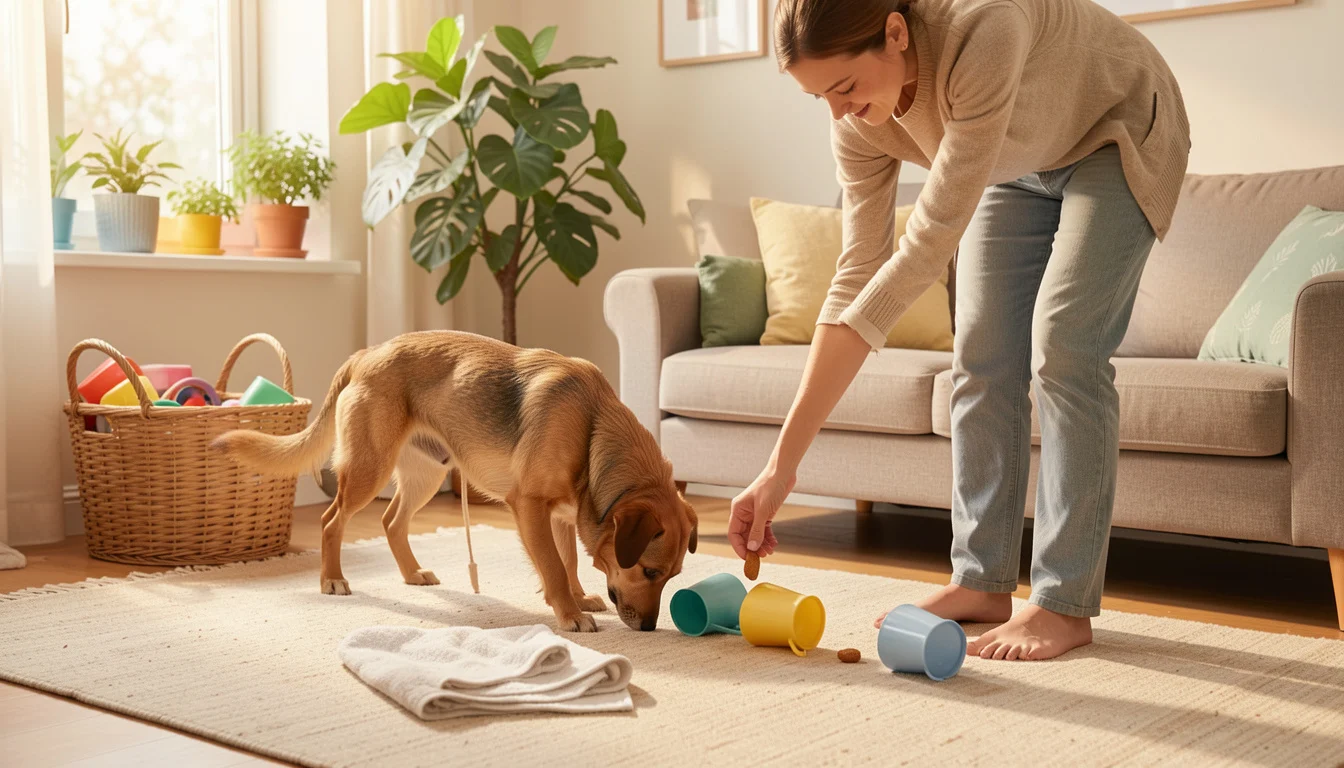 Dog searching for hidden indoor treats
Indoor Games to Keep a Bored Dog Mentally Engaged
Indoor games can give dogs a useful outlet when rain, heat, recovery, or a packed schedule limits outdoor time. These seven activities are ordered from easy, low-setup options to more involved play. Each can be adjusted for your dog’s food preferences, confidence, mobility, and available space.
Choose games that invite your dog to sniff, solve, move, or interact with you. They provide mental enrichment, which means opportunities to use natural behaviors and make choices. Enrichment complements appropriate exercise; it does not replace walks, movement, or advice tailored to your dog’s health.
1. Find It: A Simple Scent Game
To keep a dog entertained indoors, start with short scent games, then add safe food puzzles, trick practice, hide-and-seek, or gentle toy play. Use a familiar room, supervise closely, and begin with easy wins. A few minutes can be enough for some dogs, while others will want a longer session or a different activity.
“Find it” is a beginner-friendly way to turn a dog’s sense of smell into a game. Ask your dog to wait, show a treat, and place it somewhere easy to spot on the floor. Say “find it,” then let the dog search. As your dog catches on, hide the treat behind a chair leg or beside a toy.
Use pieces of your dog’s regular food if you want to avoid adding extra treats. Keep the first hiding places visible; a treat lodged under furniture can turn a quick game into a frustrating rescue mission. This option suits many dogs, but skip food-based play if your dog has dietary restrictions unless your veterinarian approves the treat.
2. Make a Short Treat Trail
A scent trail adds a little searching to “find it.” Place several small pieces of approved food in a short, easy-to-follow path across a clear area. End the trail with a slightly larger reward, or give praise when your dog reaches the last piece.
Start with pieces close together so your dog can follow the path. Later, widen the gaps or turn the trail around a table, keeping it on a nonslip surface. A common snag: dogs may lose the trail when pieces are too far apart, then start scanning the room instead. Shorten the gaps rather than repeatedly pointing at the food.
This is a good rainy day activity for dogs who enjoy sniffing but don’t yet know how to work a puzzle. For dogs that guard food, play separately from other pets and people. The American Kennel Club’s indoor-game suggestions also include scent-based ways to make home play engaging.
3. Search Under Cups
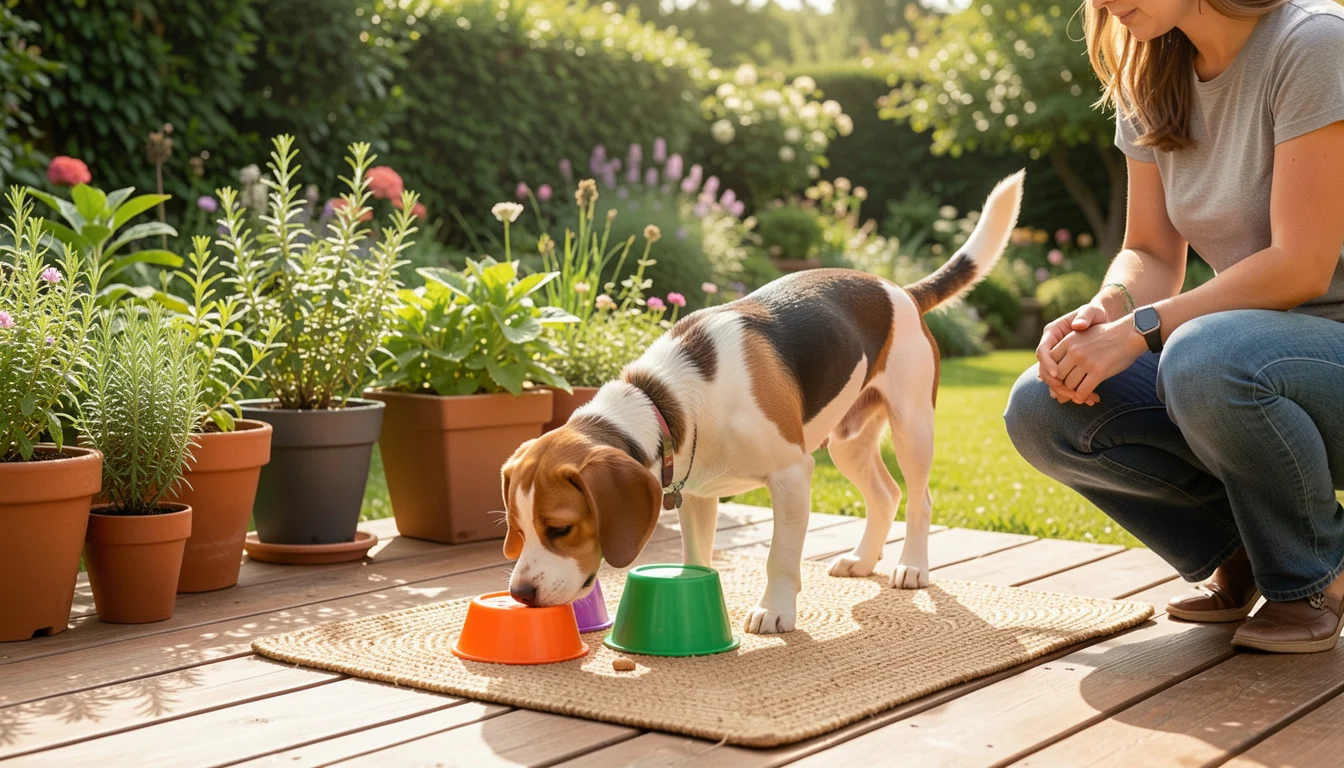
The cup game gives a dog a simple choice: locate the cup hiding a treat. Set two or three sturdy, lightweight cups upside down on the floor. Let your dog watch you place a treat under one cup, then invite them to investigate.
Use cups that cannot splinter or break, and stop your dog from chewing or swallowing them. If your dog knocks every cup over, that’s fine at first; the goal is to explore, not perform a perfect indication. You can make the search harder by adding another cup or briefly moving the cups after your dog understands the rules.
Choose wide, stable cups for large dogs and keep the setup on a rug or other nonslip surface. This game may not suit a dog that mouths objects with force. In that case, place treats in an open box instead, or return to a floor-level search.
4. Explore a Box Puzzle
A cardboard box can become one of the easiest homemade brain games for dogs. Put a few treats in a clean, empty box and let your dog sniff and reach inside. Once your dog is comfortable, add loosely crumpled paper or a second open box to create a gentle search.
Watch throughout the game. Remove staples, tape, plastic, and packing materials, and stop play if your dog tears off and eats cardboard. Avoid boxes with coatings or strong smells. Dogs who are new to puzzles should get an open box with the food clearly accessible; a dog who tends to swallow nonfood items needs a different activity.
Game Setup Difficulty Suitable for Find it Treats on the floor Easy Most dogs able to sniff and move comfortably Treat trail Food pieces in a short path Easy to moderate Dogs who like following scents Cup search Treat under a sturdy cup Easy to moderate Dogs who explore gently Box puzzle Treats in a clean box Adjustable Supervised dogs who won’t eat the materials Towel search Food folded into a towel Adjustable Dogs who enjoy sniffing and nosing fabric
5. Fold a Towel for a Search
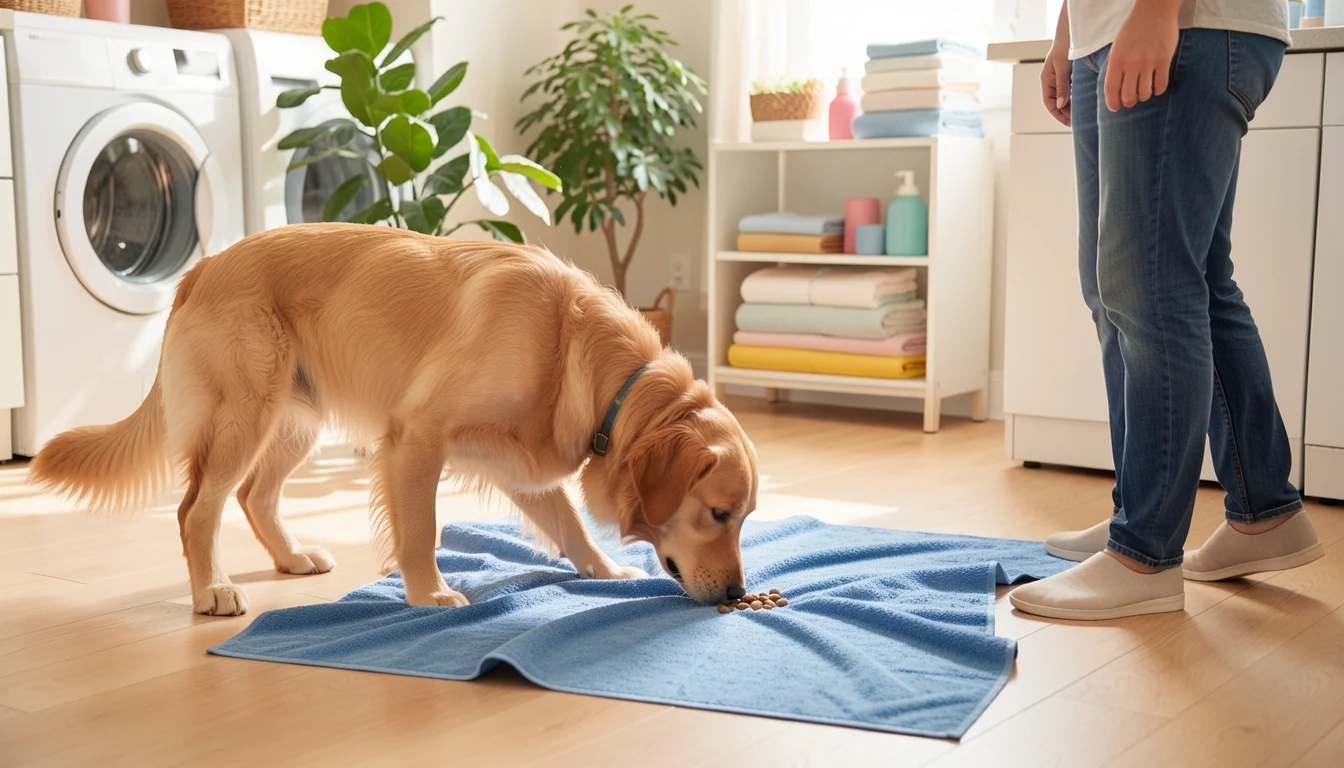
Spread a towel on the floor, scatter a few pieces of kibble across it, then fold or roll the fabric loosely. Your dog can nose through the folds to find the food. Start with shallow folds so the reward is easy to reach, and make the arrangement more involved only if your dog stays relaxed.
Use a towel without loose threads, and supervise from start to finish. Some dogs chew fabric or pull it apart; this game is a poor choice for them. For a calmer alternative, leave the towel flat and scatter food on top. If your dog has trouble lowering their head or reaching the floor, choose a setup that fits their comfort and ask your veterinarian about mobility concerns.
6. Practice Tricks in Short Sessions
Training can be an indoor game when it stays brief and rewarding. Pick one familiar behavior, such as touching a hand with the nose, spinning in one direction, or going to a mat. Work for a few minutes, reward small successes, and stop before your dog loses interest.
Keep the surface stable and avoid jumps, sharp turns, or repeated sit-to-stand movements if your dog is a puppy, older, recovering, or has joint or balance concerns. For humane training ideas, see these positive pet training methods for strong behavior results. The American Veterinary Society of Animal Behavior’s position statements support reward-based training approaches.
7. Play Hide-And-Seek or Gentle Tug
For hide-and-seek, ask your dog to wait while you hide behind a doorway or another easy-to-find spot. Call once, then celebrate when your dog finds you. Keep hiding places accessible; a dog that can’t see or hear well may need you to stay closer and make a sound.
Gentle tug offers more movement, but keep it controlled. Use a suitable toy, let your dog take breaks, and move the toy side to side rather than jerking upward or twisting the dog’s neck. If your dog becomes overexcited, trade for a treat or ask for an easy cue, then end the game calmly. Dogs that guard toys may do better with scent searches or training instead.
Start with Safety, Space, and Your Dog’s Needs
Indoor play should happen under supervision. Clear cords, breakable objects, and small items from the area; secure slippery rugs and keep games away from stairs. Check food ingredients against your dog’s sensitivities, and count treats as part of their daily food intake.
Match the activity to your dog. Puppies may need short, simple turns; older dogs or dogs with mobility limits may prefer a floor-level search over fast movement. A game that suits one dog can frustrate another, and pain, anxiety, or food guarding can change what is safe. The RSPCA’s guidance on dog enrichment discusses providing suitable opportunities for dogs to express natural behaviors.
Rainy-Day Activities and a Simple Indoor Routine
For a rainy day, try a short treat trail, a few minutes of trick practice, then a rest. Later, offer a box or towel search if your dog is still interested. Add gentle tug or hide-and-seek only if your dog can play safely in the space you have.
Watch how your dog responds rather than following a fixed schedule. Some dogs settle after a few minutes of searching; others need a walk or another form of appropriate exercise when conditions allow. Provide water and a quiet break between activities. If indoor play is part of a broader plan for alone time, gradual solo training for dogs can offer related guidance on building comfort with separation.
Choosing Games and Knowing When to Stop
Choose a game based on what your dog enjoys, what the room allows, and what your dog can do comfortably. Scent searches are a strong option for many dogs because they encourage natural sniffing and can be adapted from very easy to more challenging. There is no single “most mentally stimulating” game for every dog; preference, health, and experience matter.
Make one change at a time, such as adding a hiding place or widening the gap between treats. Stop if your dog repeatedly walks away, paws frantically, pants heavily, or becomes unable to settle. Those signs can have different causes, so don’t assume every case is boredom. Games for dogs on iPad, games for dogs online, and video games for dogs are not necessary for home enrichment; supervised activities using real movement, scent, and interaction offer practical choices.
The “7-7-7 rule” is not a universally established dog-care standard or veterinary guideline. People sometimes use the phrase to describe adjustment periods for a newly adopted dog, but timelines vary by dog and home, so it should not dictate training or play. At-home games also serve a different purpose from searching for an indoor dog park or dog activities near you, which may be relevant when your dog needs a change of setting.
📱 See this content as a Web Story
Frequently Asked Questions
How Long Should Indoor Games Last?
There is no ideal duration for every dog. Start with a few minutes, then adjust based on interest, age, health, and how easily your dog settles afterward.
What is the Most Mentally Stimulating Game for Dogs?
Scent-based searches are a strong choice for many dogs because they let them use their noses and can be made easier or harder. Individual dogs vary, so watch which activities keep your dog engaged without causing frustration.
Can Indoor Games Replace a Walk?
No. Games add enrichment and movement, but they do not automatically meet every dog’s exercise needs. Those needs depend on health, age, breed traits, and veterinary guidance.
What Should I Do If My Dog Gets Frustrated?
Make the task easier or switch activities. For example, uncover part of a hidden treat or use a flat towel instead of a rolled one. End the session if your dog remains distressed.