
Senior Cat Skincare: Grooming Tips for Short Coats
Why older short-coated cats develop dry, fragile skin: how grooming challenges, arthritis, and health issues affect coat condition and when to seek veterinar…
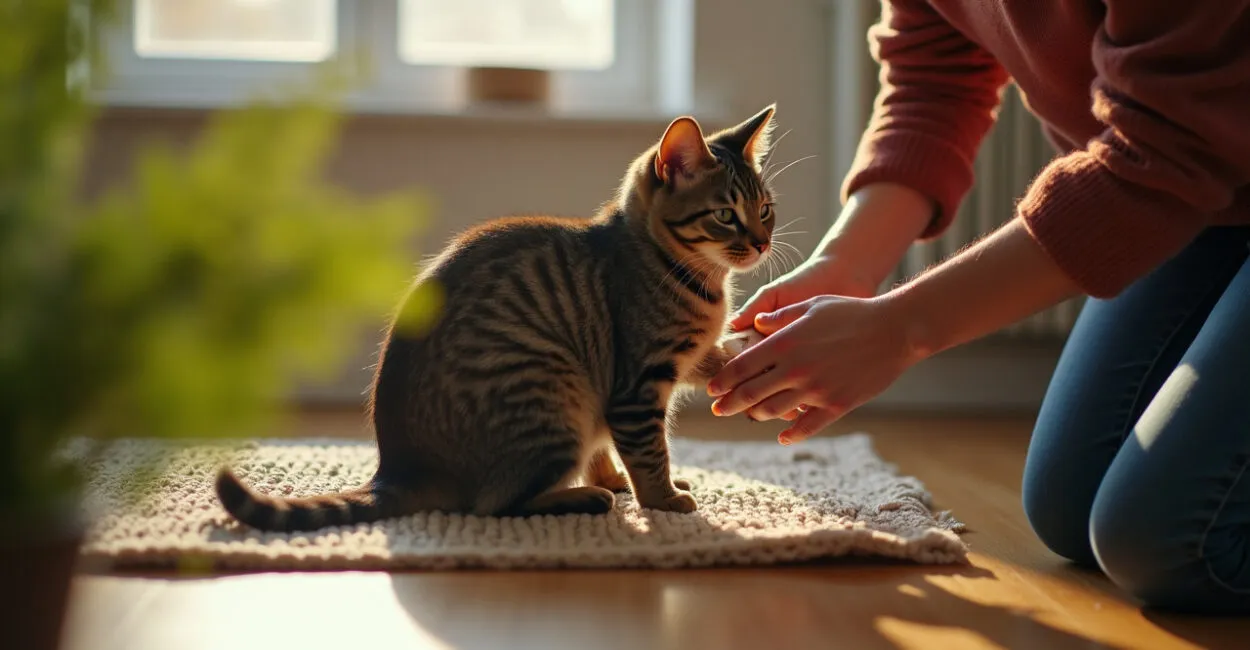 Owner gently checks senior cat’s flaky skin
📅 Updated on 10/21/2026
Dry flakes, a dull coat, new bald spots, or skin that heals slowly deserve attention in an older cat. These changes can come from grooming difficulty, parasites, allergies, infection, or an underlying health problem, so check the skin gently and contact your veterinarian about persistent or worsening signs. Caring for senior cat skin starts with noticing what has changed and avoiding products that could irritate or harm your cat.
Why Older Short-Coated Cats Get Dry, Fragile Skin
Age can make grooming harder and skin changes more noticeable, but age alone does not explain every problem. Arthritis, reduced flexibility, dental pain, and changes in energy can keep an older cat from grooming as thoroughly as before. Short fur may make flakes, thinning hair, and small wounds easier to see, but these signs can also reflect parasites, allergies, infection, or illness.
Check the coat in good light, parting the fur gently rather than pulling at it. Notice whether a change is in one spot or widespread, whether the skin looks red or crusted, and whether your cat is licking or scratching more. Keep a brief record of when you first noticed it and whether it is spreading. Photos taken in similar lighting can help your veterinarian compare changes over time.
Weight loss, a change in appetite or thirst, vomiting, or unusual tiredness alongside a coat change calls for a veterinary assessment. Thyroid disease and other conditions can affect a cat’s overall health and appearance. Your veterinarian can decide whether an examination or diagnostic tests are appropriate.
How to Spot Dermatitis Vs. Normal Age-Related Changes
Persistent itching, redness, sores, or discharge should not be dismissed as normal aging. Dryness may show up as mild, scattered flakes, while dermatitis and other skin problems can cause redness, scabs, hair loss, odor, or repeated licking. Appearance alone cannot reliably identify the cause, so a veterinary exam is the safest way to assess a concerning or recurring patch.
- Mild flakes: Check whether they are widespread or limited to an area your cat may have trouble grooming. Arrange a veterinary check if they persist or come with other changes.
- Red, crusted, or moist skin: Contact your veterinarian, especially if the area is growing, painful, or has an odor.
- Sudden hair loss, bleeding, or open sores: Seek prompt veterinary advice rather than waiting to see whether the area settles.
- Scratching or licking that disrupts sleep or daily activity: Ask about an exam. Fleas, mites, allergies, infection, and other causes can look similar.
If you notice a new mild change and your cat otherwise seems well, take a photo and call your veterinarian for advice about timing. Avoid relying on a fixed 48–72-hour waiting period: how quickly a problem needs attention depends on its appearance, your cat’s comfort, and other symptoms. Do not pick at crusts or apply a home remedy while you wait.
The Moisturizers and Topical Options That Actually Help
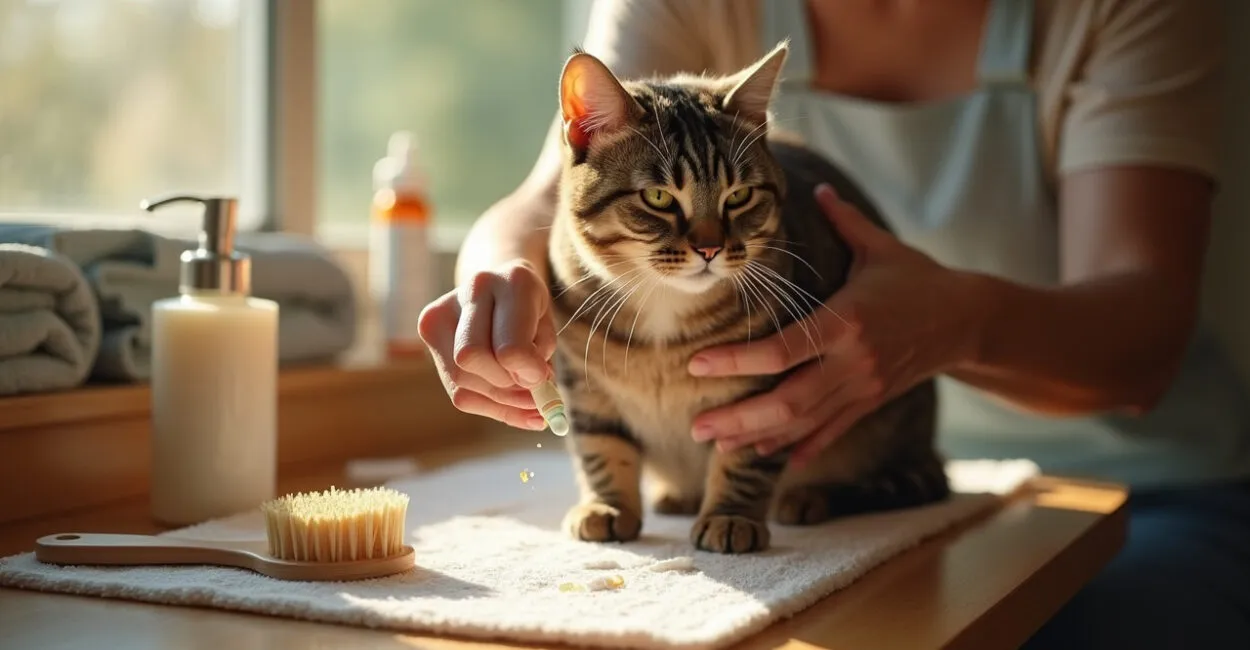
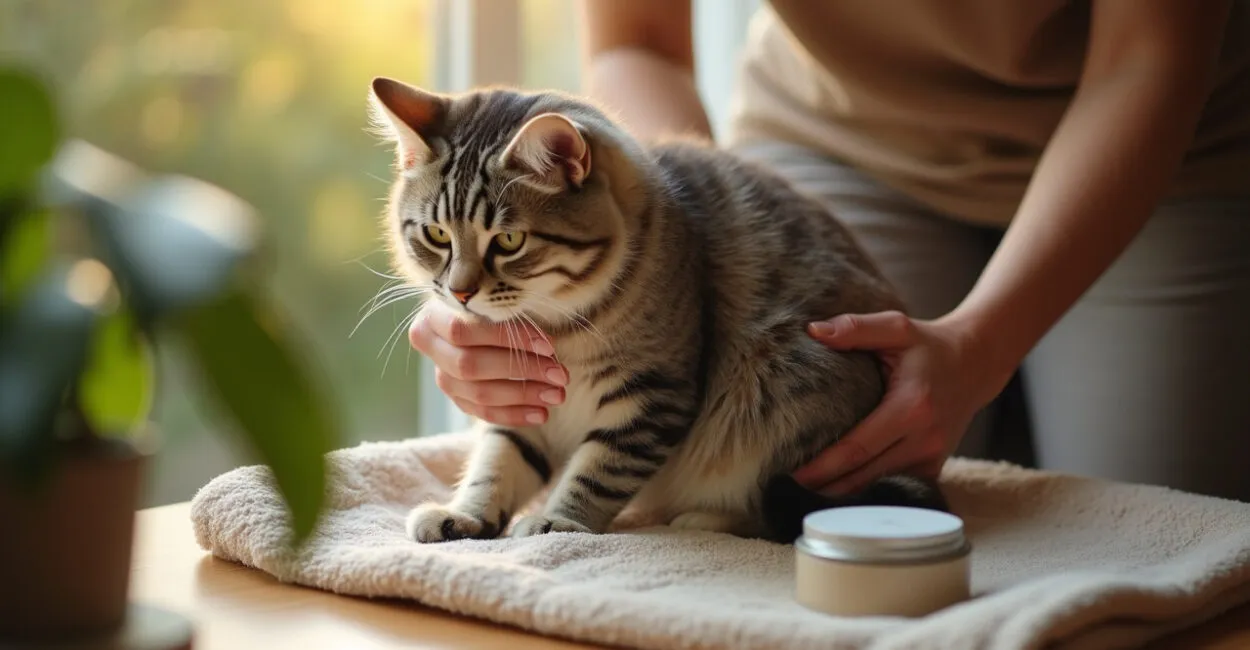
Use a skin product only when it is labeled for cats or recommended by your veterinarian. Human lotions and medicated creams may contain ingredients that irritate skin or are unsafe if licked. Essential oils, including tea tree oil, are not appropriate home treatments for cats. A product marketed as “natural” is not automatically safe.
Your veterinarian may recommend a veterinary moisturizer or a medicated topical treatment after identifying the cause. Follow the label or the veterinarian’s directions for where and how often to apply it. Prevent licking if instructed, and stop using the product and call the clinic if redness, swelling, or discomfort worsens. Do not put creams on open, wet, or infected-looking skin unless your veterinarian tells you to.
For a small patch, keep the area clean and dry while arranging advice. Avoid shaving or trimming close to the skin at home; older cats can have thin, delicate skin that is easy to nick.
Read also: Self-Watering Systems: Best Options for Busy Plant Owners
Supplements and Diet Tweaks That Repair Skin from the Inside
A complete, balanced diet supports skin and coat health, while supplements should be chosen with veterinary guidance. Omega-3 fatty acids may be recommended for some cats, but the right product and amount depend on the individual cat’s diet and health. A supplement will not treat every cause of itching or hair loss.
Before changing food or adding a supplement, tell your veterinarian about your cat’s current diet, medications, appetite, and any known kidney, liver, or other health conditions. Avoid giving extra vitamins or minerals without professional advice; excessive amounts can cause harm. If your cat is losing weight or eating less, arrange an exam instead of trying to address the problem with a skin supplement.
Read also: Best Grooming Routine for Short-haired Senior Cats
The American Association of Feline Practitioners and the American Animal Hospital Association’s senior-care guidance emphasizes that health changes in older cats warrant individualized veterinary attention. Your veterinarian can help determine whether nutrition, an underlying condition, or a skin-specific treatment needs to be addressed first.
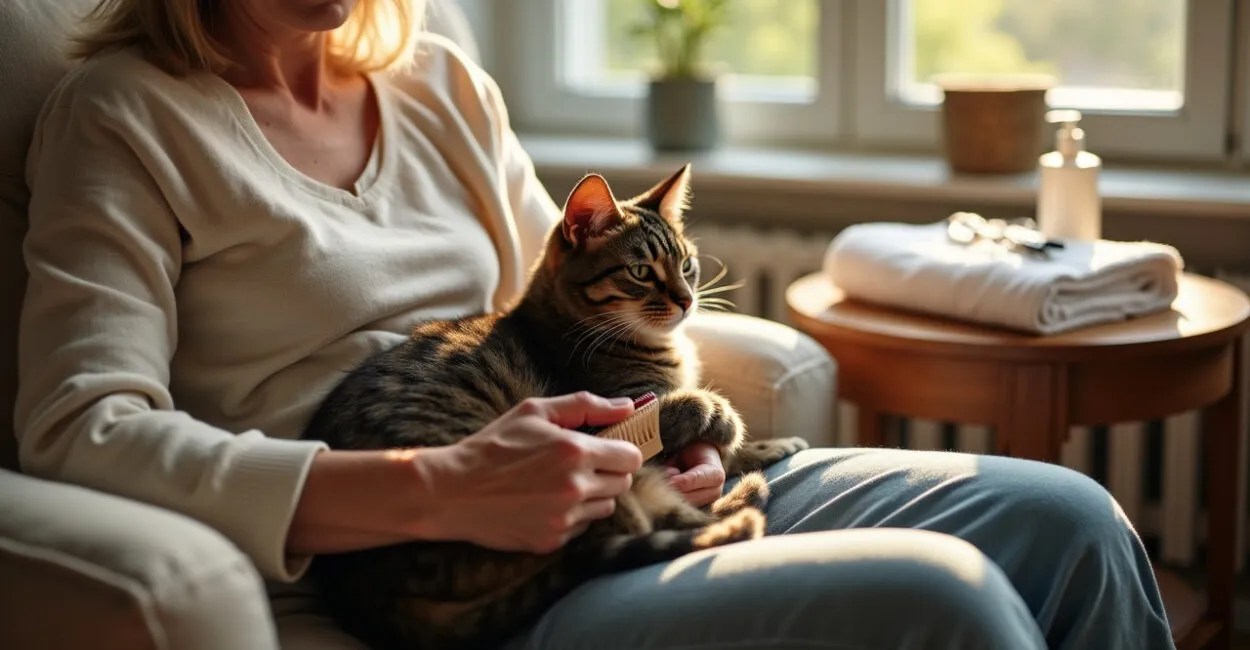
Grooming Steps That Protect Fragile Senior Skin
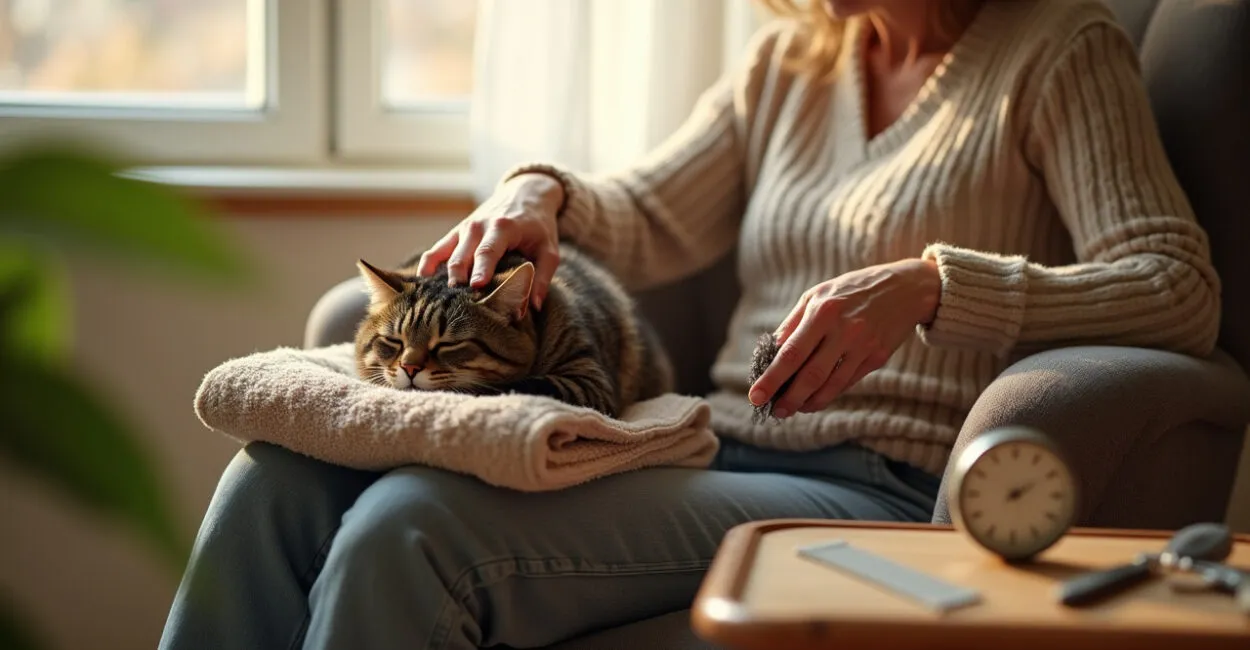
Short, gentle grooming sessions help you check the skin and remove loose fur without tiring your cat. Choose a soft brush or rubber grooming mitt, and begin in an area your cat enjoys being touched. Use light strokes, stop if your cat flinches or tries to leave, and check the brush for trapped fur, scabs, or blood afterward.
- Set up calmly. Choose a quiet, warm spot with a nonslip surface. Keep the session brief and have treats nearby if your cat accepts them.
- Brush with the coat. Use gentle strokes over the back and sides. Avoid pressing hard on bony areas, sore joints, or a sensitive patch.
- Check hard-to-reach areas. Look around the tail base, hips, belly, and behind the ears. Do not force your cat to roll over or stay in an uncomfortable position.
- Handle tangles carefully. Do not pull, cut close to the skin with scissors, or try to comb out a tight mat. The skin can be caught inside the mat, especially when it is difficult to see.
- Finish and note changes. Give your cat a chance to leave, then record any new flakes, bumps, or sore spots so you can describe them to your veterinarian.
Most short-coated cats do not need routine baths. If bathing is necessary, ask your veterinarian which cat-specific shampoo to use and how to dry your cat safely. Keep the experience brief, rinse thoroughly, and avoid directing water into the ears or face. Trim nails only if you can do so safely; ask a groomer or veterinary team for help if your cat resists or has painful paws.
What to Avoid: Common Mistakes That Make Skin Worse
Home treatments can worsen irritation or delay diagnosis, even when they seem gentle. Avoid human creams, essential oils, frequent baths, and unapproved flea or skin products. Never use a dog flea treatment on a cat unless the label specifically says it is safe for cats; some dog products can be dangerous to them.
- Do not scrub flakes or peel away scabs.
- Do not apply several new products at once. That makes it harder to identify a reaction.
- Do not give supplements or change to a restrictive diet without talking with your veterinarian.
- Do not assume a recurring patch is harmless because it improved briefly.
- Do not wait for a set number of days if your cat is in pain, bleeding, or becoming unwell.
A vet can assess possible causes such as parasites, allergies, infection, or other disease and recommend treatment that fits your cat. Seek prompt advice for a growing or painful lesion, discharge, a strong odor, or sudden hair loss. If your cat is lethargic, eating less, or losing weight as well, mention those signs when you call.
A Surprising Before/after: How Small Changes Speed Healing
A useful before-and-after is a documented change in the cat’s comfort and skin, not a promise that one routine will work for every cat. For example, an owner might photograph a flaky patch, note how often the cat scratches, and bring that information to a veterinary appointment. If the veterinarian recommends a treatment plan, the owner can keep the grooming routine gentle and record whether the patch changes.
Compare photos taken from the same distance and in similar light. Note new redness, scabs, spreading hair loss, or reduced scratching, and share the record at follow-up. A coat that looks better does not necessarily mean the underlying cause has resolved, so follow the veterinarian’s advice about rechecks and treatment duration.
For general guidance on older cats, consult the American Association of Feline Practitioners and the American Animal Hospital Association’s senior-care resources. Cornell Feline Health Center and the American Veterinary Medical Association are also recognized sources of feline and pet-health information; use their topic-specific resources or ask your veterinarian for relevant reading.
Senior Cat Skin: Quick Comparison of Common Changes
The pattern and accompanying signs can help you decide what to tell your veterinarian, but they cannot confirm a diagnosis. Use this table as a note-taking aid, not a substitute for an examination.
What you notice What to record Next step Scattered flakes or a dull coat Where the flakes appear and whether grooming has changed Review grooming gently; ask your veterinarian if it persists or spreads Itching, licking, or small scabs How often it happens and whether the skin is red or losing hair Contact your veterinarian for guidance and an exam if needed Wet, bleeding, painful, or foul-smelling skin When it began and whether your cat seems unwell Seek prompt veterinary advice Coat change with weight or appetite changes Changes in eating, drinking, activity, and body weight Arrange a veterinary assessment
📱 See this content as a Web Story
Frequently Asked Questions
How Soon Should I See a Vet for Flaky Patches?
Call your veterinarian if flakes persist, spread, or come with itching, hair loss, redness, or scabs. Seek prompt advice for bleeding, discharge, swelling, pain, a strong odor, or a cat who seems unwell. A photo and notes about when the patch appeared can help the clinic advise you on timing.
Which Moisturizers Are Safe for Senior Cats?
Use only a product labeled for cats or one your veterinarian recommends. Avoid human lotions and products containing essential oils, fragrances, or medicinal ingredients unless your veterinarian has approved them. Follow the directions and contact the clinic if your cat licks the product or develops more irritation.
Can Supplements Really Improve My Cat’s Skin?
Some supplements may be appropriate for certain cats, but they do not treat every cause of skin trouble. Ask your veterinarian before giving omega-3s, vitamins, or minerals, particularly if your cat has a chronic condition or takes medication. Keep track of appetite, weight, and any digestive changes after an approved diet adjustment.
What Grooming Frequency is Ideal for Short-Coated Senior Cats?
There is no single schedule that suits every cat. Start with short, gentle sessions a few times a week if your cat is comfortable, then adjust based on coat condition and tolerance. Stop if grooming causes distress or pain, and ask your veterinarian whether a mobility or health issue could be making self-grooming difficult.
How Can I Tell If a Skin Lesion is Infected?
Redness, warmth, swelling, discharge, a bad odor, or pain can indicate a problem that needs veterinary assessment. Persistent licking, hiding, reduced appetite, or low energy are also worth mentioning. Do not apply an antibiotic cream or other medication unless your veterinarian directs you to use it.
How Can I Care for My Aging Cat?
Keep daily routines predictable, provide easy access to food, water, litter, and warm resting places, and monitor changes in appetite, drinking, mobility, grooming, and behavior. Arrange regular veterinary care and bring up new or persistent changes rather than assuming they are part of aging. Gentle grooming also gives you a chance to notice skin changes early.
What Are Some Common Skin Problems That Cats Have?
Cats can develop parasites, allergies, infections, irritation, wounds, and other skin conditions. Flaking, scabs, itching, hair loss, redness, and bumps can have several different causes, so appearance alone is not enough to identify the problem. A veterinarian can examine the skin and recommend testing or treatment when appropriate.
How to Demat an Old Cat?
Do not tug at a tight mat or cut it out with scissors; delicate skin can hide inside the tangle. If the mat is small and loose, you can try gently separating the fur with your fingers, stopping if your cat shows discomfort. For a tight, large, or painful mat, ask a veterinary professional or experienced groomer for help.
Do Senior Cats Get Skinny?
Some older cats lose muscle or body weight, but unexplained weight loss should be discussed with a veterinarian. Note changes in appetite, thirst, vomiting, activity, and coat condition, and arrange an exam. Do not assume weight loss is a normal part of aging or try to correct it with supplements without guidance.
Check your cat’s coat and skin gently, and take note of changes in comfort, grooming, appetite, or weight. Contact your veterinarian when a skin problem persists, worsens, or appears alongside other health changes.