
Under-Staircase Storage Ideas for Small Family Homes
Maximize your home's potential with understair storage solutions that hide clutter and improve flow. Discover affordable ideas to organize today!
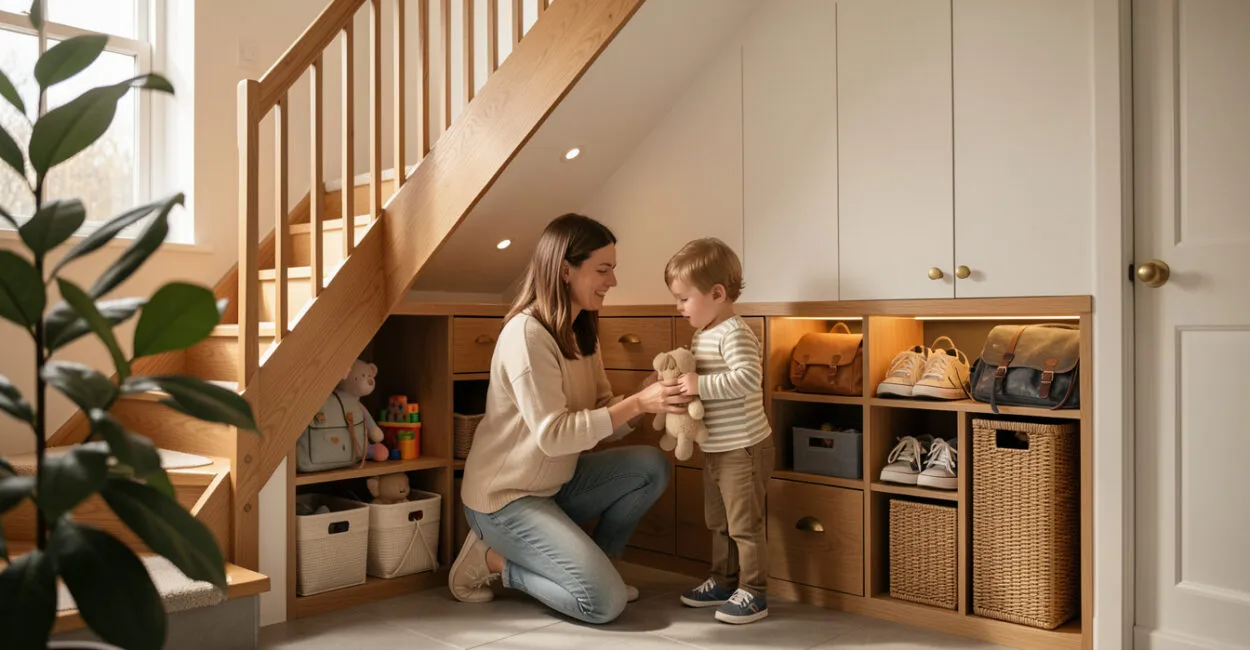 Built-in cabinets and cubbies beneath an oak staircase
Understair storage turns wasted space beneath stairs into practical, hidden family storage that keeps clutter out of sight and improves daily flow. It’s an affordable way to add drawers, cubbies, laundry bins, or toy stations that fit common stair profiles.
Many small family homes struggle with coat piles, toys, and laundry bins crowding living areas. Understair storage solves that by creating custom pull-outs, child-access cubbies, or built-in hampers tailored to your stair geometry and household needs.
This article covers real understair storage ideas, layout tips, materials, cost considerations, and installation approaches so you can choose solutions that match your staircase, budget, and family routines.
Understair Storage Basics and Benefits
What Understair Storage is and Why It Matters
Understair storage refers to built-in or fitted storage placed beneath a staircase, from simple shelving to complex pull-out systems. It matters because it reclaims dead space, improves organization, and increases usable square footage without structural changes. Families gain defined zones for shoes, coats, laundry, and toys, reducing visual clutter and cleaning time.
Designing understair storage starts with measuring headroom, riser height, and tread depth to plan drawers or cubbies that operate smoothly within the stair profile. Considering access patterns—front, side, or pull-out—ensures everyday functionality.
Common benefits include hidden storage, safer traffic flow, and a chance to add functional features like built-in lighting, locks, or kid-height stations that foster independence and routine.
Space-saving Understair Storage Solutions
Efficient Drawers and Pull-out Units
Pull-out drawers are an excellent understair storage choice because they use the full depth under each step and keep the front face clean. Install soft-close slides sized to fit the varying heights between risers for a smooth operation that resists jamming. Consider full-extension runners for easy access to items at the back.
Material choices—plywood carcasses with hardwood faces or MDF painted panels—affect durability and finish. For wet areas or mudrooms, opt for moisture-resistant plywood and stainless hardware to withstand daily wear.
Add organizers inside drawers for shoes, tools, or seasonal items; labeled compartments simplify family routines and maintain order under the stairs.
Open Shelving and Visible Cubbies
Open cubbies and shelving beneath stairs provide quick access for frequently used items like backpacks, shoes, and display pieces. Position adjustable shelves where headroom allows and integrate baskets to hide smaller clutter. Use durable finishes on horizontal surfaces to resist scuffs and dirt.
For a cohesive look, match shelf face trim to stair rail or nearby cabinetry. Consider child-height cubbies with labeled bins for school supplies and toys to encourage responsible tidying.
Built-in seat benches can be paired with cubbies to create a practical drop zone—ideal for putting on shoes or setting bags down when coming home.
Dedicated Laundry and Utility Pull-outs
Understair laundry pull-outs consolidate hampers, detergent storage, and a folding surface into one hidden module. Use slide-out hampers on heavy-duty rails and include ventilation grilles to reduce odors. If plumbing is needed, plan early with a professional to route connections safely.
Smaller homes benefit from stackable laundry baskets and a pull-out ironing board that tucks away when not in use. A dedicated utility unit can also house vacuums or cleaning supplies for quick access.
Place these units near bedrooms or bathrooms to minimize laundry transport and streamline household chores.
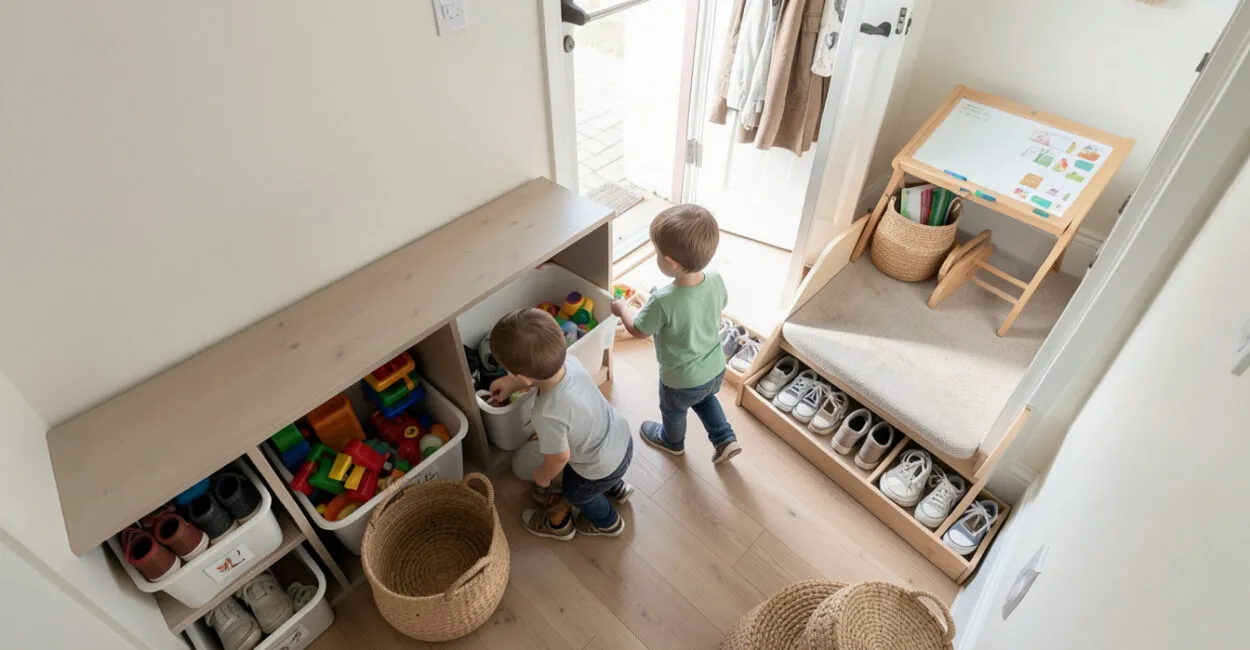
Custom Understair Storage for Families
Kid-access Cubbies and Toy Stations
Design child-friendly understair cubbies at a low height to give kids ownership over their things and encourage clean-up habits. Use rounded edges and non-toxic finishes for safety. Cubby depth should be shallow enough that kids can reach items easily without needing an adult.
Include open bins, labeled photos, or color-coded baskets to help pre-readers identify where items belong. A small flip-up desk or chalkboard front provides an imaginative play zone that disappears when closed.
Durable paint and washable liners keep toy stations looking fresh despite heavy use, while magnetic closures keep doors secure yet accessible for children.
Built-in Coat and Shoe Organization
Understair coat closets can be shallow vertical cabinets for jackets, scarves, and shoes. Use staggered hanging heights for kids and adults and add pull-out shoe trays or sloped shelves to maximize space. Hooks on the inside of doors provide additional hanging points for bags or hats.
Ventilated shoe drawers or slatted shelves reduce moisture build-up; consider removable liners for easy cleaning. Integrate a bench above low storage so family members can sit while putting on shoes.
Smart lighting inside the closet—motion-activated LEDs—improves visibility and invites use, especially during evening routines.
Homework Nooks and Small Office Spaces
A compact under-stair workspace can include a pull-out desk, charging station, and shelving for supplies. Keep the desk depth modest to fit within tread constraints and mount outlets nearby for electronics. Use cable management to hide cords and maintain a tidy surface.
Floating shelves above the desk provide storage for books and binders without consuming floor space. Consider a fold-down desktop to free up circulation space when the station isn’t in use.
This type of understair storage supports remote learning or bill-paying tasks in small homes where a separate office isn’t feasible.
Design Considerations and Materials for Understair Storage
Choosing the Right Materials and Finishes
Select materials that balance durability, budget, and aesthetics: plywood for strong carcasses, MDF for painted panels, and hardwood veneers for visible faces. Use moisture-resistant materials in mudrooms and laundry areas to prevent warping. Hardware finishes—stainless steel, brushed nickel, or matte black—should match nearby fixtures for cohesion.
Opt for finishes that withstand frequent contact: polyurethane for painted surfaces and clear coat for natural wood. For high-traffic family zones, scuff-resistant lower panels protect the unit over time.
Consider recycled or low-VOC materials to minimize environmental impact and improve indoor air quality, especially important in enclosed understair cavities.
Lighting, Ventilation, and Safety
Understair areas often lack natural light; integrate LED strips, puck lights, or motion-sensor fixtures to brighten interiors and aid visibility. Ensure ventilation for laundry or closed cabinets—simple vents or small fans prevent moisture and odors. Safety measures include soft-close hinges, anti-tip anchors, and childproof latches where needed.
Lighting placement should avoid glare while highlighting accessible zones like cubbies or pull-outs. For enclosed laundry units, leave a small gap for airflow or include perforated faces to help ventilation.
Read also: Vale Home Prices: What Happens When Demand Suddenly Spikes
Follow local building codes for any electrical or structural changes and consult a professional when modifying load-bearing walls or adding plumbing.
Cost, Planning, and Professional Vs. DIY Options
Understair storage costs range widely: simple shelving or cubbies can be DIY-friendly and budget-conscious, while custom drawers, integrated laundry, or structural work requires professional carpentry. Budget for materials, hardware, and any trades like electricians or plumbers if utilities are involved.
Read also: Cheap Storage Ideas for Small Home Renovations That Free Up Space
Start by measuring the cavity and sketching a plan that prioritizes the highest-value uses (e.g., kid-access, laundry, coats). Modular kits speed up installation and often offer a cost-effective middle ground between off-the-shelf and bespoke work.
Get multiple quotes for custom builds and check portfolios. A professional can ensure smooth hardware operation and compliance with safety standards for peace of mind.
Understair Storage Layouts and Real-world Examples
Common Stair Profiles and Matching Storage Layouts
Different stair types—closed stringer, open treads, and winding stairs—call for tailored understair storage. Closed stringer stairs typically allow full-height cabinets, while open treads favor anchored shelving or modular pieces that don’t interfere with the visual openness. Winder stairs may need segmented drawers that adapt to changing heights.
Begin by mapping the tallest and shortest clearances, then allocate zones: shallow cubbies near the low end, deeper drawers where headroom permits. Mixing open and closed storage maximizes versatility for a family’s mixed needs.
Design to maintain stair safety: avoid protrusions that can be bumped and ensure doors don’t obstruct walkways when open.
Multi-function Transforms: Toy Zones to Laundry
Flexible understair modules can swap roles as family needs evolve—convert a toy station to a laundry pull-out or replace cubbies with a mini pantry. Use removable bins, adjustable shelving, and modular hardware so the space adapts without costly remodeling.
Include durable finishes and standardized widths so components can be reused or replaced. Clear labeling and consistent bin sizes help when reconfiguring uses seasonally or as children grow.
Plan electrical and plumbing proximity carefully if you foresee adding laundry functions later to minimize future disruption.
Comparison of Popular Understair Solutions
| Solution | Best for | Approx. cost |
|---|---|---|
| Pull-out drawers | Shoes, seasonal items | $500–$2,000 |
| Kid cubbies | Toys, backpacks | $200–$1,200 |
| Built-in laundry | Hampers, detergent | $800–$3,500 |
Smart Storage Features and Accessories
Organizational Inserts and Hardware Upgrades
Enhance understair storage with drawer dividers, modular bins, and adjustable shelf pins to keep items sorted and accessible. Soft-close slides, full-extension runners, and concealed hinges improve longevity and user experience. Magnetic catches and push-to-open latches maintain a clean facade without visible knobs.
Choose hardware rated for the expected load—heavy-duty for laundry hampers and lighter options for clothing or toys. Inserts can be customized for shoes, sports gear, or cleaning supplies to reduce shifting inside drawers.
Labeling systems—chalkboard strips or photo labels—help younger family members know where items belong and speed up cleanup routines.
Hidden Compartments and Secure Storage
For valuables or important documents, a concealed compartment behind a false panel or inside a deep drawer can add security. Use lockable drawers or cam locks for small items; ensure installation doesn’t compromise the structural integrity of the stair assembly.
When creating hidden storage, avoid creating airtight voids that trap moisture. Include small vents and prevent obstruction of any required access panels for wiring or plumbing.
Secure storage is also useful for household medications—keep them in childproof, locked sections away from everyday reach.
Technology Integrations and Lighting Options
Integrate motion-activated LEDs to illuminate drawers and cubbies when opened, and include USB charging stations in homework nooks. Smart lighting on a timer can highlight the drop zone during evening returns and save energy. Use low-voltage LED strips for even, cool light and long service life.
Consider networked switches or small smart plugs for remote control and schedule automation, especially helpful for homes with multiple users and routines. Test lighting placement to avoid glare while ensuring visibility in deep drawers.
Water-resistant switches and GFCI protection are essential near laundry pulls or damp areas to ensure safety.
Installation Steps and Maintenance Tips
Measuring and Planning Your Understair Project
Accurate measurement is the cornerstone of any understair storage project: measure height at multiple points, depth behind each riser, and any obstructions like support posts. Sketch a scaled plan and identify key functions—shoe storage, laundry, or a homework station—to prioritize space allocation.
Account for hardware clearances (drawer slide space) and door swing. If adding utilities, consult a tradesperson early to confirm routing and code compliance and avoid surprises during installation.
Gather materials and test-fit components where possible. Mock-ups using cardboard can reveal access challenges before cutting expensive panels.
DIY Tips and When to Hire a Pro
Simple tasks like open shelving, cubbies, or modular kits are approachable for confident DIYers with basic tools. Use quality fasteners and level everything carefully. For complex joinery, structural changes, or electrical/plumbing work, hire licensed pros to ensure safety and code compliance.
Keep a checklist for hardware, finishes, and ventilation requirements before starting. If you’re uncertain about load-bearing walls or stair modifications, a contractor or structural engineer can advise on safe alterations.
Document measurements and take photos during disassembly if working on a retrofit—this helps during reassembly and when ordering custom parts.
Cleaning and Long-term Care for Understair Storage
Regular maintenance keeps understair storage functional: vacuum or sweep shelves, wipe surfaces with appropriate cleaners, and inspect hardware annually for wear. Remove and launder fabric bins periodically to prevent odors and dust buildup. For wood faces, use a gentle cleaner and occasional wax or oil depending on the finish.
Check drawer slides and hinges; tighten fasteners and lubricate metal runners to maintain smooth operation. Replace worn liners in shoe drawers to protect interior surfaces.
For laundry modules, monitor ventilation and clean vents to prevent mold; address spills promptly to avoid staining or warping.
Conclusion
Understair storage transforms underused stair cavities into orderly, family-friendly zones—pull-out drawers, kid cubbies, laundry pulls, or hidden toy stations—helping small homes maximize space and reduce clutter. Thoughtful planning around stair profiles, materials, and access patterns ensures long-term usefulness.
Choose solutions that fit your family’s routines, budget, and aesthetic, and consider professional help for structural or utility work. Start by measuring your staircase and sketching priorities, then take the first step toward a tidier home with practical understair storage.
📱 See this content as a Web Story
FAQ
How Do I Measure My Stairs for Understair Storage?
Measure height at several points along the cavity, depth from the front face to the back wall, and widths between stringers. Note obstructions like posts or ducts. Sketch a scaled cross-section to determine usable zones and account for hardware clearances and headroom for drawers and doors.
What Materials Are Best for Long-lasting Understair Storage?
Use furniture-grade plywood for carcasses, hardwood or veneered faces for visible panels, and moisture-resistant plywood in laundry or mudroom locations. Choose quality drawer slides and hinges, low-VOC finishes, and durable hardware to withstand daily family use and minimize maintenance.
Can I Add Laundry Hampers Under Stairs Without Plumbing?
Yes—slide-out hampers for sorting clothes require only ventilation and access, not plumbing. For washing machines or sinks, consult a plumber early to plan venting and drain lines. Removable hampers are an easy DIY option to add laundry function without utilities.
Are Pull-out Drawers Under Stairs Safe for Children?
Yes, when built with soft-close slides, anti-tip mechanisms, and rounded edges. Keep heavy items low, use childproof latches for hazardous materials, and ensure doors and drawers don’t obstruct walkways. Regular hardware checks maintain safe operation in busy family environments.
What’s the Typical Cost Range for Custom Understair Storage?
Costs vary: simple shelving or cubbies can be a few hundred dollars, modular kits $400–$1,200, and fully custom systems with pull-outs or laundry $1,000–$4,000 or more depending on materials and trades required. Obtain multiple quotes and prioritize high-use features for best value.
References: The Home Depot, Houzz.