
Vertical Herb Garden Plans For Small Urban Spaces Today
How to select a vertical herb garden suited to your light, space, and watering needs, with tips on support, drainage, and accessible setups for beginners.
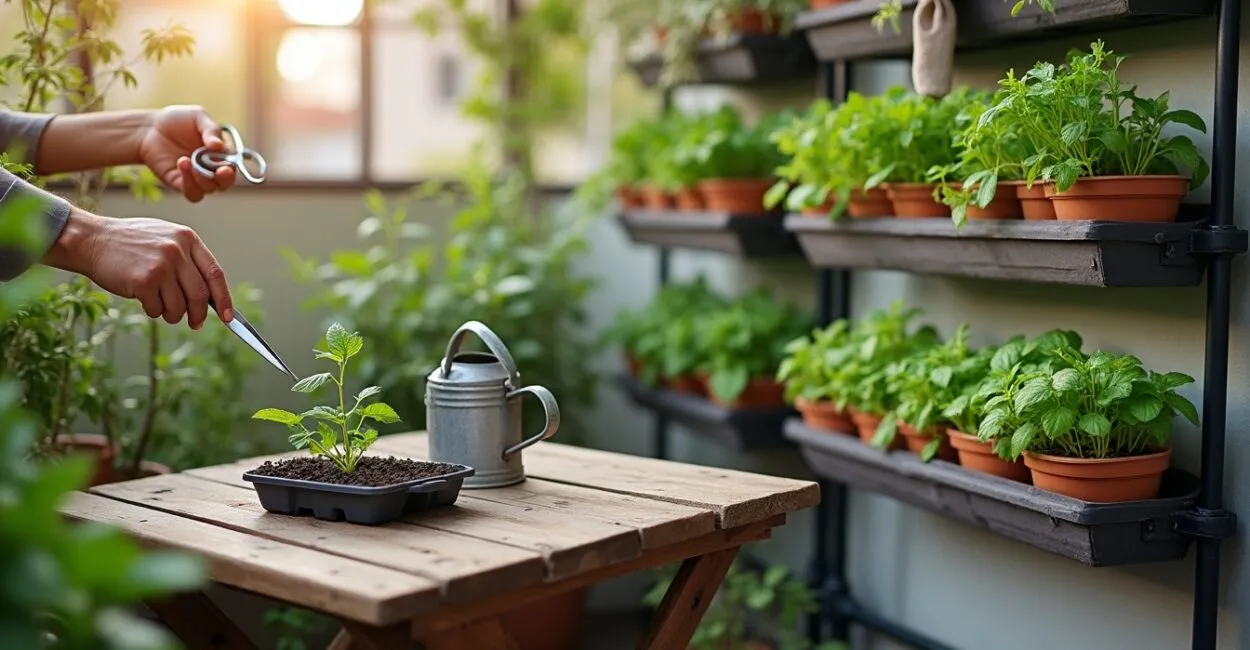 Harvesting basil on a lush urban balcony garden
📅 Updated on 10/11/2026
A sunny balcony can support a useful herb garden; a dim kitchen wall usually cannot without a grow light. A vertical herb garden is a way to grow plants in stacked or wall-mounted containers, and the right design depends first on light, drainage, and how much watering you can keep up with.
For most beginners, a freestanding tiered planter or a few pots secured to a sturdy railing is the easiest place to start. Pocket systems save wall space, towers hold more plants in a compact footprint, and hydroponic models avoid potting mix but need electricity and regular nutrient checks. Match the system to your conditions before buying plants.
Before You Start
- Track how many hours of direct sun the proposed spot receives.
- Check that the wall, railing, or floor can support the planter, wet growing medium, and mature plants.
- Decide where excess water will go, especially indoors or above a neighbor’s balcony.
- Choose a setup you can reach and water without a ladder or awkward stretching.
1. Choose a Vertical Herb Garden That Fits Your Space
A vertical herb garden is a growing system that arranges herbs in elevated, stacked, or wall-mounted planting positions to use less floor area. For a small urban space, the best choice is usually a movable tiered planter in a bright spot; choose wall pockets when floor space is scarce and the wall can safely handle moisture and weight.
Start with the growing conditions, not the planter’s appearance. Most culinary herbs need strong light, and many do best with several hours of direct sun. Indoors, a bright window may work for some plants, but a grow light is often needed when natural light is weak or inconsistent. The University of Minnesota Extension offers practical guidance on growing herbs indoors and outdoors.
Measure the footprint and the full height, including room to harvest and refill water. A narrow planter that blocks a window or places upper pots beyond easy reach can become a maintenance problem. Also consider the floor below: runoff can stain a balcony or damage indoor flooring.
2. Compare Pockets, Planters, Towers, and Hydroponics
Different systems manage water, root space, and installation in different ways. A pocket planter is light when empty but can dry unevenly; a tiered planter is straightforward to rearrange; and a tower offers a small footprint at the cost of more complicated watering and access to lower plants.
System Best fit Main trade-off Wall pockets A sunny wall with limited floor space Small pockets may dry quickly and restrict root room Rail-mounted or modular pots A balcony or patio with a secure rail Requires safe fastening and a plan for drainage Tiered planter Beginners who want easy access and flexibility Uses more floor space than wall-mounted options Herb garden tower A compact outdoor area with room to reach all sides Water can distribute unevenly between levels Hydroponic tower Indoor growers willing to monitor equipment and nutrients Needs power, cleaning, and attention to pump function
Hydroponic towers do not use soil. They support roots in water or another inert medium while a nutrient solution supplies minerals. Soil-free does not mean maintenance-free: check the reservoir, follow the system’s nutrient instructions, and clean components as directed. A power or pump failure can interrupt water delivery, so these units suit growers comfortable with routine checks.
Choose a planter by how it delivers light, root space, and water to each plant, not by how many planting holes it advertises.
3. Check Light, Cost, and Installation Safety
Before spending money, observe the location at different times of day. A south- or west-facing outdoor position often receives more direct sun than a shaded wall, but nearby buildings, balconies, and trees can change the picture. Indoors, a window’s direction and season matter; if stems stretch toward the glass or growth stays weak, the site may need supplemental light.
Costs vary with materials, size, and whether the system includes a reservoir, pump, or grow light, so compare the whole setup rather than the planter alone. Include potting mix or hydroponic supplies, saucers, mounting hardware, and any light fixture. A few food-safe pots on a stable shelf can be a lower-cost trial than a large integrated system.
Read also: Vertical Gardens Ideas for Small Spaces and Balconies
Secure wall-mounted units to appropriate structural support, using hardware suited to the wall and the planter’s loaded weight. Wet growing medium weighs more than dry medium. For renters, a freestanding rack or railing planter approved for the property may avoid drilling, but never assume a railing can carry a heavy container without checking its construction and rules.
4. Set Up Drainage, Watering, and Nutrients
Every soil-based container needs a route for excess water to escape. Use drainage holes and a tray or collection plan, but do not let pots sit in standing water for long periods. Indoors, test the arrangement over a sink or waterproof surface before placing it near a wall or wood floor.
Read also: Best Plants for a Vertical Herb Garden
Watering frequency depends on plant size, container material, growing medium, airflow, and weather. Small fabric pockets in warm sun may need attention more often than deep plastic pots in shade. Check the medium with a finger: water when the surface has begun to dry, while avoiding a prolonged soggy root zone. A fixed calendar schedule often leads to either wilted herbs or waterlogged roots.
Vertical systems can distribute water unevenly. In a tower, upper pockets may dry first while lower levels collect runoff; inspect several levels rather than judging the whole planter by one plant. Drip irrigation can help with larger installations, but test each emitter and watch for leaks before leaving the system unattended.
For soil-based containers, use a suitable potting mix rather than dense garden soil, which can compact in a small planter. Feed lightly and follow the product label; excessive fertilizer can encourage soft growth and dull flavor. Hydroponic growers should use nutrients intended for edible crops and follow the unit’s guidance instead of improvising concentrations.
5. Group Herbs by Their Growing Needs
Different herbs can share a tower when they have similar light and watering requirements and enough root space. Mediterranean herbs such as rosemary, thyme, and oregano generally prefer a sunnier position and soil that drains well. Basil and parsley usually tolerate more consistent moisture, while mint spreads aggressively and is easier to control in its own pot.
Mixing every favorite herb in one reservoir or pocket system can create avoidable problems. A thirsty basil plant may need water more often than rosemary, and a vigorous mint can crowd slower neighbors. Separate plants with conflicting needs, or assign different tiers and containers so you can water and harvest them independently.
For a first planting, try basil with parsley in a medium-sized planter if the site is bright and you can keep the mix from drying out. Put thyme or oregano in a separate, well-drained pot. The Penn State Extension herb gardening resources can help you check individual herb requirements before combining them.
6. Maintain the Garden Through Changing Seasons
Harvest small amounts often, cutting just above a pair of leaves where the plant’s growth habit allows. Regular pinching can keep basil from becoming tall and leggy, while woody herbs such as rosemary need more restrained pruning. Remove dead leaves and check the undersides of foliage for aphids or other pests before problems spread through a tightly packed planter.
Light and water needs shift with the season. A balcony planter may dry quickly in summer wind, while an indoor pot near a cold window can stay wet longer in winter. Rotate movable planters when growth leans toward one direction, and move tender plants indoors before temperatures fall below what they can tolerate.
There are limits to what vertical planting can solve. It cannot make a dark room bright, give a shallow pocket the root volume of a large pot, or remove the need for access and drainage. The exact amount of sun and water each herb needs varies by cultivar and local conditions, so observe the plants and adjust rather than treating a general rule as a guarantee.
Healthy herbs show whether the setup works: steady new growth, firm leaves, and roots that receive both moisture and air.
7. Build a Simple First Setup and Troubleshoot It
The easiest first system is a small, freestanding tiered planter with drainage holes, placed outdoors in a bright location or indoors under an adequate grow light. It avoids wall installation, makes individual pots easy to move, and lets a beginner learn each herb’s watering needs before expanding.
- Pick a reachable spot and confirm its light for several days.
- Choose three or four herbs with compatible needs, using separate pots if their watering preferences differ.
- Fill containers with potting mix and confirm that excess water drains into a tray or safe outdoor area.
- Water thoroughly at planting, then check the medium and foliage regularly instead of following a rigid schedule.
- After a few weeks, adjust the position or watering based on growth, drying speed, and any signs of stress.
If leaves wilt while the mix is wet, inspect drainage and roots before adding more water. If plants wilt and the mix is dry, water slowly until the root zone is moistened. Pale, stretched growth often points to insufficient light; move the planter or add a grow light. A practical detail that is easy to miss: the top tier can shade lower plants, so place shorter, light-hungry herbs where they will not sit beneath a dense canopy.
Begin with a few plants and let their growth guide the next purchase. Measure light, check drainage after the first watering, and keep a short note of when each container dries; those observations will tell you more than a planter’s advertised capacity.
Frequently Asked Questions
Can Herbs Grow Indoors in a Vertical Planter?
Yes, if they receive enough light and the containers drain safely. A sunny window may be sufficient for some herbs, while a grow light can help in darker rooms or during short winter days.
How Often Should a Vertical Herb Garden Be Watered?
There is no reliable single schedule. Check the growing medium and water when it begins to dry, adjusting for heat, wind, container size, and the herb’s needs.
Can Different Herbs Share One Tower?
Yes, when their light and moisture preferences are compatible and each has room to grow. Keep aggressive mint and drought-tolerant rosemary separate from herbs that need more consistent moisture.
Do Hydroponic Herb Towers Need Soil?
No. They use water with dissolved nutrients, sometimes alongside an inert support medium, rather than soil. The reservoir and pump still need regular checks.
What is the Easiest Setup for a First-time Grower?
A small tiered planter with individual pots is a forgiving option. It is easy to move, simplifies watering differences, and requires no wall mounting or hydroponic equipment.