
How to Get Your Cat Comfortable with a Travel Carrier
How to start cat carrier training at home: creating positive associations through open carrier access, rewarding exploration, and progressing at your cat’s c…
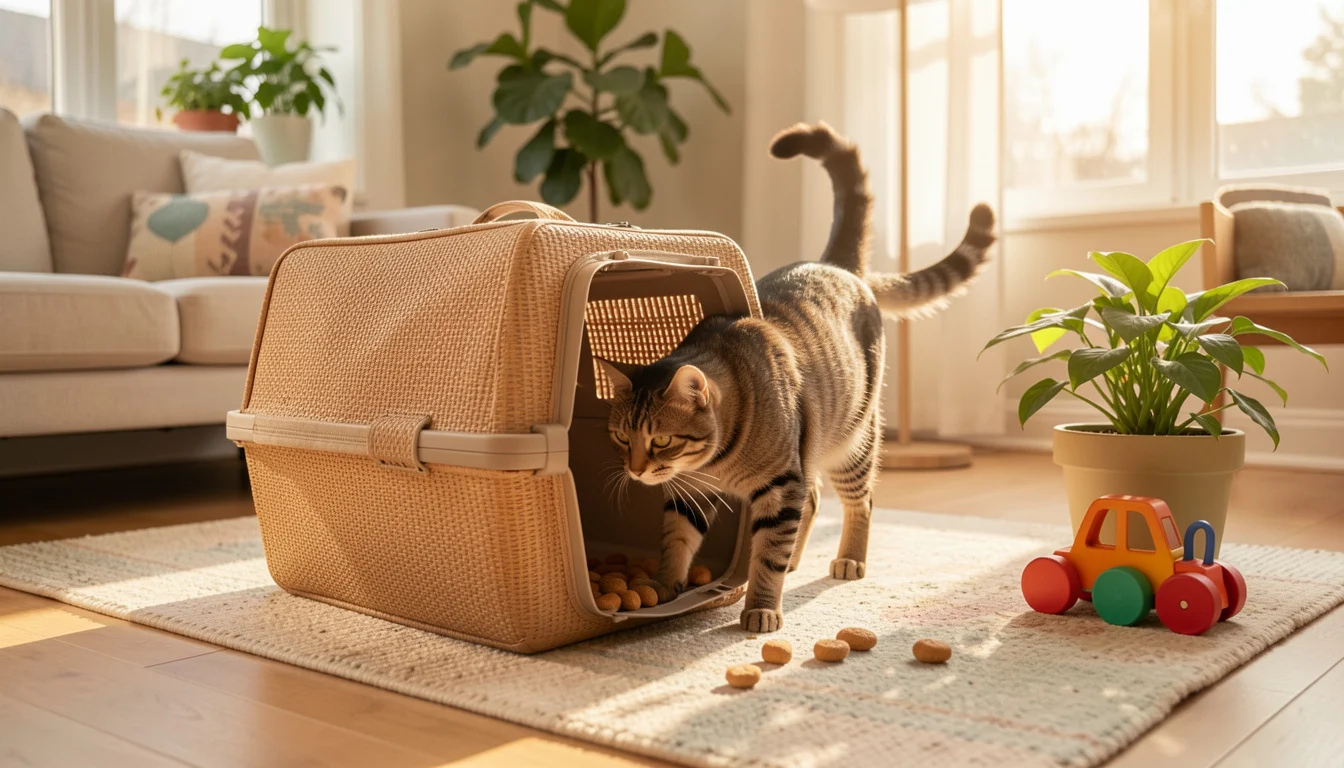 Tabby cat explores carrier for treats
A carrier that only appears before a vet appointment can become a warning signal: your cat sees it, then the chase begins. Cat carrier training changes that association through gradual, reward-based practice at home. Start with the carrier open and accessible, reward voluntary exploration, and move forward only while your cat can stay relaxed.
The goal is not to make every cat enjoy travel. It is to help your cat enter the carrier with less resistance and tolerate the steps that follow, from a closed door to a short ride.
Quick Guide
- Starting point: Leave the carrier open in a familiar room.
- Training method: Reward voluntary approaches and small steps inside.
- Progression: Practice entry, door closure, lifting, and travel separately.
- Best pace: Advance when your cat remains comfortable; there is no fixed timeline.
- Safety check: Use a carrier with secure closures and enough ventilation.
How to Start Cat Carrier Training at Home
Cat carrier training is a gradual process of helping a cat approach, enter, and remain in a travel carrier without being forced. Put the carrier in a quiet, familiar room with the door secured open, add soft bedding, and reward any voluntary interest. If your cat only looks at it from across the room, reward that first step.
Gather a few small, high-value treats, familiar bedding, and a carrier your cat can enter comfortably. A favorite toy can help, too, but food is often easier to use in short sessions. Keep treats close enough to reward the behavior you want, rather than tossing them so far inside that a hesitant cat feels trapped.
Choose a time when your cat is settled, not already agitated by a visitor, a loud appliance, or a looming appointment. Short sessions are easier to end on a good note. If your cat walks away, let them; returning to the carrier should remain their choice.
Choosing a Carrier That Fits Your Cat and Your Trip
The best cat carrier is one your cat can fit in comfortably and you can secure reliably. Your cat should be able to stand, turn around, and lie down in a natural position. Check for airflow, stable construction, and latches that cannot pop open when the carrier shifts.
Carrier style
Can suit
Check before choosing
Hard-sided carrier
Routine vet visits and car travel; often easy to clean and sturdy.
Confirm the door and any removable top lock securely.
Soft-sided carrier
Some cats who prefer a softer enclosure, especially for hand-carried trips.
Check that the frame holds its shape and zippers stay closed.
Top-loading carrier
Cats who are wary of a front entrance; a removable top can make veterinary handling easier.
Make sure the top and front openings both secure firmly.
Backpack carrier
Some supervised outings, if the cat tolerates movement and the design provides enough room and airflow.
Check fit, ventilation, stability, and whether your cat can move naturally.
A top-loading cat carrier can make placement easier when a cat is already comfortable being lifted, but it is not a reason to lower a frightened cat into a box. For a large cat, assess the interior dimensions and weight capacity rather than relying on a “large” label; a top-loading cat carrier for a large cat still needs a wide enough opening and secure support under the cat’s weight.
Backpacks have limits. A cat backpack designed for hiking should be used only if the cat is acclimated to the pack and its motion, and the carrier fits the cat rather than compressing them into a small viewing bubble. A cat backpack for two cats is not a substitute for separate, appropriately sized carriers when the cats could crowd or injure each other.
A Step-By-Step Plan for Voluntary Entry
Build the behavior in small pieces. The International Society of Feline Medicine’s cat-friendly guidance emphasizes reducing stress around handling and veterinary care; that principle applies at home, too. Let your cat set the pace instead of using hunger or pressure to force entry.
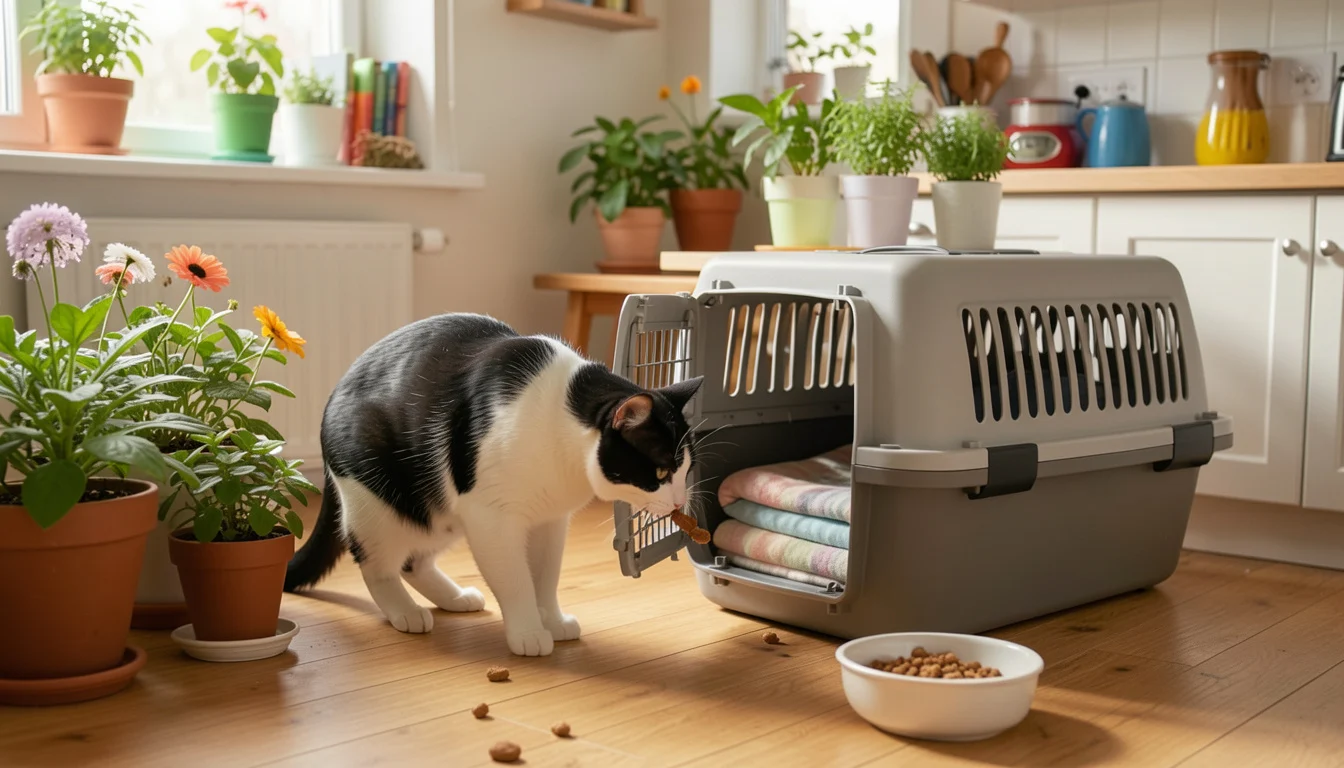
- Make the carrier ordinary. Leave it open in a room your cat uses. Put familiar bedding inside and reward looking at, sniffing, or walking near it.
- Reward crossing the entrance. Place a treat just inside the doorway. As your cat becomes comfortable, place it farther in, then reward stepping inside and coming back out.
- Offer a meal inside. Start with the food bowl near the entrance and move it inward over several meals, only as far as your cat will comfortably go. If the cat stops eating, move the bowl back.
- Build a relaxed stay. Once your cat enters freely, let them eat or rest inside with the door open. Keep the first stays brief and allow an easy exit.
- Practice the door in tiny increments. Move the door slightly, reward, and open it again. Gradually increase how far it closes and how long it stays closed before opening calmly.
- Add a cue if useful. Say a consistent word such as “carrier” just before your cat enters, then reward the entry. The cue is optional; comfort matters more than the word.
A common snag is moving the food bowl too far inside too soon. A cat may stretch in to grab a treat, then bolt back out; that is useful information, not disobedience. Keep the reward near the threshold until the cat chooses to linger.
Voluntary entry is the foundation; every later step works better when the carrier still feels like a place the cat can leave.
If your cat enjoys food puzzles, a familiar feeder can help make the carrier part of an ordinary meal routine. Ideas for keeping food-based activities interesting are in this guide to puzzle feeders for cats.
How Long Does It Take, and How Do You Build Up to Trips?
There is no reliable fixed timeline: some cats accept early steps quickly, while others need many short sessions over weeks or longer. A cat’s past experiences, temperament, health, and sensitivity to handling all affect the pace. Progress means your cat can repeat a step without escalating signs of stress, not that a certain number of days has passed.
Read also: DIY Cat Toys: 7 Easy Ideas for Apartment Play
Once your cat can stay inside with the door closed for a short period, practice lifting the carrier just an inch, setting it down, and rewarding calm behavior. Increase the duration and distance gradually. Then carry it around the home, pause, and return the cat to the same room before trying a brief car ride.
For example, a cat that calmly eats inside with the door shut may still tense when the carrier leaves the floor. The next session can stop at a one-inch lift, followed by an immediate set-down and a treat. Repeat that small movement until it is uneventful before walking across the room.
Read also: How to Teach a Puppy to Use Indoor Potty Pads
Keep each new challenge separate at first: door closure, lifting, walking, and car motion are different experiences. If your cat handles the carrier at home but vocalizes in the car, return to calm, short practice rather than extending the trip to “get it over with.” Enrichment elsewhere in the home can support a predictable routine; see these indoor cat enrichment ideas for small spaces.
Reading Stress Signals and Adjusting the Pace
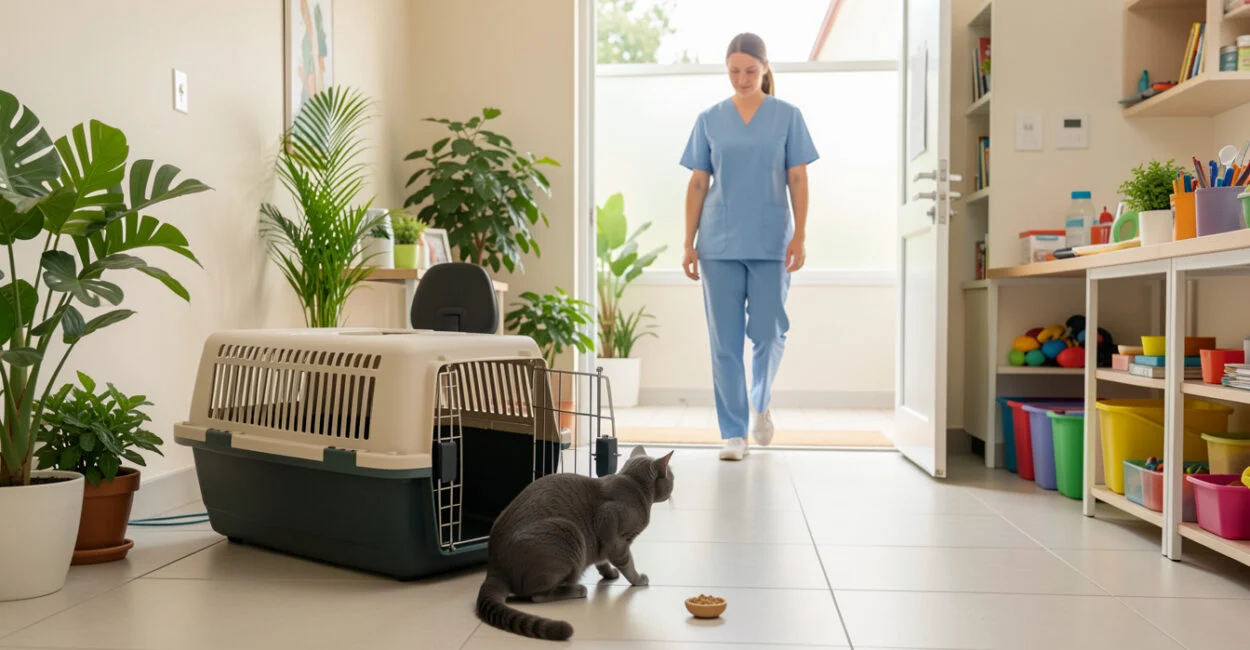
Pause or make the next session easier if your cat crouches tightly, flattens their ears, tucks the tail, freezes, pants, growls, or repeatedly tries to escape. Some cats show subtler signs first, such as turning away from food, licking their lips, or keeping their body low. A single cue does not diagnose a problem, but a cluster of changes means the current step may be too difficult.
Give your cat room to leave, then return to an easier version: carrier farther away, door fully open, or treat closer to the entrance. Do not punish, scold, or hold the cat in place to “teach” them. If fear is intense or appears suddenly, consult a veterinarian; pain or illness can change a cat’s tolerance for handling.
For cats who also struggle with being picked up, work on handling as its own skill. A gradual plan for cat scent games and nose work can offer low-pressure activities, but it does not replace a tailored veterinary or behavior plan for severe fear.
Common Setbacks, Urgent Visits, and Medication Questions
What If My Cat Refuses to Go Near the Carrier?
Start farther away and reward calm attention from that distance. If the carrier has only appeared before unpleasant trips, leave it out between appointments and make it part of the room rather than bringing it out only when you need to leave.
What If the Carrier Already Predicts a Bad Experience?
Wash or replace bedding that carries strong clinic or travel odors, then begin with the open carrier at a distance your cat can tolerate. For a strong fear response, ask your veterinarian about a behavior plan; some cats need help beyond home practice.
Is It Safe to Sedate a Cat for Travel?
Only use a sedative or anti-anxiety medication under veterinary direction. The right approach depends on the cat’s health and the type of trip, and a veterinarian can advise whether medication is appropriate and how to use it safely.
Should Two Cats Travel in the Same Carrier?
Usually, separate carriers are the safer choice, even for cats who get along at home. Travel can provoke fear or conflict, and a shared carrier can make it harder for either cat to move or for you to handle them safely.
If an appointment cannot wait for gradual training, call the clinic before leaving and explain that your cat is frightened of the carrier. Ask how to transport the cat safely and whether the clinic recommends a specific preparation plan. The American Association of Feline Practitioners’ Feline Behavior Guidelines provide professional guidance on feline behavior, while your veterinarian can tailor advice to your cat.
Safer Carrier Travel by Car and Air
For car travel, place the carrier on a stable surface and secure it so it cannot slide or tip during a turn or sudden stop. Follow the carrier manufacturer’s instructions for restraint, keep the cat inside the carrier while the car is moving, and never leave a cat unattended in a hot or cold vehicle.
Use familiar bedding if it stays clean and does not block ventilation. Before leaving, check that doors and zippers are fully closed, pack any needed medication or records, and plan how to keep the carrier contained when you open a car door. The American Veterinary Medical Association’s pet travel guidance covers general travel preparation.
Can the Same Carrier Be Used for Airline Travel?
Sometimes, but a carrier suitable for a car or vet visit may not meet an airline’s current requirements. Check directly with the airline before booking; cabin and cargo rules, carrier dimensions, and acceptance conditions can differ by airline and trip. A “vet recommended cat carrier” label alone does not guarantee airline approval.
For the next session, leave the carrier open where your cat can approach it freely and reward one calm interaction, even if that is only a sniff. Build from the behavior your cat offers today, and check the airline’s own rules before planning air travel.
📱 See this content as a Web Story
Frequently Asked Questions
Should I Leave the Carrier Out All the Time?
If you have space, leaving it open in a familiar area helps prevent it from appearing only before stressful trips. Keep the interior clean and comfortable, and remove it if your cat begins avoiding that room.
Can I Use a Carrier with a Removable Top?
Yes, provided the top locks securely for travel. A removable top can also let a veterinarian examine a nervous cat while they remain in the lower half, but follow the clinic’s handling advice.
Can Treats Make a Fearful Cat Enter Before They Are Ready?
Food can encourage exploration, but it should not lure a cat into a situation they cannot exit. Keep the door open during early practice and let the cat choose whether to approach.
Is a Cat Backpack Suitable for Hiking?
It may suit a cat who has been gradually acclimated to the pack and tolerates movement, noise, and outdoor conditions. It should have secure closures, ventilation, and enough room for the cat to shift position; a backpack is not appropriate for every cat.
What Should I Do If My Cat Panics Once Inside?
Open the door in a safe, enclosed room if doing so will not create an escape risk, and let the cat leave without chasing or grabbing them. For future sessions, return to an easier step and speak with your veterinarian if the panic is severe or persistent.