
Are Home Solar Panels a Good Fit for Your Household?
How to evaluate if home solar panels suit your roof, electricity use, utility policies, and budget by aligning production with household consumption patterns.
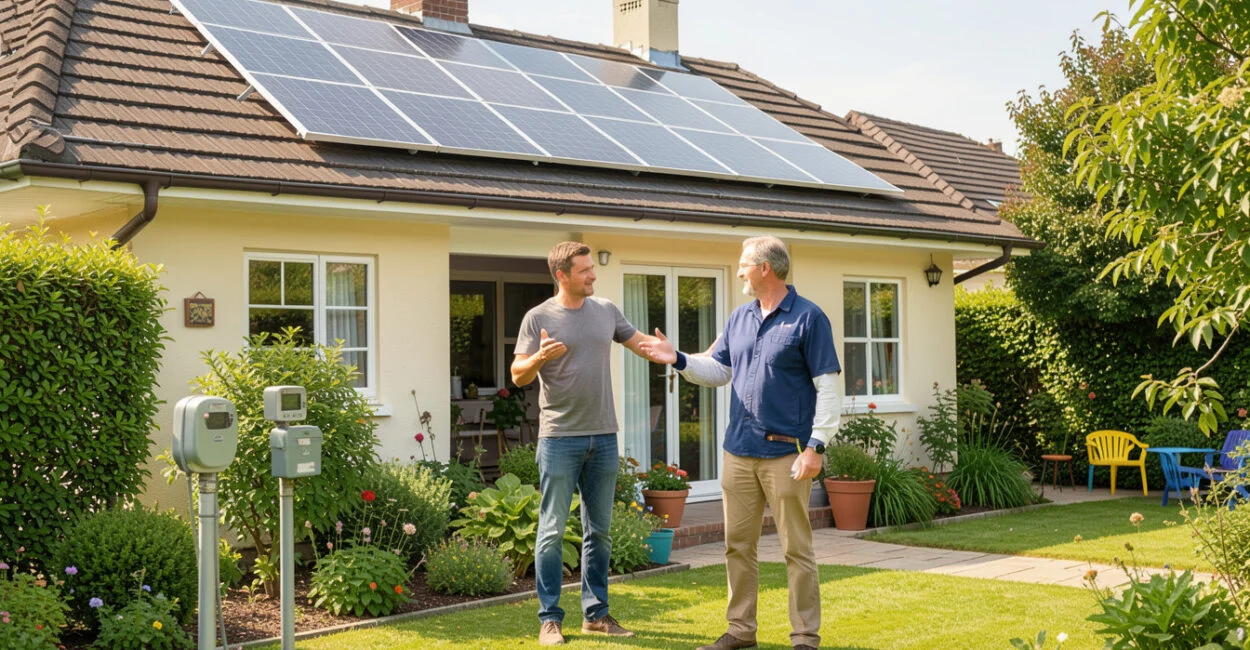 Homeowner assessing a solar-ready roof
A roof can look perfect in sunshine and still produce disappointing savings if your household uses power after sunset.
Home solar panels are a good fit when the roof can support useful production, your electricity habits and utility rules reward that production, and the project’s cost works for your budget. A sunny location helps, but it cannot settle the decision on its own.
Start by checking four things: your roof, when you use electricity, how your utility values exported power, and the full purchase or financing cost. No single factor decides the answer. Together, they can tell you whether to get a detailed quote—or pause.
Home Solar Panels Fit Best When the Household and Roof Align
Home solar is a system of photovoltaic (PV) modules that convert sunlight into electricity. In everyday terms, panels generate power when light reaches them, while your home draws electricity whenever appliances need it. Solar is worth investigating when the roof, usage pattern, utility compensation, and project cost make sense together.
You may be a strong candidate if your roof has suitable, unshaded space, your household uses enough electricity to make a system useful, and the quote holds up under your utility’s actual billing rules. A roof needing repairs soon or a financing offer with unclear costs may change that picture. Treat the first assessment as a screening, not a savings promise.
Your Electric Bill is the Best Place to Start
Gather a full year of bills before sizing a system. Look beyond the monthly total: usage in kilowatt-hours (kWh), fixed charges, time-of-use rates, and any seasonal swings can all affect the value of solar. The U.S. Department of Energy’s Homeowner’s Guide to Going Solar recommends understanding your energy use and utility arrangements as part of the decision.
- Monthly kWh use and total charges
- Rate plan, including time-of-use periods
- Fixed fees that solar may not reduce
- Any expected changes, such as an electric vehicle or heat pump
A common comparison trap: focusing on a lower estimated bill while overlooking charges that remain after installation. Improving insulation or adjusting everyday habits may also reduce how much electricity you need; these energy-saving home habits can be useful whether or not you go solar.
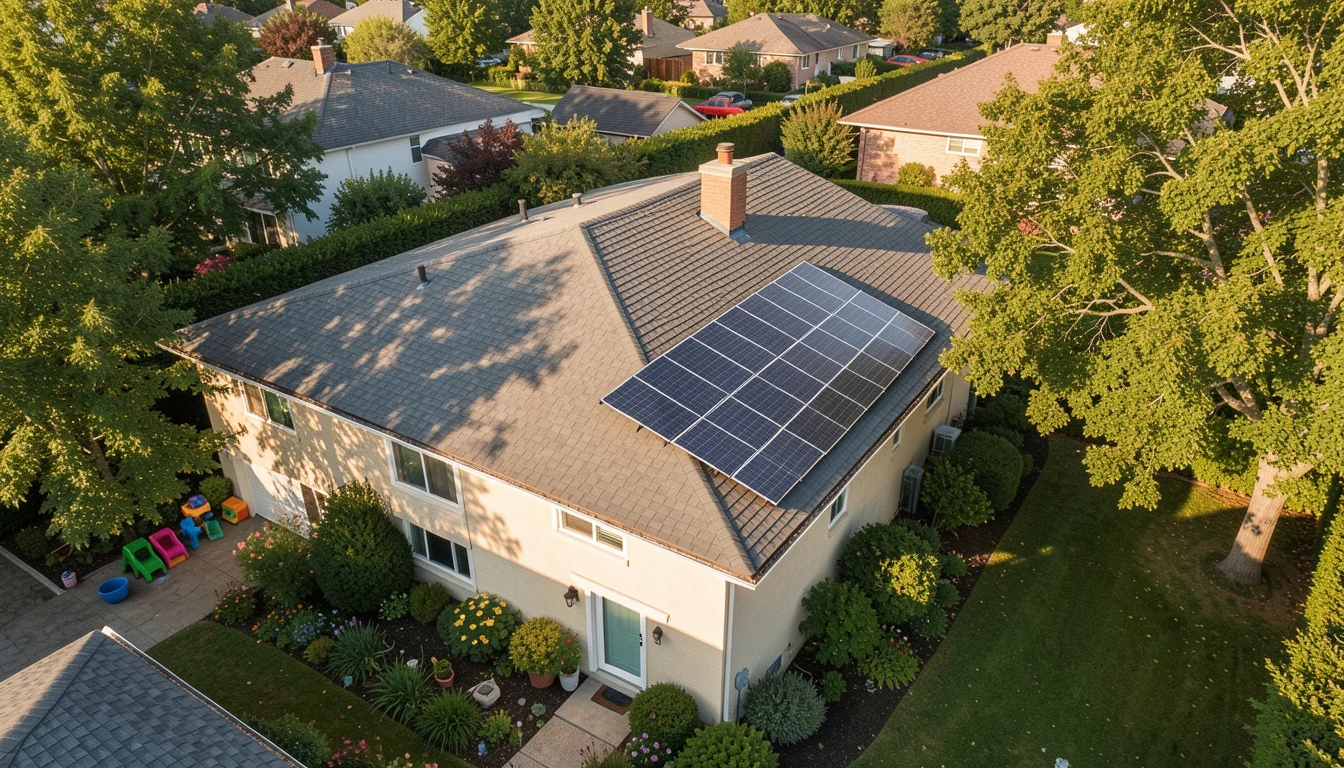
Check the Roof Before You Ask for Panel Plans
Shade from trees, chimneys, and nearby buildings can reduce production. Roof orientation and pitch matter too, though a less-than-ideal direction does not automatically rule out solar. An installer should assess the actual roof rather than assume that a sunny neighborhood means a productive array.
Read also: How to Reduce Water Use at Home Without Major Renovations
Roof age deserves a blunt conversation. If repairs or replacement are likely soon, doing that work before installation can prevent the cost and hassle of removing and reinstalling panels. Ask the installer to identify the usable area, explain shade assumptions, and state whether roof work is included or excluded. A solar quote built on the wrong roof assumptions is not a reliable comparison.
When You Use Power Changes What Solar is Worth
Panels often produce most during daylight. If your household is away then and uses more electricity in the evening, some generation may flow back to the grid instead of serving your home. Your utility’s published interconnection and compensation rules determine how exported electricity is credited, and those rules vary by utility.
Check the utility’s current rules before trusting a savings estimate. Ask how credits appear on your bill, whether they expire or change by time, and what fees remain. The National Renewable Energy Laboratory’s PVWatts Calculator can estimate system production, but it does not determine your utility bill or guarantee a project’s savings.

Compare the Offer Behind the Headline Price
Two quotes can describe systems with different equipment, production assumptions, and financing costs. Compare the details line by line, and ask each installer to use the same electricity usage and utility rules.
Offer detail What to check Equipment Panel and inverter models, capacity, and warranty terms Production estimate Shade, roof direction, degradation, and utility assumptions Purchase Total cash price, included work, and payment schedule Financing or lease Interest, fees, escalators, ownership, and transfer terms
With a cash purchase, compare the total installed price. With a loan, examine the full repayment terms, not just the monthly payment; leases and power-purchase agreements have different ownership and transfer conditions. There is no dependable payback figure without your utility rate, system estimate, and contract details.
A Battery is a Separate Decision, Not an Automatic Add-On
A battery stores electricity for later use, but it adds cost and has its own operating limits. It may matter if you value backup power or want to use more of your solar generation after dark. It does not guarantee backup during an outage: the system must be configured for that purpose, and available power depends on the equipment and battery charge.
Compare storage separately from the panels. If the project does not fit, efficiency upgrades can reduce demand, and community solar may be an option where available. Renters can also look into those alternatives or review energy-saving steps that do not require permanent upgrades.
Ask Questions That Make a Solar Quote Earn Your Trust
Ask how the installer calculated annual production, what utility compensation was assumed, which charges remain, and what the warranty covers. Request the equipment list, financing documents, and a written explanation of roof and shade assumptions. Compare at least two offers using the same bill and utility rules.
Pause if a salesperson promises guaranteed savings, calls the system “free” without explaining the contract, or cannot show how the estimate matches your utility’s published rules. The right next step may be another quote, a roof inspection, or no installation at all. An honest estimate should still make sense when you remove the sales pitch.
📱 See this content as a Web Story
Frequently Asked Questions
Do Solar Panels Work During a Power Outage?
Most standard grid-connected systems shut off during an outage for safety. Backup requires equipment designed and configured to provide it, often with a battery.
Can Renters Benefit from Solar?
Renters usually cannot install rooftop panels without the owner’s permission, but community solar may be available locally. Efficiency changes can also lower electricity use without altering the building.
What Happens to Panels When a Home is Sold?
Owned panels can be included in a home sale, but loans, leases, or power-purchase agreements may require transfer steps or lender approval. Review the contract before listing the home.