
Cat Hairballs: Causes, Prevention, and When to Call a Vet
Cat hairball prevention starts with grooming suited to coat and mobility; recurring vomiting or unproductive retching calls for veterinary advice.
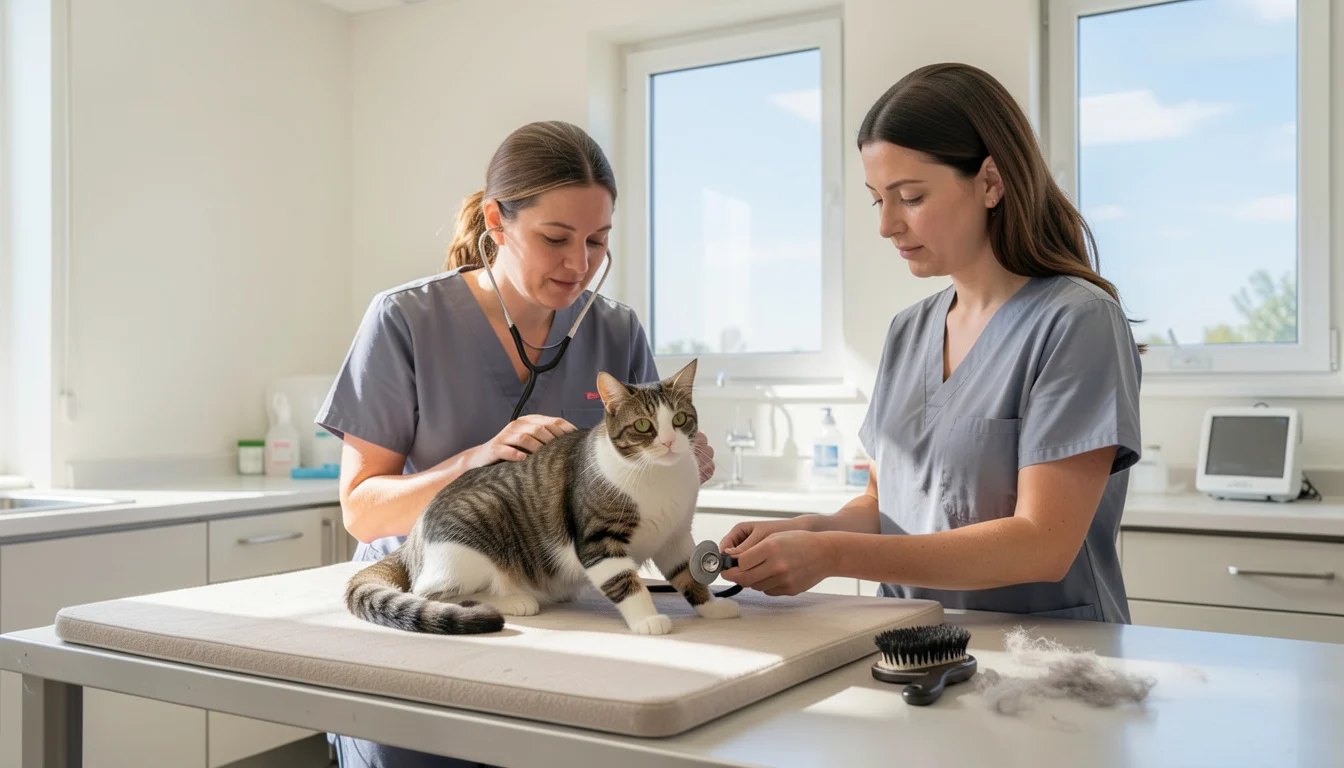 A cat receives a veterinary assessment
A cat may retch, bring up a damp tube of hair, then act as if nothing happened. Regular grooming can reduce how much loose fur a cat swallows, but repeated vomiting or unproductive retching needs more than a hairball remedy. For effective cat hairball prevention, match grooming to your cat’s coat and mobility, and ask a veterinarian about recurring episodes or diet changes.
Hairballs are common, but frequent vomiting should not automatically be blamed on fur. A change in pattern, appetite, energy, or litter-box habits can point to a problem that needs veterinary assessment.
What Cat Hairballs Are and How Prevention Helps
A hairball, or trichobezoar, is a mass of swallowed hair that collects in the stomach and is later brought up through vomiting. Cats swallow loose fur while grooming; some passes through the digestive tract in stool, while some may gather into a compact mass. Cat hairball prevention mainly means removing loose fur before a cat swallows it. Long coats, shedding, frequent grooming, skin irritation, and difficulty grooming due to age, weight, pain, or limited mobility can all affect how much fur a cat ingests.
A hairball usually comes up with retching and abdominal contractions. Coughing can look similar, so it is easy to misread a cat’s posture; repeated coughing or gagging without a visible hairball deserves veterinary advice. Cornell Feline Health Center explains how hairballs form and when they may be a concern.
Vomiting more than once, or vomiting without bringing up hair, can have causes unrelated to hairballs. Do not assume that a recurring episode is harmless just because your cat has produced a hairball before.
How Often is Too Often?
There is no single frequency that is normal for every cat. An occasional hairball may happen, but repeated episodes, a new pattern, or vomiting without a hairball are reasons to contact a veterinarian. Look at what happens before and after the episode, not only what appears on the floor. A visible hairball is different from food or fluid vomit, and repeated retching that produces nothing can signal a more urgent problem.
What you observe Possible interpretation Recommended next step Occasional hairball with otherwise normal behavior A swallowed-hair mass may have been expelled Monitor your cat and keep up with grooming Repeated vomiting or a changing pattern Hairballs or another health issue may be involved Contact your veterinarian and record the episodes Repeated retching with nothing produced A problem needing prompt assessment is possible Call a veterinarian or emergency clinic for guidance Breathing difficulty or severe distress This may be an emergency, not a routine hairball Seek emergency veterinary care
Note the date and frequency of episodes, what came up, appetite, stool, water intake, and behavior. A short video can help a veterinarian tell coughing from retching when it is safe to record.
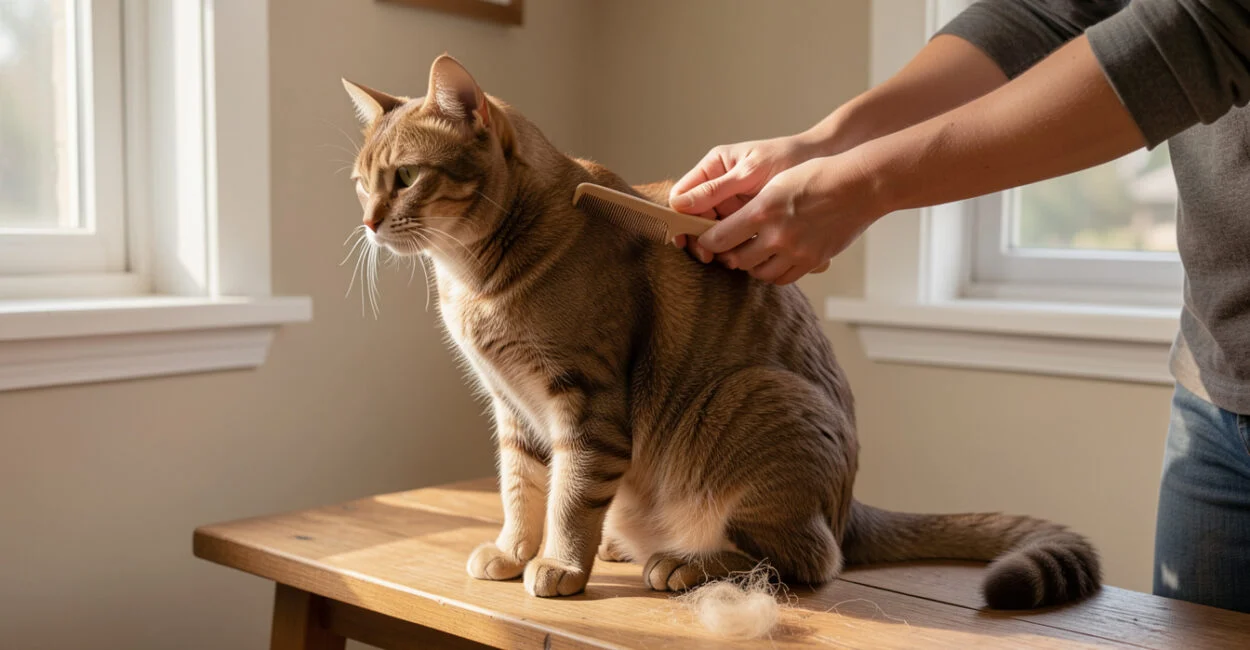
Prevent Hairballs with Regular Grooming
Brushing or combing removes loose fur before it reaches the stomach. Choose a tool suited to the coat, and set a frequency your cat tolerates; long-haired or actively shedding cats may need more frequent sessions than short-haired cats. Older cats may groom less because bending is uncomfortable or their flexibility has changed. Check areas they may struggle to reach, such as the back and hindquarters, and look for mats or skin changes. For a gentle approach with older short-haired cats, see these brushing tips for short-haired senior cats.
- Brush or comb regularly with a coat-appropriate tool.
- Check the coat and skin for mats, irritation, or bare patches.
- Notice changes in grooming, flexibility, or willingness to be touched.
- Arrange veterinary or professional grooming help for painful mats.
Keep sessions brief and calm at first. A common mistake is to pull at a tight mat or cut close to the skin; cat skin can be difficult to see beneath fur, and an accidental cut can be serious. Persistent overgrooming may reflect itch, stress, pain, or another issue, so ask a veterinarian to investigate rather than treating the licking as a hairball problem.
Food, Water, and Other Prevention Measures
Some veterinary diets are formulated to help manage hairballs, often by changing fiber content to support the passage of swallowed hair through the digestive tract. Whether one suits your cat depends on overall health and nutritional needs; a hairball food is not automatically the best hairball food for every cat. Offer fresh water and a complete, balanced diet. Hydration and diet support general health, but adding water or fiber is not a guaranteed way to prevent hairballs. Check with a veterinarian before changing food, especially if your cat has a chronic condition or already follows a therapeutic diet.
Supplements labeled “natural” are not automatically safe or effective. The right approach can depend on the cat’s health, coat, and the cause of repeated symptoms; no prevention plan works for every cat.
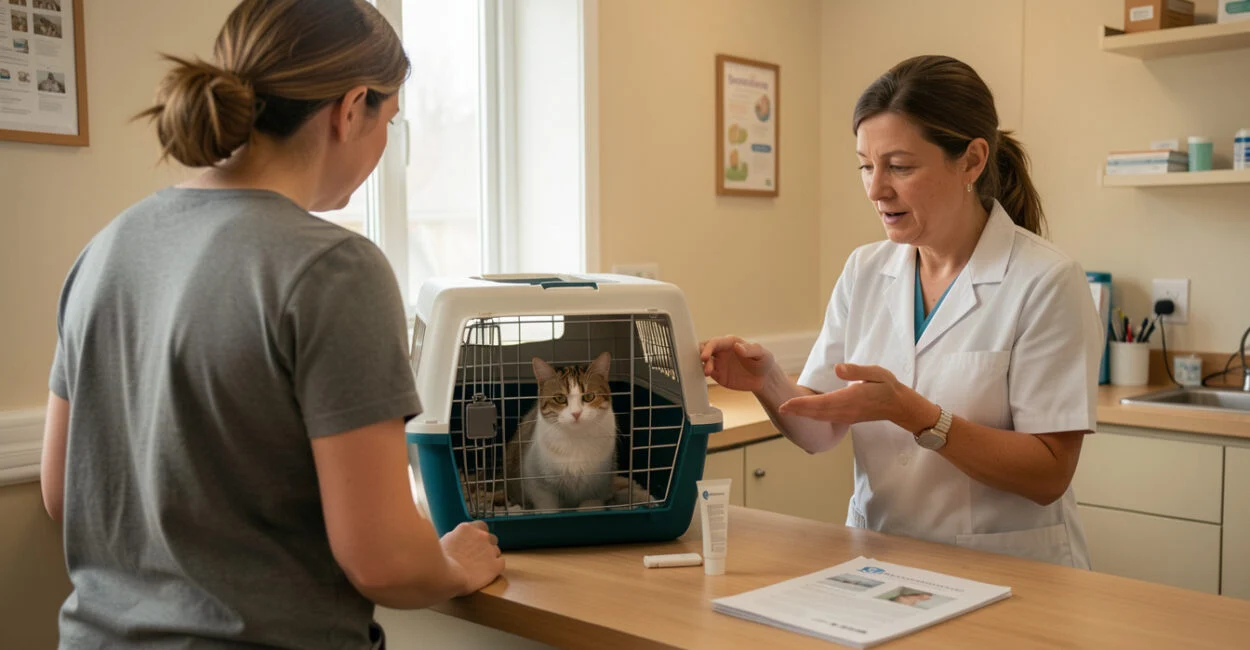
Hairball Remedies and Treatment: What to Discuss with a Vet
The best hairball treatment for cats depends on whether the problem is an isolated hairball, a recurring pattern, or another cause of vomiting. A veterinarian can help decide whether grooming changes, a diet, or a product is appropriate, and whether an examination is needed.
Option What it may be used for Caution Grooming Removing loose fur before it is swallowed Use a suitable tool and avoid tugging at mats Veterinary hairball diet Managing hairballs as part of a feeding plan Confirm suitability with a veterinarian Hairball gel or lubricant Supporting hair passage in some cases Follow label directions and veterinary guidance Unapproved home remedies No reliable role as a substitute for diagnosis Avoid oils, butter, human laxatives, and medication unless directed by a veterinarian
Hairball gels and lubricants are not guaranteed cures, and a home remedy cannot remove a hairball from the stomach or treat an obstruction. Product names, including Tomlyn Laxatone hairball remedy gel, do not establish that a product is suitable for a particular cat. Ask your veterinarian before using any gel or supplement, and follow the product directions they approve.
When symptoms persist, an examination may be needed to check for gastrointestinal or respiratory causes. If your cat has been prescribed medication, use the veterinarian’s directions rather than changing a dose; these tips for giving a cat medication with less stress may help with the routine.
Warning Signs That Need Veterinary Attention
Repeated unproductive retching, breathing difficulty, severe distress, or a painful or swollen abdomen warrants urgent veterinary attention. Do not wait for a hairball to pass or try to make your cat vomit. Possible cat hairball blockage symptoms can include vomiting, reduced appetite, lethargy, and changes in stool. These signs are not specific to an obstruction, so a veterinarian needs to assess the cat rather than relying on symptoms alone. The Merck Veterinary Manual’s information on trichobezoars describes why hair masses can require medical attention.
- Repeated retching without producing anything
- Difficulty breathing
- Repeated vomiting or worsening symptoms
- Marked lethargy
- Poor appetite or inability to keep water down
- Blood, dehydration concerns, or suspected foreign-object ingestion
Call a veterinarian promptly for repeated vomiting, blood, worsening symptoms, possible dehydration, or suspected ingestion of a foreign object. Breathing trouble or severe distress calls for emergency care.
What to Do During a Hairball Episode
Keep your cat calm and observe whether it is coughing, retching, vomiting, or struggling to breathe. If it is safe, record a short video for the veterinarian; do not delay urgent care to film. Do not reach into your cat’s throat or give food, medication, or a remedy during active distress unless a veterinarian instructs you to. If your cat repeatedly tries to bring something up but produces nothing, or has trouble breathing, contact an emergency veterinary service.
After one isolated episode, monitor appetite, energy, water intake, and litter-box output. If symptoms return or your cat seems unwell, contact your veterinarian and share your notes.
📱 See this content as a Web Story
Frequently Asked Questions
How Often Do Cats Throw Up Hairballs?
There is no universal frequency that applies to every cat. A change in pattern, repeated episodes, or vomiting without a hairball is a reason to seek veterinary advice.
What is the Best Treatment for Hairballs in Cats?
The best treatment depends on why the episodes are happening. Grooming may help reduce swallowed fur, while a veterinarian can advise whether a hairball diet or a labeled gel is suitable and whether another cause needs investigation.
How Do I Help My Cat Hack Up a Hairball?
Keep your cat calm and watch its breathing. Do not reach into its throat or give a remedy during active distress; repeated unproductive retching or breathing difficulty needs urgent veterinary attention.
How Do You Remove a Hairball from a Cat’s Stomach?
There is no safe home method to remove a hairball from the stomach. A veterinarian must assess persistent vomiting or suspected blockage and determine what treatment is needed.
What Are the Signs That a Cat’s Hairball May Be Causing a Blockage?
Vomiting, reduced appetite, lethargy, and changes in stool can occur with an obstruction, but they can also have other causes. Repeated retching, a painful or swollen abdomen, or worsening symptoms call for prompt veterinary assessment.
Start with a grooming routine your cat can tolerate, and track any vomiting or retching that recurs. If the pattern changes or your cat seems unwell, contact a veterinarian instead of trying a new remedy first.