
How to Stop Your Dog from Jumping on Guests
Stop your dog jumping on guests by rewarding calm greetings and pausing attention after jumps. Practise with a helper, gate or leash.
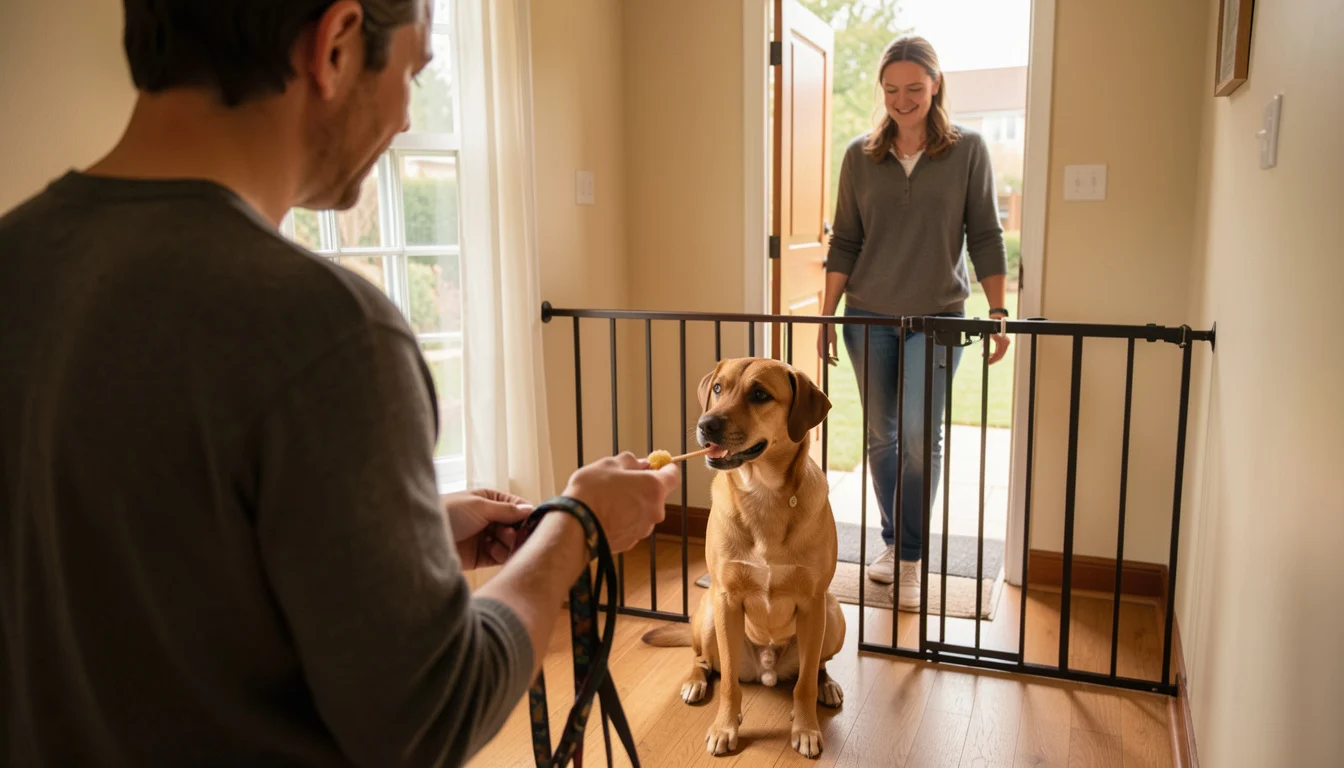 Dog earns greeting with a calm sit
The door opens, your dog launches, and your guest has to dodge a muddy-paw greeting. To stop a dog from jumping on guests, reward a calm alternative, such as standing with four paws on the floor or sitting, and make jumping pause the greeting. Practise with a helper, then use a gate or leash to manage arrivals while the skill develops.
The key is consistency: attention can reward a jump even when it comes with a scolding or a hand pushing the dog away. Keep greetings short and easy enough for your dog to succeed, and adjust the setup when excitement takes over.
Quick Facts
- Goal: Four paws on the floor or another consistent greeting behavior.
- Reward: Guest attention or a treat, delivered while the dog is calm.
- Practice: Start with a familiar helper in a quiet setting.
- Management: A gate, separate room, or adult-held leash can prevent an uncontrolled greeting.
- Safety: Keep hands and faces out of reach if the dog jumps or mouths.
Why Dogs Jump on Guests, and How to Stop It
To stop a dog from jumping on guests, teach that calm greetings earn attention and make jumping pause the interaction. Choose one behavior, such as four paws on the floor or sitting, and reward it promptly.
Practise with a calm helper before busy visits; use a gate, separate room, or leash to prevent rehearsal when the dog is too excited to respond.
Jumping is a behavior, not a diagnosis. A dog may jump because people have rewarded it with attention, because greetings are exciting, or for other reasons shaped by that dog’s history and surroundings. When guests talk to, touch, or look at a jumping dog, even a brief reaction can keep the habit going. A familiar, bouncy greeting is different from behavior that signals fear or distress. If your dog growls, snaps, lunges, or seems highly anxious around visitors, prioritize distance and safety; seek guidance from a veterinarian or qualified behavior professional rather than asking guests to test the dog’s limits. The American Veterinary Society of Animal Behavior’s position statements offer guidance on humane behavior practices.
Teach a Greeting Behavior Your Dog Can Succeed At
Pick one clear alternative to jumping and reward it as soon as it happens. “Four paws on the floor” can work well for a dog that finds sitting difficult; a sit is useful only if the dog can still respond when a person approaches.
Begin with familiar people in a quiet room. Reward the chosen behavior with a small treat or friendly attention, then add one challenge at a time: a person standing up, taking a step, or moving closer. If the dog breaks position, lower the difficulty instead of repeating the cue louder. Everyone in the household should use the same cue and reward the same behavior.
A clicker can mark the exact moment the dog keeps all four paws down, followed by a treat. If you use one, first build the association between the click and reward with a beginner-friendly clicker training routine.
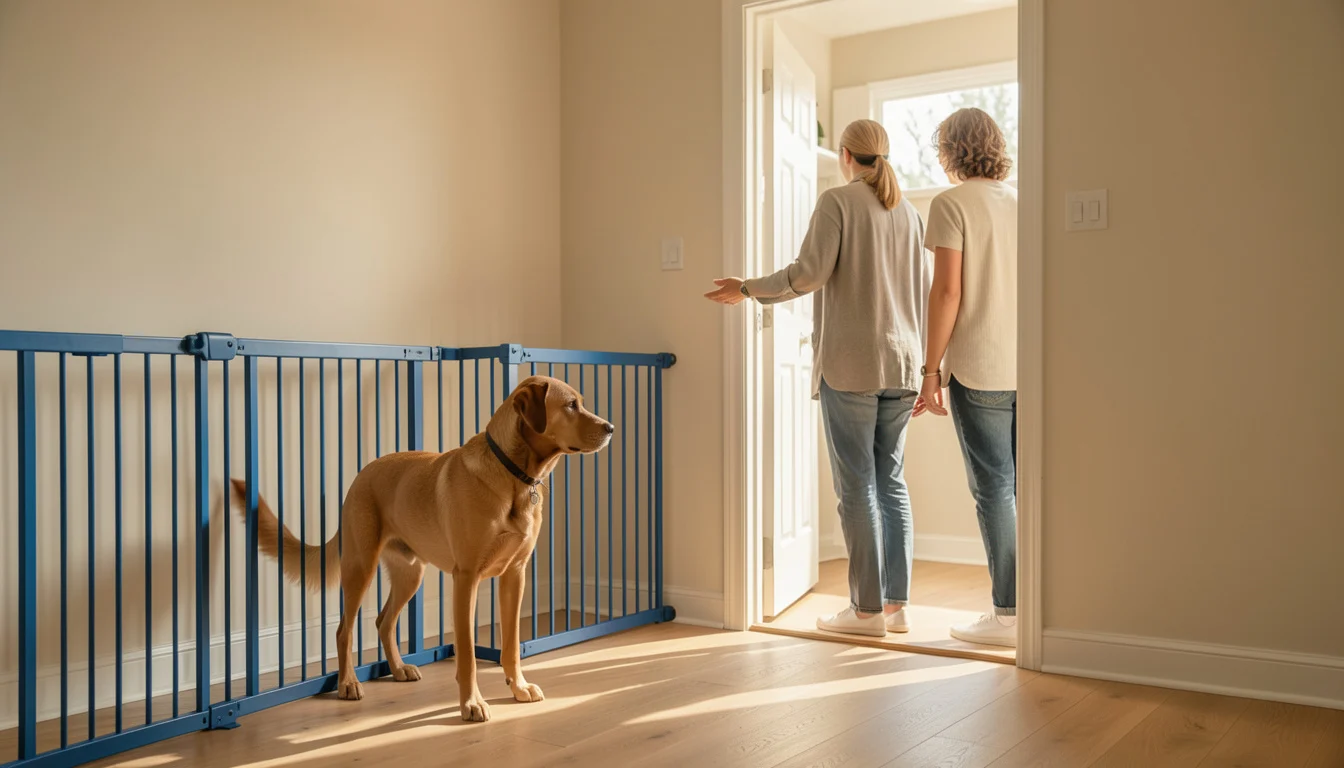
Practise a Calm Greeting with a Guest
Schedule brief practice visits before expecting polite behavior during a real arrival. Ask a familiar helper to approach only while the dog stays calm. If the dog jumps, the guest should turn away or step back without speaking, touching, or pushing; resume when the dog has four paws down or performs the chosen alternative.
Situation Guest’s response Owner’s response When to resume greeting Dog approaches calmly Stay neutral, then greet Reward the chosen calm behavior Right away, while the dog remains calm Dog jumps Turn away or step back; do not touch or speak Create space and wait for four paws down or the alternative behavior When the dog is calm enough to respond Dog is too excited to settle Pause the interaction Use a barrier or move the dog farther away After resetting with an easier setup
For example, if the dog jumps when a helper steps through the doorway, have the helper step back while the owner creates space. When the dog settles with four paws down, the helper can approach again and reward that calm moment with attention. If the dog jumps again, repeat at a greater distance rather than pushing through the greeting.
Keep repetitions short. A dog that can no longer respond to a familiar cue may need more space or a break, not another round of greetings.
Manage the Doorway During Real Visits
Before opening the door, place your dog behind a gate, in a separate room, or on a leash held by an adult. Give the dog a chance to settle, then decide whether a greeting is safe and manageable. Doorbell practice can help with the arrival routine, but it does not by itself teach the dog how to interact politely with a person; see how to teach a dog to stay calm when the doorbell rings for that separate skill.
- Prepare a gate, separate room, or leash and harness.
- Tell the guest to avoid rewarding jumping.
- Have treats ready before opening the door.
- Choose where the dog will wait.
- Keep hands and faces beyond the dog’s reach.
Management prevents unwanted contact while training catches up; it does not teach the greeting on its own. A gate or room works well when the dog cannot yet settle near visitors. A leash can help an adult maintain distance, but only if the handler can control it safely and the equipment fits.
A calm greeting becomes reliable when the dog can practise it safely and every person responds the same way.
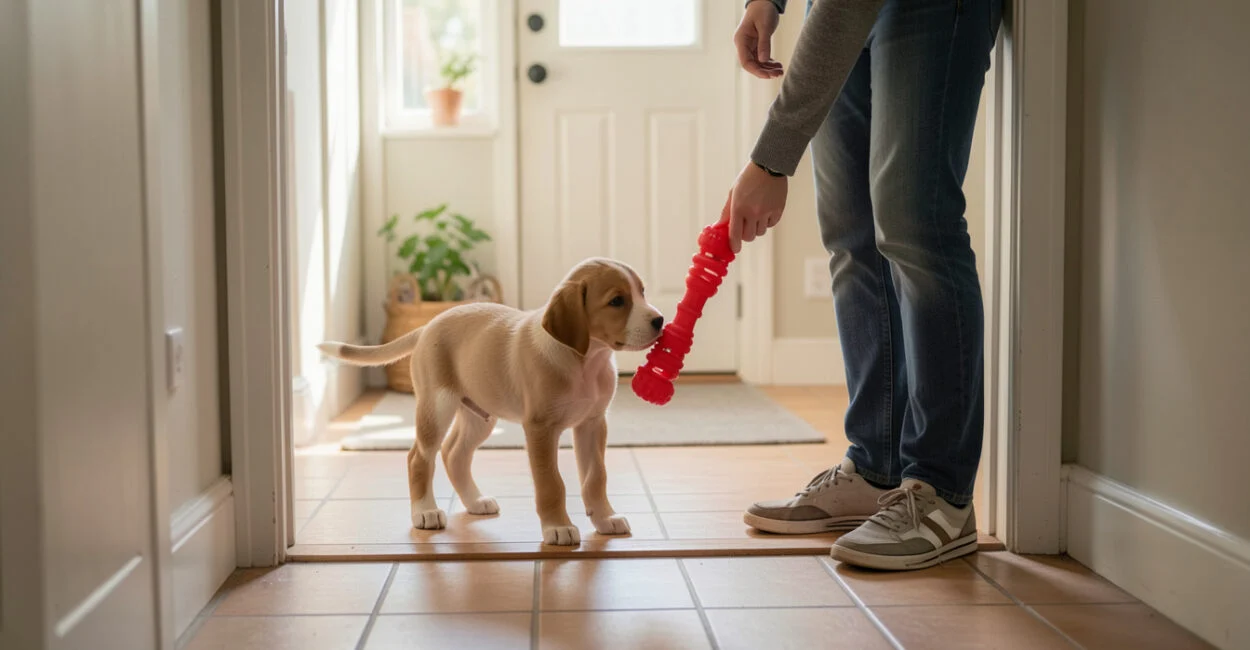
Adapt the Plan for Puppies Who Jump and Bite
Keep puppy greetings brief, and redirect biting to an appropriate toy rather than offering hands as play targets. If a puppy jumps and bites, pause the interaction and create space; resume when the puppy can engage calmly. Avoid yelling, hitting, or rough handling, which can increase fear or excitement.
Teething, fatigue, and overstimulation may contribute to mouthing, but age alone cannot establish why a puppy is biting. If you are wondering how to stop a puppy from jumping up and biting, focus on short greetings, a toy within reach, and a quiet break when the puppy loses control. The same approach can help with a 5-month-old puppy jumping and biting, though individual behavior varies.
Seek veterinary or qualified behavior-professional advice if biting is severe, escalating, or hard to manage safely. For broader puppy routines, this guide to teaching a puppy to use indoor potty pads covers another useful part of setting up a manageable home routine.
Choose Equipment for Management, Not as a Shortcut
A well-fitted harness and leash can help an adult keep a dog at a safe distance from guests. They do not teach the dog not to jump; that learning comes from repeated practice and consistent consequences. Follow the manufacturer’s fitting and safety instructions, and check with a veterinarian if you are unsure about comfort or fit.
Claims about an “anti-jump dog harness” or a device to stop a dog from jumping deserve caution. Evaluate comfort, fit, and welfare, and do not assume a product will solve the behavior. The phrase “ultrasonic dog training devices” covers tools that may startle a dog; they are not a guaranteed or humane solution. Consult a qualified professional before using aversive or startling equipment.
The ASPCA’s guidance on jumping up also emphasizes responding to the behavior without reinforcing it. If equipment makes the dog freeze, struggle, or avoid the greeting, stop and reassess rather than tightening control.
Troubleshoot Setbacks and Build Reliable Greetings
If jumping returns, make the next practice easier: increase distance, use a barrier, choose a calmer helper, or rehearse without the doorbell. Repeated jumping, refusal of a treat, ignoring familiar cues, or rising excitement are practical signs that the setup may be too difficult. They are reasons to simplify practice, not diagnostic tests.
For people asking how to stop a dog from jumping on you when excited, use the same rule outside the home: create space and reward calm attention or four paws on the ground before allowing an approach. If your dog jumps on people during walks, avoid letting a close greeting become the reward for pulling or leaping. Progress varies by dog, setting, and how consistently people respond; a fixed number of days or sessions cannot be promised.
Start with one calm helper and a greeting your dog can manage. Add the doorway, more movement, or busier visits only after the easier version is working.
📱 See this content as a Web Story
Frequently Asked Questions
How Can I Stop My Dog from Jumping Up to Greet People?
Reward a calm alternative, such as sitting or keeping four paws on the floor, and have people pause attention when the dog jumps. Practise with a helper, and manage real arrivals with a barrier or leash until your dog can respond reliably.
What Are the 3-3-3 Rules for Dogs?
The 3-3-3 rule is a commonly shared guideline for a dog’s adjustment after adoption: three days to decompress, three weeks to learn routines, and three months to feel more settled. It is not a scientifically fixed timetable or a guarantee, and each dog’s adjustment can differ.
What is the Hardest Command to Teach a Dog?
There is no universally hardest command. Difficulty depends on the dog’s training history, motivation, and surroundings; a behavior that is easy at home may be much harder with guests at the door.
What Does a Dog Jumping on You Mean?
It can reflect excitement, a learned way to get attention, or other motivations shaped by context. Jumping alone does not prove dominance, affection, or anxiety; consider the dog’s overall behavior and the situation.
Should Guests Ignore a Dog That Jumps?
They can briefly turn away or step back without talking or touching, while the owner creates space. Resume the greeting when the dog is calm enough to keep four paws down or perform the chosen alternative.
Should I Let My Dog Greet Every Visitor?
No. A greeting is optional, and a dog that is overwhelmed, fearful, or too excited may do better behind a gate or in a separate room. Give the dog access only when the setup is safe and manageable for everyone.