
Teach Your Dog to Settle on a Mat: A Simple Guide
Teach your dog to settle on a mat by rewarding voluntary steps, building rest gradually, and watching for signs of comfort rather than mere stillness.
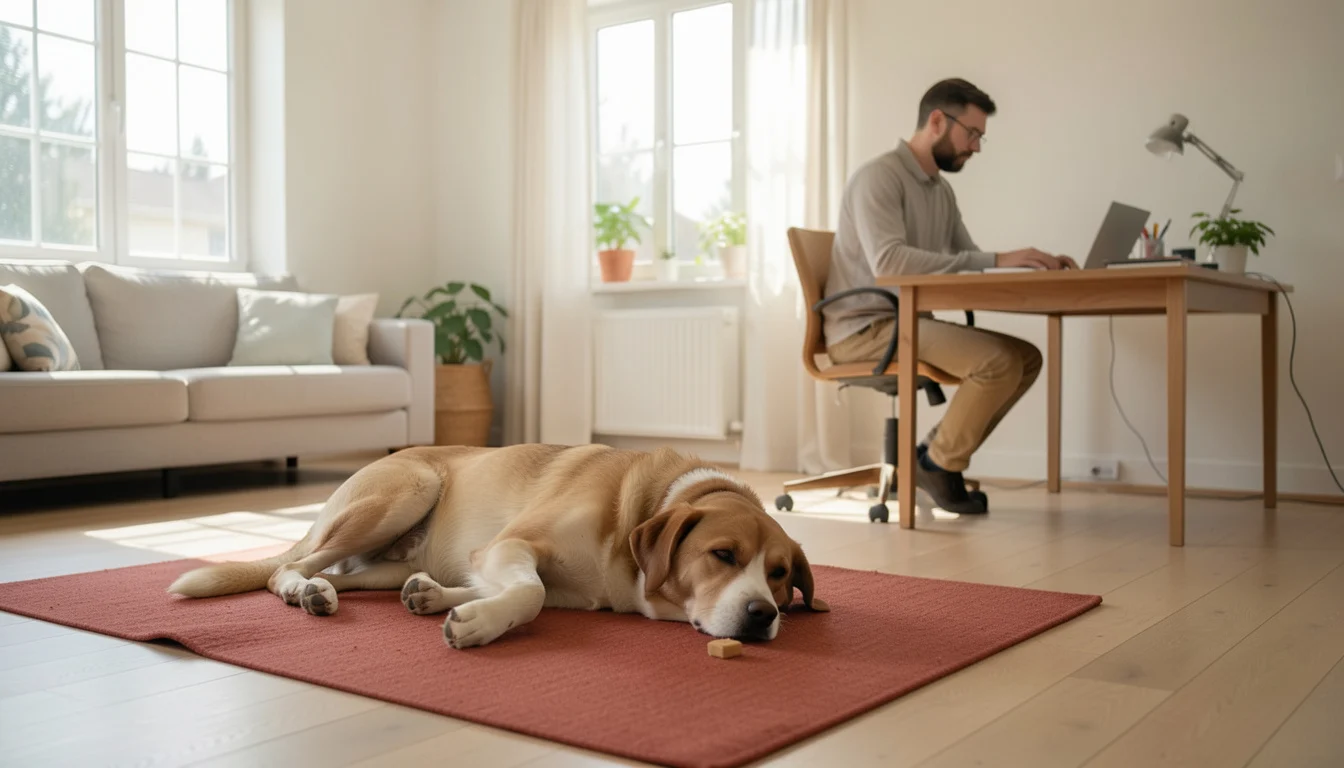 Dog rests calmly on its mat
A dog who can relax on a mat has a useful place to land while you work, eat, or welcome a visitor. To teach your dog to settle on a mat, reward voluntary steps toward it, then build toward comfortable resting and longer stays. Start somewhere quiet, add a release cue, and increase duration or distractions gradually.
The goal is a repeatable resting behavior, not a dog held in place. Progress depends on your dog’s comfort, health, and surroundings, so a settle that works in the living room may need to be taught again in a busier space.
What Does “Settle on a Mat” Mean?
Settling on a mat is a learned behavior in which a dog chooses a designated spot and rests there with a comfortable body posture. Put plainly, the dog goes to the mat and relaxes by choice, rather than being placed or kept there. A “go to mat” or place cue can mean moving to the spot; a settle adds the next part: resting there. The mat can offer a predictable resting place, but it does not replace exercise, enrichment, supervision, or help with fear and distress. A dog who is motionless may still feel tense, so watch the whole body rather than counting stillness as success.
How Should You Prepare the Mat and Training Space?
Choose a comfortable, non-slip mat with enough room for your dog to lie down. If you want a portable dog settle behavior, pick a mat you can carry, then introduce it first at home. Begin in a familiar, quiet room with small, suitable rewards close at hand.
- A non-slip, comfortable mat
- A quiet starting location
- Suitable rewards within reach
- Short, low-pressure practice
- A clear release cue, such as “all done”
- No forcing, punishment, or unsupervised chewing
Keep practice brief enough that your dog stays willing to participate. If your dog avoids lying down, seems uncomfortable, or struggles to get up, check the mat and position. Ask a veterinarian about possible pain, especially if the change is new. The American Veterinary Society of Animal Behavior’s position statements support humane, reward-based approaches to behavior.
How Do You Teach a Dog to Choose the Mat?
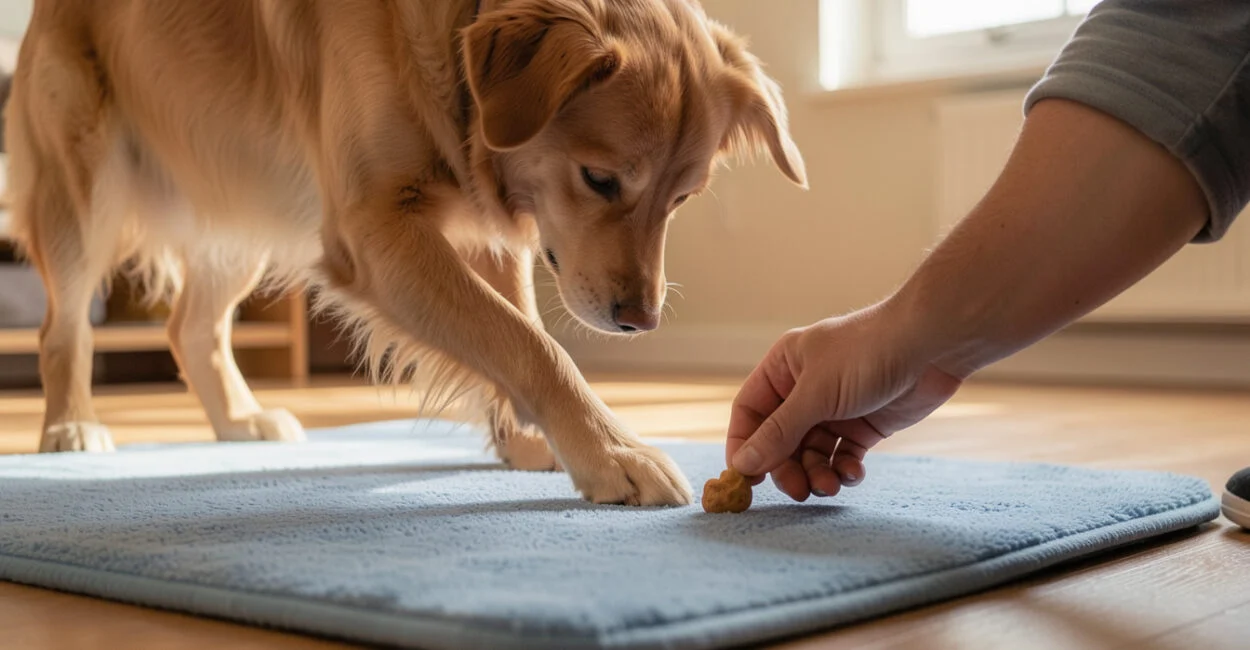
Reward your dog for voluntarily noticing, approaching, and stepping onto the mat, then gradually reward more settled behavior. This dog mat training with positive reinforcement gives the dog a reason to return without luring or placing them there.
- Set out the mat. Put it on the floor in your quiet practice area and give your dog room to investigate.
- Reward interest. Mark a glance, approach, or sniff with a word such as “yes” or a click, then deliver the treat near the mat.
- Reward stepping on. Feed on the mat when your dog puts a paw on it; build toward all four paws, rewarding before the dog loses interest.
- Invite a resting posture. Reward a sit, down, or relaxed position if your dog offers one. Don’t require a down if it is uncomfortable or not yet learned.
- Add the cue. Once your dog reliably moves toward the mat, say “mat” just before they do. Practise in easy conditions first.
Delivering the reward on the mat helps keep the dog there for another moment. If your dog steps off, reset calmly; don’t turn returning to the mat into a contest. A clicker can mark the exact behavior you want, and this beginner’s guide to clicker training explains how to pair the sound with a reward.
How Do You Build a Calm, Longer Settle?
Reward observable signs of comfortable rest, such as lying down, resting the head, or staying quietly on the mat. Start with frequent rewards, then vary the time between them only while your dog remains at ease; there is no fixed schedule that suits every dog.
Training stage What the handler does What to look for If the dog struggles Approach and investigate Reward voluntary interest Dog approaches or sniffs Make the mat easier to approach Step onto the mat Reward paws on the mat Dog remains briefly Reward sooner or reset calmly Rest on the mat Reward a sit, down, or relaxed posture Loose, comfortable behavior Reduce duration or check comfort Add duration and distractions Progress one challenge at a time Dog can remain settled comfortably Return to an easier stage
Teach a release cue such as “all done” by saying it, then inviting your dog off the mat and rewarding them for leaving. The cue ends the exercise; it does not ask the dog to stay indefinitely. If your dog gets up before the release, shorten the next attempt or return to an easier step rather than scolding or repeatedly putting them back.
How Do You Add Distractions and New Locations?
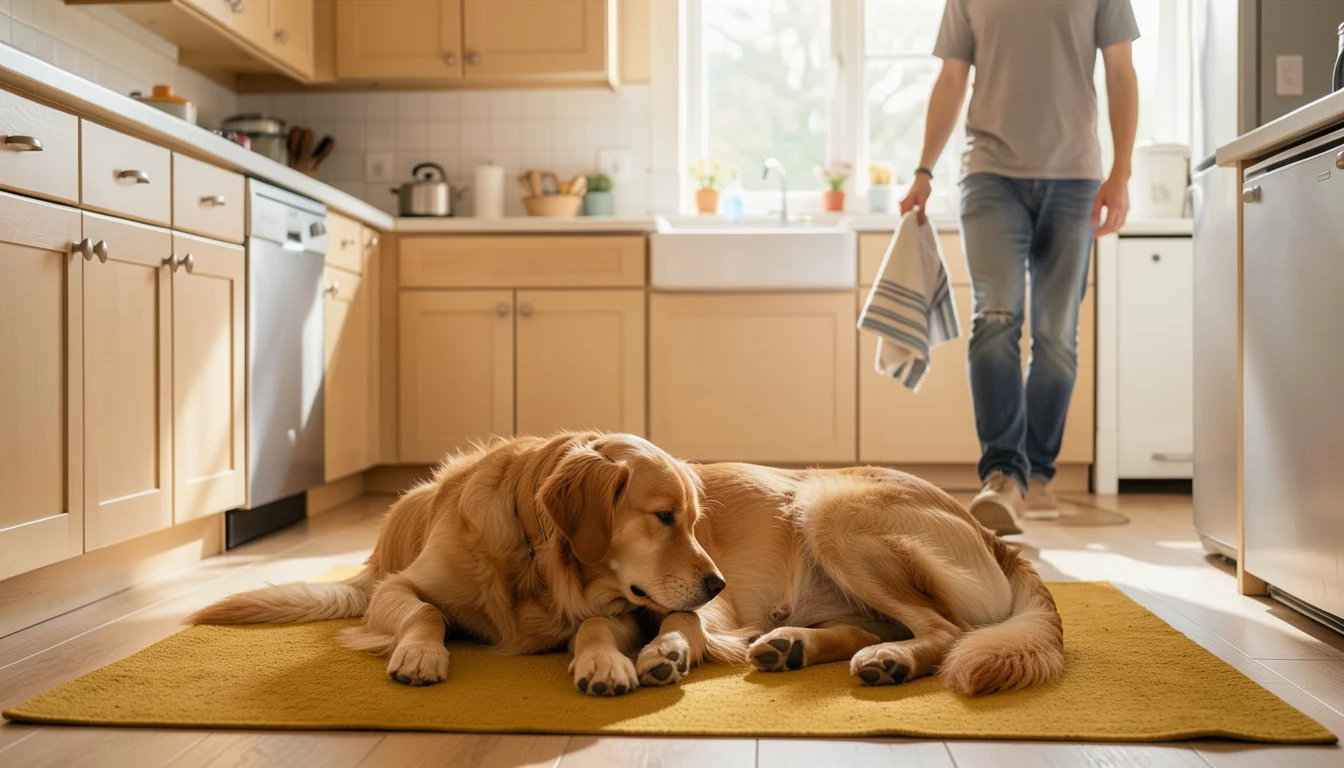
Change one challenge at a time: try a person moving nearby, a mild household sound, or a slightly busier room. If your dog cannot settle, increase distance from the distraction, lower its intensity, or return to a quieter space.
Practise with the same mat in different safe locations so the behavior can transfer beyond one room. For a portable settle, take the familiar mat to a low-pressure setting and begin with easy rewards and short rests. A dog who can settle at home may find a café, lobby, or busy gathering too difficult at first; that is a cue to make the setting easier, not to insist.
If visitors are the challenge, mat practice can be one part of a gradual plan. The steps in training a dog to stay calm when the doorbell rings can help you work on that specific trigger at a manageable level.
What Should You Do About Common Setbacks?
Make the next repetition easier when your dog leaves, chews the mat, or looks tense. Stillness alone does not prove relaxation; a stiff posture, repeated lip licking, or an attempt to move away may mean the dog needs more space or a chance to leave.
- Reduce the duration.
- Reduce the distraction or increase distance from it.
- Reward sooner for easier behavior.
- Check whether the mat or position is uncomfortable.
- Stop and seek appropriate help if the dog appears distressed or may be in pain.
If your dog chews or paws at the mat, supervise closely and consider whether the material is suitable. Your dog may need an appropriate chew, more activity, or a simpler training step. Stop practice if chewing creates a safety risk.
Persistent distress or a sudden change in behavior warrants veterinary guidance. If health concerns are ruled out but training remains difficult, a qualified reward-based trainer or veterinary behavior professional can help adapt the plan. The VCA guide to behavior modification in dogs describes why gradual, structured practice matters.
How Can Mat Settling Fit Into Everyday Life?
Use the mat for realistic, manageable moments: while you sit nearby, during a quiet meal, or when a visitor stays at a comfortable distance. Keep rewarding the behavior now and then so the mat remains worthwhile, and don’t expect your dog to settle through a prolonged or overwhelming situation.
Generalization takes practice, and results can vary with location, distractions, health, and the individual dog. If you are also building a puppy’s home routine, this guide to teaching a puppy to use indoor potty pads covers a separate skill that can be practised alongside calm mat time.
Question Short answer Where should I start? Use a comfortable mat in a quiet, familiar room. What earns a reward? Voluntary interest first, then steps onto the mat and comfortable resting. When should I add time? When your dog remains relaxed at the current level. What if my dog gets up? Reset calmly and make the next attempt easier. How do I practise elsewhere? Bring the familiar mat and begin again with easy rewards.
For your next practice, put the mat in a quiet room and reward your dog for choosing to approach it. Build from there: teach the location, reward calm behavior, add duration, introduce distractions, and practise in new places only when your dog is ready.
📱 See this content as a Web Story
Frequently Asked Questions
How Long Does It Take to Teach a Dog to Settle on a Mat?
There is no reliable fixed timeline. Some dogs learn the basic mat cue quickly, while comfortable settling across different places takes more practice and depends on the dog and the distractions.
What Should I Do If My Dog Keeps Getting Up from the Mat?
Shorten the time between rewards, reduce distractions, or return to rewarding an easier behavior such as stepping onto the mat. Let your dog leave without scolding, then try again when the setup is easier.
Can I Teach a Puppy to Settle on a Mat?
Yes. Use short, positive practice and reward small steps, since puppies may have limited attention and need frequent breaks. Keep the mat practice suited to the puppy’s age and needs.
Should I Use a Mat or a Crate for Settling?
They serve different purposes. A mat teaches a dog to rest at a chosen spot with freedom to move away; a crate is a separate enclosure that should be introduced positively and used in a way that suits the individual dog.
What If My Dog Chews or Paws at the Mat?
Supervise, prevent unsafe chewing, and check whether the mat is comfortable and appropriate. Offer a suitable chew or make the exercise easier; if the behavior persists or seems linked to distress, ask a veterinarian or qualified reward-based trainer for guidance.