
How to Help Your Cat Drink More Water
How to get your cat to drink water: account for moisture in food, offer fresh water in quiet spots, and try bowls or fountains without forcing a change.
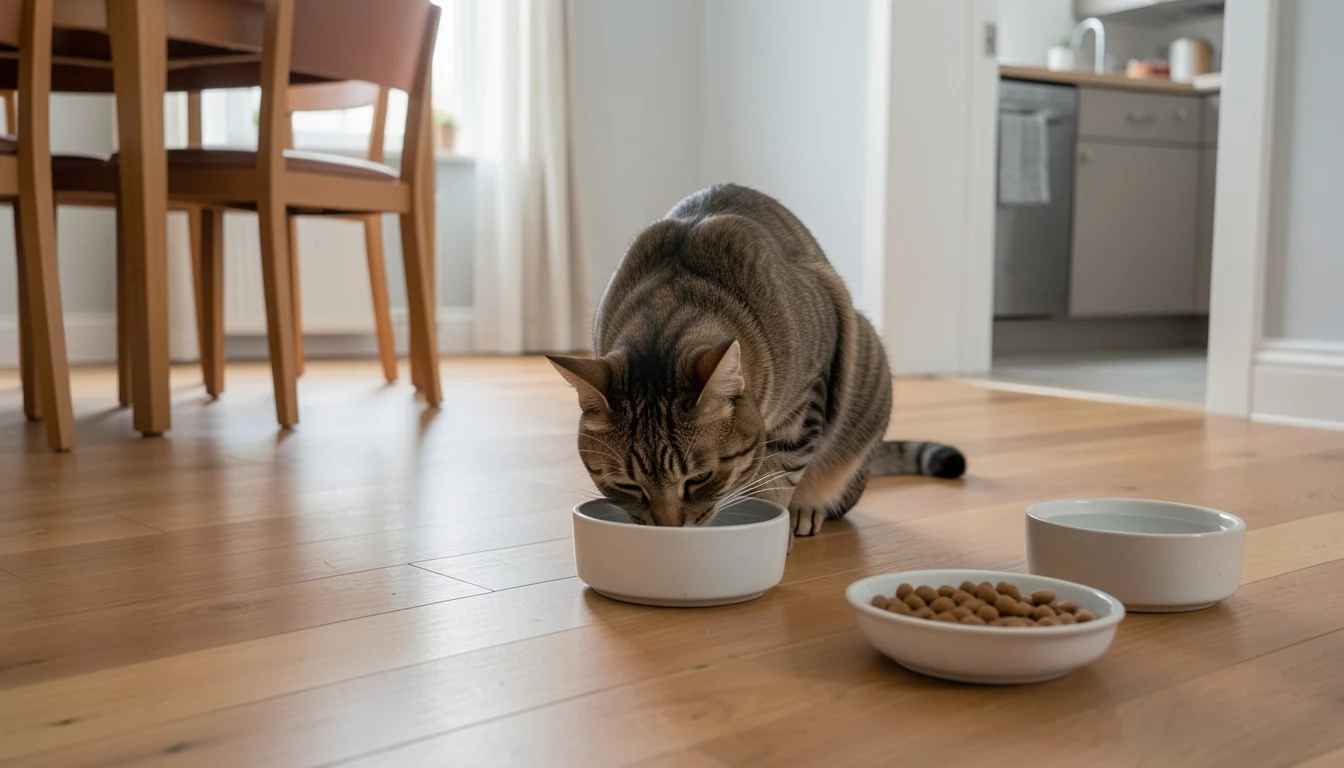 A cat chooses where to drink
A cat who barely touches the water bowl may still be getting water at mealtime. The best way to approach how to get cat to drink water is to consider food, habits, and preferences together, then make a change feel easy rather than forced.
Wet food contains water, so bowl-watching alone can give you an incomplete picture of your cat’s intake. How much a cat drinks varies with diet and individual needs. Start by offering clean water in a few accessible spots and noticing what your cat chooses. If drinking or eating changes suddenly, or your cat seems unwell, contact a veterinarian instead of relying on a bowl or food adjustment alone.
How to Get Your Cat to Drink Water: Start with Choices
To encourage a cat to drink, offer fresh water in more than one quiet, accessible location, and try a different bowl or a fountain if your cat seems interested. Keep the setup low-pressure: let your cat investigate and choose, rather than placing them beside the bowl or pushing water toward them. Hydration means taking in enough water to support normal body functions. In everyday terms, that water can come from both drinking and food. A wide, shallow bowl may suit a cat that dislikes its whiskers brushing the sides; another cat may prefer moving water. Neither option works for every cat.
Keep the water clean and easy to reach, then change one thing at a time. A bowl tucked beside a noisy appliance or in a spot your cat avoids may be less appealing than a calm location. Refresh water regularly, and give a new setup time before judging it.
Wet Food May Explain the Quiet Water Bowl
Wet food contributes water, so a cat eating it may drink less from a bowl than a cat eating dry food. That observation alone cannot confirm whether a particular cat is getting enough; diet, health, and individual needs all matter. The Cornell Feline Health Center’s guidance on water discusses how food and drinking both contribute to a cat’s water intake. If you’re unsure whether your cat’s usual pattern is appropriate, ask your veterinarian about the full diet and health picture instead of applying a universal target.
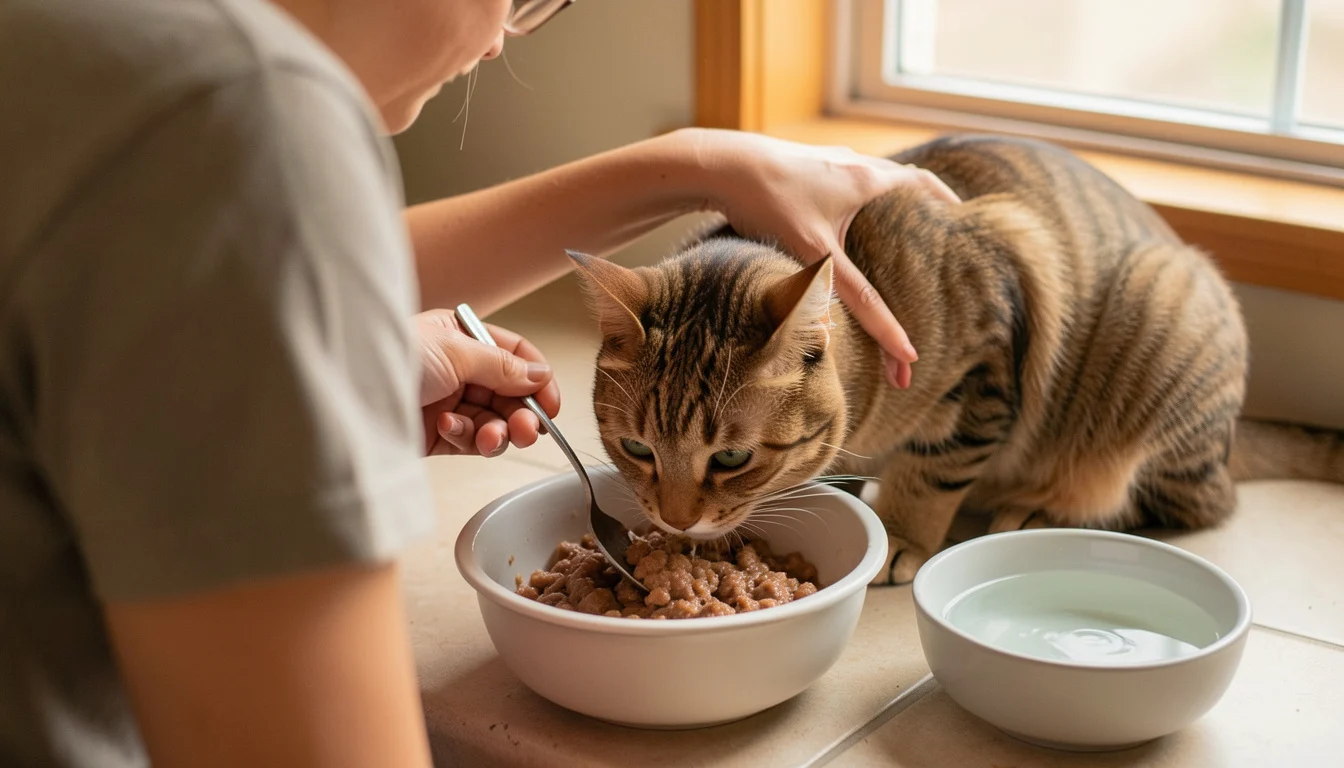
Add Water to Food Only If Your Cat Accepts It
If your cat already eats wet food, try mixing in a small amount of water and see whether the texture still appeals. Add it gradually; some cats welcome the change, while others leave a meal that feels unfamiliar. Abrupt diet changes can put a cat off eating, so keep the usual food in the picture and avoid turning mealtime into a contest. For feeding enrichment, you could also explore how puzzle feeders make meals more engaging, while keeping water available separately.
Skip seasoned broth unless your veterinarian confirms that its ingredients are safe for your cat. Broths may contain ingredients such as onion or garlic that are unsafe for cats, and salty or seasoned liquids aren’t a dependable hydration shortcut.
Small Setup Mistakes Can Make Water Less Appealing
When a cat seems uninterested, check the setup before trying increasingly elaborate fixes. These common missteps can backfire:
- Leaving water stale, dirty, or in a hard-to-reach place.
- Assuming every cat likes fountains or the same bowl shape.
- Changing food suddenly or adding an unapproved broth.
- Forcing water by syringe without veterinary direction.
Make changes calmly, one at a time, so you can tell what your cat actually prefers. A fountain can be worth trying, but it is an option, not a guaranteed solution.
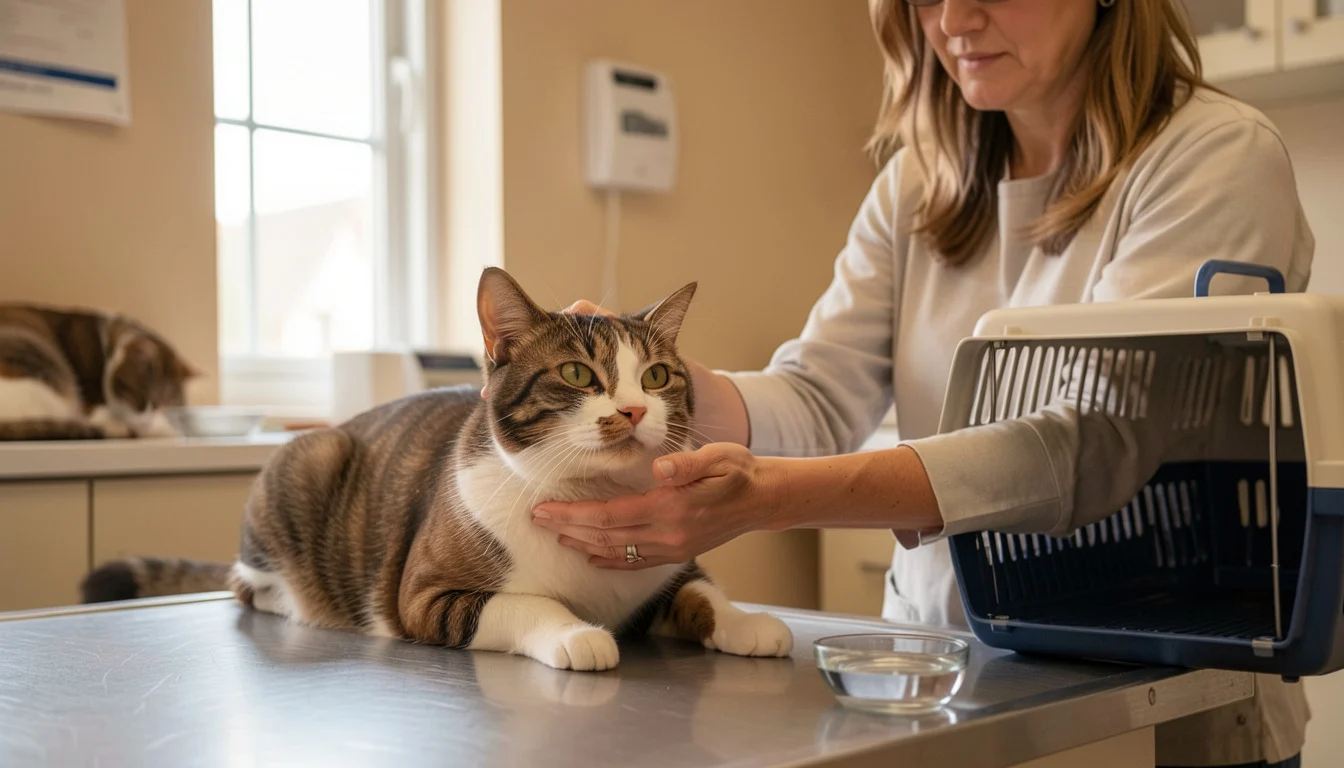
A Sudden Change Deserves More Attention Than a Longtime Quirk
A cat that has always taken little interest in a bowl while eating normally is different from one that suddenly stops drinking or eating. Contact your veterinarian if you notice a sudden change, signs of illness, or concern about dehydration. Thirst by itself cannot diagnose a health problem.
Don’t wait on a home experiment if your cat seems unwell. A veterinarian can assess the situation and advise what to do; avoid syringing water unless they specifically instruct you. If getting your cat to an appointment is difficult, this advice on helping a cat feel more comfortable with a carrier may make the trip less stressful.
Build a Routine Around What Your Cat Chooses
Set out fresh water in a couple of calm spots, keep the usual food steady, and watch for changes in your cat’s normal drinking and eating habits. The Merck Veterinary Manual offers veterinary information on digestive conditions; a veterinarian can help put any symptoms in context. There’s no single bowl, food, or daily target that suits every cat. Your most useful clue is a change from your own cat’s baseline. Make water easy to choose, and call your vet when that pattern shifts alongside illness or concern.
📱 See this content as a Web Story
Frequently Asked Questions
How Do You Hydrate a Cat That Won’t Drink?
Offer fresh water in a different spot or try wet food, with a little water mixed in if your cat accepts it. If refusal is sudden or your cat seems unwell, contact a veterinarian.
How Can You Trick a Cat Into Drinking?
Think of it as offering choices: fresh water, a different bowl, another location, or a fountain. Let your cat decide what feels comfortable.
What If My Cat Eats Wet Food but Doesn’t Drink?
Wet food contributes water, so little visible bowl-drinking may fit your cat’s usual pattern. A new change in drinking or eating, or another health concern, merits a call to your veterinarian.
Should I Give My Cat Water by Syringe?
Only if your veterinarian directs you to do so. Forcing water can create stress and carries a risk of it entering the airway.