
How Much Should You Feed an Indoor Cat Each Day?
How much to feed an indoor cat depends on calories, activity, and body condition. Use the label as a starting point, then measure and adjust with your vet.
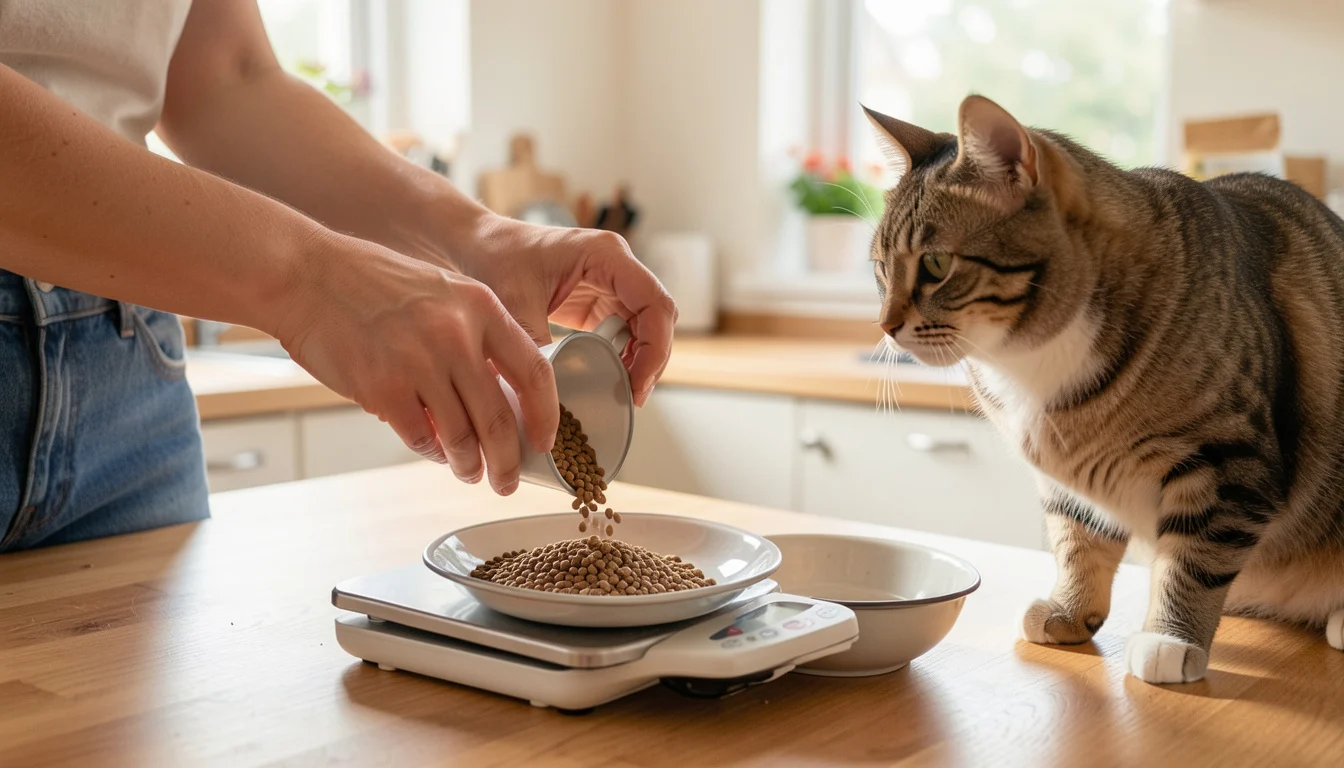 A cat’s daily portion, carefully weighed
A food bowl can look perfectly reasonable while your cat quietly gains weight; the label, a kitchen scale, and your cat’s body condition tell a more useful story.
When you’re figuring out how much to feed an indoor cat, there isn’t one scoop size that fits every feline. The right daily amount depends on weight, body condition, life stage, activity, health, and the calories in the food. Start with the package’s feeding guidance, measure the full daily ration, and ask your veterinarian to confirm the target if your cat needs to lose weight or has a health condition.
Indoor life alone doesn’t determine portion size. A lively young cat and a less active senior may eat the same food but have different needs. The practical goal is to find a measured amount that supports a healthy body condition, then adjust it based on changes you can track.
1. How Much to Feed an Indoor Cat Starts with the Individual
For an adult cat, the right daily portion is the amount of food that meets that cat’s energy needs while maintaining a healthy body condition. You can estimate a starting point from the food label, but the label cannot account for your cat’s exact activity, health, or weight goals. Body size, age, and activity all matter. So do pregnancy, growth, illness, and medications. The WSAVA Global Nutrition Toolkit offers guidance for assessing nutrition and body condition; your veterinarian can help translate that assessment into an appropriate feeding plan.
Use package directions as a starting estimate, not a personalized prescription. If you’re unsure whether your cat is at a healthy weight, get a professional assessment before cutting portions.
2. Compare Calories Before You Compare Scoops
Calorie content measures the energy food provides. A cup of one kibble can contain substantially more calories than a cup of another, so matching scoops does not necessarily mean matching portions.
Look on the packaging for “kcal per cup,” “kcal per can,” or calories per gram. Use the feeding chart as an initial guide, then check how its suggested daily amount compares with your cat’s needs. If you change foods, compare calories rather than pouring the same volume into the bowl.
The Cornell Feline Health Center’s guide to feeding cats explains why a cat’s needs depend on factors such as age and health. When the label’s calorie information is unclear, ask your vet or the manufacturer rather than guessing.
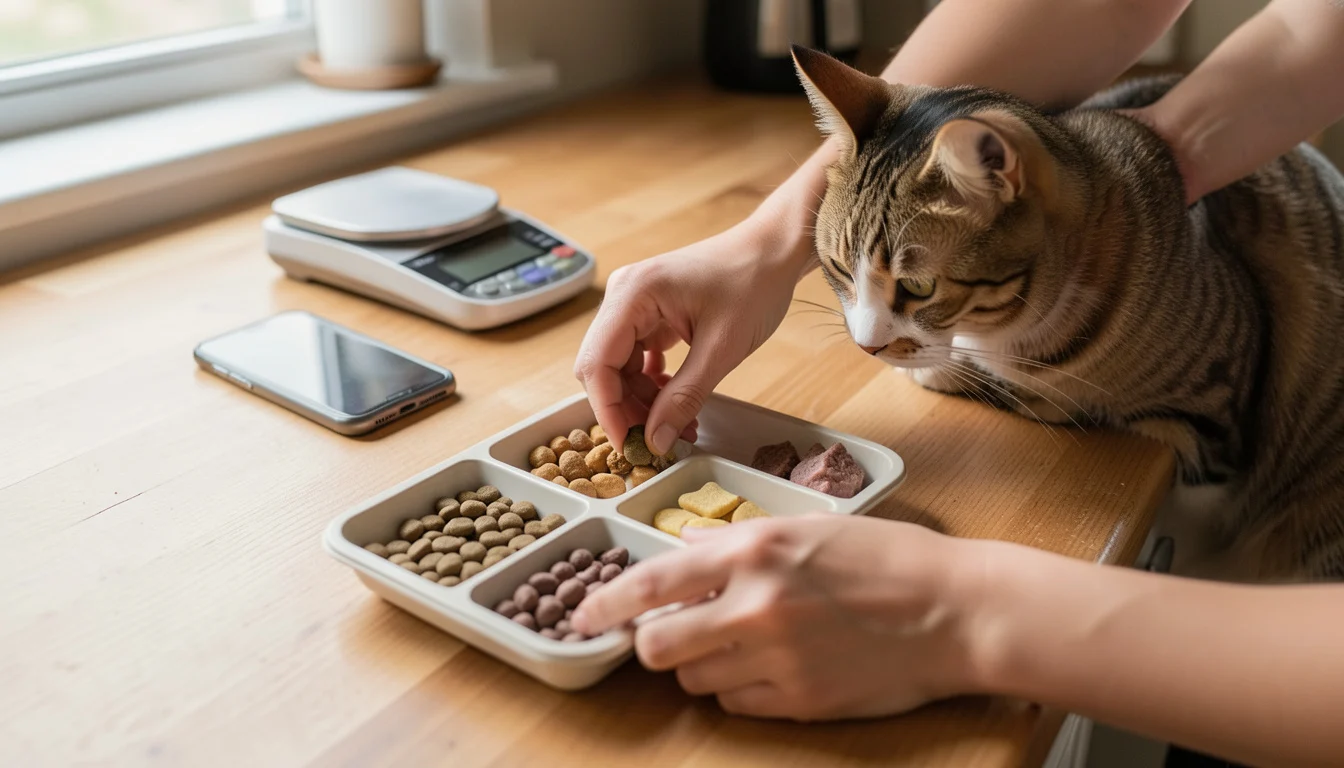
3. Count Every Bite in the Daily Ration
Measure the total food for the day, not just what goes into the main bowl. Treats, a spoonful of food used to give medication, and snacks from a puzzle feeder all contribute calories. They’re easy to overlook because each serving seems small.
Use a kitchen scale to weigh dry food when you can; measuring cups can be inconsistent, especially when they’re filled differently. If your cat gets wet food at one meal and kibble at another, record both. A simple note on your phone can track food, treats, and weight.
Food can make medication easier to give, but that portion still counts. These tips for giving a cat medication with less stress can help you plan the routine without forgetting the food used along the way.
4. Wet Food Can Fit Into the Plan
Wet food can be part of your cat’s daily diet, whether you serve it alone or alongside dry food. Check the calorie content on the can or pouch and subtract that portion from the total daily ration you’ve planned.
Don’t assume one can equals one meal for every cat. Package sizes and calorie densities vary. If you mix wet and dry food, keeping a written tally helps prevent the common mistake of feeding a full recommended serving of each.
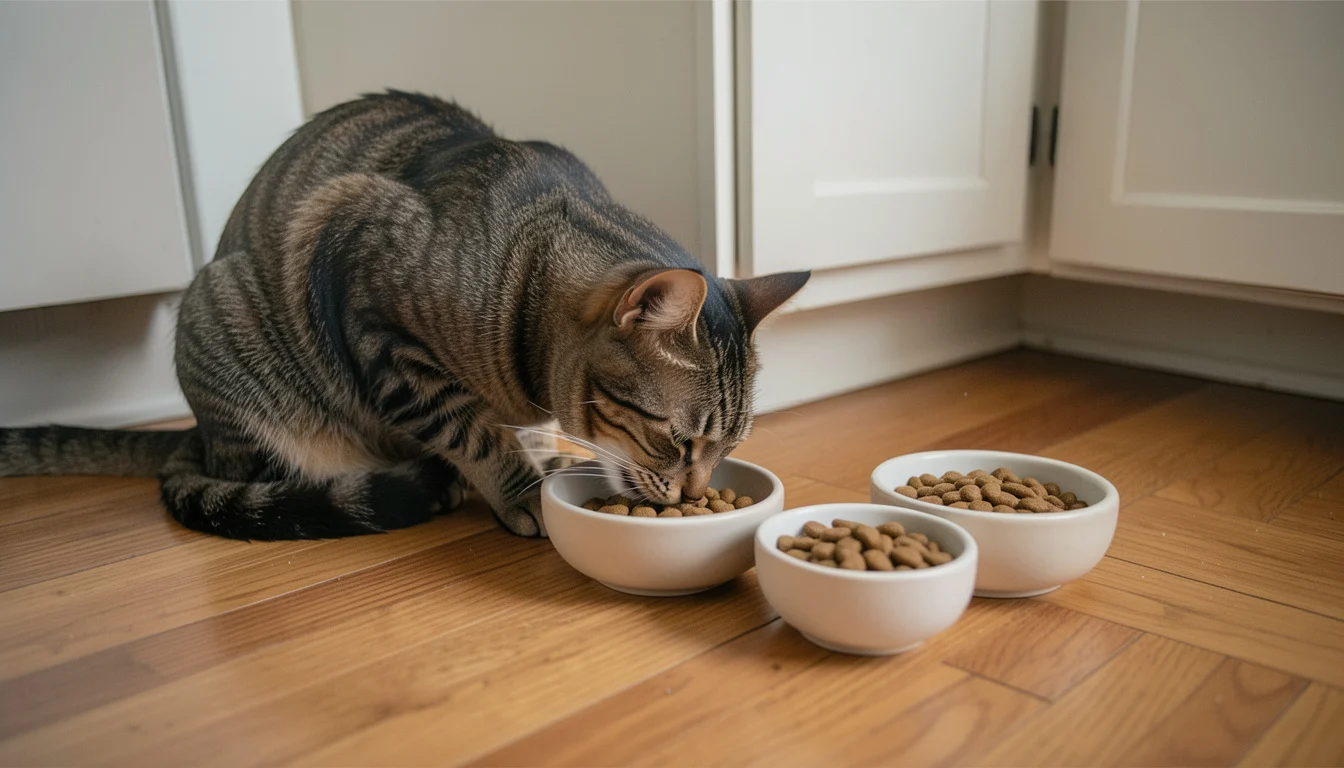
5. Pick a Meal Schedule You Can Keep
Some cats do well with two meals; others may do better with several smaller meals. Three meals a day can work too, as long as you divide the planned daily amount among them rather than adding extra food at each serving.
For cats that graze, measure out the day’s portion in the morning instead of topping up an empty bowl by feel. Activity can help make indoor life more engaging; these indoor cat enrichment ideas for small spaces offer ways to add movement without turning treats into the main event.
6. Adjust by Tracking Weight and Body Condition
Body condition describes how much fat a cat carries relative to its size, assessed by looking at and gently feeling the body. A full bowl can’t tell you whether your cat is getting too much, and an empty bowl doesn’t prove it needs a refill.
Weigh your cat at regular intervals and note any gradual trend. For a consistent check, use the same scale and a similar time of day. If weight shifts, or you can’t tell whether your cat needs to gain or lose, consult your veterinarian before making a sharp cut or increase.
Small changes are easier to assess when you’ve measured the starting portion. The right adjustment depends on the cat and may not follow a single timetable.
7. Treat Appetite or Weight Changes as Useful Information
A sudden change in eating or weight can have many causes, and feeding behavior alone cannot identify a disease. Still, it’s worth calling a veterinarian if your cat starts eating far more or less, or loses weight without an intentional diet change.
Older cats and cats with known health conditions may need closer attention. If you’re also changing food, share the product and portion details with the clinic. A feeding log can make those changes easier to describe.
Your cat’s measured daily ration, calorie intake, and body-condition trend matter more than the bowl’s appearance.
Set aside the day’s food before the first meal tomorrow. Once every bite has a place in the plan, it becomes much easier to spot whether the portion needs a second look.
📱 See this content as a Web Story
Frequently Asked Questions
What is the Silent Killer of Cats?
Chronic kidney disease is sometimes called a “silent killer” because early signs can be subtle. That phrase doesn’t make it the only condition with hard-to-notice symptoms; ask a veterinarian about changes in your cat’s appetite, thirst, or weight.
How Much Should I Feed a 2-Year-Old Cat?
Age alone isn’t enough to set a portion. Check the food’s calorie information and feeding guidance, consider your cat’s body condition and activity, and ask a veterinarian to confirm the target if you’re uncertain.
Can I Feed My Cat Wet Food Every Day?
Yes, wet food can be offered daily. Count its calories as part of the total ration, especially if your cat also eats dry food.