
How to Clean Your Dog’s Ears Safely and When to Call the Vet
Learn when to clean dog ears and when to stop: spot ordinary debris versus signs of pain or disease, and use safe, gentle cleaning only when appropriate.
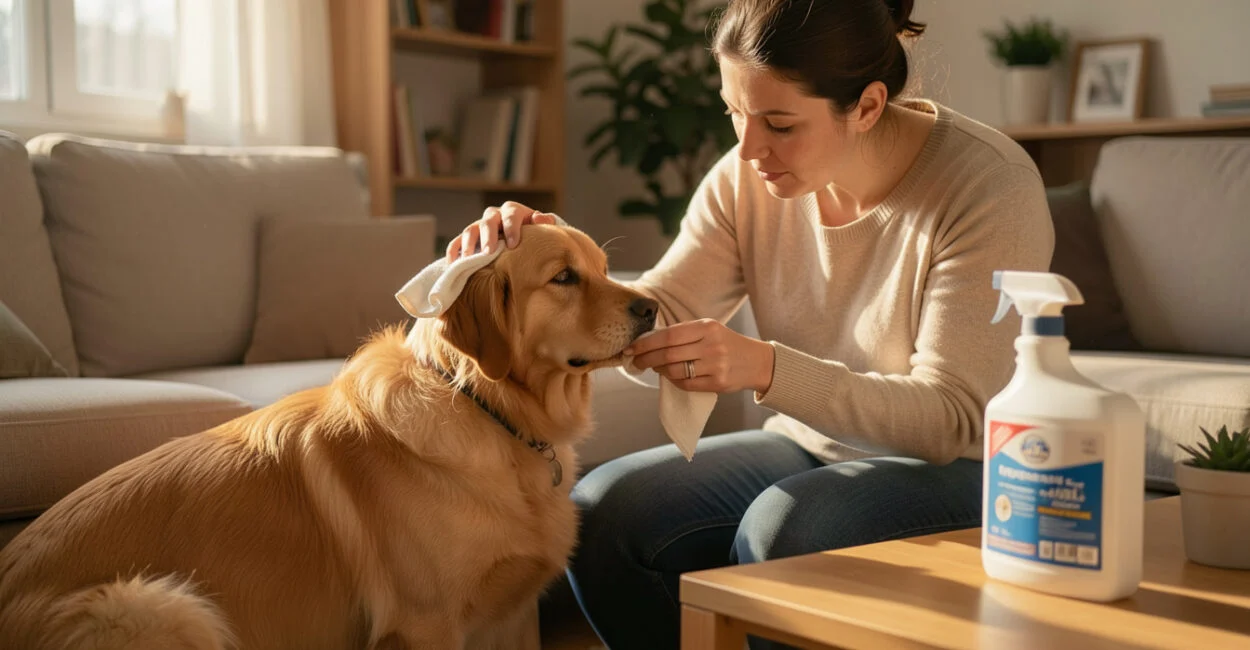 Gentle care for a relaxed dog’s ears
A dog who suddenly shakes their head after a bath may have water or debris in an ear, but repeated shaking can also signal pain or disease. To clean dog ears safely, use a dog-specific cleaner only when the visible ear needs it, and wipe only the areas you can see. Redness, odor, discharge, or tenderness calls for veterinary advice before cleaning.
Ear cleaning removes accessible debris from the outer ear and, when directed, helps clear the ear canal. It does not identify the cause of irritation or treat an infection.
A simple decision rule helps: ordinary visible buildup in a comfortable-looking ear may be suitable for gentle cleaning; pain or abnormal signs mean stop and call a veterinarian.
How to Tell Whether Your Dog’s Ears Need Cleaning
Clean your dog’s ears only when there is visible debris or your veterinarian has recommended a routine. Healthy ears do not all need the same cleaning schedule. Some dogs need occasional care; others need an individualized plan because of recurring ear problems or other health needs. A small amount of wax or dust is different from a symptom. Redness, swelling, discharge, a strong odor, tenderness, or repeated head shaking and scratching can point to a problem that cleaning alone will not resolve. If an ear looks inflamed or seems painful, do not try to clean it before getting veterinary guidance.
Visible debris in a comfortable ear may call for gentle cleaning; pain, inflammation, or persistent symptoms call for a veterinary assessment.
What to Use—and What to Avoid
Choose a dog ear cleaner recommended by your veterinarian, and follow the label or clinic’s instructions. A dog ear cleaning solution is not a universal product: the right choice can depend on your dog’s medical history and what is happening in the ear. A vet approved dog ear cleaning solution is for cleaning, not for diagnosing or curing an infection.
Item or approach Routine use? Guidance Dog-specific, veterinarian-approved ear cleaner May be appropriate Follow the label and your veterinarian’s instructions. Cotton ball or gauze For visible areas only Wipe gently; do not push material into the canal. Cotton swab inserted deep into the ear No Do not insert it into the ear canal. Household remedies or leftover medication Not for self-treatment Ask a veterinarian before using anything in an abnormal or painful ear.
Skip alcohol, hydrogen peroxide, oils, and vinegar as default home treatments. These substances may irritate tissue, and a liquid that seems harmless in a healthy ear may be unsuitable when the ear is inflamed or injured. The Merck Veterinary Manual’s overview of canine ear disorders explains why ear problems need assessment rather than guesswork.
How to Clean Your Dog’s Ears Safely
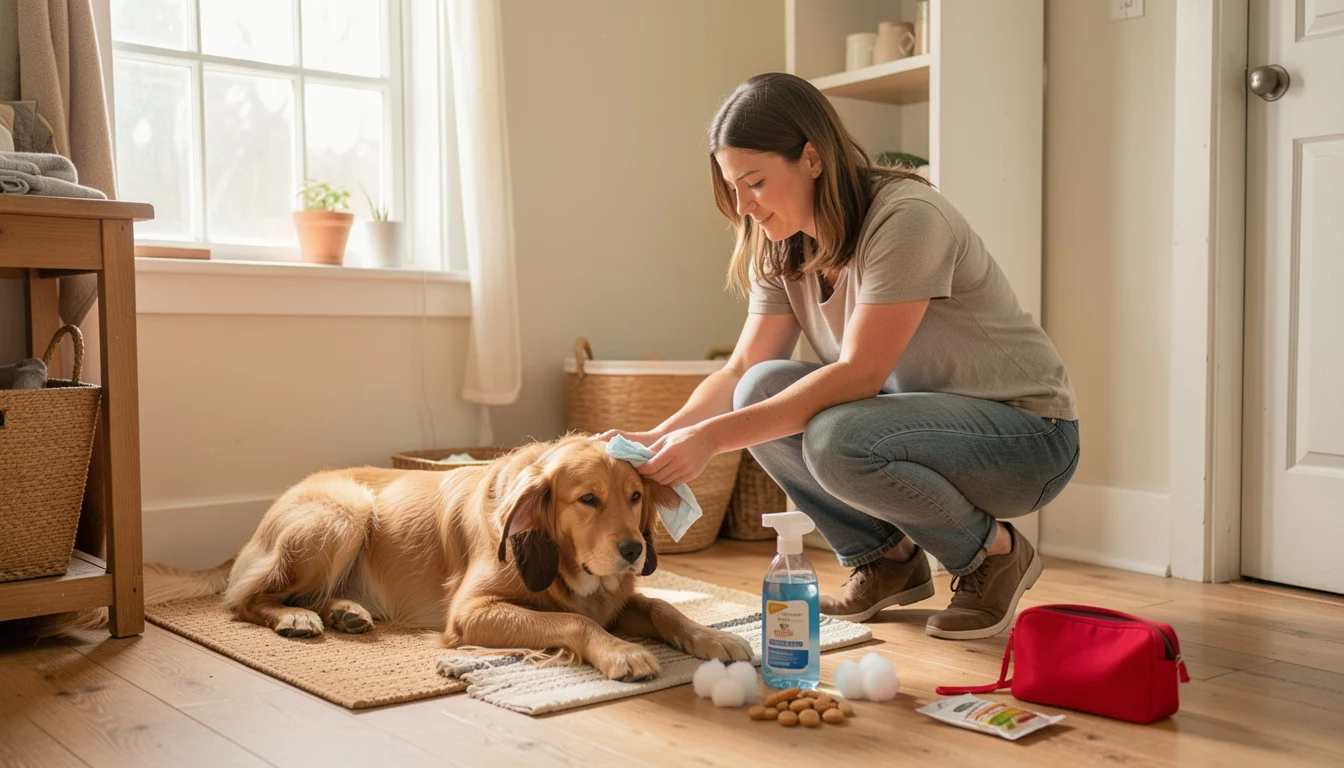
Choose a calm moment, gather the supplies, and keep the dog in a comfortable position. Follow the cleaner’s directions or your veterinarian’s instructions; do not force the applicator into the canal. A dog who pulls away, yelps, or stiffens may be showing discomfort, not being uncooperative.
- Prepare the supplies. Have the recommended dog ear cleaner, cotton balls or gauze, and a few treats within reach.
- Apply gently. Use the amount and method on the product label or given by your veterinarian. Keep the nozzle at the opening rather than pushing it into the ear canal.
- Massage only if tolerated. If the ear is not painful and your dog accepts it, gently massage the base of the ear. Let your dog shake their head.
- Wipe visible debris. Use gauze or a cotton ball to clean the accessible inner flap and opening. Leave deeper areas alone.
- Stop for discomfort. Stop if your dog shows pain or distress, or if you see bleeding or worsening irritation. Contact your veterinarian for advice.
A common mistake is wiping farther in each time because debris remains visible near the canal opening. That can push material deeper or irritate delicate tissue. Clean only what you can see; if the buildup does not come away easily, ask your veterinarian what to do next.
Keeping a dog calm during care follows the same reward-based approach used in beginner clicker training: reward small steps, and pause before your dog becomes distressed. Ear care should never turn into a struggle.
How Often to Clean—and When to Leave the Ears Alone
There is no schedule that fits every dog. How often to clean depends on your dog’s ear health, the reason for cleaning, and veterinary advice. If ear problems keep returning, ask your veterinarian to set a routine instead of increasing cleaning frequency on your own.
Cleaning too often or scrubbing vigorously can irritate the ear. Persistent odor, discharge, or repeated scratching is not a cue to clean again and again; those signs need assessment. The VCA guide to ear infections in dogs describes symptoms that may have different causes and need veterinary attention.
Signs That Need Veterinary Attention
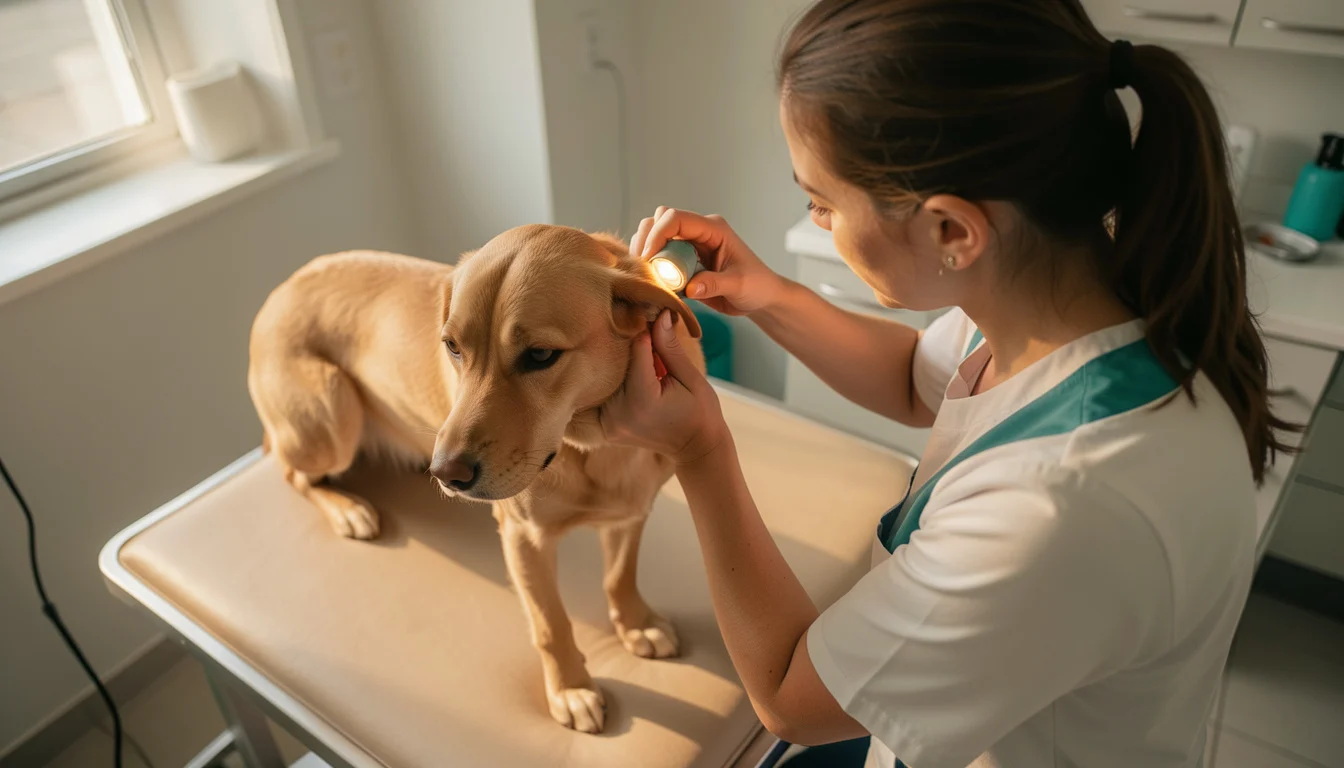
Contact a veterinarian when ear symptoms persist, recur, or worsen. Signs alone cannot confirm an infection: irritation may have several causes, and an examination helps determine whether testing or treatment is needed.
- Persistent head shaking
- Repeated scratching at one or both ears
- Unusual or strong odor
- Discharge or excess material
- Redness or swelling
- Tenderness or pain when the ear is touched
- Bleeding or visible injury
- Balance changes or sudden worsening
What you notice What to do Persistent head shaking or scratching Contact a veterinarian for guidance. Odor, discharge, redness, or swelling Arrange a veterinary assessment; do not assume the cause. Pain, bleeding, marked swelling, or balance problems Seek prompt veterinary advice.
Do not use leftover antibiotics or choose an over-the-counter product to treat a suspected infection. The best antibiotic for a dog ear infection cannot be selected safely without a veterinary diagnosis and direction. Searching for a dog ear infection home remedy, a dog ear infection remedy, or the best homemade dog ear cleaning solution does not replace an examination. If you are wondering how to treat a dog ear infection without a vet, the safe answer is not to attempt treatment without veterinary advice.
Persistent ear symptoms need a diagnosis because cleaning and medication can affect an ear differently depending on the cause.
What a Vet Visit or Grooming Appointment Can—and Cannot—Do
A veterinarian can examine the ear and decide whether testing or treatment is needed. The next step depends on the findings and your dog’s history; there is no single treatment pathway for every ear problem.
Veterinary costs vary by location and by what the visit requires, such as an exam, tests, or treatment. Ask the clinic for an estimate before the appointment and check what it includes. A groomer may clean accessible areas as part of a grooming service, depending on the service offered and your dog’s tolerance. Grooming does not replace veterinary care for pain, suspected infection, or other medical signs.
- What does the estimate include?
- Could the visit require tests or treatment beyond the exam?
- Should I avoid cleaning the ear before the appointment?
If routine grooming includes nail care too, these safe at-home dog nail-trimming steps can help you prepare for another low-stress care task.
Build a Low-Stress Ear-Care Routine
Check the visible parts of your dog’s ears from time to time, and note changes in appearance or behavior. Pick a calm moment and reward cooperation. If your dog becomes distressed, stop rather than holding them still and pushing through.
For recurring symptoms, write down what you notice and when it happens, then discuss the pattern with your veterinarian. Do not respond by cleaning more often or trying several products. A useful rule to keep: routine visible debris may call for gentle cleaning; pain or other abnormal signs call for veterinary advice.
Frequently Asked Questions
What Are Some Home Remedies for Cleaning a Dog’s Ears?
For routine cleaning, use a dog-specific cleaner recommended by your veterinarian and wipe only visible areas with gauze or a cotton ball. Avoid vinegar, oils, alcohol, and hydrogen peroxide unless your veterinarian specifically directs you to use a product.
How Much Does It Cost to Get Dog Ears Cleaned at the Vet?
There is no fixed price. The total depends on your location and whether the visit involves an exam, tests, or treatment, so ask the clinic for an estimate.
What Do I Do If My Dog Keeps Shaking His Head and Scratching His Ear?
Contact a veterinarian for guidance, especially if the behavior persists or you notice odor, discharge, redness, or pain. Avoid putting cleaner or medication in an abnormal or painful ear before you get advice.
What Do Groomers Do to Clean Dogs’ Ears?
Depending on the service and your dog’s tolerance, a groomer may clean accessible areas of the ear. A groomer cannot diagnose or treat a suspected infection, injury, or painful ear; those signs need veterinary assessment.