
How to Clean Gutters Safely and Spot Drainage Problems
Clean gutters safely by checking weather, footing and overhead hazards, choosing a method that avoids overreaching, and testing downspout flow.
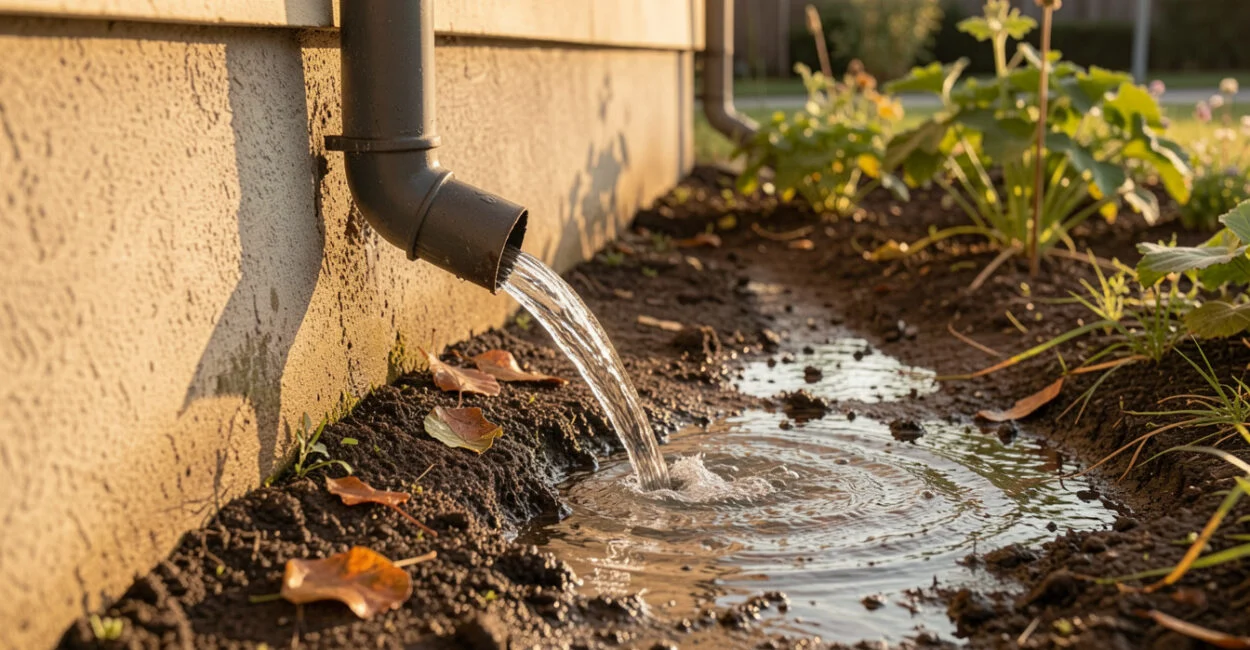 Downspout carries water away from foundation
A gutter can look clear from the ground while a downspout stays blocked at its outlet, leaving rainwater to spill beside the foundation. To clean gutters safely, choose a method that suits the building and conditions, remove debris without overreaching, then check that water flows through the downspouts and drains away from the home. Stop if access or the gutter itself looks unsafe.
Cleaning removes leaves and other debris from the gutter channel and its outlets so rainwater can move through the drainage system. It cannot fix poor slope, loose fasteners, damaged joints, or an outlet that sends water toward the house. The safest approach depends on more than the tool you own. Height, ground conditions, visibility, and the gutter’s condition all affect whether a ground-based method is enough or a professional should take over.
Start with a Safety Check Before Cleaning Gutters
Clean gutters safely by checking the weather, the ground, and overhead hazards first, then choosing a method that reaches the gutter without unsafe access. Clear the work area, follow the ladder manufacturer’s instructions if using a ladder, and stop if the building, equipment, or task makes stable access uncertain.
Postpone the work if wind, rain, ice, or soft ground could make your footing unstable. Look for power lines near the work area and keep ladders and long tools well away from them. The OSHA ladder requirements explain why safe setup and proper ladder use matter.
A ladder is not right for every house or every section of gutter. Never lean or reach sideways to grab debris; climb down and reposition the ladder instead. Avoid climbing onto a roof unless you have the training and equipment for that work. Hire a professional for significant height, unsafe access, damaged gutters, or a blockage you cannot clear without force.
Before starting, make this quick check:
- Check the weather and ground conditions.
- Identify overhead hazards, including power lines.
- Choose a method that can reach the gutter without unsafe access.
- Inspect visible gutter condition and decide where debris will go.
- Stop if access, equipment, or gutter condition is unsafe.
Choose Gutter Cleaning Tools That Suit the Job
Hand-cleaning from a properly positioned ladder offers a direct view of the gutter, while ground-based options can reduce ladder use but often limit visibility and control. No tool works equally well on every gutter: consider reach, the type of debris, equipment compatibility, and whether you can confirm the result.
Method/tool Best suited to Limitations and cautions Hand-cleaning from a ladder Accessible sections where the ladder can be positioned safely Requires safe ladder setup; visibility and reach vary. Extension pole or gutter scoop Loose debris reachable from the ground May offer limited visibility and control; avoid forcing the tool. Gutter vacuum Debris that the equipment can reach and extract Reach and performance depend on the equipment and gutter setup. Leaf-blower attachment Loose, dry debris where the tool is compatible Can scatter debris; use only with safe access and suitable conditions. Professional service Unsafe access, difficult clogs, or suspected damage Confirm scope, repairs, and price with the provider.
A gutter scoop removes debris; it does not clear every blockage. Forcing one into a seam or outlet can damage the gutter or push debris deeper. Ground-based gutter cleaning tools also vary in how well they show what is happening inside the channel. Searches for a Xero gutter tool or products at Lowe’s or Harbor Freight are product-specific searches, not proof of universal compatibility or current availability.

Remove Debris in Manageable Sections
Work a short section at a time, placing leaves and sediment where they will not create a slip hazard or block a drain below. If you use a ladder, keep your body centered between the rails and move the ladder rather than reaching past your balance. A ground tool may clear loose leaves but leave compacted debris behind, so inspect the result from a safe position.
Water can help rinse a gutter when the setup can handle it and the downspout is open. Avoid high-pressure methods: forceful water can loosen fittings or drive water behind the gutter. If you are unsure whether the gutter or drainage arrangement can take a rinse, skip it and use a suitable lower-force method or call a professional.
Safe gutter cleaning ends only when the channel, downspouts, and water discharge all work as intended.
Loose roof-edge components or signs of water intrusion deserve a separate inspection; cleaning will not address a roof or flashing defect. For background on repair costs that can accompany roof problems, see what roof repairs may cost beyond the initial quote.
Clear and Test the Downspouts
Debris can collect at the gutter outlet, inside the downspout, or at its lower end, so clearing the channel alone may not restore flow. Check visible openings for blockage, then test with a controlled amount of water if conditions allow and the outlet can drain safely.
If water backs up, leaks from joints, or fails to emerge at the bottom, stop and investigate rather than forcing a tool through the pipe. A suitable cleanout method may be needed, but its fit depends on the downspout and the location of the clog. If clearing requires force or unsafe access, leave it to a professional.

Check Drainage and Look for Gutter Damage
Watch where water exits the downspout and whether it drains away from the home instead of pooling beside it. A clear gutter cannot correct poor slope, broken components, or an outlet that discharges in the wrong place. The CDC’s healthy homes guidance discusses moisture and structural conditions worth watching around a home.
- Overflow during rain: Check for a blockage or inadequate flow; get help if the cause is unclear.
- Leaks at a joint: Look for a loose or damaged connection; arrange repair if cleaning does not resolve it.
- Sagging or detached gutter: Suspect a support or attachment problem and consult a qualified professional.
- Pooling near the outlet or home: Check where the outlet sends water and seek advice if pooling persists.
- Standing water in the gutter: Investigate slope or obstruction; cleaning may not correct the underlying issue.
Recurring overflow or clogs often point to an unresolved cause, such as a damaged section, poor drainage layout, or debris that repeatedly collects at the same point. A professional can assess whether the issue calls for cleaning, adjustment, repair, or a change to the discharge route.
Decide Whether to Do It Yourself or Hire a Service
DIY cleaning makes sense only when the access is safe, your equipment suits the gutter, and the system appears intact. Having a tool that reaches the roofline does not make the task safe if you cannot see whether it has cleared the gutter or if the ground is unstable.
For a “clean gutters near me” search, compare written estimates and confirm what the service includes: gutter-channel cleaning, downspouts, debris removal, and a drainage check. Ask whether repairs cost extra and what access the crew needs. Gutter cleaning cost depends on the property and scope, so use current local quotes rather than a universal price.
Set a Maintenance Routine Based on Debris
Cleaning frequency depends on nearby trees, wind-blown debris, and how quickly the gutters block. Check after heavy leaf or seed fall and when you notice overflow; a fixed calendar interval may miss a fast-forming clog or prompt unnecessary cleaning where debris is sparse.
If the same spot clogs repeatedly, look for the reason instead of only cleaning more often. A recurring blockage can signal a problem at the outlet, a damaged section, or a drainage layout that needs attention.
Frequently Asked Questions
Can Gutter Guards Eliminate Cleaning?
No. Guards can reduce the amount of debris entering gutters, but leaves and grit may still collect on top or pass through. Check the guards and outlets as part of routine inspection.
Should I Clean Gutters Before or After the Leaves Fall?
That depends on local trees and debris. If leaves keep falling after a cleanup, another check later may be needed; clear heavy buildup before it blocks the outlet.
Can a Gutter Vacuum Remove Wet Leaves?
It depends on the vacuum’s design and the debris. Wet or compacted material can be harder to extract, so check the equipment instructions and do not force the tool into the gutter.
What Should I Do If Water Still Overflows After Cleaning?
Check whether the downspout discharges freely and look for sagging, leaks, or standing water. If the gutter and outlet appear clear but overflow continues, have a qualified professional assess the slope, capacity, and condition of the system.
Does a Cleaning Service Usually Include Repairs?
Not necessarily. Ask for the service scope in writing and confirm whether downspouts, debris disposal, drainage checks, and repairs are included or billed separately.