
How to Fix an Interior Door That Sticks and Won’t Latch
Fix a sticking door by finding the resistance first. Check rubbing marks, hinges, the latch and strike plate before sanding or planing wood.
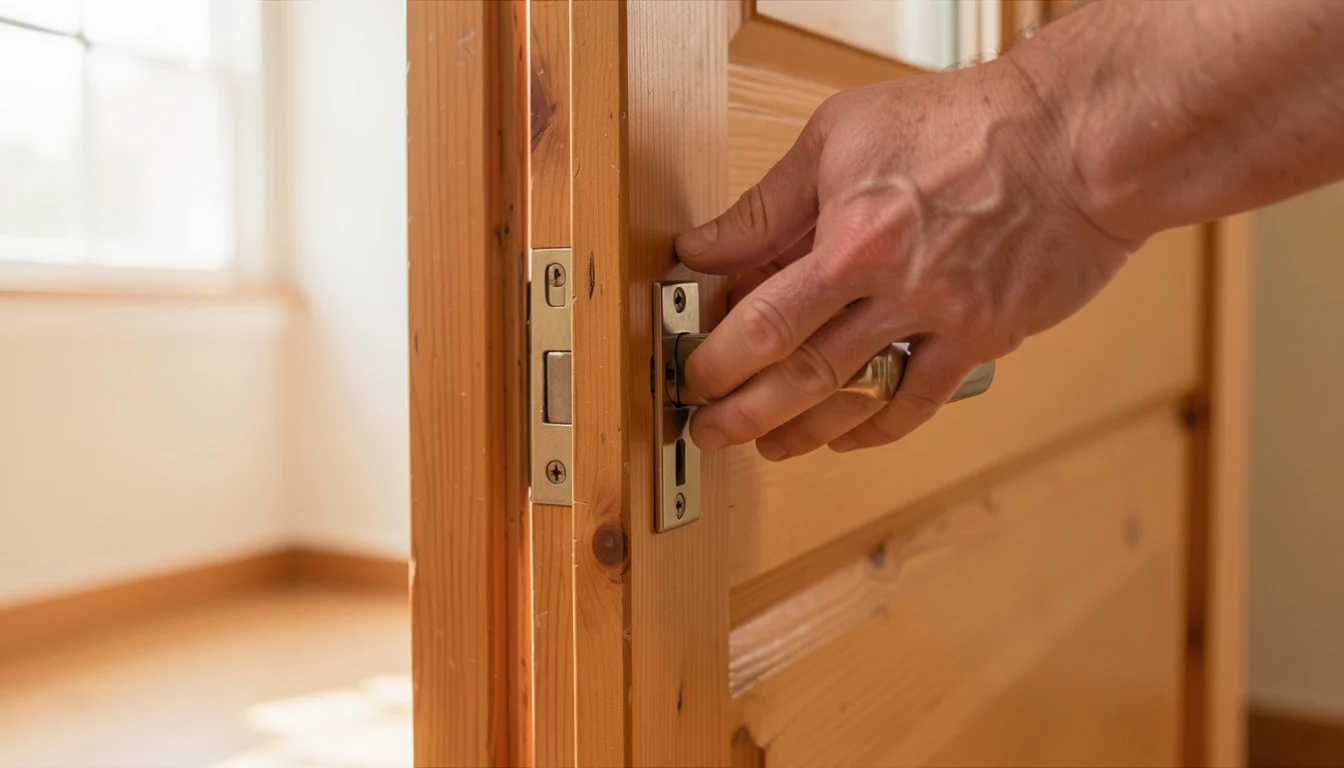 A careful test at the doorway
A door that needs a shove to latch often has a small, specific problem: it rubs the frame, its latch misses the strike plate, or the handle mechanism sticks. To fix a sticking door, find the exact point of resistance first, then make the smallest suitable adjustment. Humidity can swell wood, but loose hinges and a shifted frame can cause similar symptoms.
For an interior door, the best first move is a slow test with the door open and closed. If it swings freely but won’t latch, check the latch and strike plate; if it scrapes the frame, look for contact marks and loose hinge hardware before removing any wood.
Quick Repair Notes
- Start with: A slow open-and-close test to locate the bind.
- Check first: Handle, latch, hinge screws, and strike plate.
- Adjustments: Make one small change at a time and retest.
- Wood removal: Consider sanding or planing only after checking alignment and moisture.
- Get help: Call a door professional for a damaged frame or severe misalignment.
How to Fix a Sticking Door That Won’t Latch
To fix a sticking door that won’t latch, first identify whether the door rubs the frame or closes freely while the latch misses the strike plate. Inspect scrape marks, gaps, hinges, and handle movement; then adjust only the part that matches the symptom.
A rubbing door needs a different check than a latch that cannot reach its opening.
- Open and close the door slowly.
- Locate and note the rubbing or catching point.
- Look for visible scrape marks and uneven gaps.
- Check hinge screws and plates for looseness.
- Test the handle and latch separately.
Contact marks are clues, not proof of the cause. For example, a scrape at the top-right corner may point you toward the upper hinges, but a loose frame or a door that has shifted can create the same pattern.
Check the Handle, Latch, Hinges, and Frame First
A door latch is the spring-loaded bolt in the door’s edge; it should retract when you turn the handle and extend when you release it. With the door open, turn the handle and watch the latch.
If it catches or fails to retract smoothly, investigate the handle or latch mechanism before changing the frame hardware.
Next, inspect the hinge leaves and screws. Tighten loose screws with a hand screwdriver, stopping when each screw feels secure; overtightening can strip the hole or damage the finish. If a screw spins without gripping, the hinge may need a proper repair rather than a harder turn. A correctly sized drill bit for a pilot hole can help with certain screw repairs, but the right approach depends on the condition of the jamb and hinge.
Look at the strike plate, the metal opening on the jamb where the latch enters. If it is loose or visibly out of line, note that, but don’t move it yet. First confirm that the door closes freely without the latch needing to engage; otherwise, a strike-plate adjustment may conceal the real problem.
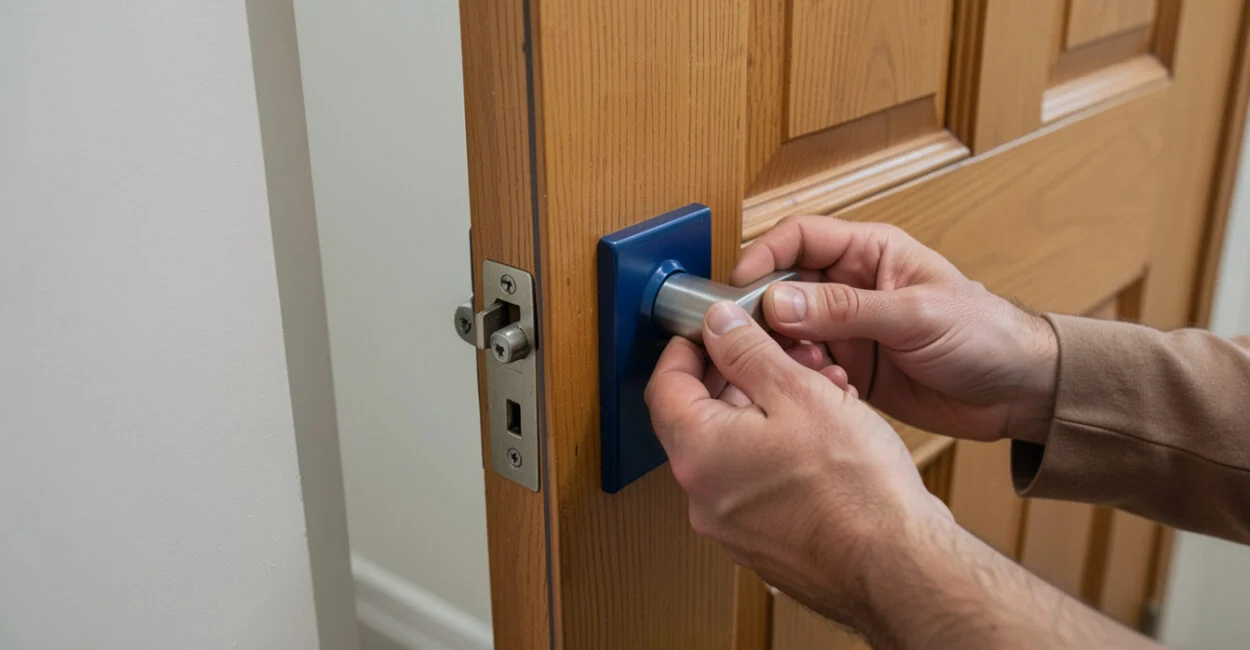
Match the Repair to Where the Door Sticks
Use the contact point to choose what to inspect first, not to assume a single cause. A door sticking at the top of the frame may have a hinge or clearance issue, while a door that closes but won’t latch points you toward the bolt and strike plate.
Symptom or contact point What to inspect First check Rubs at the top or top-right corner Upper hinges, screws, frame clearance Check for loose hardware and note the exact contact point. Rubs at the bottom or hits the frame while closing Lower edge, hinges, frame clearance Confirm where contact occurs; don’t assume the door needs trimming. Closes but won’t latch Latch bolt and strike plate alignment Check that the handle retracts the latch and compare its position with the plate opening. Handle sticks or latch does not retract smoothly Handle and latch mechanism Test the handle independently to separate hardware trouble from frame rubbing.
“Bottom of door hitting frame when closing” describes contact with the frame, not a latch that misses its plate. Don’t treat those symptoms as interchangeable. A bottom-edge scrape calls for checking the lower clearance and hinge alignment; a freely closing door with a missed latch calls for checking the bolt’s path to the strike opening.
Adjust Hinges and the Strike Plate Carefully
Start with loose hinge screws and test the door after each small adjustment. If the door’s position changes when you lift it gently by the handle, a hinge or its attachment may be loose, but movement alone does not tell you which part needs repair.
If the door swings freely and the latch barely misses the strike opening, compare their positions with the door nearly closed. A modest strike-plate adjustment may help when the plate is secure and the frame is sound. Avoid enlarging the opening or shifting the plate until you have confirmed that the latch and door align consistently.
A door hinge bending tool is a specialized option for certain hinge-adjustment situations, not a default fix. Hinge types and door setups vary, and bending a hinge can damage its leaves, screws, or finish. Don’t force hardware into position; if the hinge design or cause is unclear, stop and consult the manufacturer’s guidance or a door professional.
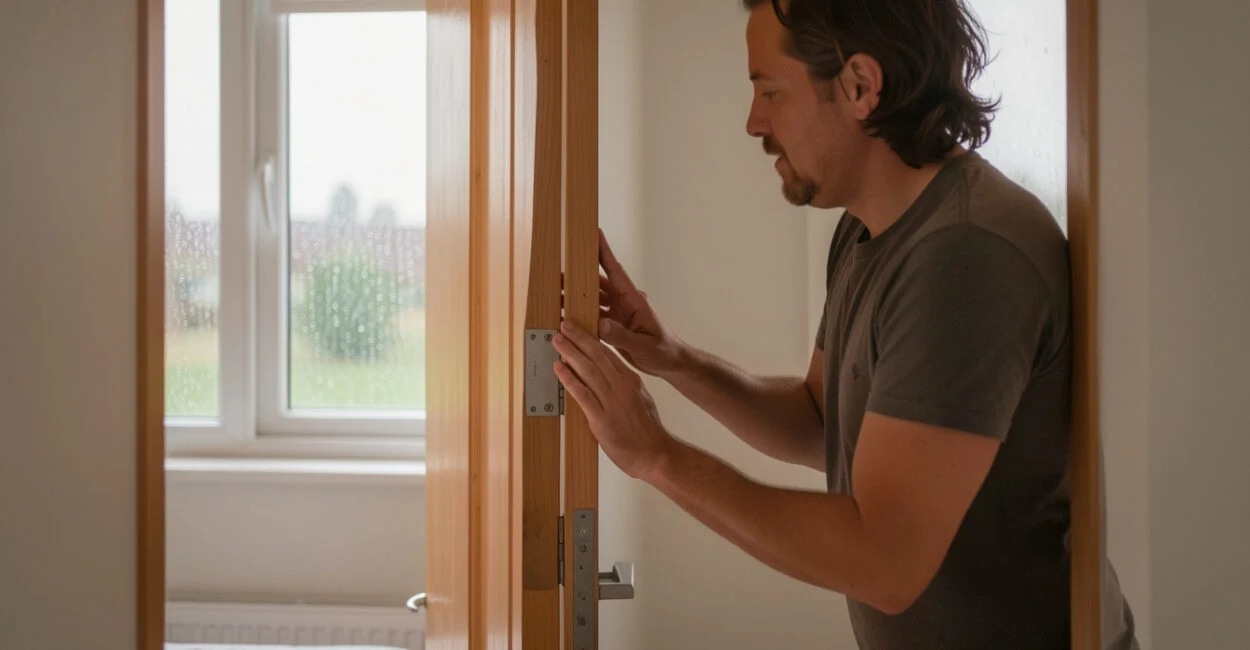
How to Fix a Door That Sticks Due to Humidity
Wood can expand as it takes up moisture, so seasonal swelling is one possible reason a wooden door binds. It is not the only one: loose hinges, a shifted frame, and a sticking latch can produce similar symptoms. Note whether the problem appears during damp weather and look for other signs of moisture around the door or in the room.
Address a moisture source where practical, then retest the door before removing wood. The U.S. Department of Energy’s moisture-control guidance explains why managing indoor moisture matters, but it does not diagnose a particular door. A door may still need a hardware or frame repair even after room conditions change.
Will WD-40 help a swollen door? It may lubricate suitable moving hardware, depending on the product and manufacturer’s instructions, but it will not shrink swollen wood or correct door-to-frame misalignment. Keep lubricant off surfaces where it could affect paint or finish, and don’t use it as a substitute for locating the bind.
Decide Whether Sanding or Planing is Appropriate
Removing wood should come late in the diagnosis, after you have checked the hinges, latch alignment, frame, and possible moisture. If the frame has shifted or the wood is still swelling, trimming the door may not solve the cause and can leave a poor fit once conditions change.
If you confirm that a particular edge is the actual rubbing point and the door is otherwise aligned, remove only a small amount from that area and protect the finish as much as possible. Recheck the fit before taking off more. The amount and method depend on the door’s construction and finish; hollow-core doors and some edge treatments leave less room for trimming than a solid-wood door.
Skip sanding or planing if the frame is visibly out of square, the door is damaged, or you cannot tell why the fit changed. In those cases, a qualified carpenter or door professional can assess whether the frame, hinges, or door itself needs attention.
Test the Repair and Know When to Get Help
After each change, test the door from open to latched without pushing hard. Stop if the fit gets worse, the hinge begins to move, or the strike plate no longer sits securely. For replacement hardware, compare the existing parts and measurements before choosing a new set; this interior door hardware budget guide can help you plan that decision.
- Door swings without rubbing.
- Door closes without force.
- Latch enters the strike plate.
- Handle operates smoothly.
- No hinge, strike plate, or frame hardware is loose.
Seek professional assessment if the door remains badly misaligned, the frame appears damaged, or a safe adjustment would require force or extensive material removal. The cause can’t always be confirmed from the contact point alone, particularly when the frame or wall has shifted.
📱 See this content as a Web Story
Frequently Asked Questions
How Do You Stop a Door from Sticking to the Frame?
Find the exact rubbing point, then check hinge screws, frame clearance, and signs of moisture. Make a small adjustment that matches the cause and retest before considering any wood removal.
Why Has My Wooden Door Expanded?
Wood can take up moisture and swell, which may reduce clearance between the door and frame. A change in fit can also come from loose hardware or a shifted frame, so seasonal timing is a clue rather than a diagnosis.
What Should You Do If the Door Handle is Sticking?
Open the door and turn the handle to see whether the latch retracts smoothly without touching the strike plate. If it still sticks, inspect the handle and latch mechanism rather than adjusting the door frame.
How Do You Unjam Your Door?
Don’t force it. Test the handle, then gently check whether the door is binding at the frame or the latch is caught; if it will not open without force, stop to avoid damaging the door or jamb.
Will WD-40 Help a Swollen Door?
No. It can lubricate suitable moving hardware, but it cannot reduce moisture-related swelling or realign the door and frame.
Can You Adjust Every Interior Door Hinge the Same Way?
No. Hinge designs and door construction differ, and some hinges do not offer a safe adjustment method. Check the hardware maker’s instructions, and get professional help if adjustment would require bending or force.
The U.S. Environmental Protection Agency’s mold and moisture information offers additional guidance on moisture in homes.