
How to Stop Puppy Biting During Play Without Punishment
Stop puppy biting during play with a calm pause, a toy redirection, and a brief break when needed—so your puppy learns that gentle play keeps going.
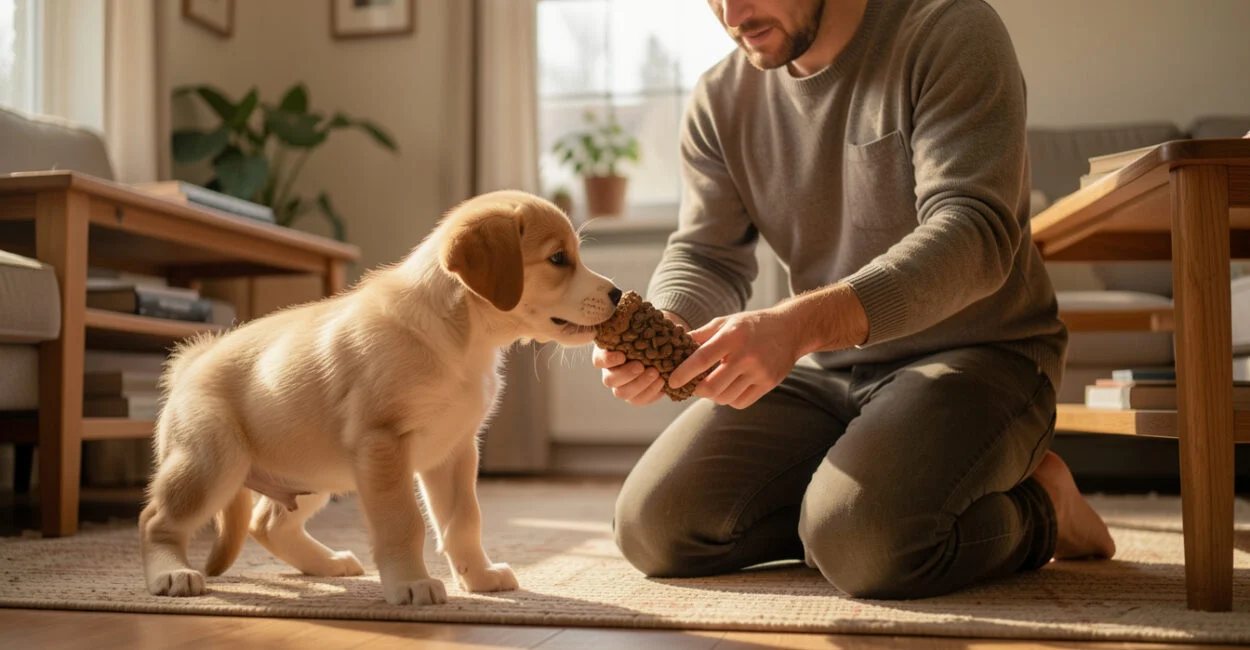 Puppy turns from sleeve to toy
A puppy grabs your sleeve, you pull away, and the game gets even rowdier. To stop puppy biting during play, calmly pause when teeth touch skin or clothing, offer a suitable toy, and restart when your puppy is calmer. This teaches a clear pattern: gentle play keeps going; biting makes the fun pause.
Puppy mouthing is common, but it can still hurt and needs consistent guidance. The aim of learning how to stop puppy biting is to teach a safer way to play, not to expect normal mouthing to disappear overnight.
Before You Start
- Keep a sturdy, puppy-safe toy within reach.
- Choose a calm place with room to move away without cornering the puppy.
- Agree on one response with everyone who plays with the puppy.
- Plan short play sessions and pauses before your puppy gets wound up.
How to Stop Puppy Biting During Play
When your puppy’s teeth touch skin or clothing, stop moving and calmly pause your attention. Once the puppy lets go or turns away, offer a toy; praise and continue when they bite the toy or play more gently.
If they keep coming back to bite, end the interaction for a brief, calm break, then try again later.
This response works by changing what follows the behavior: biting no longer keeps the game going, while appropriate play does. Avoid yelling, hitting, pinning, or pushing the puppy away.
Those reactions can frighten a puppy or add movement and excitement to a game that is already too lively.
What happens What to do What to avoid Teeth touch skin Pause movement and attention calmly. Shouting, hitting, or pushing. Puppy disengages Offer a suitable toy. Waving hands or clothing. Puppy plays with the toy Praise and continue appropriate play. Letting rough hand play continue. Puppy keeps biting End the interaction briefly and allow a calm break. Threatening or frightening the puppy.
Consistency matters. If one person stops the game and another keeps wrestling with bare hands, biting may continue because it sometimes earns more play.
For a marker-based way to reinforce the behavior you want, see this guide to clicker training for dogs.
Every time teeth touch skin, pause the game; every time your puppy chooses the toy, let play continue.
Why Puppies Mouth Hands and Clothes
Mouthing is a puppy’s use of the mouth to explore and play. Teething can increase chewing, but not every nip is caused by sore gums. Puppies may also grab when they feel excited, frustrated, tired, or overstimulated; the context and the puppy’s overall behavior matter. Play mouthing alone does not prove aggression. Look at the whole interaction: how intense the biting is, whether the puppy can disengage, what happens just before the bite, and whether the behavior changes over time. Growling can occur during play, too, so the sound by itself does not establish what the puppy is feeling.
Clothing can become part of the game when a person tugs, waves a sleeve, or runs away. If you’re thinking, “My puppy won’t stop biting me and my clothes,” stop the fabric’s movement, pause attention, and redirect to a toy instead.
Pulling the garment away can invite more chasing and grabbing.
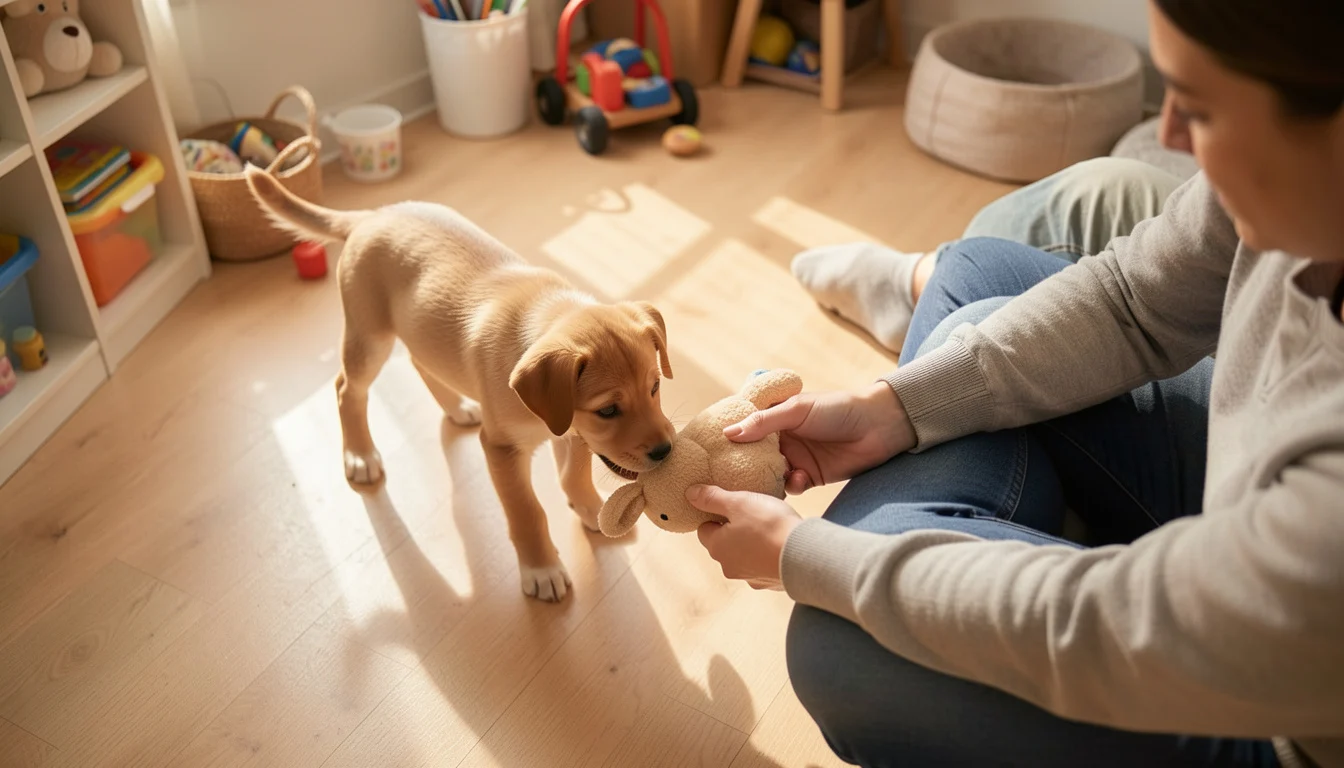
Build a Play Routine That Rewards Gentler Behavior
Set up the game so you can respond quickly. Keep a toy close, start by engaging the puppy with it, and pause as soon as teeth land on skin. Resume when the puppy is calmer and focused on the toy, rather than restarting while they are still lunging at hands. If the puppy repeatedly returns to biting, end the session for a short break and give them a chance to settle. This should feel like an ordinary pause, not a frightening punishment or a threat of isolation. Short, supervised play sessions often make it easier to stop before excitement boils over.
A practical detail that can be easy to miss: a dangling sleeve may keep moving after you freeze, especially if you keep pulling your arm away. Hold still, avoid tugging the fabric, and bring the toy into the puppy’s view once they release. The goal is to make appropriate play rewarding and biting an ineffective way to keep the interaction going.
Prevent Biting Before It Starts
Notice what happens just before your puppy grabs: faster movement, frantic jumping, repeated missed toy offers, or difficulty pausing can signal that the play is becoming too intense. Redirect early or take a calm break rather than waiting for a painful bite. Give the puppy chances to rest and explore with suitable enrichment; no single activity will prevent all mouthing.
- Have toys ready before play begins.
- Supervise play, especially with children.
- Avoid wrestling with hands or encouraging sleeve-chasing.
- Watch for rising excitement and redirect early.
- Offer calm breaks and age-appropriate rest.
- Teach children to stay calm and get an adult rather than handling a biting puppy alone.
Put away tempting household items and supervise access to things the puppy might chew. Mouthing people and chewing furniture are different problems, so a puppy-safe chew item and environmental management matter for household chewing. If you’re also establishing a toileting routine, this guide to teaching a puppy to use indoor potty pads covers that separate task.
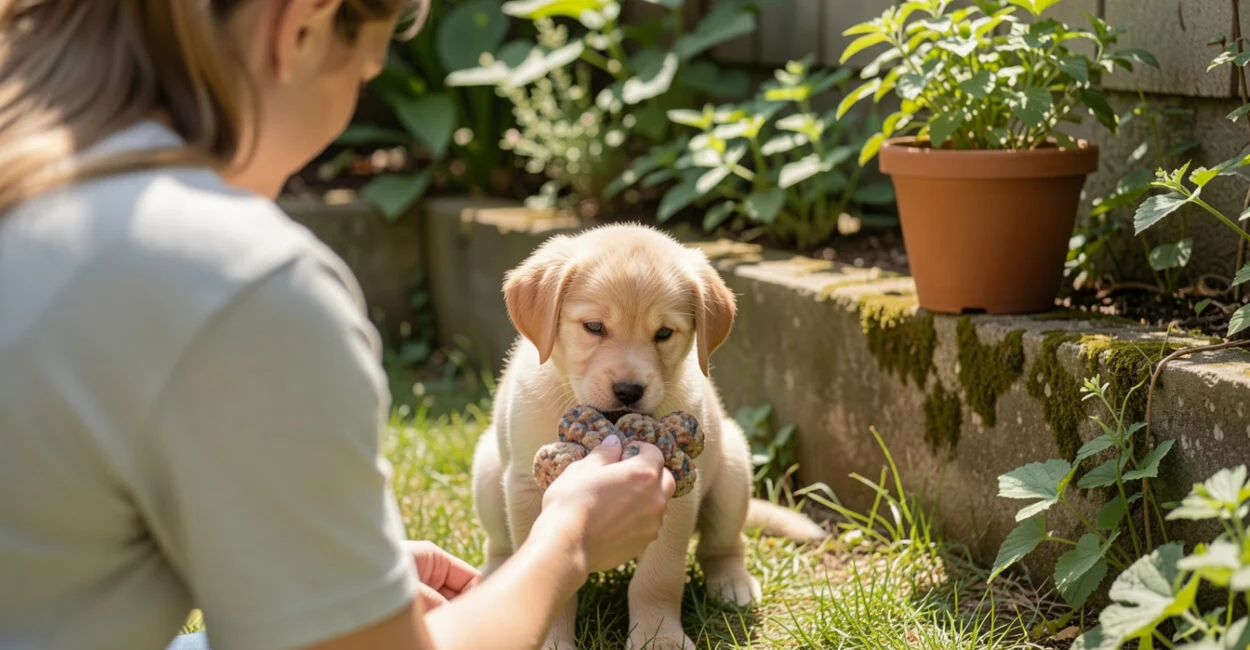
What to Expect from the Puppy Biting Phase
There is no guaranteed age when puppy biting stops. Mouthing usually changes as a puppy develops and learns, but progress depends on the individual puppy, their routine, and how people respond. A puppy may improve for several days and then nip more when tired or excited; that uneven pattern does not automatically mean the training has failed.
People often ask, “When do puppies stop chewing everything?” There is no single deadline for that, either. Chewing objects may continue for reasons that differ from play mouthing, so provide appropriate chew items, supervise access, and make tempting household objects harder to reach.
If your puppy bites your hands, pause the interaction and redirect to a toy rather than pushing hands into the puppy’s mouth or starting rough hand play. The American Veterinary Society of Animal Behavior’s guidance on humane training supports reward-based approaches and cautions against methods that rely on fear or pain. The best response can vary with the puppy and situation, so repeated painful bites or behavior that you cannot interrupt safely calls for individual assessment.
When Biting or Growling Needs Extra Help
Do not diagnose aggression from one bite or a growl. If biting is severe, escalates, causes injury, or is difficult to interrupt, consult your veterinarian and a qualified, reward-based behavior professional. A veterinarian can also assess a sudden behavior change or signs of pain that may contribute to a puppy’s response.
Seek professional assessment if you notice:
- An injury from biting.
- Increasing intensity or frequency.
- Difficulty interrupting the behavior safely.
- A sudden change in behavior.
- Signs of pain or another health concern.
If children may be at risk or reliable supervision is not possible, separate them from the puppy safely and involve an adult. Don’t physically confront or punish the puppy. The ASPCA’s guidance on puppy nipping and mouthing also describes mouthing as a behavior to address with management and training, while a professional can help tailor the approach when the situation is more serious.
📱 See this content as a Web Story
Frequently Asked Questions
What is the 3-Second Rule for Puppies?
It is a commonly used pause-and-observe guideline in some interactions, not a universal or scientifically fixed rule. Watch whether the puppy seems comfortable and chooses to re-engage; a timer matters less than the puppy’s behavior.
What Month is Hardest with a Puppy?
There is no single hardest month for every puppy. The challenging period depends on the puppy, household routines, and which behaviors the family is working through.
Is It Okay to Push a Puppy Away When Biting?
It’s better not to push as a default response because the movement may intensify play or frighten the puppy. Pause, disengage calmly, and offer a toy when the puppy lets go.
How Should I Discipline a Puppy?
Use discipline to mean teaching the behavior you want, setting safe boundaries, and managing the environment. Reward suitable choices and avoid hitting, intimidation, or harsh corrections.
Choose the Next Step
At the next play session, keep a toy within reach and use the same pause-and-redirect response each time teeth touch skin or clothing. If the biting causes injury, escalates, or cannot be interrupted safely, contact your veterinarian rather than trying a harsher correction.