
Container Flowers That Attract Pollinators to Your Patio
How to choose and arrange container flowers that suit your patio’s light and climate, providing nectar and pollen to support local pollinators all season long.
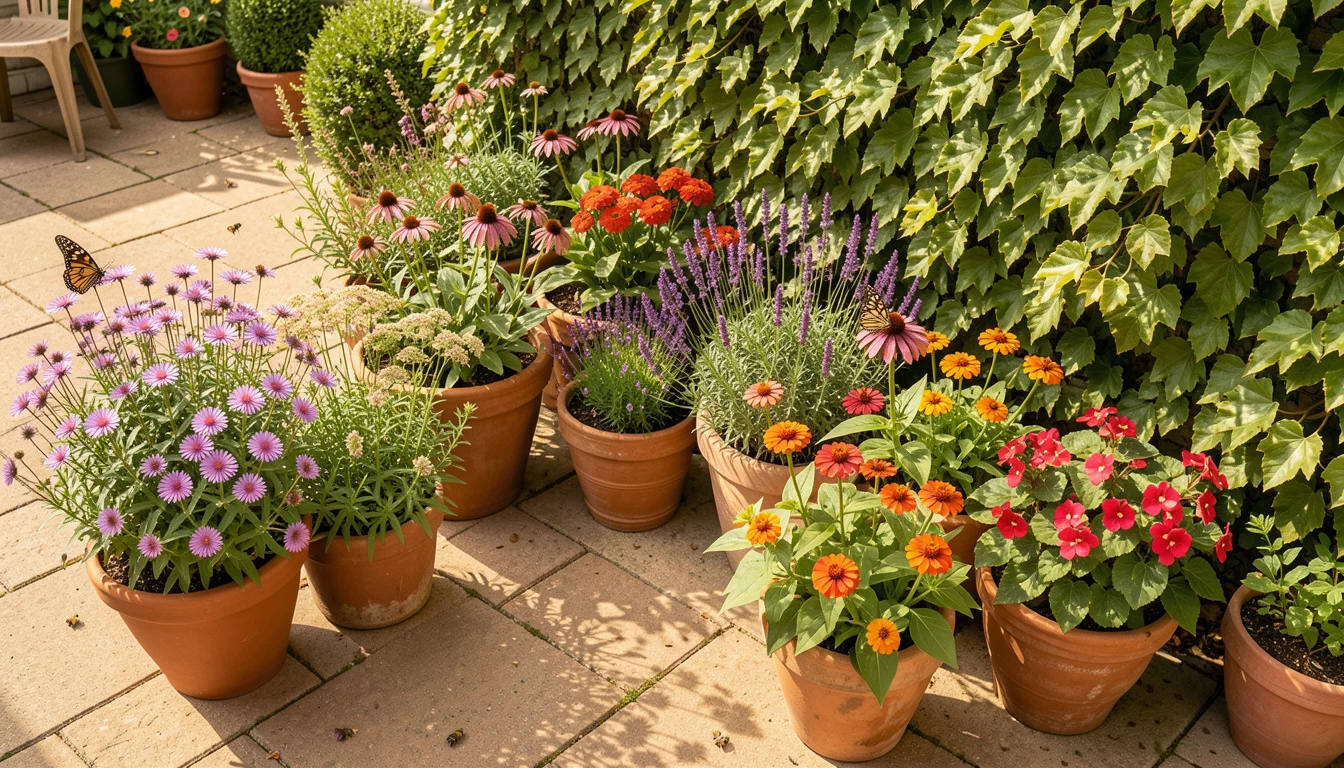 Pollinators visiting a colorful patio garden
Container Flowers That Attract Pollinators to Your Patio
A few well-chosen pots can offer bees, butterflies, and other pollinators useful nectar and pollen, even where garden space is limited. The strongest choices suit your local climate and patio conditions, and provide a range of flower shapes and bloom times. These seven options are grouped by growing style, from sunny spots to partial shade.
Plant choice matters, but so do container size, drainage, and pesticide practices. The guide below covers flowers for different patios, plus ways to arrange and care for them so pollinators can make use of the blooms.
What Makes a Patio Container Flower Pollinator-Friendly?
A pollinator-friendly flower provides accessible nectar, pollen, or both, with flower structures that visiting insects can use. On a patio, choose container plants suited to your climate and light, then combine bloom times and flower forms to offer resources over a longer stretch of the season. In plain terms: grow flowers that feed local pollinators and keep something in bloom as the weather changes.
Bees often visit open, easy-to-reach flowers, while butterflies can use blooms with landing platforms or clusters. Flower shape is a useful guide, not a guarantee: pollinator visits vary by region, season, and the insects already living nearby. A native plant that thrives in one state may struggle in another, so check regional advice before buying.
1. Native Asters for Late-Season Color
Native asters are a strong choice for fall containers because their small, open flower heads offer accessible nectar and pollen when many summer blooms have faded. Bees and butterflies may visit them, although the species found in your area and local pollinator populations affect which visitors appear.
Choose a regional species and confirm its mature size before planting. A large aster can outgrow a small pot or lean over a balcony railing; compact cultivars or naturally smaller species are easier to manage in containers. Give most asters sun and a pot with drainage. They suit patios that need late-season flowers, but they are a poor fit for deeply shaded corners.
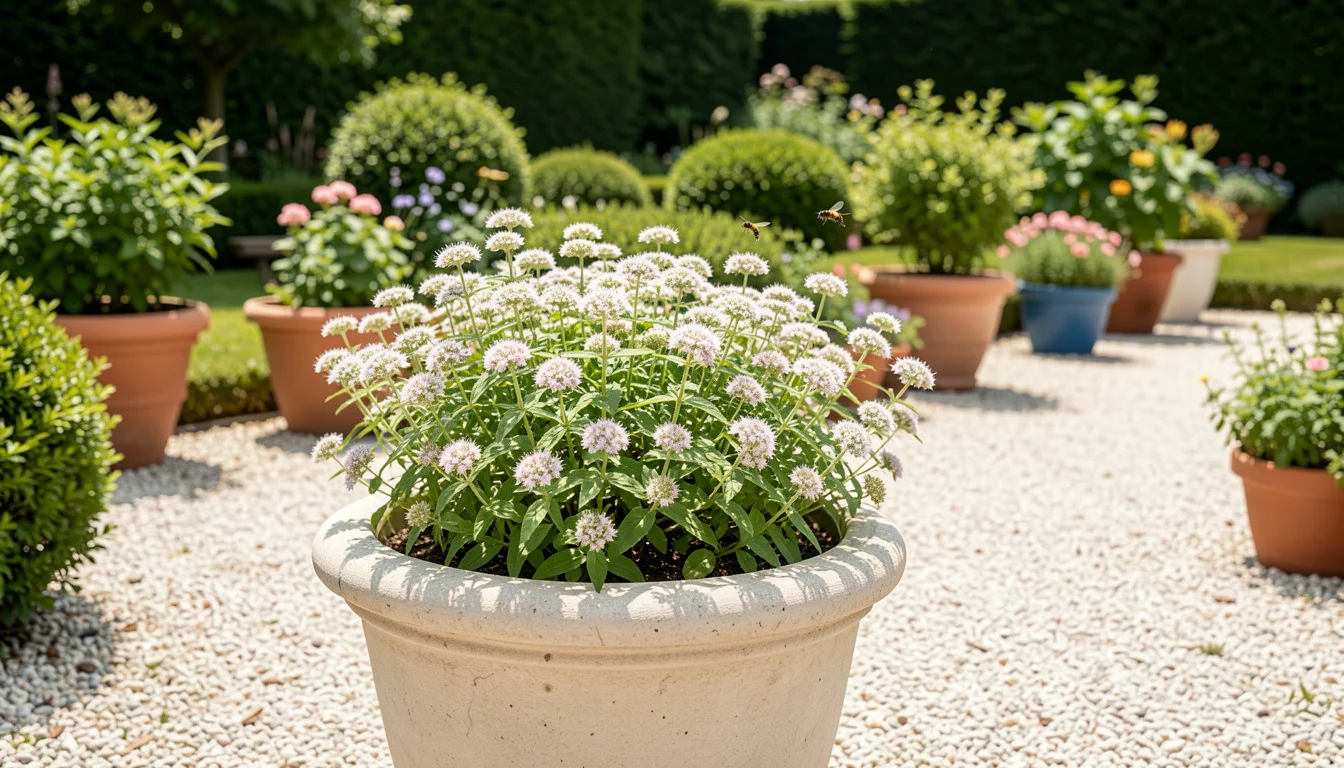
2. Mountain Mint for a Sunny Container
Mountain mint (Pycnanthemum species) produces clusters of small flowers that can draw a variety of visiting insects. It is a useful choice when the goal is to provide many small feeding sites in a sunny container, rather than one large, showy bloom.
Give it a roomy pot and well-drained soil; plants can spread, so check the growth habit of the species before choosing a container. Mountain mint is native to parts of North America, but its suitability depends on local conditions. Look for regional guidance rather than assuming every mountain mint species belongs in every garden. If your patio gets strong sun and you can accommodate a fuller plant, it is worth considering.
3. Purple Coneflower for a Sunny, Roomy Pot
Purple coneflower (Echinacea purpurea) has a broad central cone and prominent petals, making it a recognizable option for flowers for pollinators in full sun. Bees may forage on the blooms, and butterflies may visit when the plant grows in suitable conditions.
It needs sun and a container deep and wide enough for its roots and height. A cramped pot dries quickly and can make tall stems less stable, especially in wind. Choose coneflower for a larger patio planter, not a tiny railing box. Deadheading can extend flowering, but leaving some spent heads later in the season provides seeds for wildlife and lets the plant complete its cycle.
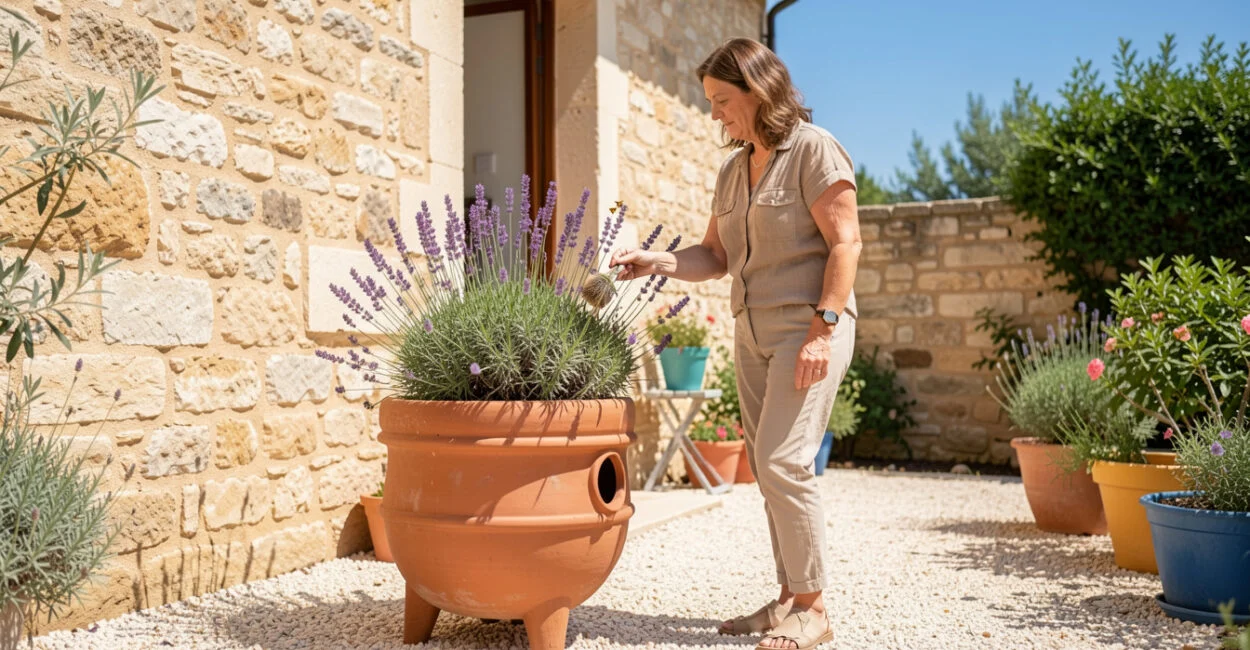
4. Lavender for a Hot, Well-Drained Spot
Lavender is a fragrant, sun-loving option for container flowers that attract pollinators, particularly where summers are warm and the potting mix drains freely. Its flower spikes can draw bees and other insects, though flowering time and visitor activity depend on the variety and local climate.
Use a pot with drainage holes and avoid keeping the roots wet. Lavender can struggle in humid climates or heavy, persistently damp soil, so it is not a universal pick. Select a cultivar suited to your region and growing conditions, and check its mature size. A sunny entry or patio edge works well, provided the container does not sit in water after rain.
5. Salvia for Repeating Blooms
Many salvias produce tubular flowers that bees and hummingbird moths can reach, and some varieties rebloom after a trim. Since the genus includes plants with different hardiness and water needs, choose a salvia suited to your region rather than relying on the name alone.
Most garden salvias grow best with good light and well-drained soil. For a container garden for pollinators, pair one with a flower that has a different shape or blooms at another time. This keeps the planting more useful than a pot filled with a single variety. If you are unsure which salvias are appropriate locally, a Cooperative Extension office can help identify suitable options.
6. Zinnias for a Bright Summer Display
Zinnias are easy-to-find annuals that can bloom through warm weather and provide colorful flowers for bees in pots. Single-flowered types usually offer easier access to pollen and nectar than densely double forms, where extra petals can obscure the flower’s center.
Plant them in a sunny spot with enough room for airflow, and avoid crowding seedlings in a small pot. Zinnias work well for a seasonal display on a balcony or patio. They are not a substitute for regionally appropriate native flowers, but they can add summer blooms while other plants are establishing. If powdery mildew is a problem locally, choose resistant varieties and avoid overhead watering.
7. Begonias for Partial Shade
Some begonias can flower in partial shade, offering an option when a patio gets only a few hours of direct sunlight. Their value to pollinators varies by species and flower form, so check the variety rather than assuming every begonia provides the same access to nectar or pollen.
Use a container with drainage and keep the mix evenly moist, not waterlogged. Begonias can suit covered balconies or shaded corners where sun-loving choices would flower poorly. They are not the best choice for a very dark space, and they may need protection from cold depending on the type and your climate. For native flowers for containers in shade, ask a local Extension office for alternatives adapted to your area.
Choose Flowers for Your Climate, Sunlight, and Container Size
Start by tracking how many hours of direct sun the patio receives, including the afternoon. Then check the plant’s mature height, width, water needs, and hardiness. The USDA PLANTS Database can help you verify a plant’s native range, while your regional Cooperative Extension service can offer locally tailored growing advice.
Native flowers can grow successfully in patio containers when the pot offers enough root space and drainage, and the plant’s light and moisture needs match the site. Native status alone does not make a plant container-ready: some species develop deep roots or grow too large for a small balcony. Ask an Extension office or native-plant group for compact regional choices.
For small patios, prioritize a few larger, stable pots over many tiny containers. Tiny pots dry out quickly, and tall flowers in lightweight containers can tip in wind. See these pot sizes and materials for small patios when planning your layout. Leave clear paths and keep flowering containers where you can water them without stepping over furniture; a practical patio seating arrangement can help preserve that access.
Build a Container Garden That Blooms Across the Season
Use plants with overlapping bloom periods rather than relying on one big flush. For example, pair spring-flowering regional choices with summer annuals such as zinnias, then add a suitable late-blooming aster. Local climate determines the calendar, so use plant tags and regional growing advice to set expectations.
- Combine at least two flower shapes so different pollinators can access blooms.
- Check mature size before grouping plants in one pot; crowding can reduce airflow and root space.
- Keep a few blooms open while trimming spent flowers elsewhere.
- Choose a mix of colors and heights that fits the patio without blocking doors or walkways.
When arranging containers near a seating area, give plants enough room for access and care. A simple layout can keep flowers visible without putting pots where chairs, doors, or foot traffic will disturb them; these patio decor ideas for entertaining may help with the overall arrangement.
Pick Containers, Soil, and Drainage for Healthy Plants
Choose a pot large enough for the plant’s mature roots, with drainage holes at the bottom. Use a quality potting mix made for containers rather than dense garden soil, which can compact and hold too much water in a pot. Match the container to the plant: a thirsty annual in a tiny pot may need frequent watering, while a drought-tolerant lavender can suffer in a mix that stays soggy.
A practical detail that often gets missed: saucers can hold runoff, but water left in them keeps roots wet. Empty them after watering or rain, especially for plants that need sharp drainage. In windy locations, heavier pots or sheltered placement can help stabilize taller stems.
Care for Patio Flowers Without Harming Pollinators
Water when the mix begins to dry according to the plant’s needs, checking pots more often during hot or windy weather. Deadheading can encourage some plants to produce more flowers, but avoid removing every spent bloom if you want seed heads or late-season food. A useful compromise is to trim selectively, leaving some flowers or seed heads in place.
Inspect leaves for pests before treating anything. The Xerces Society’s pollinator-friendly pesticide guidance recommends approaches that reduce risk to pollinators; avoid spraying open flowers, and do not assume a product is safe just because it is labeled natural. For container pests, start with hand removal, pruning affected parts, or adjusting watering and airflow. If a pesticide is truly needed, follow its label and choose a timing and method that minimize exposure to visiting insects.
Make Your Patio More Welcoming to Pollinators
A shallow water source with pebbles or stones gives insects places to land while drinking. Refresh it often so the water stays clean. A sheltered, undisturbed corner can also give pollinators a safer route to flowers; avoid moving pots or tidying every patch of bare soil if doing so would disturb nesting insects.
Small balconies can help, too. A few well-chosen containers placed in available sunlight, with water nearby and pesticide use avoided, can provide useful forage. Keep expectations regional: what visits one patio depends on surrounding habitat, season, and which pollinators live nearby.
How to Choose Pollinator Patio Plants for Your Space
Before buying, ask: How much direct sun reaches the spot? How large can the container be? Which plants are suited to the local climate? Can you keep the pot watered during hot spells? Answers to those questions will narrow the choices more reliably than a plant’s popularity or flower color.
Start with one or two containers and expand as you learn how quickly they dry and which flowers thrive. For the best fit, combine plants with different bloom periods and flower forms, while checking local recommendations for native species. Rules of thumb have limits: a plant’s pollinator value and performance can shift with region, cultivar, and growing conditions.
📱 See this content as a Web Story
Frequently Asked Questions
Can Native Flowers Grow Successfully in Patio Containers?
Yes. Choose native species with manageable mature size, then provide the root room, drainage, and light they need. Confirm regional suitability with the USDA PLANTS Database and local Cooperative Extension guidance.
How Can Someone Support Pollinators on a Small Balcony?
Use the sunniest available spot for a few containers, select plants with different bloom times, and keep a shallow water source with landing stones nearby. Compact regional natives can be good choices when their mature size fits the pots and the balcony conditions.
Should Flowers Be Deadheaded If the Goal is to Attract Pollinators?
Sometimes. Removing spent flowers can encourage new blooms on some plants, but leaving some flowers to go to seed provides another resource later in the season. Trim selectively rather than stripping every pot at once.
How Can Readers Protect Pollinators When Managing Pests in Containers?
Start with nonchemical steps such as hand-picking pests, pruning affected leaves, and correcting watering or airflow problems. Avoid treating open flowers. If a pesticide is necessary, follow the label and select an approach that limits contact with pollinators, using guidance from the Xerces Society and local Extension resources.