
How to Keep Outdoor Furniture from Blowing Away in the Wind
How to secure lightweight and heavy patio furniture using anchors, weights, and straps, plus tips for managing covers and umbrellas before strong winds.
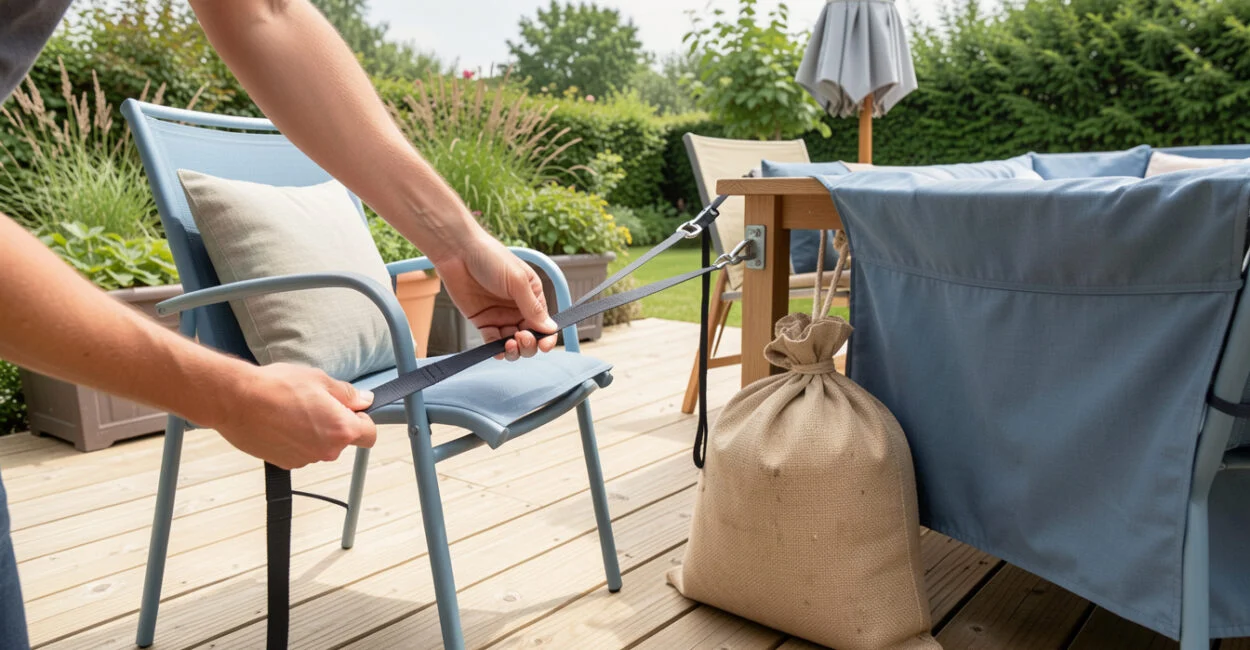 Securing patio furniture against gusts
A gust can move an empty patio chair across a deck before anyone notices, while a heavy table barely shifts. To keep patio furniture from blowing away, match the restraint to the item and the surface: secure lightweight pieces to a sound anchor, add stable weight where drilling is unsuitable, and bring loose items indoors when severe weather is expected.
The right setup depends on what can catch the wind. A fitted cover can act like a sail, and an umbrella left open may be more vulnerable than the table beneath it.
For everyday gusts, securing furniture in place can help. Before a windstorm, removing movable items is the safer choice; no home anchoring method guarantees that furniture will stay put in severe conditions.
Quick Guide
- Best first step: Fold or remove umbrellas, cushions, and lightweight accessories.
- Concrete patio: Use a compatible concrete anchor only when drilling is permitted and the slab can accept it.
- Deck or balcony: Favor furniture-to-furniture straps, fitted weights, or other non-drilling options.
- Loose cover: Secure it with cover clamps or suitable tie-downs so wind cannot get underneath.
- Severe weather: Bring movable items inside and follow local National Weather Service guidance.
How to Keep Patio Furniture from Blowing Away
Start by reducing what the wind can catch, then secure the heaviest pieces that will remain outside. Fold umbrellas, remove cushions, and group chairs around a sturdy table; use a strap or compatible anchor where the patio allows it. For a storm, take movable pieces indoors rather than relying on weights or tie-downs.
A furniture anchor is a restraint that connects an item to a stable surface or to another suitably heavy item. In everyday terms, it keeps a chair from sliding or tipping; it does not make furniture stormproof. The connection, the surface, and the furniture frame all have to hold.
Secure everyday furniture against shifting, but clear movable items before severe weather rather than trusting an anchor to withstand it.
Choose an Anchor That Suits the Patio Surface
Choose the restraint based on both the ground and the furniture frame. A strong anchor in weak concrete, a rotting deck board, or a thin chair leg can still fail at the weakest point.
Surface or setup
Useful option
Trade-off to consider
Sound concrete, with permission to drill
Concrete anchors paired with rated straps or suitable hardware
Requires the right anchor for the load and slab; drilling may damage the surface or affect waterproofing.
Concrete where drilling is unsuitable
Furniture weights, a weighted base, or straps connecting stable pieces
Less secure than a sound mechanical anchor, and weight can shift or become a trip hazard.
Wood deck
Straps secured to a sound structural member, where permitted
Do not rely on a loose board or attach hardware without checking for damage and permission.
Rental patio or balcony
Removable weights, furniture grouping, and cushion storage
May reduce movement in ordinary wind but cannot guarantee stability in severe weather.
Concrete anchors are not interchangeable: their suitability depends on the concrete, the anchor design, installation, and the force on the connection. If drilling could puncture a waterproof deck coating or violate a lease or building rule, skip it. For design ideas that suit an exposed deck, see these weatherproof sofa and table picks for decks.
Use Patio Furniture Weights, Sandbags, or Planters Carefully
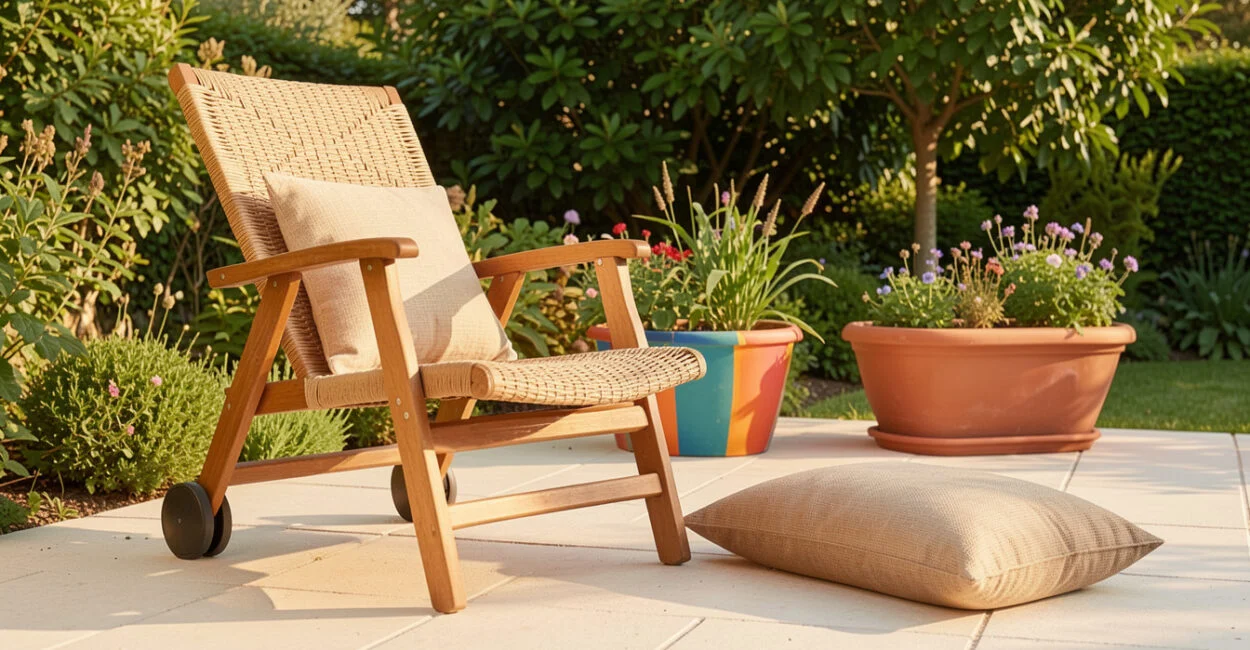
Patio furniture weights add mass to a piece that cannot be anchored, often at its base or frame. They can help keep a chair or table from sliding in routine gusts, but their effect depends on the furniture’s shape, where the weight sits, and how much wind catches the item.
Place a weight low and close to the furniture’s center, and secure it so it cannot swing, roll, or fall onto someone. Sandbags can work as temporary ballast if they stay dry and contained. A heavy planter may help block a chair, but a tall or top-heavy planter can itself tip; keep it on a stable surface and out of walkways.
For a simple DIY patio furniture weight, a securely closed, purpose-made weighted base is usually more manageable than loose masonry or a container that can leak. Avoid tying a weight to a thin arm or slat. Added mass is not enough when strong wind can tip the whole piece, pull a strap loose, or move the furniture and weight together.
Read also: How to Choose Weatherproof Outdoor Speakers for a Patio
Keep Cushions and Covers from Flying Away
Cushions are light and easy for wind to lift, so storing them indoors or in a closed deck box is the most dependable everyday fix. Cushion clips for outdoor furniture can attach a cushion to a frame, but check that the clip grips both parts firmly and does not damage the fabric or finish.
To add ties to outdoor cushions, use compatible fabric ties or sew-on fasteners only if the cushion cover’s material and construction can handle them. Attach ties around a substantial part of the furniture frame, not a narrow decorative slat. Some cushions have built-in ties; a clip is a practical alternative when they do not.
Read also: Best Outdoor Poufs for Garden and Patio Decor
A loose cover can trap air and pull against its own seams. Fit it snugly, use cover clamps for patio furniture where the hem permits, and add tarp tie-downs only to reinforced loops or suitable anchor points. A bungee cord can hold a hem close, but it stretches and can snap back; keep tension modest and position hooks so they cannot strike someone if released.
Secure Chairs, Tables, Loungers, and Umbrellas Differently
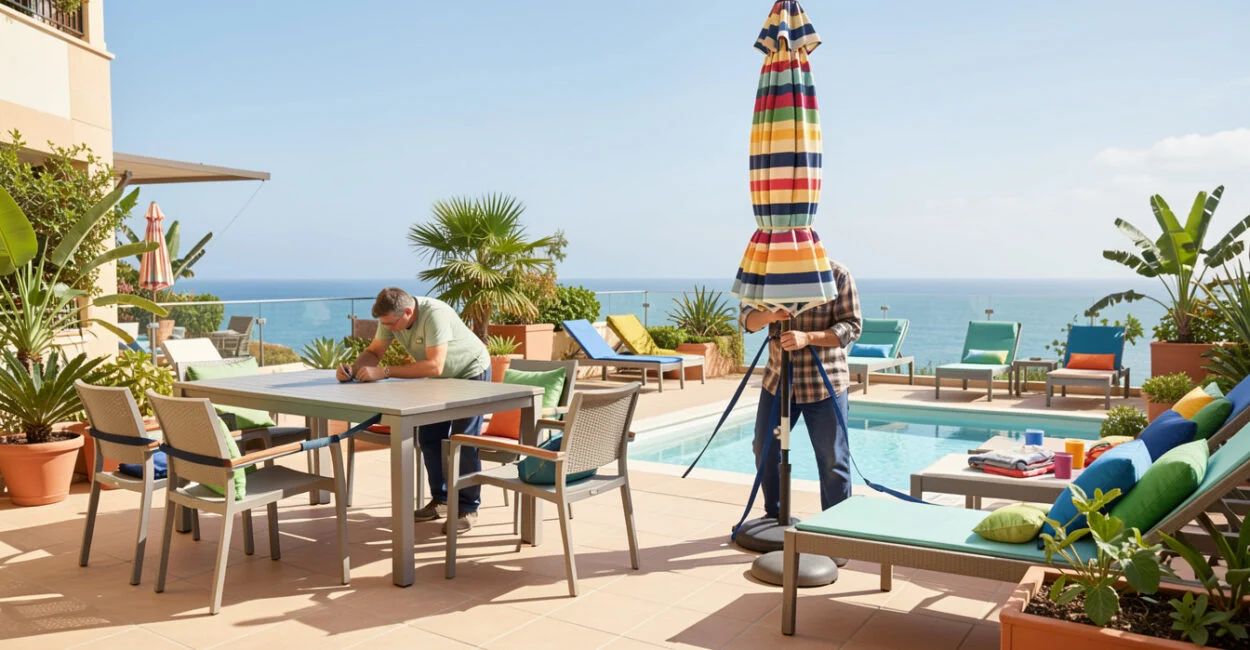
Lightweight chairs are often easiest to group and strap together around a heavier table. Keep straps around solid frame members, not woven panels, thin armrests, or removable parts. A stack of chairs can act like a sail, so stacking is not a substitute for securing or storing them.
Tables need attention to both the top and base. A broad glass or lightweight tabletop may catch gusts, while a pedestal table can tip if its base is not weighted as intended. Follow the manufacturer’s instructions for any base weight and remove loose tabletop accessories.
Close and secure umbrellas when not in use; remove the canopy or take the umbrella inside if the manufacturer’s instructions call for it in windy conditions. Never count on the umbrella’s table opening to hold it in place. For loungers and modular seating, connect sturdy frames with straps and move smaller sections indoors if they can separate or lift.
Planning a seating layout around a fire feature? These outdoor seating arrangements for gatherings can help with placement, but leave clear space for safe movement and keep wind-sensitive pieces easy to bring in.
Protect Furniture on Decks, Balconies, and Other Surfaces
On a deck, avoid drilling until you know what lies beneath the boards and whether the surface has a waterproof membrane. If the landlord, homeowners’ association, or building rules require approval, get it before installing permanent hardware. A strap around a sound structural post may be an option, but a railing should not be treated as an anchor unless it is designed and approved for that use.
On a balcony, prioritize storage and removable restraints. Check that planters and weights cannot fall over an edge, and keep cords away from doorways and walking routes. Do not tie furniture to a weak railing, neighboring structure, or building component whose strength and permitted use are unknown.
For a non-drilling setup, group chairs with a heavier table, use fitted weights designed for the furniture, and store cushions and covers indoors. These measures can limit movement during ordinary gusts, but exposure, furniture design, and building layout all affect results. The right outdoor rug for a sun-exposed patio can finish the space, but a rug is not an anchor and should not be counted on to hold furniture in place.
Prepare Patio Furniture Before a Windstorm
Before a windstorm, bring movable furniture and loose accessories indoors instead of relying on tie-downs. The National Weather Service provides wind safety guidance, and FEMA’s severe weather preparedness advice can help you plan for local hazards.
- Bring in cushions, small tables, lightweight chairs, décor, and loose covers.
- Close and secure umbrellas, or remove them from their bases if the maker recommends it.
- Move remaining furniture to a sheltered location only if doing so does not put anyone at risk.
- Check local alerts and follow instructions from local authorities; do not go outside during dangerous conditions to retrieve belongings.
Whether furniture weights are enough depends on the furniture, its position, wind exposure, and the strength of the restraint. There is no single safe weight or tie-down method for every patio, so treat weights as everyday help, not storm protection.
📱 See this content as a Web Story
Frequently Asked Questions
Can a Furniture Cover Stay on During a Storm?
Follow the cover maker’s instructions, but remove a loose or poorly secured cover when high winds are expected. A cover that catches air can pull against its fasteners or the furniture beneath it.
Can I Use a Bungee Cord to Secure a Chair?
A bungee can keep a fitted cover or cushion from shifting, but it is a poor substitute for a properly fitted anchor strap. Stretch and exposed hooks also create hazards if the cord slips or breaks.
Where Should Outdoor Furniture Weights Go?
Place them low, near the furniture’s base, and secure them to a solid part of the frame if the product is designed for that use. Avoid loose weights on narrow edges, where they can slide or create a trip hazard.