
How to Choose Outdoor Curtains for a Windy Patio
How to select outdoor curtains for windy patios: balance fabric breathability, water resistance, and secure hardware based on exposure and ease of removal.
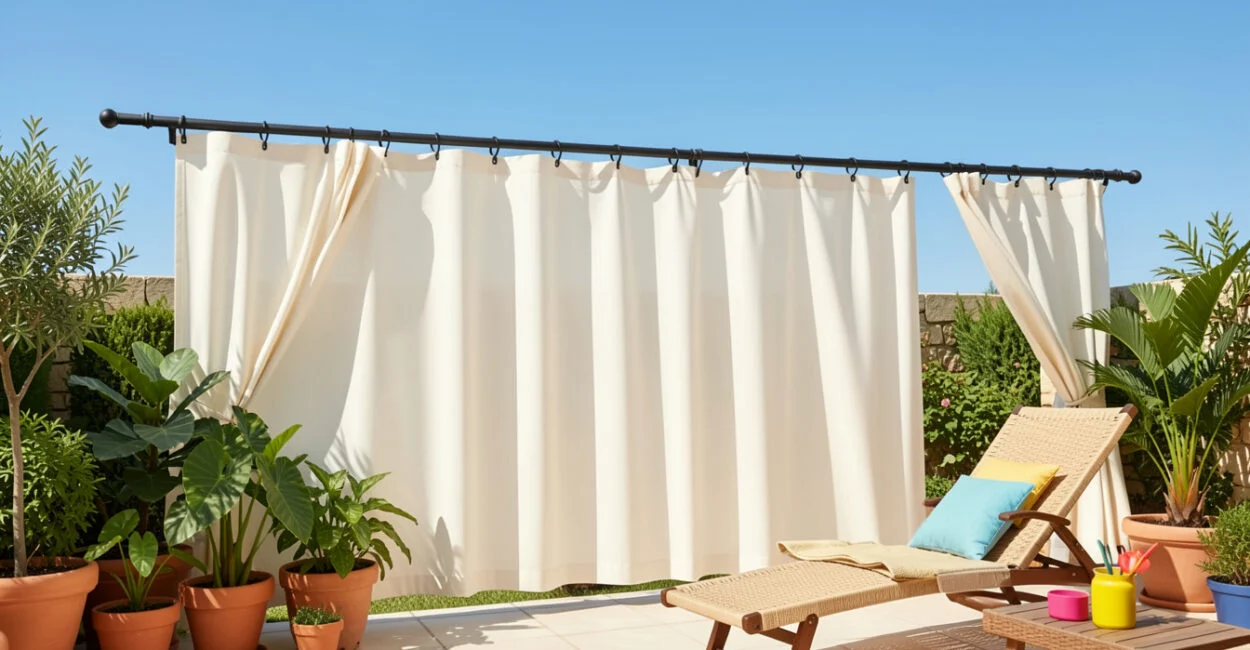 Outdoor curtains secured against the breeze
Outdoor curtains can add shade and privacy, but wind changes the buying decision: fabric can billow, hardware can loosen, and a panel can become a hazard. Choose by how exposed the patio is, whether you need rain protection, and whether the curtain system can be secured or taken down easily.
How to Choose Outdoor Curtains for a Windy Patio
For an exposed patio, choose breathable panels that gather or come down easily, with hardware secured to a sound mounting surface. For a sheltered space where rain protection matters, water-resistant fabric may be a better fit. Waterproof curtains can catch more wind, so use them only when the installation and removal plan suit the exposure.
Wind suitability depends on the whole setup: fabric, panel width, attachment points, and the structure holding the rod. The National Weather Service’s Beaufort Wind Scale describes wind conditions and their effects; it does not certify a curtain or installation as safe at a particular wind level.
Choose Curtain Fabric for Wind, Sun, and Rain
Water resistance describes how well a fabric repels water; waterproof fabric is intended to prevent water from passing through under specified conditions. Neither label tells you how a curtain will behave in gusts. A dense, coated panel may block rain, but its broad surface can also catch wind.
Fabric type Wind behavior Rain protection Best fit Breathable outdoor fabric More air can pass through; still needs tie-backs or removal in gusts Usually limited Exposed patios where airflow and easy handling matter ✓ Water-resistant fabric Can catch more wind than an open weave Helps shed light rain; check the product specification Sheltered patios needing some rain resistance ✓ Waterproof fabric Can act like a sail when left loose Designed to resist water passage under stated conditions ✓ Protected areas with a reliable way to gather or remove panels
For a sunny patio, check the fabric’s stated UV resistance and care instructions as well as its color. Sunbrella’s fabric care guidance explains routine cleaning and stain treatment for its fabrics; follow the instructions for the specific curtain rather than assuming all outdoor textiles can be cleaned the same way.
“Sunbrella outdoor curtains” may describe curtains made from Sunbrella fabric, but the brand name alone does not establish a panel’s wind rating, waterproofness, or suitability for your rod. Check the finished product’s specifications and installation guidance.

Pick the Right Curtain Length, Width, and Style
Measure the opening and the intended hanging height before choosing a panel. Curtains that drag can collect dirt and stay damp after rain, while panels that stop well above the floor may leave a privacy gap. In a windy location, a shorter panel or one that can be gathered fully clear of the opening is often easier to manage.
Fullness means how much fabric width hangs across the rod compared with the opening. More fullness creates a softer, more gathered look, but it also adds fabric that can billow when released. For exposed patios, favor panels that stack compactly and have secure tie-backs; for sheltered spaces, choose fullness based on appearance and coverage.
A common mistake is measuring only the patio opening and buying panels that barely meet in the middle. That can leave a gap when the curtains shift. Measure the usable rod length, account for how much space the panels occupy when gathered, and check the manufacturer’s recommended panel width.
Read also: How to Choose Weatherproof Outdoor Speakers for a Patio
Select Outdoor Curtain Rods and Mounting Hardware
Outdoor curtain rods should suit the span, curtain weight, and mounting surface, with corrosion-resistant materials or finishes appropriate to the manufacturer’s outdoor-use instructions. Look at the support spacing and the fasteners as well as the rod itself: a strong rod attached to weak trim can still pull loose.
Outdoor curtain rods that are rust proof are not all equally resistant to moisture or salt exposure. Confirm the material and care guidance, especially near the coast. For wide openings or heavier curtains, use the support brackets and installation method specified for the product rather than relying on a rod’s appearance.
Read also: Budget-Friendly Outdoor Deck Design Ideas
Outdoor curtain rods with tension can work in a sheltered opening if the product’s load limits match the curtain and the two contact surfaces are firm, parallel, and suitable for the rod. They are a poor choice for exposed patios, uneven surfaces, or heavy waterproof panels unless the manufacturer explicitly approves that use. A tension rod can slip under shifting loads even when it feels secure during a still-weather test.
ASTM International’s ASTM D5034 textile strength test measures breaking strength and elongation of textile fabrics using a grab test. That test is not a wind rating for a finished curtain assembly: it does not account for seams, grommets, rod supports, fasteners, or the wall they attach to.
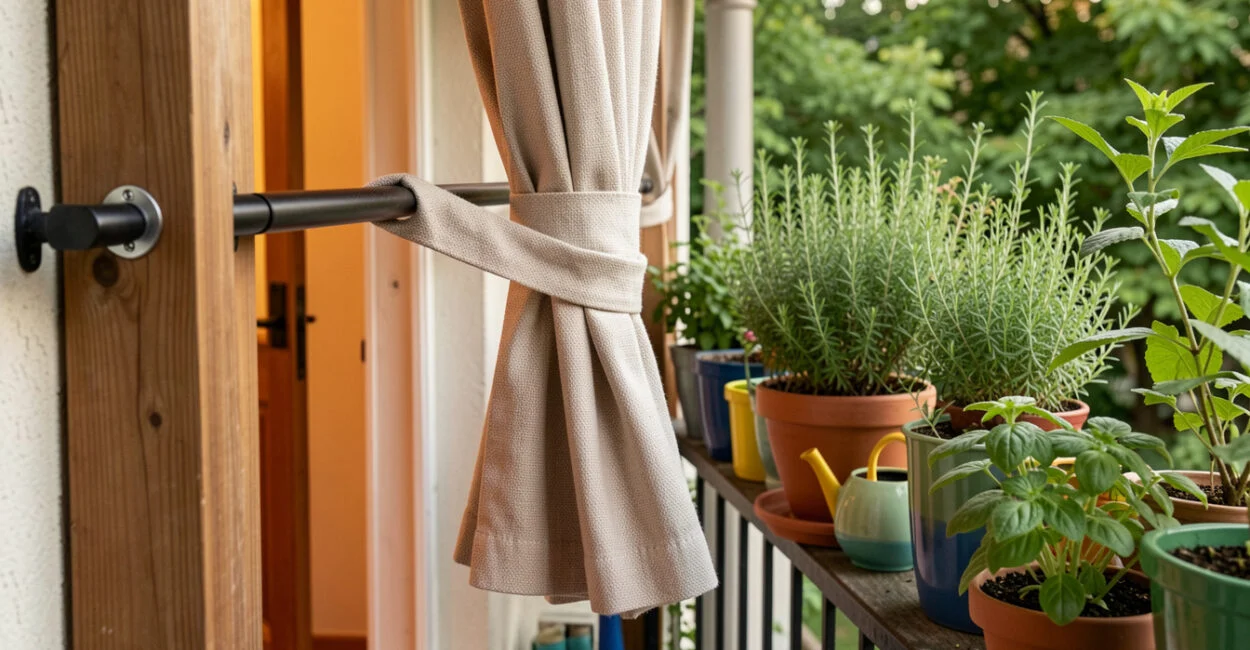
Reduce Wind Buildup and Keep Curtains Manageable
Outdoor curtains should come down or be secured when conditions exceed the product’s guidance or the mounting system’s limits. No fabric weight makes a curtain windproof, and heavier fabric can put more load on the rod and brackets while still catching gusts.
- Use tie-backs attached to a stable point, and gather panels fully when wind is forecast.
- Choose panels with grommets, tabs, or another attachment style designed for the intended rod, then follow the maker’s installation instructions.
- Remove panels before storms or prolonged high winds if the manufacturer recommends it, or if the hardware shifts, rattles, or pulls away from its supports.
- Store dry curtains in a clean, breathable container. If a panel gets wet, let it dry fully before storage to limit mildew and odor.
Wind direction matters: a patio that feels calm from one side can funnel gusts through an opening from another. Watch how the panels move during ordinary breezes before leaving them unattended, and do not treat that observation as a substitute for the product’s limits or local weather guidance.
Match Curtains to Your Patio or Balcony
On a sheltered patio with a solid roof and reliable side supports, water-resistant curtains may offer a useful balance of privacy and light rain protection. On a fully exposed edge, breathable panels that gather quickly—or no curtains during windy periods—are usually easier to manage. If privacy is the main goal and the site is too exposed for fabric, consider a fixed screen instead; these budget-friendly small-patio privacy screen ideas offer alternatives.
Balconies need careful measuring because rails, neighboring units, and building rules can limit both mounting and panel movement. Outdoor curtains waterproof for balcony use should fit within the allowed space, attach only where permitted, and avoid blocking drainage or creating loose fabric that could blow beyond the railing. Check the building or property manager’s requirements before drilling or hanging anything outside the balcony line.
For a small patio where seating and circulation compete for space, compare the curtain’s gathered footprint with your furniture layout. Compact outdoor seating arrangements can help you plan the opening without placing chairs where tied-back panels will swing into them.
What to Check Before You Buy
- Fabric: Confirm whether it is breathable, water-resistant, or waterproof, and check UV and cleaning guidance.
- Wind handling: Look for maker instructions on tie-backs, removal, and weather limits. Do not infer a safe wind speed from fabric weight or a textile strength test.
- Dimensions: Measure the opening, rod span, hanging height, and space needed to gather each panel.
- Hardware: Check outdoor-use suitability, corrosion guidance, support requirements, fastener compatibility, and tension-rod load limits where applicable.
- Care and storage: Follow the label or manufacturer’s directions. Clean dirt and stains as instructed, rinse if specified, dry fully, and store in a dry place.
- Returns and installation: Review return terms before opening or installing the product, plus any restrictions on drilling, balcony attachments, or exterior changes.
Heavy duty waterproof outdoor curtains, including heavy duty waterproof outdoor curtains that roll up, can be convenient for a sheltered space where rain coverage is the priority. Confirm how the roll-up mechanism attaches, whether it is designed for your installation surface, and how the system should be secured or removed in wind. Product descriptions vary, so the manufacturer’s specifications are the deciding source.
📱 See this content as a Web Story
Frequently Asked Questions
Are Breathable Curtains Always the Safest Option in Wind?
No. They may allow more airflow than a solid coated panel, but an unsecured curtain can still flap, strain its fittings, or become damaged. Exposure and mounting matter.
Can I Leave My Curtains Tied Back All Season?
Only if the product instructions and local conditions support that use. Ties can loosen, fabric can weather, and prolonged exposure can wear both the panel and attachment points. Inspect them and take them down when conditions call for it.
How Can I Reduce Mildew When Cleaning and Storing Patio Curtains?
Use the care instructions for the specific fabric, and do not pack curtains away damp. Remove surface dirt as directed, allow the panels to dry completely, and store them in a clean, dry place with some ventilation.
Should I Buy Waterproof Curtains If Rain is Common?
Choose them when rain protection matters and the patio is sheltered enough for the panels to be managed safely. In a wind-exposed spot, a waterproof curtain can catch gusts; a retractable shade or fixed screen may suit the site better.