
How to Remove Grease Stains from Clothes Before Washing
Remove grease stains from clothes before washing: lift excess oil, pretreat with detergent or dish soap, and check the fabric before drying.
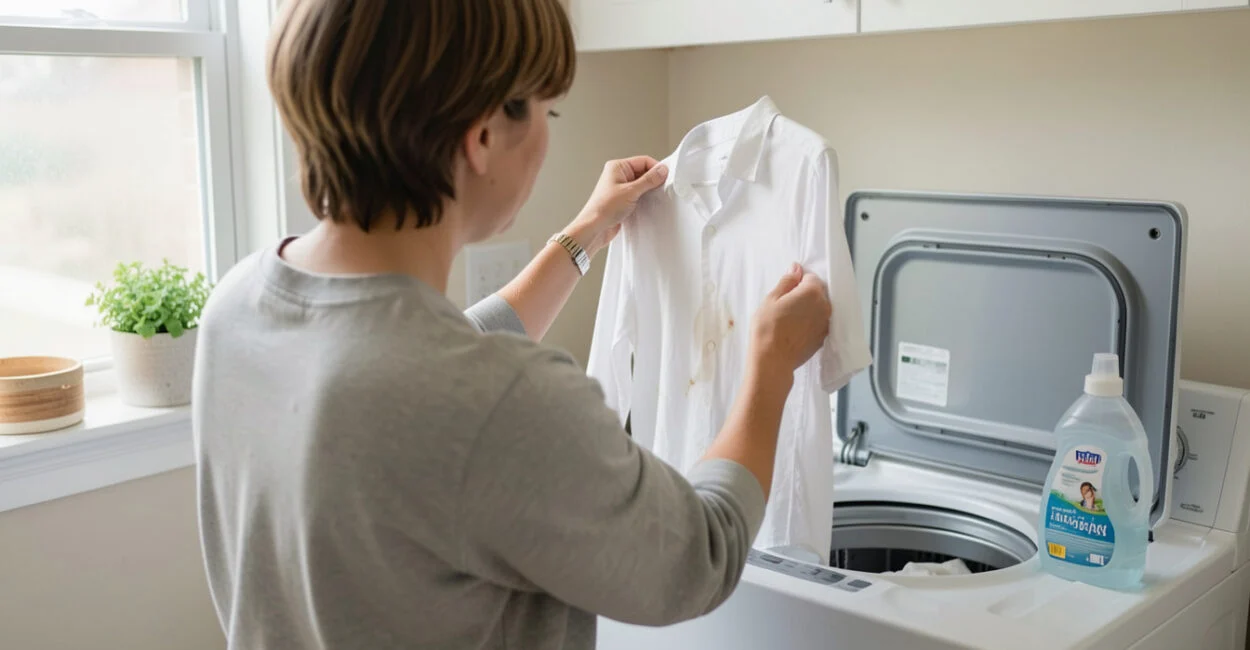 Checking a shirt before machine drying
A greasy spot from salad dressing or a bike chain can look worse after a trip through the washer, especially if it goes unnoticed before drying. To remove grease stains from clothes, lift off excess residue, pretreat the mark with a suitable liquid laundry detergent or dish soap, then wash according to the care label. Check the fabric before using a dryer.
Grease is oil-based, so water alone may not lift it from fabric fibers. The right treatment depends on the stain, the garment, and whether heat has already reached the mark.
How Do You Remove Grease Stains from Clothes Before Washing?
For a washable garment, blot or lift away excess grease without spreading it, then work a small amount of suitable liquid laundry detergent or dish soap into the stain. Let the product sit as its label directs, and wash the item according to its care label. Test the product on a hidden area first, particularly on colored fabric.
Place a clean absorbent cloth or paper towel behind the stained section if grease could transfer to another layer of fabric. For example, slip it inside a shirt before pretreating a spot on the front. Replace the cloth if it becomes oily.
- Lift or blot excess grease; do not scrub.
- Put an absorbent cloth behind the spot if useful.
- Test the pretreatment on an inconspicuous area.
- Apply pretreatment according to its label.
- Wash within the garment’s care limits.
- Inspect the stain before using a dryer.
The last check matters: dryer heat can make remaining grease harder to remove. If you are also dealing with odors or residue in the appliance, see these steps for cleaning a washing machine and preventing musty odors.
How Can You Tell What Kind of Stain and Garment You Have?
An oily-looking spot should be treated as grease or oil rather than as a water-based mark, which may respond to a different approach. Check the care label before choosing a product or wash setting; it gives instructions for washing, water temperature, and drying that can rule out some home treatments. Textile care labels use standardized care symbols. The Federal Trade Commission’s clothing labeling guidance explains the labeling requirements, while the garment’s own instructions should guide your treatment. If the item is dry-clean-only, delicate, or made from a specialty fabric, ask a professional cleaner before applying soap or stain remover.
Situation First action Important caution Fresh food or cooking grease Blot or lift excess, then pretreat. Avoid rubbing and check the care label. Old stain or stain after washing Pretreat again and rewash if the fabric allows. Inspect before drying; results can vary. Black or automotive grease Remove loose residue carefully, then treat the oily mark. Do not grind particles into the fabric; consider a cleaner for delicate items. Delicate or dry-clean-only garment Follow the label or consult a cleaner. Do not assume a home remedy is safe.
Automotive grease can leave both an oily film and dark particles. Those particles can smear when scrubbed, so lift loose residue gently before treating the remaining mark. For other stubborn household grease, such as cooking splatter, the cleaning approach for removing grease from an oven is a separate task; do not transfer appliance-cleaner instructions to clothing.
What is the Best Way to Treat Fresh Grease Without Spreading It?
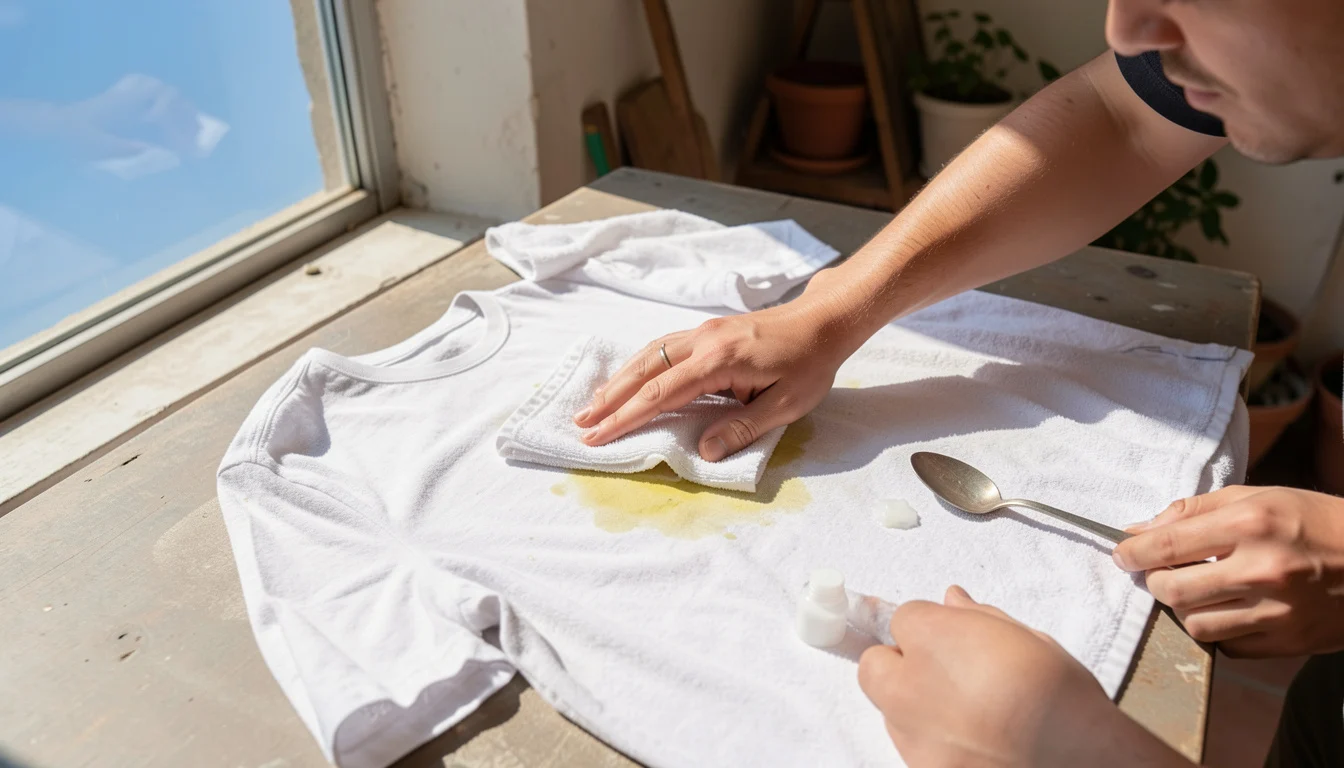
Start by removing what sits on the surface, then apply a fabric-appropriate pretreatment to the oily area. Gentle pressure helps the product reach the fibers; hard rubbing can push grease outward or drive dark particles deeper into the weave.
- Lift the excess. Use the edge of a spoon or a dull utensil for solid residue, then blot the remaining grease with a clean cloth.
- Protect the layer beneath. Put an absorbent cloth or paper towel behind the stain when the garment’s construction allows it.
- Test the product. Dab a small amount on a hidden seam or hem and check for color change or damage.
- Pretreat the mark. Apply liquid laundry detergent or a small amount of suitable dish soap, then work it in gently with a fingertip or soft brush.
- Follow the product directions. Rinse or move to laundering as the product and garment labels instruct.
For a large or heavily saturated spot, remove surface grease first and repeat pretreatment if a residue remains. An absorbent powder may help draw up grease from the surface before washing, but it is only a preliminary measure; detergent-based pretreatment may still be needed.
Gentle blotting keeps a fresh grease stain contained while pretreatment works on the oil in the fabric.
How Should You Wash and Check the Garment?
Wash the item with detergent, using the water temperature and cycle allowed by its care label. Hotter water is not automatically better: fabric limits and product directions determine what is appropriate. After washing, inspect the stained area in good light before putting the garment in a dryer. If you can still see or feel an oily mark, pretreat and wash again rather than applying dryer heat. Air-drying while you check or retreat the garment avoids adding heat before the stain is gone.
A greasy spot can be hard to see on damp fabric, so check the area from more than one angle. If the washer itself needs attention after a load of oily work clothes, clean it according to its manual rather than adding cleaning products to the laundry cycle.
Can You Remove Old or Heat-Set Grease Stains?
Old grease stains may come out after another suitable pretreatment and wash, but results depend on the fabric, the stain, and any heat exposure. A stain noticed after washing or drying is not automatically permanent; treat it again within the garment’s care limits and inspect before drying once more. For old oil stains on clothes, apply a detergent-based pretreatment as directed and give it time to work according to the product label. Do not use aggressive scrubbing to compensate for the stain’s age. Repeated gentle treatment is safer for the fabric, though heat-set marks may remain.
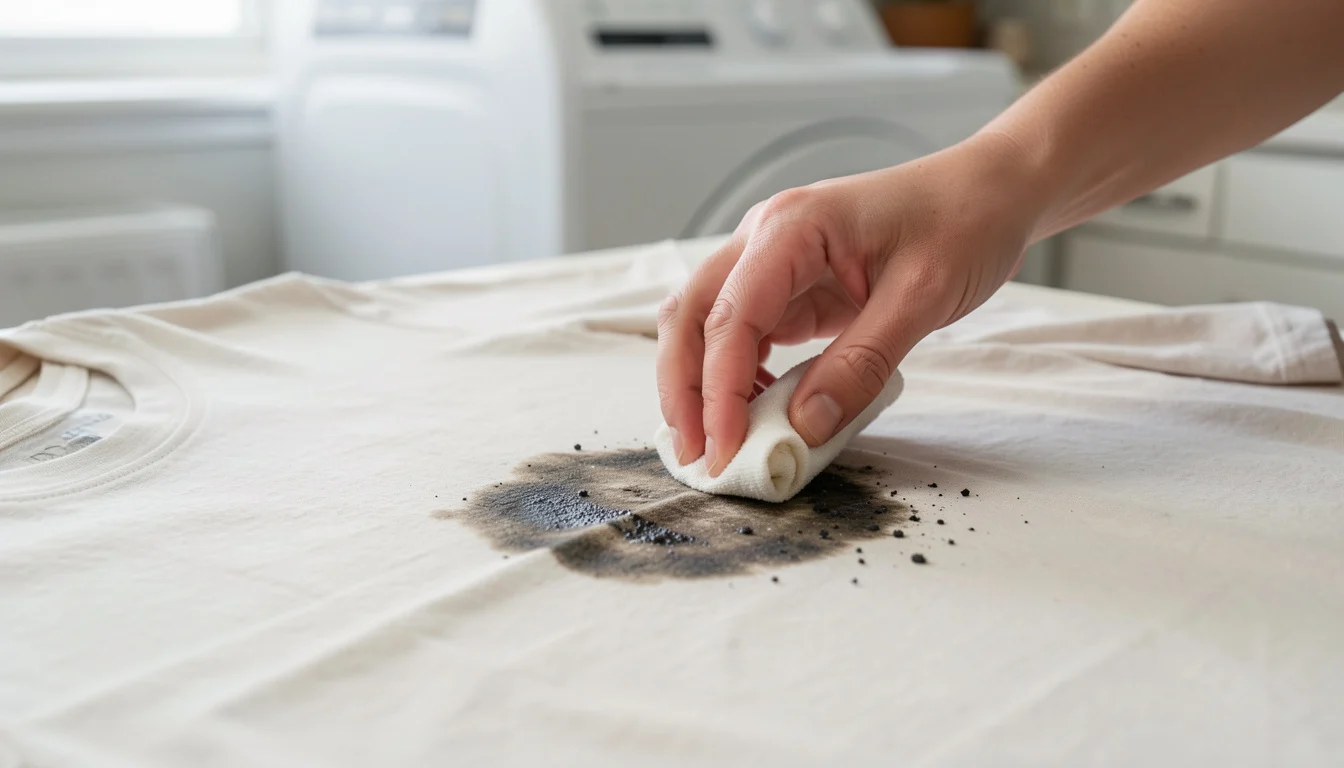
For black or car grease, carefully lift loose particles first, then treat the oily residue without grinding debris into the cloth. A delicate garment with embedded dark residue is a better candidate for professional cleaning than repeated home experiments. A typical example: a cooking-oil spot appears on a cotton shirt after it has already been washed. The shirt is still damp, and the mark is visible under bright light. Pretreat the spot again, rewash it within the care-label limits, and inspect it before drying. If the mark remains, repeat cautiously rather than assuming one wash settled the matter.
Which Products and Methods Are Safe to Try?
Liquid laundry detergent is a practical pretreatment for many washable garments; dish soap can also help with grease on suitable fabric. Neither choice suits every item or formula, so follow both the garment and product instructions, and test first.
Option How to use it Caution Liquid laundry detergent Use as a pretreatment when the product label allows it. Follow product and garment instructions. Dish soap Consider a small amount on suitable washable fabric. Test first; not every formula is intended for clothing. Vinegar Treat it as a reader-suggested household option, not the main grease treatment. Do not count on it to remove grease. Absorbent powder Use as an optional first step to lift surface grease. It is not a guaranteed complete treatment.
Dish sprays and concentrated cleaners are not automatically safe for clothes, even when marketed for grease. Check the label for fabric use and avoid applying them to delicate or specialty materials unless the product specifically permits it. The American Cleaning Institute offers general guidance on fabric care, but the garment’s care label and cleaner’s directions remain the practical limits for a specific item.
Vinegar should not replace detergent-based pretreatment for an oily stain. Do not mix cleaning products, and do not apply solvents or stain removers without checking both the product directions and the garment label.
What Mistakes Make Grease Stains Harder to Treat?
Hard rubbing, skipping the care label, using an unsuitable cleaner, or machine-drying a visible stain can spread residue or complicate removal. A common slip is tossing a shirt into the dryer after a wash without checking the spot; the fabric may look clean at a glance while an oily shadow remains.
- Do not rub hard or scrub a dark stain outward.
- Do not ignore washing and drying instructions on the care label.
- Do not mix cleaners or layer products without checking their directions.
- Do not machine-dry a garment with a visible grease mark.
Paper is different from clothing: it is porous and cannot be soaked or laundered like washable fabric. If oil marks a document or book, avoid applying clothing treatments; the paper may need a paper conservator or advice from an archive instead.
Your situation Next step Fresh stain on washable fabric Pretreat and wash according to the label. Persistent stain after washing Repeat pretreatment cautiously and inspect before drying. Delicate or uncertain fabric Follow the label or seek professional advice.
Start with the garment’s care label, then choose a pretreatment the label and product instructions allow. That decision helps prevent a manageable grease spot from turning into fabric damage.
📱 See this content as a Web Story
Frequently Asked Questions
Will Vinegar Remove Grease from Clothes?
Vinegar is not a dependable grease remover and should not replace detergent-based pretreatment. Choose a suitable product for the garment, follow its directions, and test it on a hidden area first.
How Do You Remove Oil Stains from Paper?
Paper is porous, so laundry methods such as soaking and washing do not apply. Avoid wet cleaners that could warp or damage it; for a valuable document, consult a paper conservator or archival professional.
Can Baking Soda Remove a Grease Stain by Itself?
An absorbent powder may lift some surface grease, but it may not remove the oil lodged in the fibers. Treat it as a preliminary step and follow with a suitable fabric pretreatment if the care label allows.
Should I Use a Toothbrush to Scrub the Stain?
A soft brush may help work pretreatment into sturdy, washable fabric, but use light pressure. A stiff brush or aggressive scrubbing can spread the stain, damage fibers, or push automotive particles deeper.
Can I Use the Same Treatment on Silk or Wool?
Do not assume dish soap or standard laundry detergent is safe for silk, wool, or other specialty fabrics. Follow the care label and consult a cleaner when the label calls for professional care or the fabric is uncertain.
Why Does a Grease Mark Remain After Laundering?
Grease may remain if the wash did not remove the oily residue, or if the garment went into the dryer before anyone noticed the stain. Pretreat and rewash within the fabric’s care limits, then inspect the spot before applying heat.