
How to Organize Cleaning Supplies in a Small Home
Organize cleaning supplies by task or room, check labels, remove empty containers, and choose safe, accessible storage for each group.
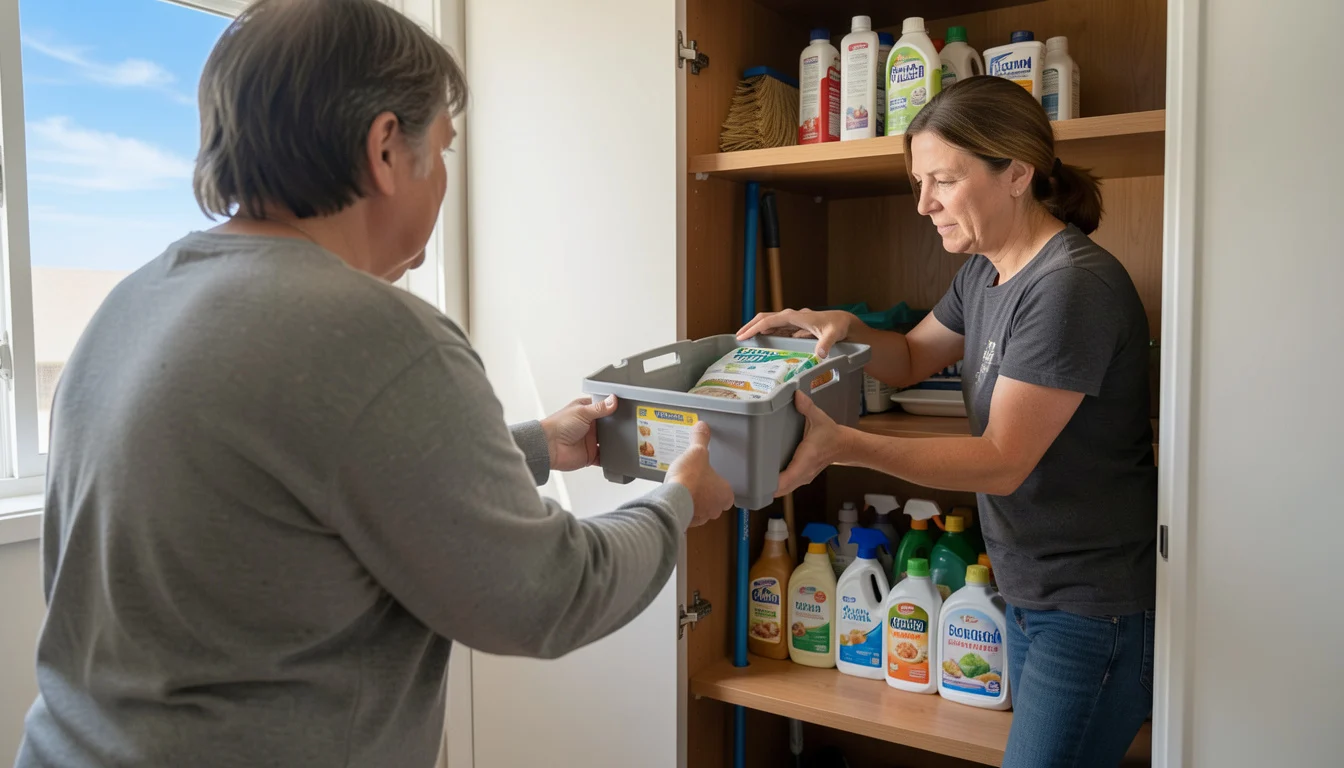 A shared system for cleaning supplies
In a small home, cleaning supplies need a clear storage plan more than they need a large closet. A useful system starts by grouping products by task or location, then matching each group to a safe, accessible spot. The ideas below move from sorting and placement to storage choices and upkeep, so you can choose only what fits your space.
Cleaning-supply organization is the planned arrangement of cleaning products and tools by use, location, and storage needs. Put simply, it means knowing what you have, where it belongs, and how to reach it without crowding a cabinet or blocking a walkway.
The best setup depends on your home’s layout, plumbing, and product labels.
1. Sort and Group Supplies Before Choosing Storage
Organize cleaning supplies in a small home by grouping them by task or location, then assigning each group to compact storage that fits the space. Start with bathroom, kitchen, floors, and laundry supplies. Check labels, remove empty containers, and set aside products you no longer want. Do not combine leftovers or transfer products into unmarked containers.
Sorting reveals how much storage you actually need and can uncover duplicates that take up valuable cabinet space. Keep frequently used items within easy reach, and place less-used supplies elsewhere if their labels allow it. For example, keep the products used for regular bathroom cleaning together, while storing a specialty cleaner separately. A common storage mistake is buying a large organizer before checking what needs to go in it. Sorting first helps prevent wasted space and makes it easier to choose a bin, caddy, or shelf that fits the real load.
2. Assign Supplies to a Home Zone
A home zone is a designated place for supplies based on where you use them or how you need to control access. Bathroom products might fit under the bathroom sink, kitchen cleaners under the kitchen sink, and floor tools in a utility corner or closet.
Keeping items near their point of use can save trips across the home.
One central cabinet may work better if your home has very little storage or if products need to stay in a controlled-access location. Choose zones based on the available space, household routines, and each product’s storage directions. For more space-first ideas that apply across a home, see these minimalist storage ideas for small spaces. It can also help to match supplies to recurring tasks. If refrigerator cleaning happens only occasionally, for instance, its product may belong with less-used kitchen supplies rather than in the everyday cleaning caddy. These refrigerator-cleaning steps can help clarify which supplies you reach for during that task.
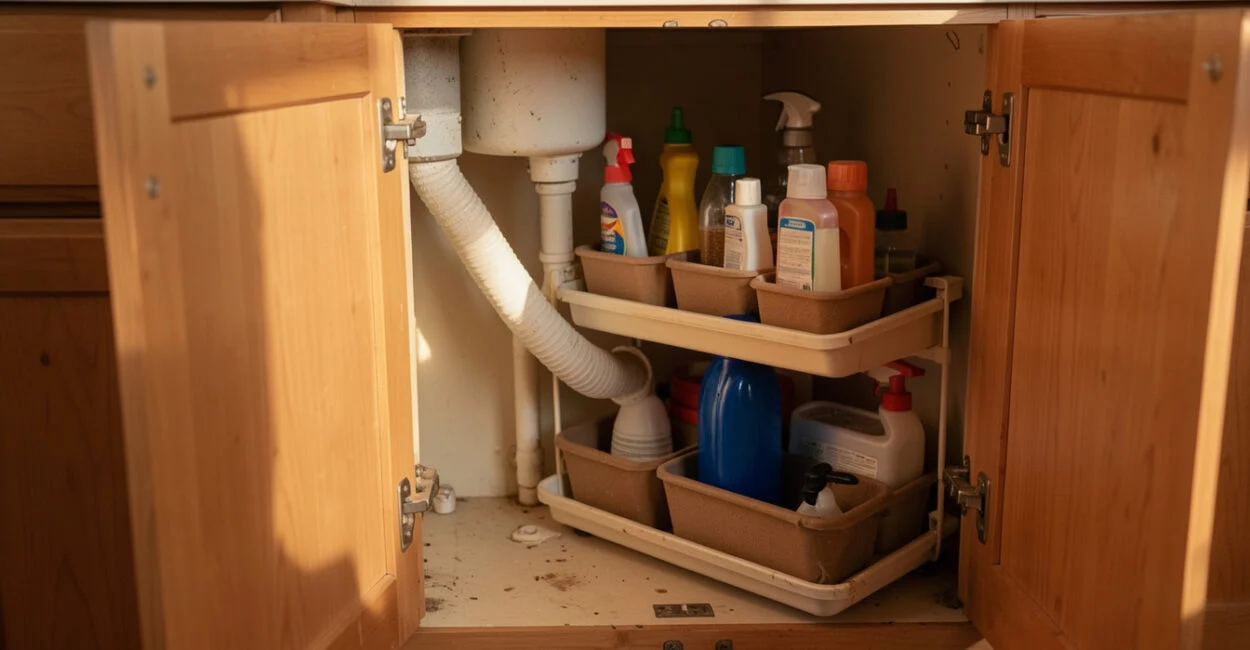
3. Use an Under-Sink Organizer for Compact Cabinets
An under-sink organizer uses shelves, bins, or pull-out trays to make cabinet contents easier to reach. An under bathroom sink organizer can corral bathroom products, while under kitchen sink pull-out storage can bring items toward the cabinet opening instead of leaving them behind pipes.
Measure the cabinet’s width, height, and depth before choosing a unit. Include plumbing, hinges, and door clearance in your measurements; a pull-out that fits the cabinet dimensions on paper may still collide with a pipe or door. Use small bins or trays to keep bottles and cloths from scattering, but leave room to reach shutoff valves and inspect plumbing.
Under-sink cabinets can have damp spots or leaks, so check the area and follow product-label storage directions. A two-tier design can improve access, but it is not suitable for every cabinet. If you store bathroom products near shower supplies, this guide to removing hard-water stains from shower glass may help you decide which items belong together.
4. Choose a Cleaning Caddy for Portable Supplies
A cleaning caddy holds a small, task-specific set of products so you can carry them from room to room. It works well for routine cleaning when supplies are scattered across several locations, or when you want to bring a few essentials to one area without making repeated trips.
A hand-carried caddy suits a modest load. A cleaning caddy on wheels can carry more or travel farther, but it needs clear floors and enough room to turn. Measure the caddy’s intended storage spot, too. A large caddy for cleaning supplies may hold many bottles, yet be awkward to lift or too bulky for a narrow bathroom.
Keep backups separate and load only what you need for common tasks. This limits weight and leaves space for supplies to sit upright. If a small basket already handles your routine, there is no need to replace it with a larger organizer.
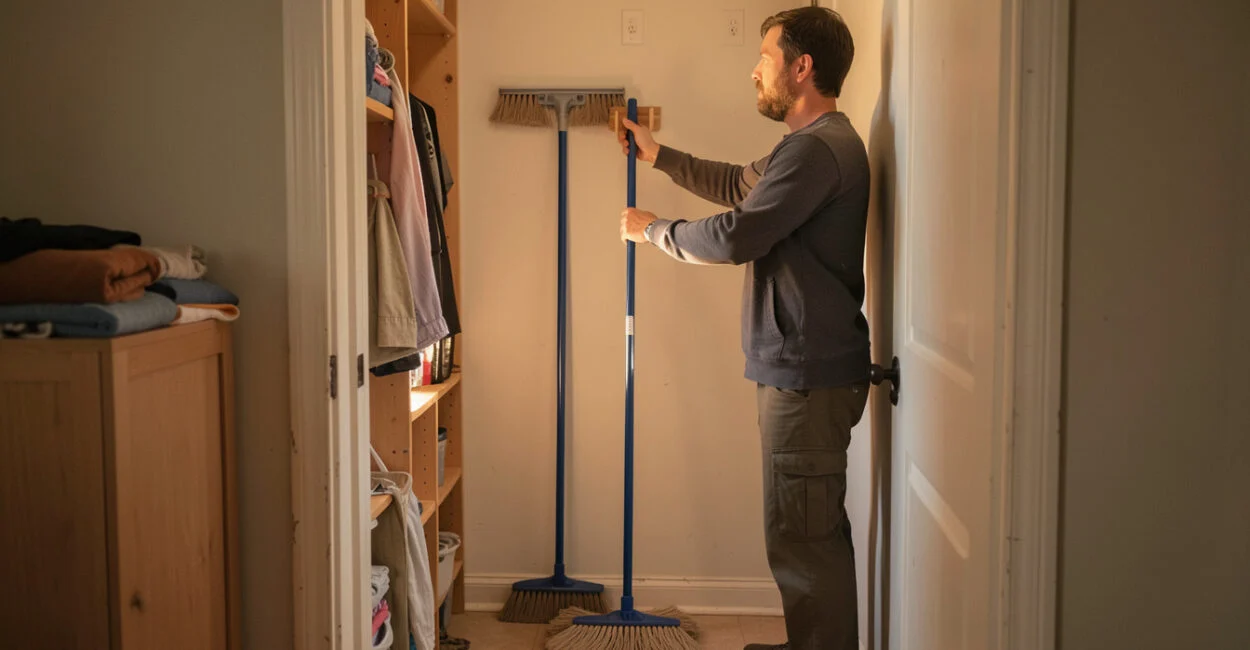
5. Store Brooms and Mops Vertically
Vertical storage keeps long-handled tools off the floor and can free up space in a closet or utility corner. A storage cabinet for brooms and mops hides tools behind a door, while wall hooks or a freestanding holder keep them easier to see and grab.
Before choosing, check the tools’ height and the space needed to mount a holder or open a cabinet. Keep tools together in a spot where they can be put back after use. An open holder may suit a utility corner, while a cabinet can make more sense when you want to conceal tools or keep them away from household traffic.
Check that handles and mop heads do not obstruct a doorway or block access to other stored items. If you have a narrow closet, an open vertical holder may take less usable floor space than a cabinet, but the right choice depends on your layout and how often you use the tools.
6. Make a Small Cleaning Closet Work Harder
A small cleaning closet can hold more when shelves, narrow bins, and long tools each have a clear place. Use adjustable shelves if available, and separate cleaning products from cloths and long-handled tools. Simple labels can help household members return items to the right spot.
Use the closet’s vertical space, but avoid stacking products so high that they become difficult or unsafe to reach. Keep frequently used supplies at a comfortable height and less-used items in a spot that remains accessible. Choose bins that fit the closet’s actual dimensions and leave enough room to reach what is stored behind or beside them.
For example, a narrow bin can keep spare cloths together without taking up a full shelf. If several kinds of laundry products share the closet, keep them grouped so they do not get mixed into the everyday floor-cleaning supplies. A useful arrangement is one you can maintain when you are putting things away quickly.
7. Use a Rolling or Portable Setup When Supplies Need to Move
A rolling organizer can suit larger cleaning loads, multiple rooms, or anyone who finds a hand-carried caddy difficult to manage. It holds more, but takes up more space and can be harder to maneuver in narrow rooms. A hand caddy or small basket is often enough for a limited routine.
Before choosing a cart, check its width, storage footprint, and route through your home. Make sure it can pass through doorways and turn where needed, then identify a parking spot that does not block a door or walkway. If you clean several rooms in one session, a cart may keep supplies together; if you only carry a few items, its extra size may add clutter.
A portable cleaning-supply organizer does not have to be a cart. A small basket can move between rooms and tuck onto a shelf when the task is done. Pick the lightest setup that handles your regular load.
8. Keep the System Safe and Easy to Maintain
Store cleaning products in their original containers and follow each label’s directions for use and storage. Never mix cleaning products. Keep them secured away from children and pets, following product labels and applicable safety guidance. The EPA’s Safer Choice program provides information about products that meet its criteria for safer ingredients; that designation does not replace label instructions or safe storage.
Check stored items from time to time for empty, damaged, or expired products, and clear out containers you no longer need according to their labels. There is no single inspection schedule that suits every household; how often to check depends on how many products you keep and how quickly you use them. If pets share your home, review this advice on disinfecting when you have pets at home before deciding where certain products belong.
The National Capital Poison Center also offers guidance on keeping household products away from children. Its advice can help inform storage decisions, but product labels and your household’s circumstances still matter.
Summary: Cleaning-Supply Storage Options
List item Main purpose Best suited to Sort and group supplies Reduce clutter and identify storage needs Any small home Assign supplies to a home zone Keep items near where they are used Homes with several storage spots Under-sink organizer Make cabinet contents easier to reach Bathroom or kitchen cabinets with suitable clearance Cleaning caddy Carry a small set of supplies between rooms Routine room-to-room cleaning Vertical broom-and-mop storage Store long tools and free floor space Utility corners, closets, or suitable walls Small-closet system Organize mixed products and tools Homes with a narrow cleaning closet Rolling or portable setup Move a larger set of supplies Larger cleaning loads and routes with enough clearance Safety and maintenance routine Keep storage orderly and reduce avoidable risks Every household
How to Choose the Right Cleaning-Supply Storage
Start with the supplies you use most and the locations where you use them. Then ask:
- Do you need a fixed storage spot, or do supplies travel between rooms?
- Will an under-sink organizer clear the plumbing, doors, and cabinet opening?
- Can a caddy or cart fit its storage spot and move through your usual route?
- Do long-handled tools need a holder, hooks, or a cabinet?
- Can products be stored in the chosen location according to their labels and household safety needs?
General advice has limits: an under-sink cabinet may be convenient in one home and unsuitable in another because of plumbing, moisture, or product-label requirements. Measure the space and check the labels before committing to a setup. For more on using laundry products safely, see this guide to cleaning a washing machine and preventing musty odors.
Conclusion
A workable system gives each product and tool a sensible home, with the most-used supplies easy to reach and the rest stored safely. Start with what you already own, then add an organizer only when it solves a specific space or access problem.
📱 See this content as a Web Story
Frequently Asked Questions
Where Should Cleaning Supplies Go in a Small Home?
Store them near the rooms where you use them when space and product labels allow. A central cabinet can be a better choice when storage is limited or household safety calls for controlled access.
What Should I Measure Before Buying an Under-Sink Organizer?
Measure cabinet width, height, and depth, then account for pipes, hinges, and door clearance. Leave enough room to access plumbing and check for moisture.
Is a Cleaning Caddy on Wheels Better Than a Hand-Carried Caddy?
It depends on the load and the route. A wheeled caddy can carry more, but it takes up space and needs room to turn. A hand caddy or basket often suits a smaller routine.
Can I Store All Cleaning Products Together?
Products can share a storage zone if their labels allow it and they remain secured away from children and pets. Keep them in their original containers, follow label directions, and never mix cleaning products.