
How to Clean a Coffee Maker and Remove Mineral Buildup
Clean a coffee maker by washing permitted removable parts and following the model’s approved descaling process, with the right cleaner and fresh-water rinses.
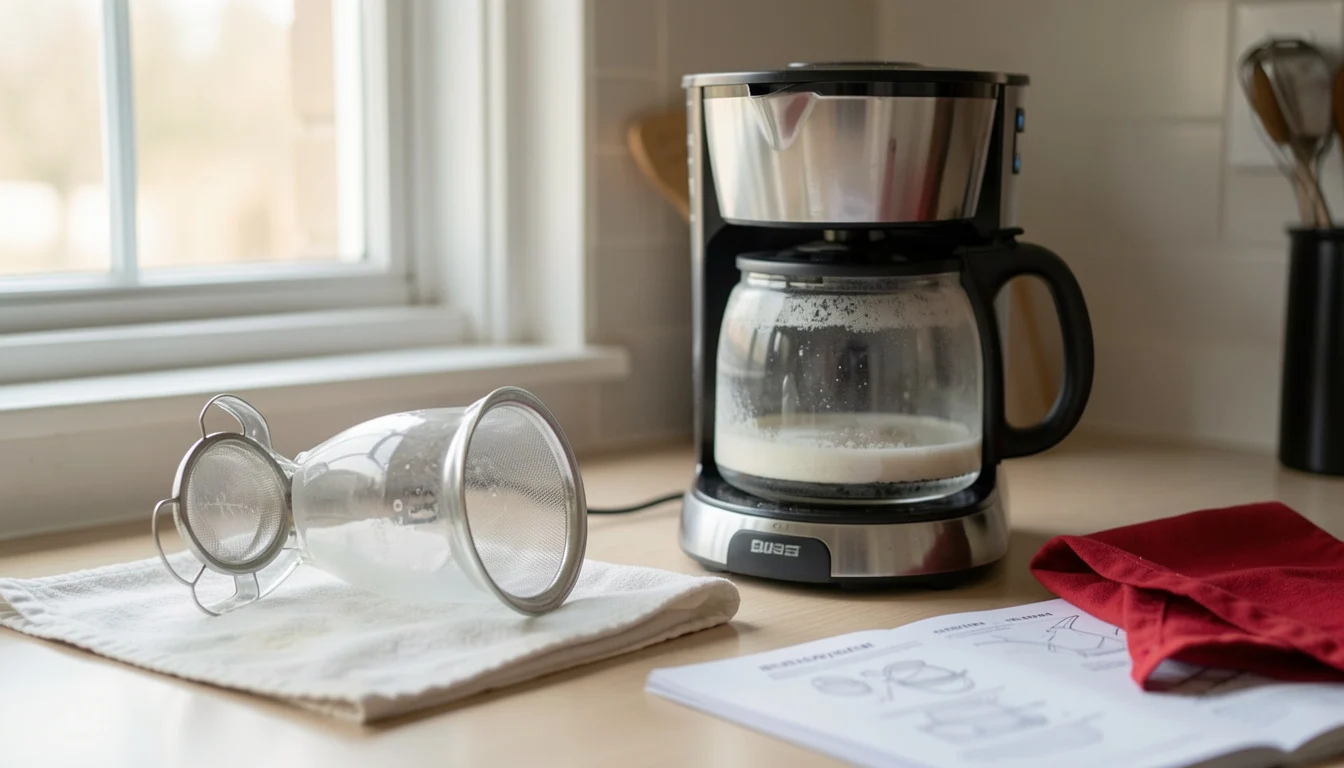 Clean parts beside a scaled reservoir
A slow drip or a stale coffee smell can come from two different problems: coffee residue on removable parts or mineral scale inside the brewer. To clean a coffee maker, wash the parts its manual allows you to remove, then use the manufacturer-approved cleaning or descaling process and rinse as directed. The right cleaner, amount, and cycle depend on the model.
Let hot parts cool before handling them, and keep the electrical base and cord dry. Vinegar is not approved for every machine, so check the manual before pouring any cleaner into the reservoir.
Quick Cleaning Notes
- Wash coffee-contact parts with dish soap and water when the manual permits it.
- Descaling removes mineral deposits inside the brewer; it does not replace washing the carafe and basket.
- Use the cleaner and cycle specified for your model, including any required fresh-water rinses.
- Do not assume removable parts are dishwasher-safe or that vinegar is suitable.
How to Clean a Coffee Maker: The Basic Process
Start by checking the manual for your exact model, then empty the brewer, let hot components cool, and wash permitted removable parts. Wipe the exterior with a damp cloth, keeping water away from the base and cord.
If scale needs attention, follow the manual’s approved cleaning or descaling instructions, discard the solution, and run the required fresh-water rinses.
Cleaning removes coffee grounds, residue, and oils from parts that touch brewed coffee. Descaling targets mineral deposits that build up inside water passages and heating components. They address different deposits, so running a descaling cycle does not eliminate the need to wash the carafe and brew basket.
- Check the model’s manual.
- Empty the brewer and let hot parts cool.
- Wash permitted removable parts.
- Use only an approved descaler or cleaner.
- Run the prescribed cycle and fresh-water rinses.
- Keep the electrical base dry.
Wash coffee residue from accessible parts; descale the internal water path only as the manufacturer directs.
What You’ll Need—and What to Check First
Most routine cleaning calls for dish soap, clean water, and a soft cloth or sponge. If the brewer needs descaling, use the manufacturer’s product or another cleaner only when the manual says it is compatible.
Task or part General care Check in the manual Carafe and brew basket Wash gently and rinse Dishwasher-safe or hand-wash only? Exterior Wipe with a damp cloth Any model-specific restrictions? Internal scale Use the approved descaling process Which product, amount, and cycle? Removable single-serve parts Clean only if designed to be removed Which parts may be removed and washed?
Abrasive pads can scratch finishes and some components, while unapproved cleaners may damage seals or leave residues. “Non-toxic” on a product label does not mean it is safe for every machine, nor does it mean the cleaner is meant to be swallowed. The same model-by-model caution applies when comparing a “non-toxic coffee maker” or a “non-toxic coffee maker with no plastic”: those product claims do not determine which cleaner is safe for the appliance.
For other household appliances, the care instructions can be just as part-specific; see this guide to cleaning a dishwasher filter to prevent bad odors.
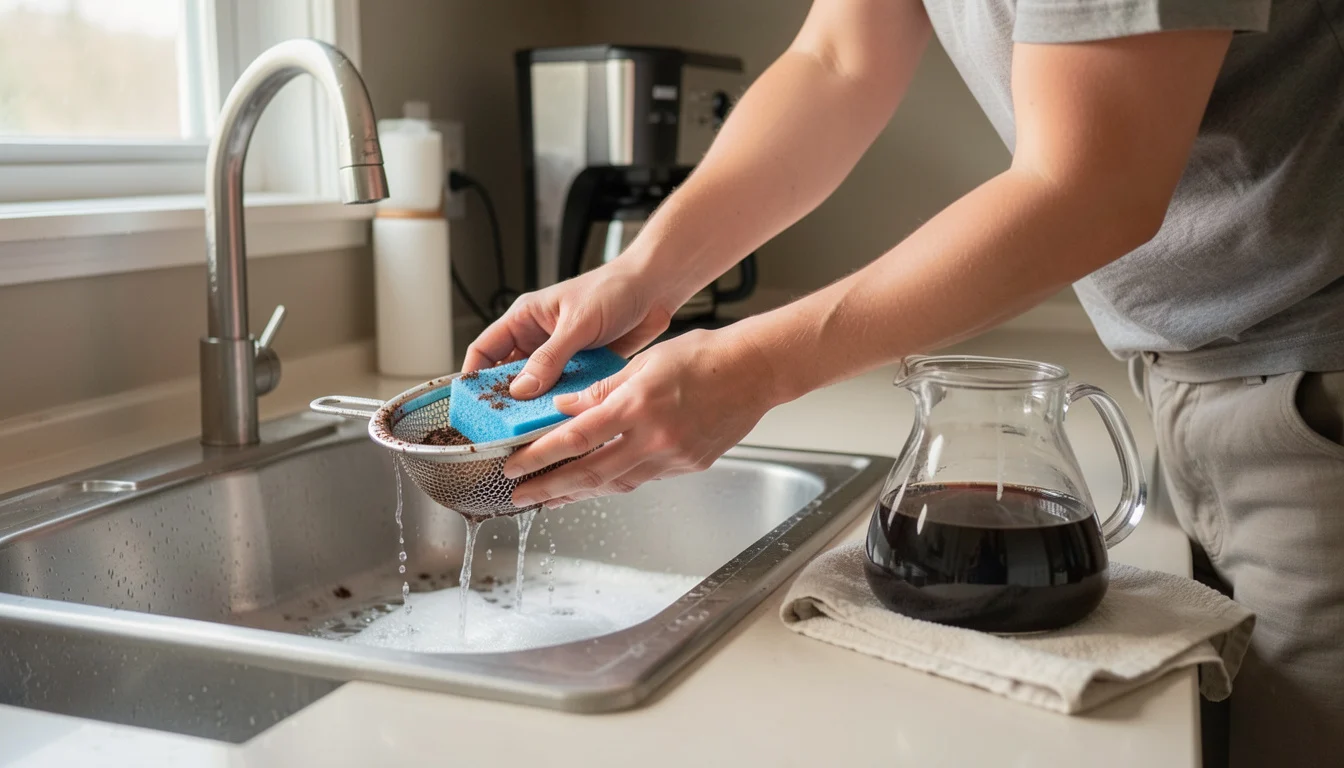
Wash the Carafe, Basket, and Removable Parts
Remove the carafe, lid, brew basket, and any other parts the manual identifies as user-removable. Wash them in warm, soapy water if permitted, rinse until no suds remain, and let them dry before reassembly. A damp cloth works for the machine’s exterior; keep the base, plug, and cord out of the sink.
For oily film or coffee stains, use a soft sponge and a little dish soap rather than scraping. Grounds can lodge around the basket’s edges, and a quick rinse may leave them behind; check the rim and underside before putting the part back. Do not mix cleaning chemicals or use a harsh product to speed up stain removal.
If a part is not listed as removable, do not pull it out to clean it. The same principle applies to other appliances with model-specific parts, such as the filter covered in this guide to cleaning a washing machine and preventing musty odors.
Read also: How to Clean Ceiling Fans Without Spreading Dust
Descale the Brewer to Remove Mineral Buildup
Descaling is the process of removing mineral deposits from a brewer’s internal water path. Minerals in water can accumulate inside the machine; visible scale, slower brewing, or changes in performance may signal a need to descale, though symptoms vary by model and water conditions.
Prepare the manufacturer-approved solution exactly as directed, run the specified cleaning or descaling cycle, and discard the used solution. Then rinse or run fresh-water cycles as the manual requires. There is no universal amount of descaler or rinse-cycle count that works for every machine.
Read also: How to Remove Grease Stains from Clothes Before Washing
Water hardness affects how quickly mineral deposits may form. The U.S. Geological Survey explains how water hardness relates to dissolved minerals, but your brewer’s manual remains the authority on its descaling method and schedule. Follow the appliance maker’s interval and adjust only as its instructions allow.
The right descaling schedule depends on the brewer, the water, and how often the machine runs.
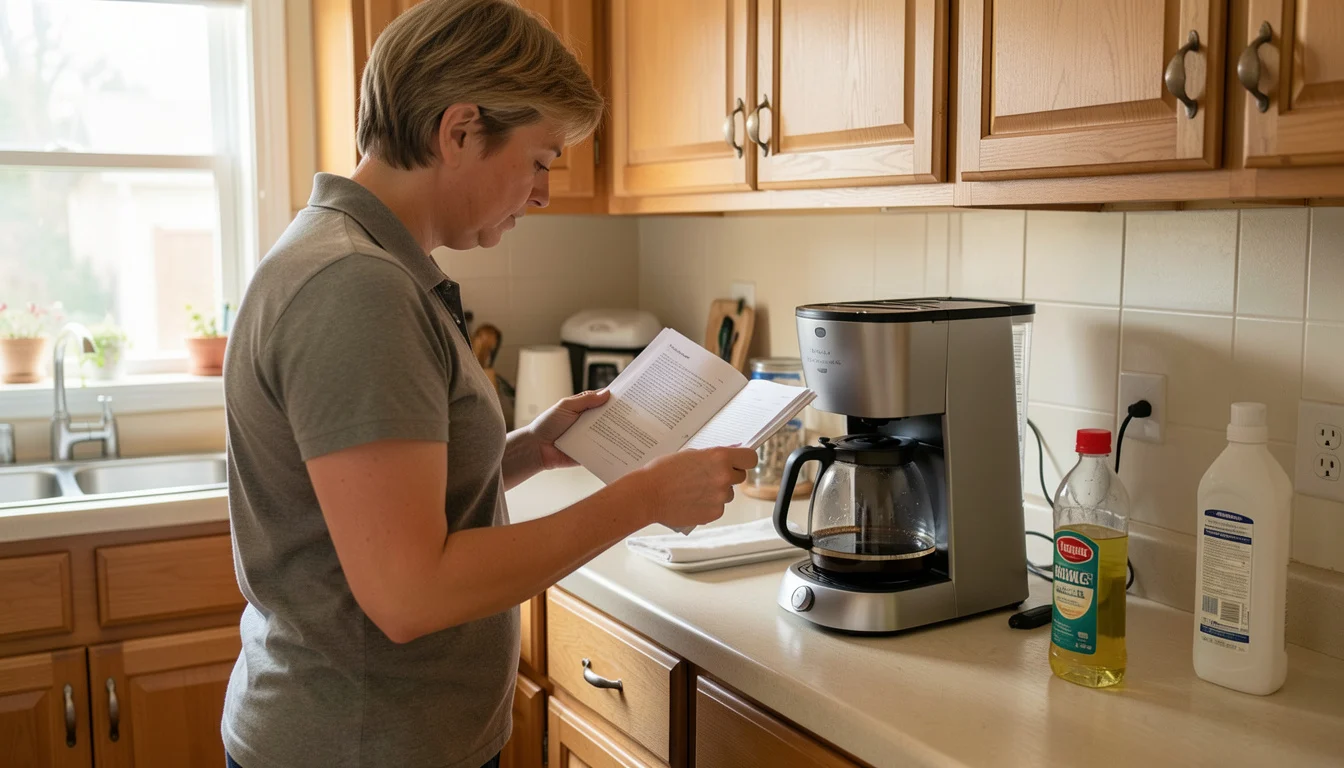
Can You Use Vinegar to Clean a Coffee Maker?
Use vinegar only if the manual for your model permits it. Some manufacturers specify a descaler or warn against vinegar, and the amount and dilution are not universal.
If vinegar is allowed, follow the exact dilution and cycle instructions in the manual, then run the required fresh-water rinses to clear lingering smell or taste. Never combine vinegar with bleach or another cleaning chemical. If the manual does not address vinegar, do not assume it is safe; use a named, compatible descaler instead.
People searching for how to clean a coffee maker without vinegar can use the manufacturer-approved descaler or cleaning method and follow its rinse directions. The U.S. Environmental Protection Agency provides general information about drinking water and private wells; water quality can vary, but it does not override the appliance maker’s cleaner restrictions.
Adjust the Steps for Your Coffee Maker Type
Drip machines usually have a carafe and brew basket to wash, along with an internal descaling process. Single-serve brewers may have different removable components and a model-specific descaling sequence. Button combinations, cycle length, and compatible cleaners vary, so do not copy a sequence from another brewer.
For a Cooks-branded machine, identify the exact model before choosing a cleaning method. “Cooks” can refer to different products, and their removable parts and instructions may not match.
Brewer type What to clean What varies by model Drip coffee maker Carafe, basket, removable parts, and internal scale Vinegar approval, cleaner, and cycle Single-serve brewer User-removable components and internal scale Descaling sequence and compatible product Cooks-branded brewer Parts identified in that model’s manual Exact model and manufacturer instructions
Keep the Coffee Maker Clean Between Deep Cleans
Empty leftover coffee and grounds after use, wash removable parts as often as the manual recommends, and wipe spills before they dry. Let washed parts dry before reassembly; trapped moisture around a lid or basket can leave a stale smell.
Use the manufacturer’s guidance for routine cleaning and descaling rather than relying on one timetable for every brewer. If generic advice conflicts with the manual, follow the manual. For mineral marks elsewhere at home, this guide to removing hard-water stains from shower glass covers a different surface and cleaning problem.
📱 See this content as a Web Story
Frequently Asked Questions
How Much Vinegar Should I Use to Clean a Coffee Maker?
There is no universal vinegar amount. Check the manual and use vinegar only if the manufacturer permits it, following the model’s dilution, cycle, and rinse instructions.
How Do I Clean a Hamilton Beach Coffee Maker?
Check the instructions for the exact Hamilton Beach model. Wash only the parts the manual identifies as removable, then use its specified cleaning or descaling method and rinse procedure.
How Do I Clean My Cooks Coffee Maker?
Find the model number and consult that brewer’s manual. It identifies which parts may be washed, which cleaner is compatible, and how to start the cleaning or descaling cycle.
How Do I Clean a Keurig Coffee Maker?
Follow the official instructions for your specific Keurig model, especially for descaling and removable-part care. The sequence and compatible products can differ across models, so avoid relying on a button sequence meant for another brewer.