
How to Clean Ceiling Fans Without Spreading Dust
Clean a ceiling fan without dusting the room: switch it off, protect the area below, and use a pillowcase or cloth to catch dust as you wipe each blade.
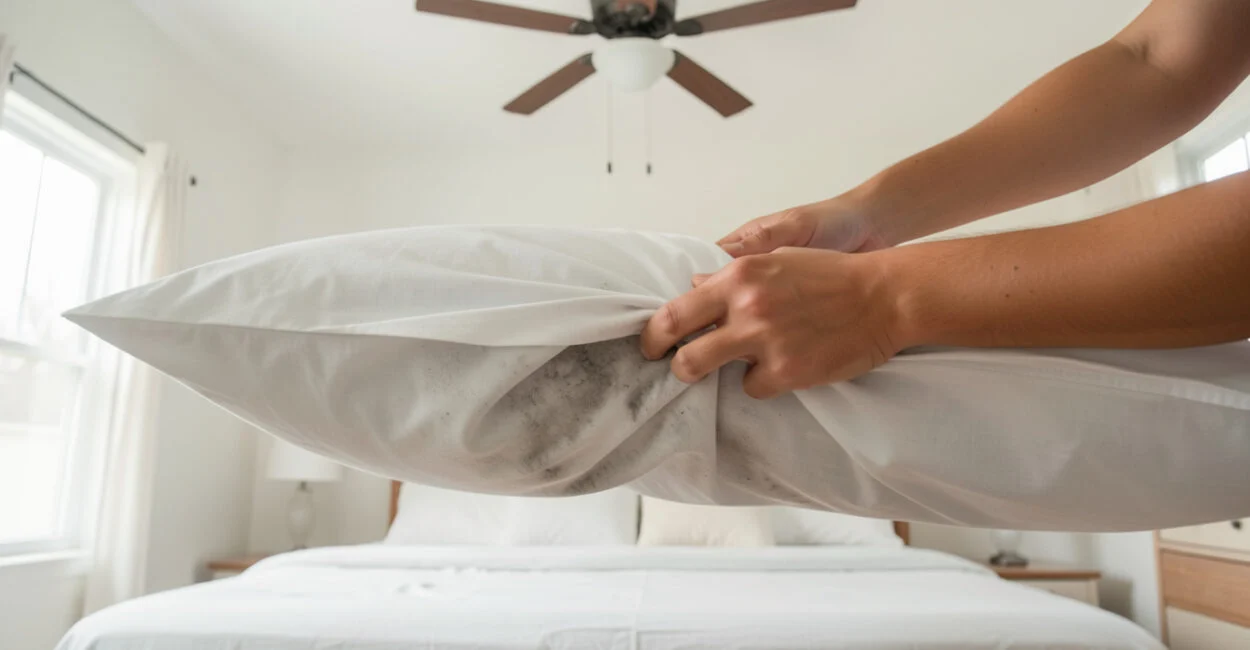 Pillowcase catches dust above covered bed
A clean ceiling fan starts with catching dust before it lands, not chasing it around the room with a cloth.
That familiar gray stripe on a blade can send loose dust drifting onto a bed, table, or floor as soon as you wipe it. The fix is to switch the fan off, contain the dust with a pillowcase or suitable cloth, and protect the area below. Imagine wiping one blade over a freshly made bed: the blade looks cleaner, but fine dust settles across the bedding. A quick cover-up below and a gentle, contained wipe can spare you that second cleanup.
1. Clean a Ceiling Fan by Containing Dust First
To clean a ceiling fan without spreading dust, switch it off and wait until the blades stop. Cover or move items beneath it, then use a pillowcase or suitable cloth to catch loosened dust as you wipe each blade gently. Choose a stable tool that lets you reach without stretching, and finish by cleaning the housing and nearby surfaces.
Loose dust can fall or become airborne when disturbed, so wiping alone may leave a mess below. The EPA’s guidance on indoor particulate matter explains why particles in indoor air matter; for this task, the useful takeaway is to contain dust and clean any residue after the fan.
2. Turn It Off and Prepare the Landing Zone
Switch off the fan and wait for every blade to stop. A moving blade can catch a cloth or duster, and you can’t control where the dust goes while the fan is turning. Move furniture or cover it with a sheet, and protect the floor if dust may fall there. This small step matters most above beds, desks, and open shelves. If a little dust escapes, wipe nearby surfaces after you finish overhead work; the same careful approach helps when cleaning window tracks without scratching their frames.
3. Slide a Pillowcase over Each Blade
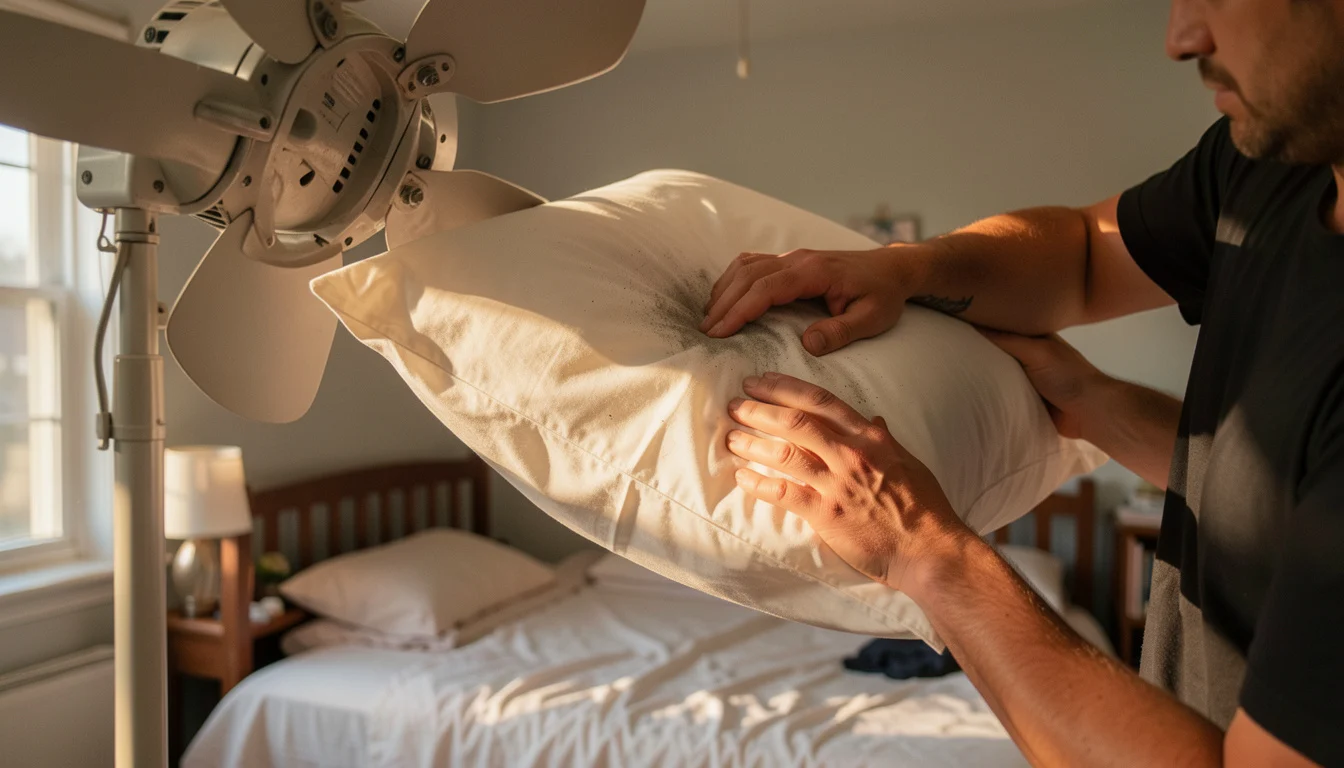
A pillowcase encloses a blade as you wipe, helping catch loosened dust inside the fabric. Slide it over one blade at a time, then draw it back gently while wiping the blade’s surface. Support the blade lightly; don’t pull, bend, or press down on it. A ceiling fan blade can flex, and forcing it may damage the blade or its attachment. Take the case outside or empty it carefully before laundering. Check your fan’s manufacturer instructions if its finish or care requirements are unclear.
4. Use the Sock Trick Only Within Safe Reach
A clean sock over your hand or a suitable duster can pick up dust from blades and other reachable surfaces. It works best when you can keep the tool steady and make controlled passes, rather than flicking dust into the room. A sock does not make an awkward reach safe. If the fan sits beyond comfortable reach, stop and switch to a purpose-made extension duster. Don’t climb on a chair or other unstable furniture to get closer.

5. Reach High Ceilings from the Floor
Use a long-handled duster or another extension tool designed for overhead cleaning. The handle should let you guide the cleaning head without leaning far or pushing hard against the blades. If the fan still can’t be reached safely from the floor, arrange appropriate help instead of improvising with stacked furniture. The Occupational Safety and Health Administration’s ladder-safety guidance is written for work settings, but its basic caution applies at home too: use suitable equipment, not an unstable substitute.
6. Finish the Housing and the Surfaces Below
Wipe the motor housing with a dry or lightly damp cloth, following the manufacturer’s care instructions. Don’t spray cleaner onto the fan; liquid can reach electrical parts or damage a finish.
Once the blades and housing are done, clean any escaped dust from furniture and floors. In a bedroom, check bedding as well; dust that settles there may mean you need to clean the mattress surface as part of the same room cleanup.
7. Clean a Box Fan by Its Own Instructions
A box fan has a grille and internal parts, so it needs a different process from an overhead fan. Unplug it first, then check the manufacturer’s instructions before removing the grille or opening the unit.
Clean only accessible areas and the grille as directed. Keep water away from electrical components, and let any cleaned parts dry fully before reassembling. Designs vary, so don’t assume a grille can be removed or a particular part can be washed.
Make dust containment part of the setup: switch off the fan, cover what sits below, and choose a tool that fits the height. A few minutes of preparation can keep a blade-cleaning job from turning into a room-wide dusting session.
📱 See this content as a Web Story
Frequently Asked Questions
Can I Clean a Ceiling Fan While It is Running?
No. Turn it off and wait for the blades to stop before cleaning.
Does a Pillowcase Remove All the Dust?
It helps catch dust loosened from the blade, but some may escape. Protect nearby surfaces and clean them after the fan.
Is the Sock Trick Safe for a High Ceiling?
Only if the sock is on a stable tool that reaches comfortably. Don’t stretch, overreach, or climb on unstable furniture.
Can I Wash a Box Fan Grille?
Follow the manufacturer’s instructions first. Unplug the fan, keep moisture away from electrical components, and let parts dry before reassembly.