
Landscape Fabric Under Mulch: When It Helps and When It Hurts
When to use landscape fabric under mulch: for defined areas with few plants to reduce soil weeds, and when to skip it for frequent planting or improving soil…
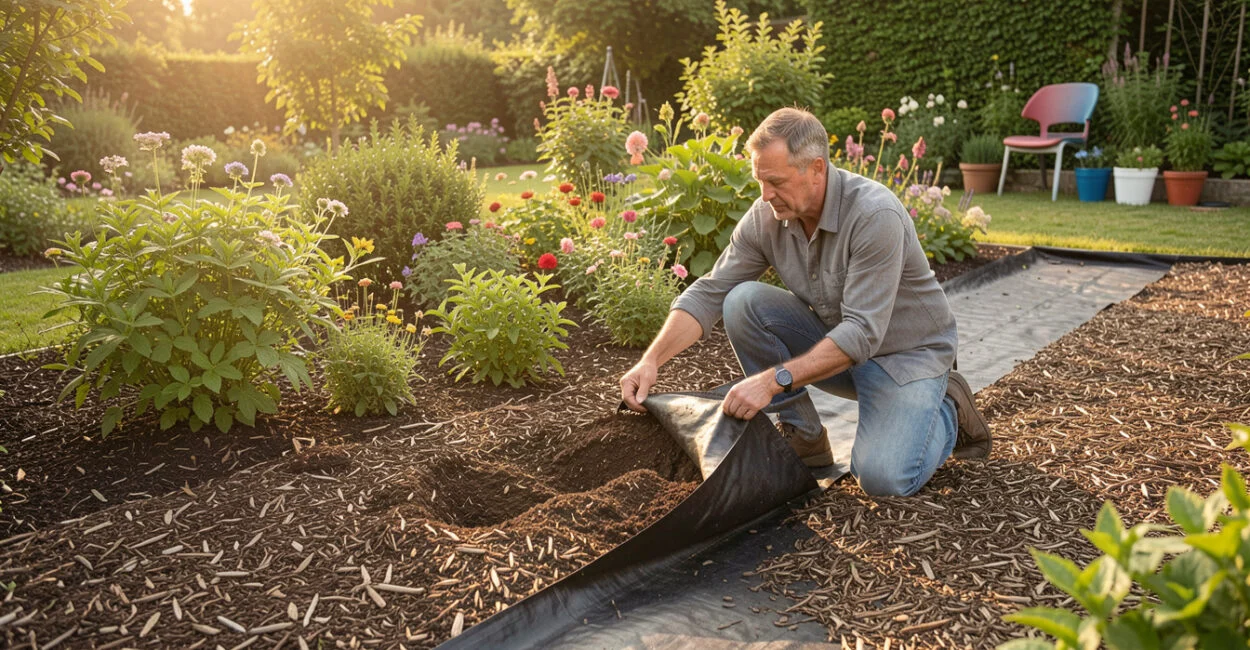 Comparing fabric beneath garden mulch
Landscape fabric beneath mulch can suppress weeds that germinate from the soil, but it will not stop every weed or eliminate upkeep. Whether it is worth using depends on the site, the plants growing there, and how willing you are to remove or replace the material later. For many planted beds, mulch without fabric is easier to maintain.
Should You Put Landscape Fabric Under Mulch?
Choose landscape fabric under mulch for a defined area with few planned plantings, such as a path or a bed of established shrubs where reducing soil-sprouting weeds is a priority. Skip it in beds that need frequent planting, where plants spread by runners, or where you want to build healthy soil with organic mulch. Fabric can help for a time, but it is not permanent weed control.
What Landscape Fabric Does—and What It Does Not Do
Landscape fabric is a permeable geotextile barrier laid over soil to limit weed growth while allowing some water and air to pass through. In everyday terms, it covers the ground so fewer weeds can push up from below. Its performance depends on the fabric, soil conditions, installation, and the mulch covering it.
Water and air can reach the soil through many fabrics, but permeability does not guarantee that water will distribute evenly or that soil conditions will remain unchanged. Compacted soil, slopes, and fabric clogged with fine particles or debris can affect how water moves. Check the product’s specifications, and do not assume every fabric performs the same way.
Fabric also cannot prevent weeds that sprout in mulch or in debris accumulating on top of it. Windblown seeds can germinate in that layer, while persistent weeds may grow through seams, openings, or damaged spots. The UC Statewide Integrated Pest Management Program’s weed management guidance emphasizes that landscape weed control involves ongoing management rather than a single barrier.
Situations Where Fabric Can Help
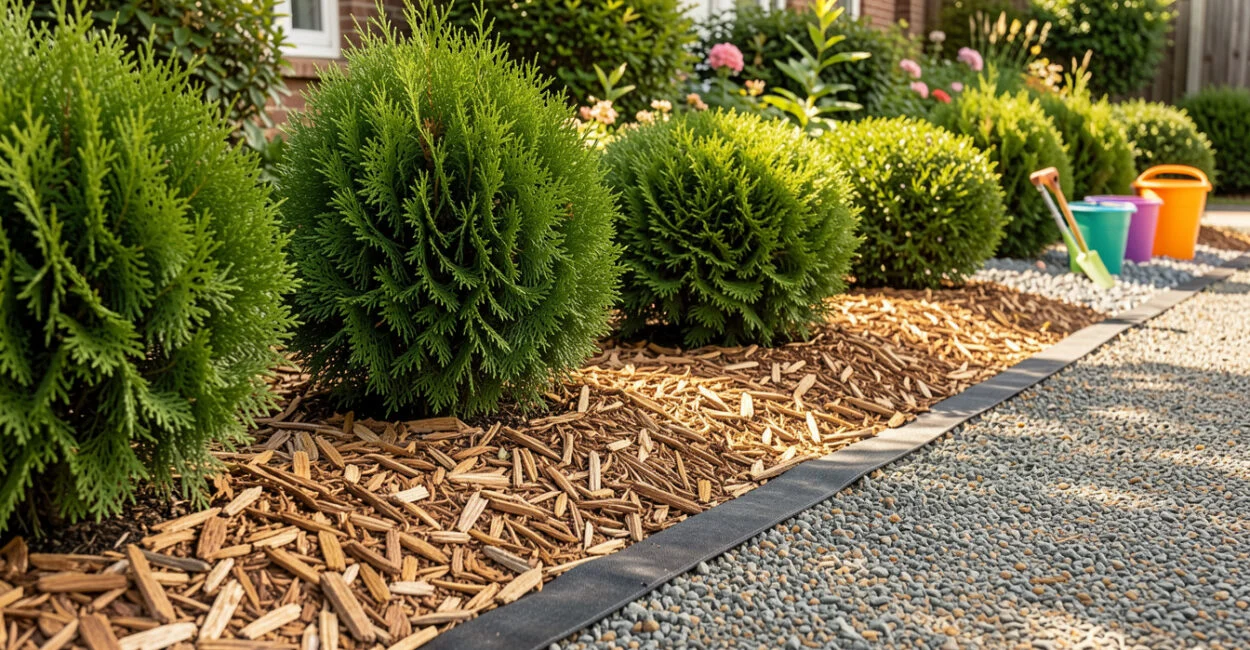
Fabric is most useful when the planting layout is settled and you want to suppress weeds in the spaces between long-lived plants. It may suit a narrow ornamental bed, a stable shrub border, or a path topped with mulch or gravel. Benefits can include fewer weeds emerging from the covered soil and less direct contact between mulch and soil.
It is a weaker fit where plants need room to spread or where the bed will change often. For a front-yard design with changing plant groupings, these cost-conscious front-yard mulch landscaping ideas can help shape the bed before choosing a weed-control method. Fabric is not a substitute for removing established perennial weeds before installation.
Drawbacks to Consider Before Installing It
Fabric can break down or become exposed as mulch shifts, and weeds can root into organic material that collects above it. Once roots tangle through the fabric, pulling a weed may lift or tear the barrier. A common installation mistake is laying fabric over perennial weeds: their shoots can push through weak points, while their roots become harder to remove.
Organic mulch decomposes and contributes material to the soil. Fabric beneath it can make that process harder to manage because adding compost or planting later may require cutting through the barrier. Around trees, fabric can also interfere with the surface roots and natural litter layer if it is placed too close to the trunk or maintained as a permanent cover. Keep mulch away from trunks, and avoid cutting a tight collar around expanding stems.
Removal is part of the decision, not an afterthought. Fabric can become caught under roots and decomposed mulch, so a bed that seems quick to install may take more work to renovate later. The Penn State Extension guidance on landscape mulches explains how mulch type and use affect garden beds.
How to Install Landscape Fabric Under Mulch
If fabric fits the site, careful preparation matters more than adding extra layers. Use a product intended for landscape use, follow its instructions, and avoid blocking drainage or covering plants that need to spread.
- Prepare the bed. Remove existing weeds, including as much of the roots and rhizomes of perennial weeds as practical. Level the soil without compacting it.
- Set plants first when possible. For an established planting, plan openings around each plant. Keep fabric and mulch from pressing against trunks or stems.
- Lay and overlap the fabric. Follow the manufacturer’s overlap guidance at seams. Secure edges and seams with landscape staples so wind and mulch movement do not expose gaps.
- Cut restrained openings. Make small cuts for plants rather than large slits that leave broad areas of soil exposed. Do not cinch fabric around stems as they grow.
- Add mulch on top. Use a consistent layer appropriate to the mulch and site, without piling it against trunks. Check the fabric and seams periodically as mulch shifts or settles.
One practical detail: mulch often slides away from the bed edge after rain or routine cleanup, exposing fabric first along the perimeter. Anchor the edges securely and inspect them after heavy rain, rather than relying on the mulch to hold the fabric in place.
Landscape Fabric Vs. Better Weed-Control Alternatives
For many planted beds, organic mulch without fabric is the easier alternative: it covers bare soil, can be replenished, and does not create a buried sheet to work around. Hand weeding takes repeated attention but lets you respond to weeds before they seed. Other options, such as groundcovers, can suit a bed where living plants are intended to fill the space.
Criterion Fabric under mulch Organic mulch, no fabric Hand weeding Suppresses weeds from below ✓ Helps when intact Helps; needs replenishing Removes visible weeds Stops weeds in mulch Does not Does not ✓ Removes them directly Supports soil improvement Can complicate access ✓ Decomposes into soil Depends on bed practices Easy to plant or redesign later More difficult ✓ Easier to amend and replant ✓ No barrier to work around Ongoing effort Less early weeding; inspect and maintain Replenish mulch and weed ✓ Direct effort, repeated as needed
Groundcovers are another option for suitable sites, particularly where a living layer can fill bare soil. For a slope, compare fabric with native groundcovers that help hold soil in place; plant choice and establishment conditions matter, so a groundcover is not a universal replacement for weed control.
How to Choose the Right Approach for Your Landscape
Use the bed’s future use and your maintenance preference to decide. Fabric favors stable layouts where limiting weeds emerging from soil matters most. Organic mulch without fabric favors beds that will be planted, amended, or redesigned, while hand weeding works for small areas where regular attention is manageable.
Choose Fabric If:
- The planting layout is established and unlikely to change.
- You are covering a defined area between long-lived shrubs or a suitable path.
- You can accept periodic upkeep and eventual removal or repair.
Choose Mulch Without Fabric If:
- You plan to add plants or compost, or want organic matter to reach the soil.
- The bed contains spreading plants or tree roots that need room at the surface.
- You prefer a simpler bed renovation later, even if some weeding continues.
If you want less bare soil without a buried barrier, consider a living groundcover suited to the location. For small yards, these native groundcover options offer another approach to filling open spaces.
📱 See this content as a Web Story
Frequently Asked Questions
Does Landscape Fabric Need to Be Covered with Mulch?
Most landscape fabric is designed to be covered. Mulch protects it from exposure and helps the bed look finished, but it can also collect debris where new weeds may sprout.
Can Landscape Fabric Be Used with Gravel Instead of Mulch?
It can be used beneath gravel in some paths or decorative areas, but suitability depends on drainage, traffic, fabric specifications, and the site. Weeds can still establish in debris above the fabric, and seams can become exposed.
How Often Should Mulch Be Checked over Landscape Fabric?
Inspect the surface after storms and routine garden work, and whenever you notice exposed fabric, displaced mulch, or weeds taking hold. The right maintenance interval depends on the bed, material, and weather.
Is Biodegradable Fabric a Permanent Solution?
No. Biodegradable products are intended to break down, and their useful life varies by material and conditions. Check the label for the intended use and expected behavior rather than treating them as permanent barriers.