
How to Choose Outdoor Throw Pillows That Can Withstand the Elements
Choose outdoor throw pillows by sun and rain exposure, checking UV claims, water protection, fabric and insert details, and care needs.
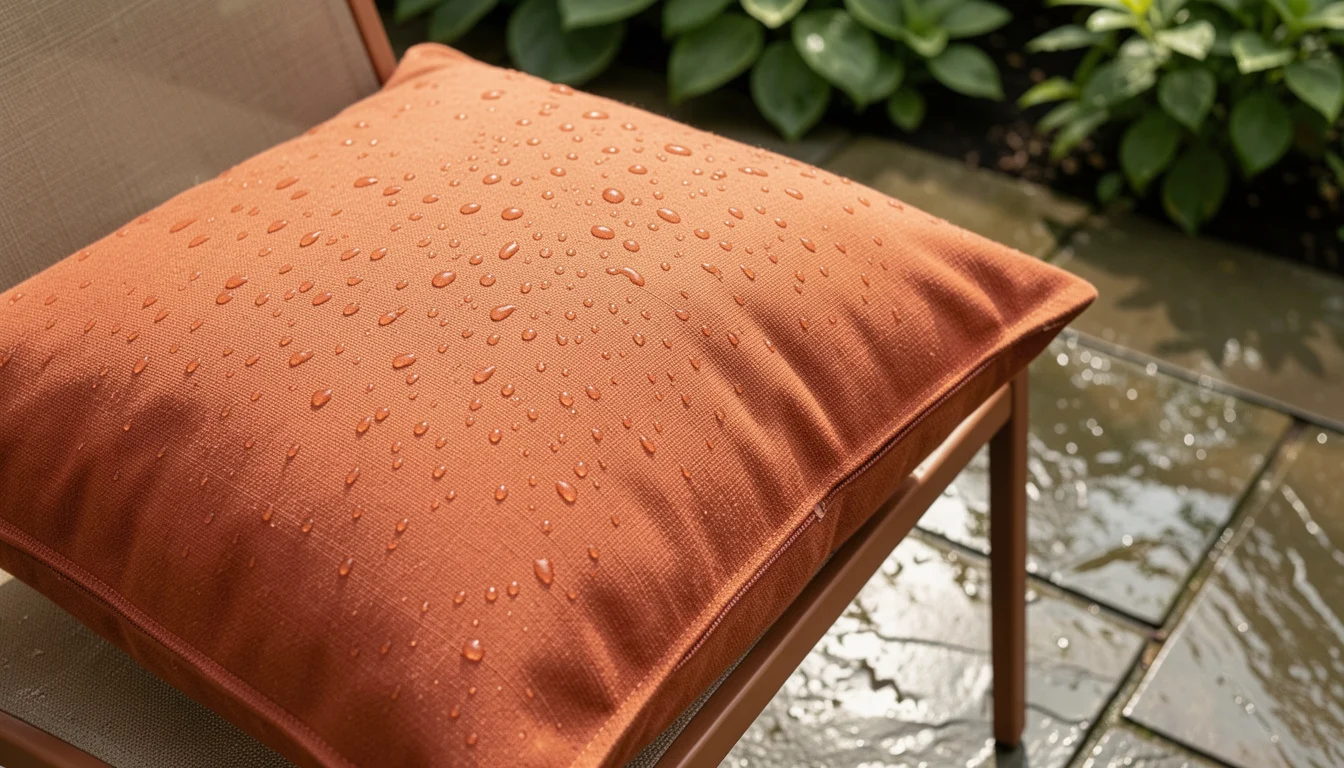 Rain beads on a patio cushion
Outdoor throw pillows can look similar on a product page but behave differently in sun and rain. Choose based on the actual exposure, the fabric and insert specifications, and the care you can keep up with. The word “outdoor” alone does not tell you whether a pillow is waterproof or suitable to leave outside all year.
Outdoor Throw Pillows: Which Type Should You Choose?
For a sunny patio, compare pillows with specific UV or colorfastness claims, including solution-dyed acrylic options such as Sunbrella. For rain-exposed seating, look for product-specific details about water resistance or waterproofing and which components those claims cover.
On a sheltered porch, an outdoor-rated pillow with easy-care instructions may be enough if you can store it during bad weather.
The key difference is what the maker has actually tested or described: fabric performance, water protection, and care can vary across products, even when they share a fiber name or brand.
Option Best fit to investigate What to verify Main caveat Solution-dyed acrylic / Sunbrella fabric pillow Outdoor seating where sun exposure is a concern Exact fabric and pillow specifications, UV or colorfastness claims, cleaning directions, and warranty The brand or fiber name alone does not establish whole-pillow waterproofness or identical performance across products. Other outdoor-rated fabric pillow, including polyester or olefin where specified Settings where the stated performance and style suit the exposure Fiber content, outdoor-use claim, water guidance, and care label Performance cannot be generalized from fiber type alone. Pillow advertised as waterproof Rain-exposed seating, when the product details support that use Which components the claim covers, construction details, and care instructions A cover claim may not cover the insert, seams, or prolonged exposure. Indoor or decorative pillow without an outdoor rating Sheltered settings, only if the maker permits it Care directions and exposure limits Do not assume it will tolerate sun or rain.
Start with the Weather Your Pillows Will Face
Match the product’s stated performance to the conditions at your seating area, rather than relying on the word “outdoor.” A covered porch reduces direct sun and rainfall, but wind can blow rain underneath a roof, and damp air can slow drying. A fully exposed patio or poolside spot puts more pressure on the cover, seams, insert, and your storage routine. Decide where pillows will go when a storm arrives or the season ends. If you cannot bring them indoors, check whether the manufacturer recommends a storage box or protective cover; covers can also trap moisture if pillows go away damp. For furniture exposed to strong sun, the same exposure planning can help when protecting outdoor wood furniture from fading.
Compare Outdoor Pillow Fabrics
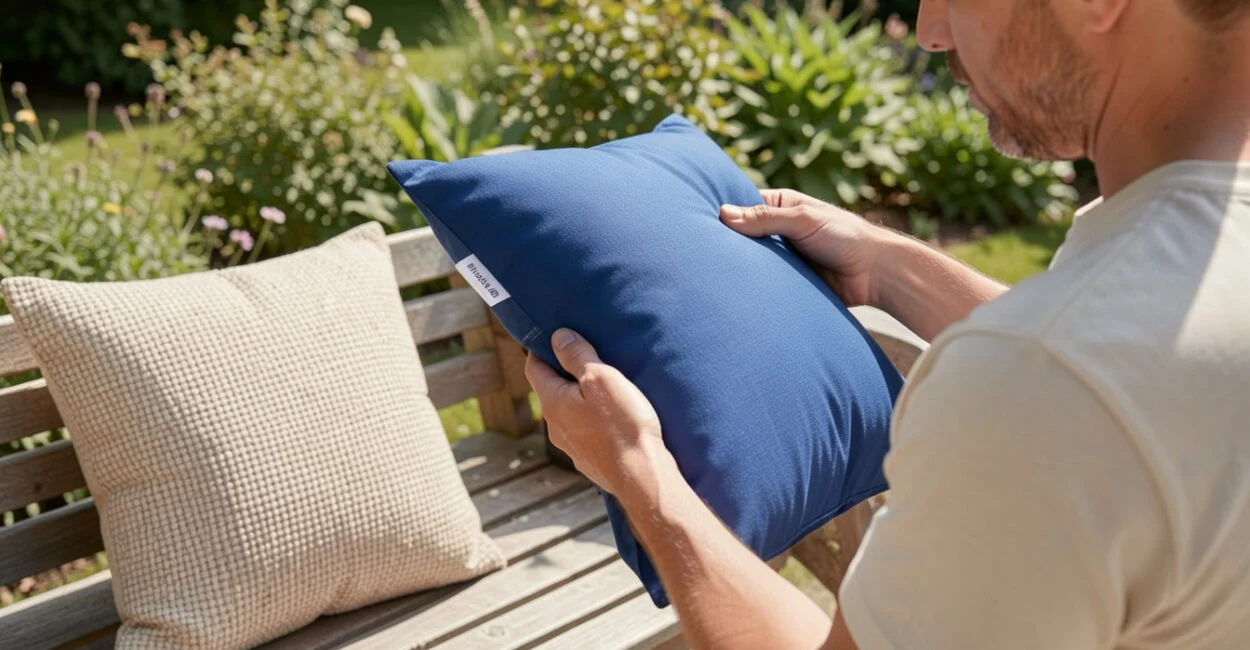
Solution-dyed fibers receive color during fiber production, before the yarn or fabric is made. That process can support color retention, but it does not certify an entire pillow as waterproof or guarantee that every color and construction will perform the same way. Sunbrella is a recognizable outdoor-fabric brand; check the exact fabric name and pillow listing rather than treating the brand as a complete specification.
Polyester and olefin pillows also vary by product. Fiber content, weave, coatings or other finishes, color, seams, and care directions all affect what the maker claims. The FTC’s textile labeling guidance explains fiber-content disclosures, but fiber labels do not substitute for product-specific UV, water, or cleaning information.
For fabric care, follow the pillow maker’s instructions. Sunbrella publishes care directions for Sunbrella fabrics, but those directions do not automatically apply to every finished pillow or insert bearing the fabric name.
Understand Water Resistance, Waterproofing, and Inserts
Water resistance means a material or product is designed to shed or withstand some moisture under stated conditions. Waterproof is a stronger claim, but its practical meaning depends on the manufacturer’s definition and the parts of the pillow covered by it. A water-resistant cover does not prove that the seams, zipper, or insert will stay dry.
Check whether the insert comes with the cover and identify its material and drying instructions. After rain, a cover can feel dry while the insert or the area around a closure remains damp. Leaving that moisture trapped inside can lead to odors or mildew; the EPA’s guidance on mold and moisture explains why controlling moisture matters, though it does not certify any particular pillow as mildew-proof.
A practical mistake is putting a pillow straight into a storage bin after a brief shower because the outer fabric feels dry. Check the seams and insert, then follow the product’s directions for drying before storing it.
Choose the Right Shape, Size, and Look
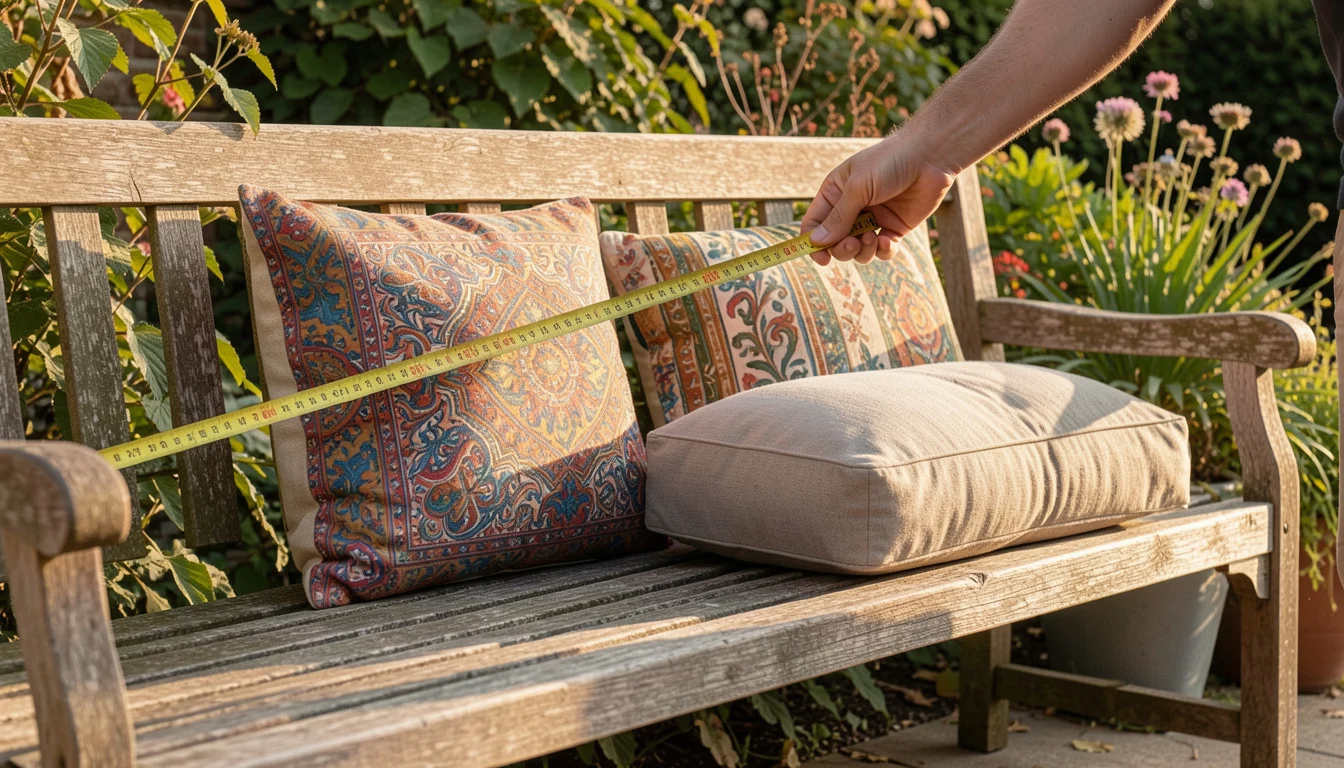
Square throw pillows add back or side support and help fill out a seating arrangement; lumbar pillows provide a narrower support area that can fit a bench or the lower back. Neither shape is universally better. Measure the seat and back area, then compare those measurements with the listed pillow dimensions before ordering.
Color, pattern, and matching sets are style choices, not guarantees of weather performance. Dark or patterned fabric can still fade. If you are coordinating pillows with a shaded dining area, consider the furniture layout too, as in this guide to choosing an outdoor dining table for your patio.
Check the Listing, Care Requirements, and Your Use Case
Before buying, confirm whether the cover is removable, how it closes, whether the insert is included, and what the manufacturer says about seams, cleaning, drying, and storage. Do not assume machine washing, bleach, or pressure washing is safe; care rules vary by product. Compare the warranty terms as well, and check the exact listing when shopping for Sunbrella, CB2, or clearance items at Walmart. Retailer and sale status do not establish performance.
Storage is part of upkeep, particularly when pillows get wet or the off-season arrives. Follow the maker’s directions, and use this guide to clean and store outdoor cushions between seasons for additional care planning.
Use these profiles to narrow the choice:
- Mostly sheltered porch: Choose a pillow explicitly intended for outdoor use if it will stay outside. Prioritize a look you like and care directions you can follow.
- Sunny patio: Compare products with specific UV or colorfastness claims, including Sunbrella options. Verify the exact fabric and pillow details.
- Rain-exposed seating: Look for product-specific water guidance that covers the components you care about, then dry or store the pillow as directed.
- Low-upkeep priority: A removable cover and straightforward cleaning instructions can simplify care, but may not eliminate the need to bring pillows in or store them.
- Matching set or lumbar support: Choose by dimensions, shape, and set quantity, then confirm the fabric’s exposure guidance.
- No space to store pillows: Favor products with clear outdoor-use and care instructions, but do not assume any decorative pillow can stay out through every storm or season.
Before checkout, ask: Does the listing name the exposure performance you need? Does its water claim include the insert and closures, if relevant? Can you follow its cleaning and storage instructions?
📱 See this content as a Web Story
Frequently Asked Questions
Can I Use an Outdoor Throw Pillow Indoors?
Usually, if its size, comfort, and care instructions suit the room. Check the label for any finish or cleaning guidance that matters for indoor use.
Can I Replace a Worn Insert and Keep the Cover?
Often, if the cover is removable and a replacement insert fits its dimensions and shape. Check the closure and the maker’s instructions, since a tightly fitted insert may not suit every cover.
Should I Leave Outdoor Pillows Out During Winter?
Follow the product’s storage guidance. If the maker recommends off-season storage, clean and dry the pillows as directed before putting them away.
Are Clearance Pillows a Good Buy?
They can be, but compare the exact fabric, dimensions, insert inclusion, care instructions, and warranty with other listings. A markdown does not confirm that a pillow suits your weather.