
How to Create a Backyard Game Zone for All Ages
Plan a backyard game area around movement: map usable space, match activities to its footprint, and leave clear paths and room to rest.
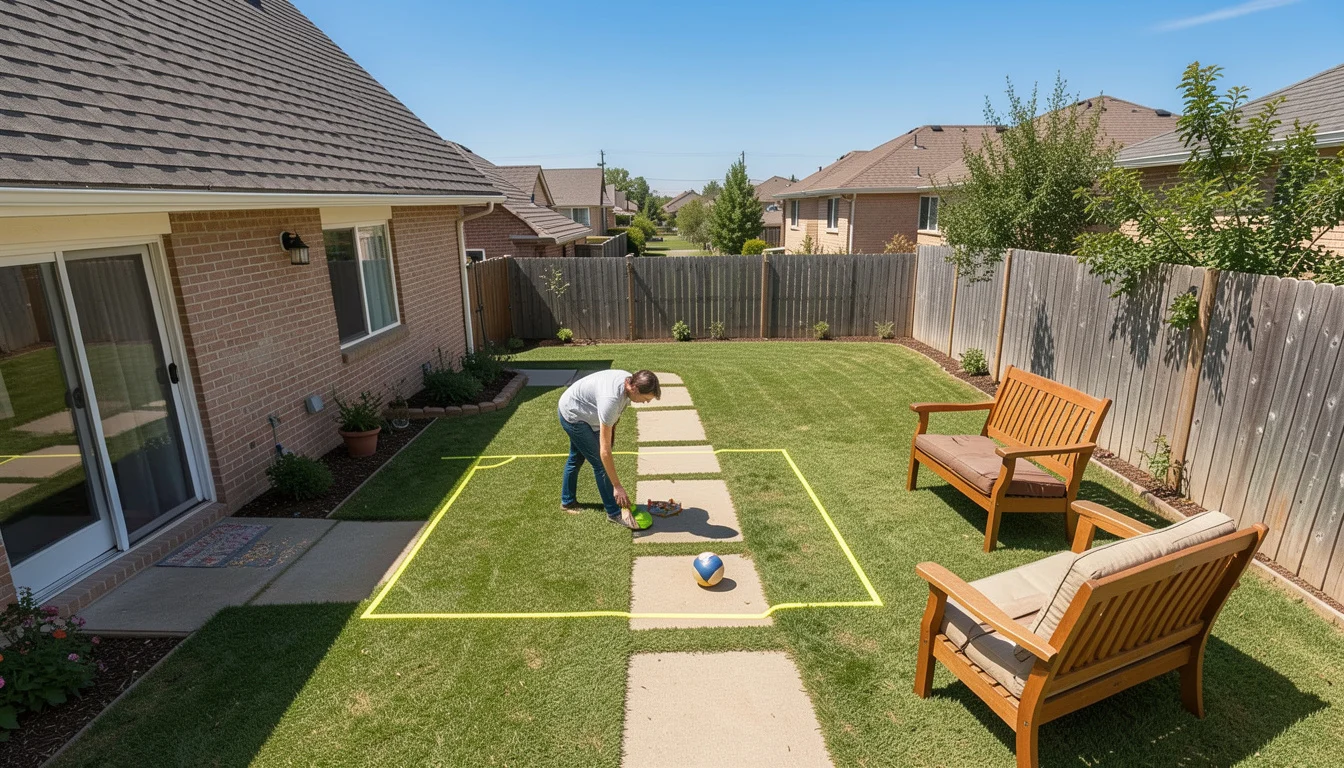 Testing a backyard play area
A backyard game area works best when play, passage, and rest each have room, even when the yard itself is modest.
A ball game, a quiet puzzle, and a comfortable place to watch can all fit in one backyard. The trick is to plan the layout before buying equipment.
Start by mapping usable space, then choose activities that fit its footprint and energy level. Leave clear routes between the house, play areas, and seating, with somewhere to pause.
That approach helps different ages share the yard without every activity competing for the same patch of ground.
Plan Your Backyard Game Area Around Movement
To create a backyard game area for multiple ages, first map the space people can use, then match activities to that footprint and leave clear paths and a resting place. Mark entrances, gates, steps, trees, and everyday routes before deciding where a game belongs. This helps you spot conflicts early, before equipment or furniture makes them harder to fix. Watch how people already cross the yard. A route to the grill or back door should not run through the middle of a throwing game. Also consider sightlines: a seated adult should be able to watch play without blocking a path or sitting in the active zone.
Choose Games by Footprint and Energy
Group activities by how much space and movement they require. A wide-open area may suit tossing or kicking games; a smaller corner might work better for tabletop games, cards, or a ring toss that packs away. Noise matters too: a lively game beside a quiet seating spot can make both less pleasant.
Activity type Space and movement Best fit Active games More room to move Open area away from paths Low-movement games Small, defined footprint Table or shaded corner Pack-away games Flexible Shared yards that change use
In a tight yard, choose activities that can be put away or reset quickly. A permanent setup earns its space only if it won’t interfere with everyday use.
Make Room for Different Ages and Abilities
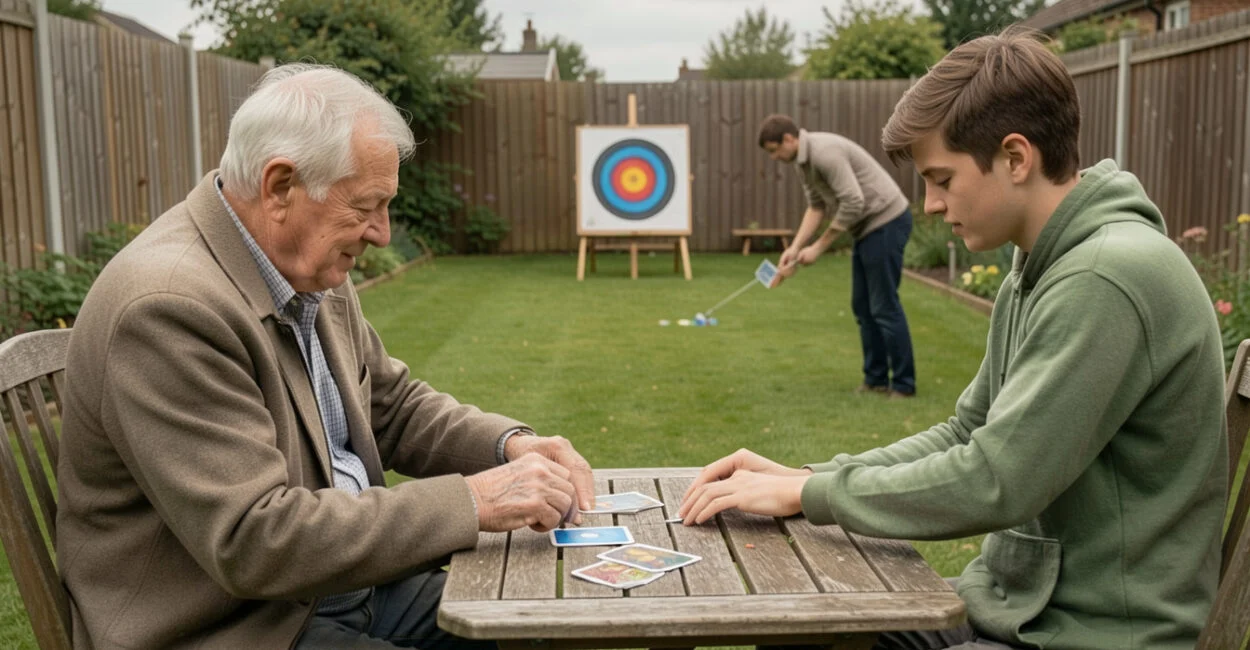
A shared game zone should offer more than one way to join in. Combine activities that call for running or throwing with options that can be played seated or at a slower pace. Let people choose their level of movement rather than assuming everyone wants the same game.
Imagine a family setting up a target game in the only open strip of lawn. Younger players crowd the throwing area, while an older relative has nowhere comfortable to join or watch. Moving the target game to a defined corner and adding a nearby table for cards gives the group choices without making one activity the center of the whole yard.
For another way to make outdoor gatherings feel welcoming, these rustic backyard ideas for entertaining guests can help you think about how seating fits around a shared space.
Separate Play, Passage, and REST
Where the yard allows, give active play its own zone and keep seating outside its likely path. A bench placed just beyond a throwing area can become an unintended target, while chairs set across a route can turn a quick trip indoors into an obstacle course.
Try temporary markers before committing to a layout. Set out cones, chalk, or moveable chairs to outline play and rest zones, then walk the routes with the activities in place. If people must step through a game to reach the house, adjust the boundaries. For ideas on arranging a comfortable outdoor gathering spot, see these backyard entertaining and seating ideas.
Match Surfaces and Boundaries to the Games
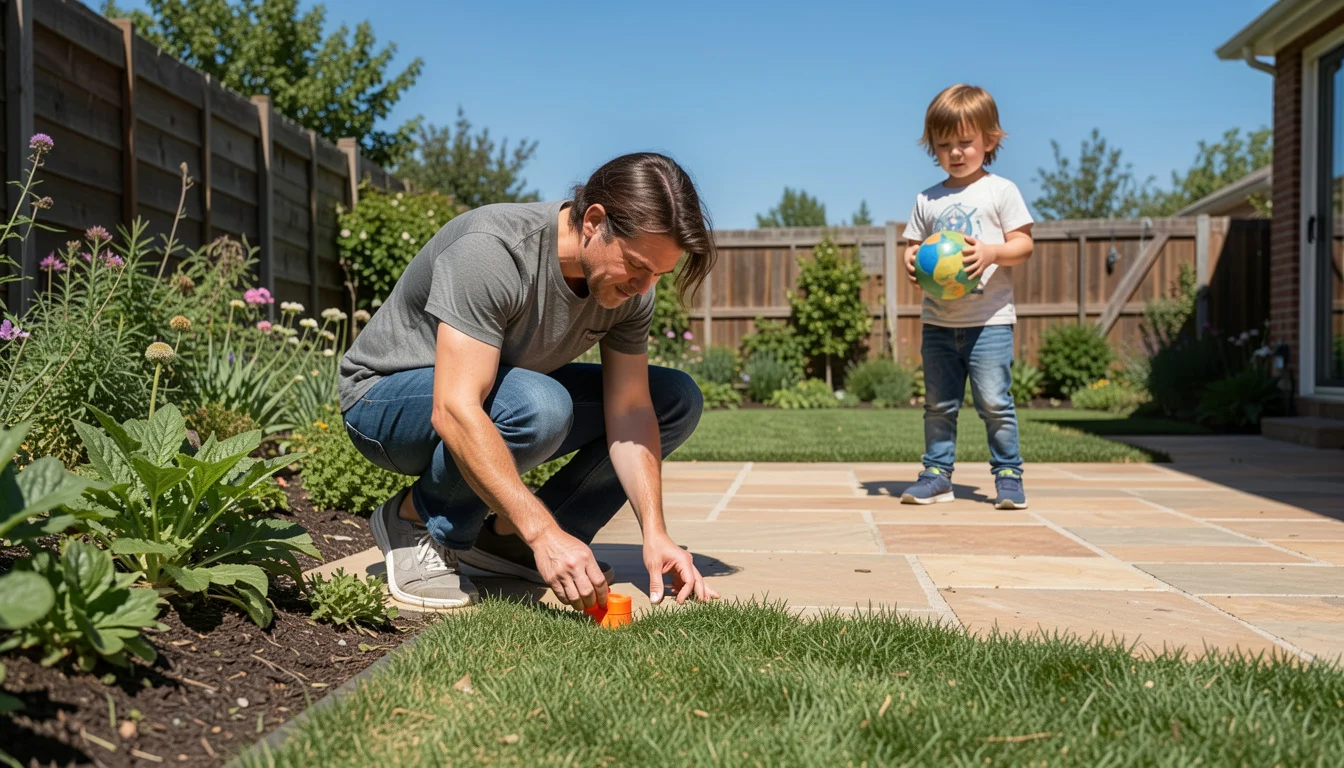
Choose a playing surface for the activity and the yard’s conditions. Grass may suit some casual games; a patio can work for seated play but may be unforgiving if someone falls. Check edges, nearby walls, garden beds, and hardscape, especially around activities involving running or thrown objects.
There is no single surface or layout that guarantees safety for every age or game. The U.S. Consumer Product Safety Commission’s playground guidance offers relevant safety considerations, though its recommendations may not map directly to every informal backyard activity. Review guidance for the specific equipment you use, and keep play away from hazards you cannot move.
Add Seating, Shade, and Easy Storage
Seating lets someone take a break or join as a spectator, and shade can make that pause more comfortable in hot weather. Choose a spot that stays outside the active play area and does not narrow a main path. A table can also support quieter games, snacks, or equipment between rounds.
Store gear where it stays dry and is easy for the people using it to reach. A weather-appropriate bin near the play zone can make it easier to switch activities without leaving loose equipment underfoot. If you add an umbrella, consider how it fits the space and wind exposure; this guide to choosing an outdoor umbrella for a small patio covers useful factors.
Test the Layout Before Making It Permanent
Use temporary markers to try the arrangement during ordinary yard use, not just when the space is empty. Notice where balls roll, where people naturally walk, and whether seated guests can see without sitting too close. Then shift the boundaries or swap an activity before adding permanent features.
- Don’t place active games across a doorway or regular walking route.
- Don’t assume every player wants the same pace or level of movement.
- Don’t add fixed equipment until you’ve tested how the yard works with it.
Revisit the setup as children grow, mobility needs change, or favorite activities shift. A good game zone is easy to rearrange when the household’s needs change.
📱 See this content as a Web Story
Frequently Asked Questions
What Games Work in a Small Backyard?
Choose activities with a compact footprint or equipment that packs away, such as tabletop games or a small target game. Keep a clear route through the yard.
How Can Different Ages Share One Game Area?
Offer both active and lower-movement options, with seating nearby. People can take part at a pace that suits them or watch between turns.
Should a Backyard Game Area Have a Permanent Surface?
Not always. Start with the surface you have and test activities with temporary boundaries; a permanent change depends on the games, site conditions, and how else you use the yard.
Where Should Spectators Sit?
Place seating outside the likely path of play and away from main walkways. Check that people can watch without blocking access to the house or other parts of the yard.