
How to Clean a Microwave and Remove Stubborn Odors
How to clean a microwave with steam: soften dried splatters before wiping the interior, door, and turntable. Lemon or vinegar is optional.
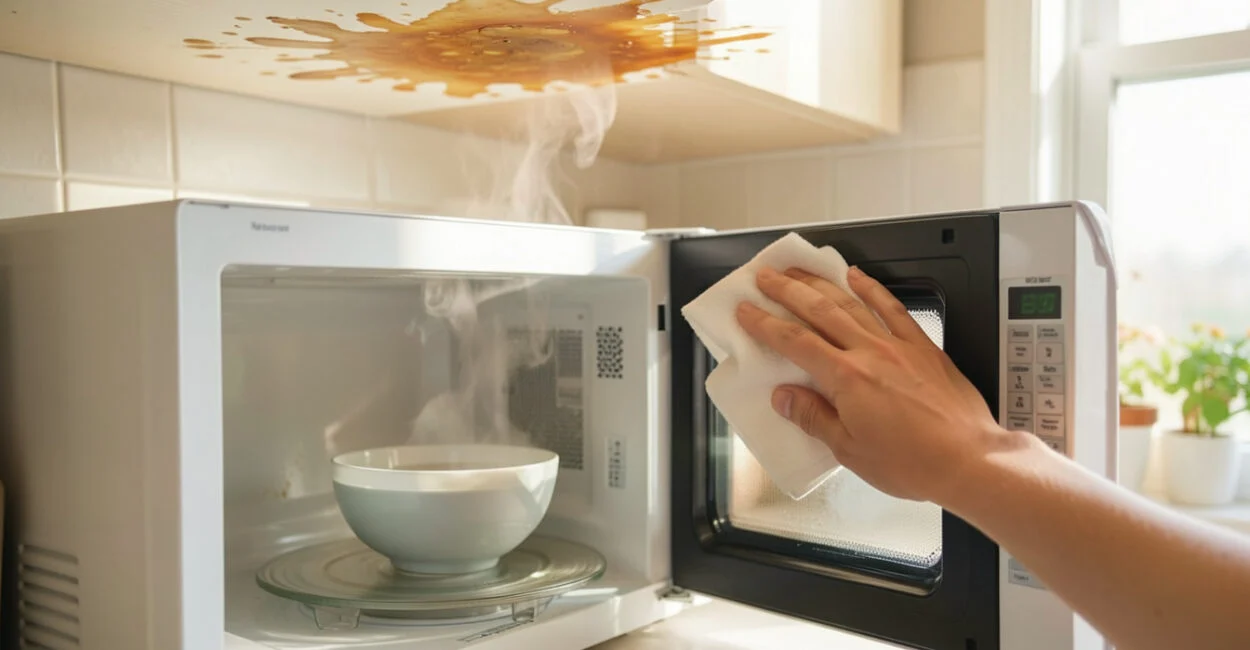 Softened splatter wiped from microwave ceiling
A dried soup splash on the microwave ceiling can turn a quick wipe into a frustrating scrape. To clean a microwave, loosen stuck-on food with steam from a microwave-safe bowl of water, then wipe the interior, door, and turntable with a soft cloth. Lemon or diluted vinegar is optional; neither is needed for everyday splatters.
The key is to let steam soften residue before you touch it. That reduces scrubbing and helps protect the interior finish, while careful handling keeps hot water and steam away from your hands and face.
Quick Cleaning Checklist
- Use a microwave-safe bowl and a soft cloth or sponge.
- Remove the glass plate and roller ring only if the manual permits.
- Let steam settle, and handle hot items with care.
- Keep liquid away from vents and openings.
- Wipe softened residue instead of scraping it with sharp or abrasive tools.
- Dry and reinstall removable parts before using the microwave.
How to Clean a Microwave: The Quick Steam Method
Put water in a microwave-safe bowl and heat it until the water is steaming; the exact time depends on your appliance and the amount of water. Let the bowl stand briefly with the door closed, then open the door with your face and hands clear of the steam.
Wipe the softened splatters with a damp, soft cloth, repeating the process if residue remains.
Steam cleaning means using water vapor to loosen residue so it can be wiped away. In everyday terms, you let the moisture do the first part of the work, then remove the loosened food by hand.
Add lemon or vinegar if you want, but plain water is enough for routine splatters.
Steam softens the mess; a cloth still has to remove it.
What You’ll Need—and What to Avoid
Gather a microwave-safe bowl, water, a soft cloth or nonabrasive sponge, and mild dish soap for removable parts. A purpose-made microwave steamer can help create steam, but it does not collect or remove the loosened food.
Angry Mama is one example of a steam-cleaning accessory; fill and use it according to its product instructions.
Skip steel wool, abrasive scouring pads, and sharp tools. They can scratch surfaces or damage the door seal. Don’t spray cleaner into vents, openings, or control panels, and check the appliance manual for care instructions that apply to your model. The FDA’s guidance on microwave oven radiation and safe use is also a useful reference for general appliance safety.
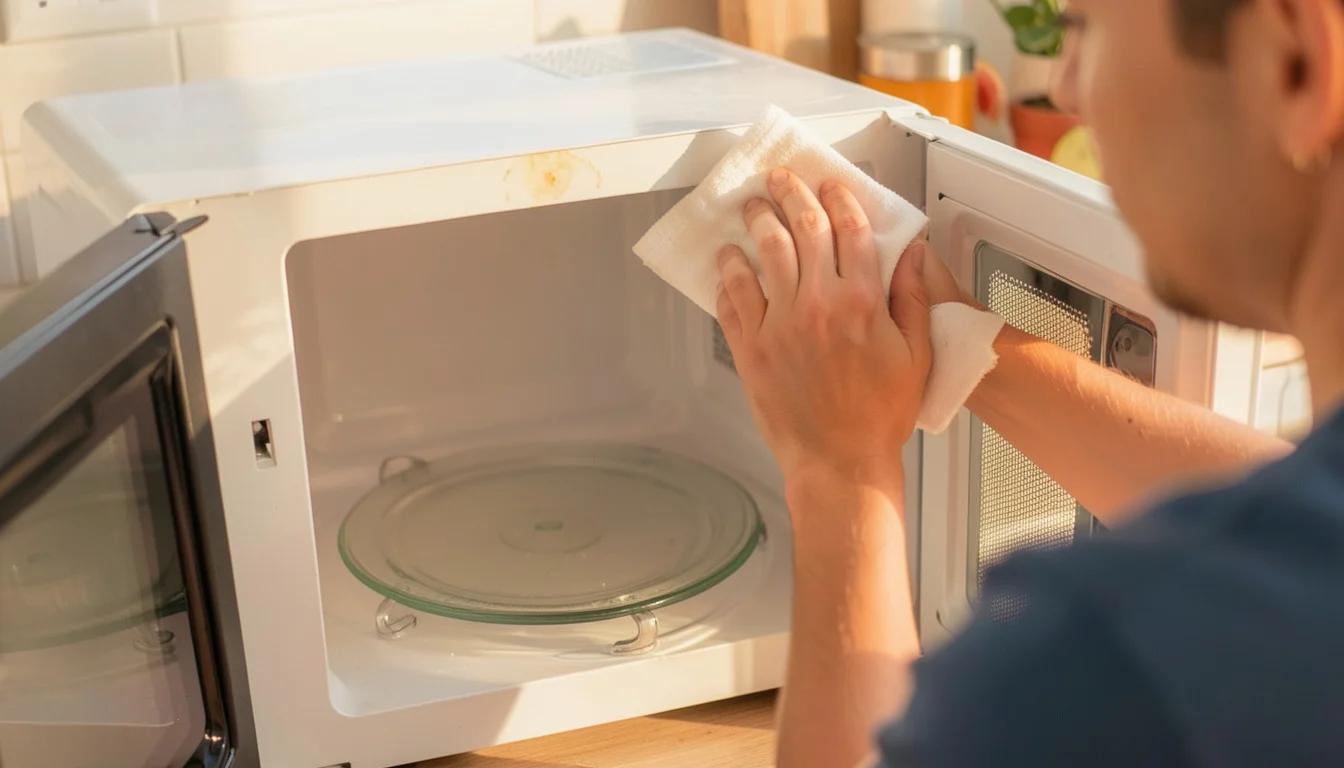
Clean the Interior, Door, and Turntable
After steaming, wipe the ceiling, side walls, floor, and inside of the door with a damp cloth. Use a gentle touch around the door seal: don’t pull it, soak it, or force a cloth into a gap. Keep moisture away from vents and openings. If your manual allows it, remove the glass plate and roller ring. Wash them with warm water and dish soap, rinse, and dry them before reinstalling. For a dried spot that won’t lift, soften it with another round of steam rather than prying at it; residue on the microwave ceiling often needs a second pass because it is harder to reach and easy to overlook.
For a separate appliance, use instructions designed for that appliance. Oven cleaning requires its own safety steps; a microwave steam method should not be assumed safe for an oven.
Choose a Method for Grease, Odors, or Stubborn Spots
Choose based on the problem: water works for ordinary splatters, lemon or vinegar can add a scent while steam loosens residue, and baking soda can help with a small spot. Every option still requires wiping. None should be treated as a guaranteed disinfectant or a fix for every stain.
Method Best suited for How to use Important caution Water steam Everyday splatters and dried food Heat water in a microwave-safe bowl until steaming, let it stand briefly, then wipe. Handle the hot bowl carefully; steam loosens residue but does not remove it. Lemon water Steam-assisted cleaning with a fresh scent Add lemon slices or juice to water, heat until steaming, then wipe the interior. Lemon does not guarantee sanitizing; wipe away the loosened food. Diluted vinegar water Residue with an odor that may benefit from a vinegar-water steam clean Add vinegar to water, heat until steaming, then wipe. The vinegar smell may linger for a while; wiping is still required. Baking soda spot-cleaning A small stubborn spot Use a damp cloth with a little baking soda to gently work on the spot, then wipe clean. Avoid abrasive scrubbing, and don’t mix baking soda with vinegar expecting a stronger cleaner.
For how to clean your microwave with vinegar, dilute it in water rather than applying it undiluted. If you’re using baking soda, apply it to a damp cloth for a limited spot-cleaning job instead of spreading powder across the cavity. If a smell is tied to food residue, cleaning the affected area matters more than masking it; the same principle applies when removing food odors from a refrigerator.
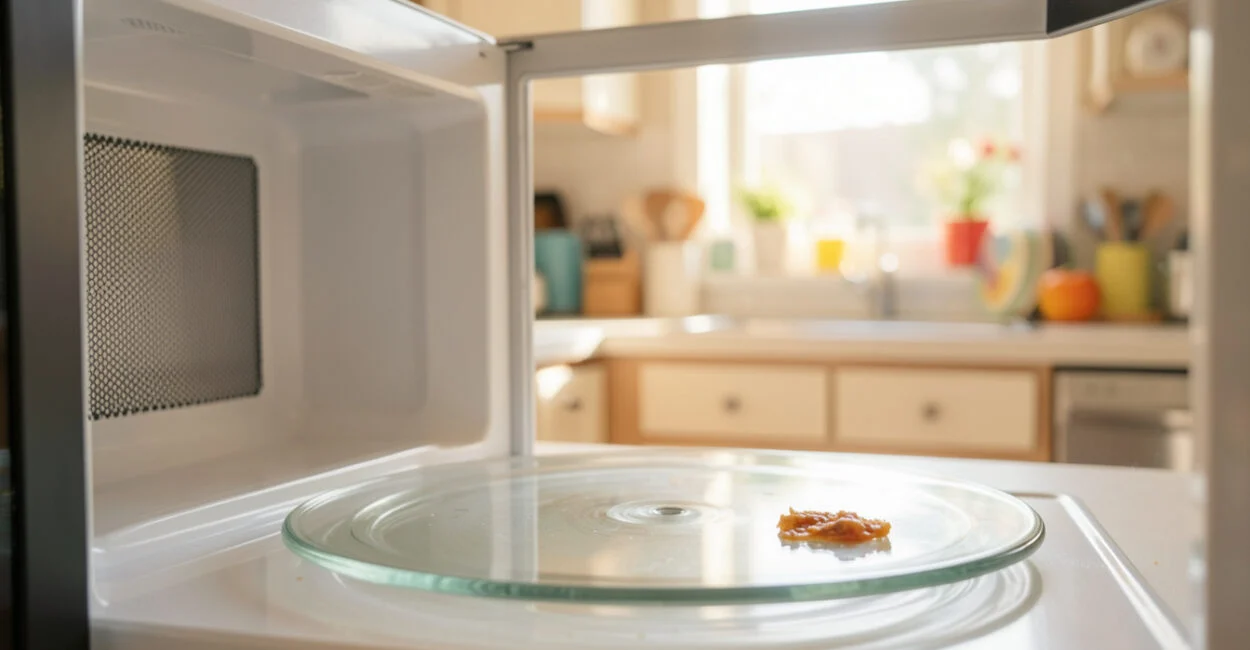
Remove Lingering Microwave Odors
Start by removing food debris and wiping splatters, since trapped residue can keep producing a smell each time the appliance warms up. After cleaning, leave the door open for a short time if the location and household setup make that practical. A lemon-water or diluted-vinegar steam clean may help with odor-associated residue, but it cannot guarantee that every odor will disappear.
If the smell remains, check for overlooked spills around the turntable and door, then consult the manual for model-specific advice. A persistent odor may point to damage or a problem that cleaning alone won’t address. Don’t run the microwave empty to try to clear the smell.
A lingering odor is a reason to inspect for missed residue or damage, not to run the microwave empty.
Microwave Cleaners, Steamers, and Product Instructions
“Microwave cleaner” usually refers to a cleaning product; “microwave cleaner steamer” usually refers to an accessory that generates steam. A steamer loosens residue, while wiping removes it. A commercial product may do more, but only use one whose label says it is suitable for microwave interiors, and follow both the label and the appliance manual.
Option What it does What to check DIY steam bowl Uses heated water to loosen residue for wiping. Confirm the bowl is microwave-safe and keep hands clear of hot steam. Microwave-safe steamer Generates steam to soften splatters; it does not replace wiping. Follow the device instructions, including fill and heating directions. Commercial microwave cleaner Provides a product intended to clean, subject to its label directions. Check that the label approves use inside a microwave and review the appliance manual.
For Angry Mama microwave cleaner instructions, use the directions supplied with that specific accessory. Its contents and the device can become hot, so let them cool as directed and handle them with care. “Best microwave cleaner” depends on the job: water may be all you need for fresh splatters, while a labeled product may suit residue that the manual allows you to treat.
Don’t guess what the search phrase “microwave cleaner lady” refers to. Unless it identifies a verified product, creator, or trend, choose a cleaner by its label and your microwave’s care instructions rather than by an unclear name.
Keep the Microwave Easier to Clean
Wipe fresh splatters once the interior is safe to touch; dried food takes more effort to loosen. Cover food with a microwave-safe cover that allows steam to escape, then clean the cover according to its own instructions. After cleaning, dry the interior and keep ventilation openings clear.
If an odor problem appears alongside residue elsewhere in the kitchen, address each appliance on its own terms. For example, a clean dishwasher filter can help prevent trapped food from causing bad odors. For special interior surfaces or a problem that persists after cleaning, follow the microwave manufacturer’s care guidance.
📱 See this content as a Web Story
Frequently Asked Questions
How Can I Use Lemons to Clean My Oven?
Oven cleaning is a separate task, and a microwave steam method should not be assumed safe for an oven. Follow the oven manufacturer’s instructions and use only a cleaning method or product approved for that appliance.
Can I Use a Microwave Steamer Instead of Wiping the Microwave?
No. A steamer loosens food residue; wipe the softened residue away with a soft cloth.
Can I Spray Household Cleaner Directly Inside a Microwave?
Avoid spraying vents, openings, or controls. Use a product only if its label says it is suitable for microwave interiors, and follow the product label and your appliance manual.