
How to Keep Your Dog Safe and Calm in the Car
Dog car travel safety starts with a back-seat restraint. Compare harnesses, seats, and carriers, verify crash-test claims, and plan for practice and breaks.
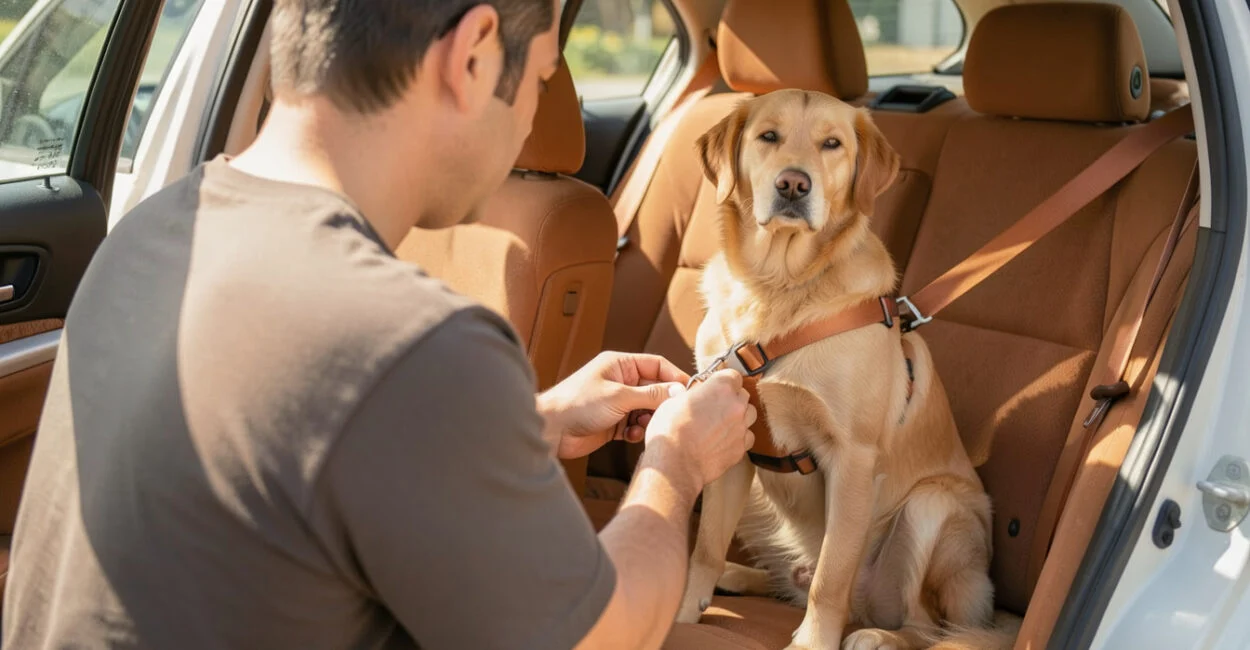 Checking a dog’s back-seat harness attachment
A loose dog can turn a routine drive into a dangerous distraction when you brake or swerve. Good dog car travel safety starts with a restraint secured in the back seat, then depends on correct fit, calm preparation, and a plan for stops and temperature. No harness, seat, or carrier removes every travel risk.
The right setup depends on your dog’s size and behavior, your vehicle, and the product’s tested configuration. A small dog who settles in a secured carrier may need a different arrangement from a large dog who rides in a harness.
Start by choosing a restraint you can install as directed, then let your dog get used to it before a long drive. Build in care breaks, and change the plan if your dog becomes distressed or conditions in the car become unsafe.
Quick takeaways
- Restrain your dog in the back seat, away from the driver.
- Check the exact product and setup behind any crash-testing claim.
- Practice with the restraint before setting out on a long trip.
- Never leave a dog unattended in a car when conditions could be dangerous.
Before You Set Out
- Decide whether a harness, secured seat, or secured carrier suits your dog and vehicle.
- Read the manufacturer’s fit and installation instructions.
- Consider your dog’s comfort with car rides and any history of nausea or fear.
- Plan water, bathroom opportunities, and a safe place to stop.
Start with Dog Car Travel Safety: Restrain Your Dog in the Back Seat
For safer car travel, keep your dog restrained in the back seat with a correctly fitted harness or a carrier secured as its manufacturer directs. The dog should not roam, climb into the front seat, or reach the driver. An unrestrained dog can be hurt or interfere with driving during sudden braking or a crash, and no restraint guarantees injury prevention.
This comes down to three choices: select a restraint that suits the dog and vehicle, install it correctly, and prepare the dog for the ride. A loose leash attached to a collar is not a substitute for a car restraint; it can also create a hazard if the dog moves or the vehicle stops abruptly.
A restraint can reduce avoidable risks only when it fits the dog, works with the vehicle, and is used as directed.
Choose a Restraint That Fits Your Dog and Vehicle
There is no universally safest restraint category for every dog and car. Choose based on the dog’s size, body shape, comfort, and behavior, as well as where the restraint can be secured in your vehicle.
Dog Car Harnesses
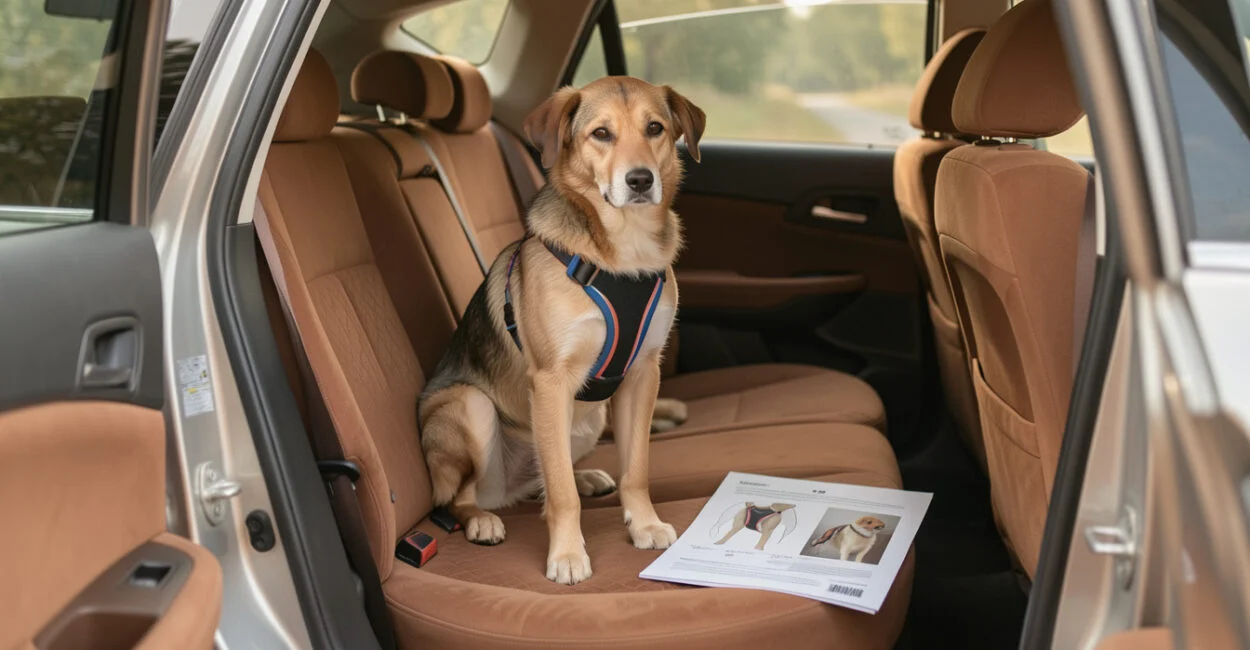
A dog car harness connects the dog to the vehicle’s restraint system using the attachment specified by the manufacturer. Check the fit around the chest and shoulders, and confirm that the harness is approved for car travel, rather than assuming a walking harness is suitable. A crash-tested dog harness should be used only in the configuration that was tested.
For a small dog, look for evidence that the specific harness model and size were tested. The phrase “crash-tested dog harness for small dogs” is a useful shopping query, but the words alone do not establish how a product performed.
Booster Seats and Dog Car Seats
A booster dog car seat may raise a small dog so it can look out, or provide a contained place to sit. It still needs to attach securely to the vehicle, and the dog needs a restraint within the seat. A booster that is only held by an unsecured strap or that lets the dog roam does not solve the core safety problem.
For a large dog car seat or a crash-tested dog car seat for a larger animal, check the manufacturer’s stated weight range, the vehicle attachment method, and how the dog is restrained. A “best crash-tested dog car seat” search cannot replace checking whether the exact model, size, and installation match your situation.
Carriers and Crates
A carrier or crate can be a practical option for a dog that settles inside it, provided it is secured to the vehicle as directed. An unsecured carrier may slide or tip, so its presence alone does not make the ride safer. If you also travel with a cat, the gradual familiarization approach in this guide to getting a cat comfortable with a travel carrier may offer useful ideas for making a carrier feel less unfamiliar.
Restraint type What it is for What to check before buying or using Key limitation Car harness Connects the dog to the vehicle restraint system. Fit, attachment method, instructions, and testing details for the exact model and configuration. A walking harness or an incompatible tether may not be suitable for car travel. Booster or dog car seat Contains or elevates a dog, often a smaller one. How the seat attaches to the vehicle and how it restrains the dog. Elevation alone does not secure the dog or the seat. Carrier or crate Provides an enclosed travel space for a dog that tolerates one. Size, ventilation, vehicle attachment, and directions for securing it. An unsecured carrier can move during a sudden stop.
Check What “Crash-Tested” Means for the Exact Product
“Crash-tested” is meaningful only when you can identify the specific product and configuration tested, who conducted the test, and what the test involved. A general label or broad marketing statement does not show that every size, attachment, or use case performed the same way.
Look for an accessible explanation of the test and whether it was independently documented or described only by the manufacturer. Harness, seat, and carrier test results are not interchangeable. The Center for Pet Safety publishes information on pet travel products and testing; check its materials for coverage of the model you are considering rather than assuming every product appears there.
Searches such as “crash tested dog harness Amazon” or “crash tested dog harness Reddit” may surface claims and opinions, but neither a retailer listing nor user comments establish test performance. Use those sources to locate a product, then verify the product-specific evidence and installation directions.
Fit the Restraint and Help Your Dog Get Used to It
Read the product instructions before the first drive. Fit the harness or set up the carrier as directed, secure every vehicle connection, and check that your dog cannot reach the driver, pedals, or controls. Before moving, tug gently on the installed restraint to confirm that its attachments are engaged.
Acclimate your dog in small steps: let the dog inspect the restraint while the car is parked, reward calm interest, and build up to sitting in place and then taking short rides. Clicker training for dogs can help mark calm behavior during practice if your dog already responds well to it. Do not force a dog through escalating distress just to complete a training session.
A familiar blanket or toy may help if it stays clear of buckles, tethers, and the dog’s breathing space. The common mistake is to add comfort items before checking that the restraint still fits and functions as intended. If fear or unsafe behavior persists, ask a veterinarian or qualified behavior professional for guidance.
Plan Breaks, Temperature, and Care During the Trip
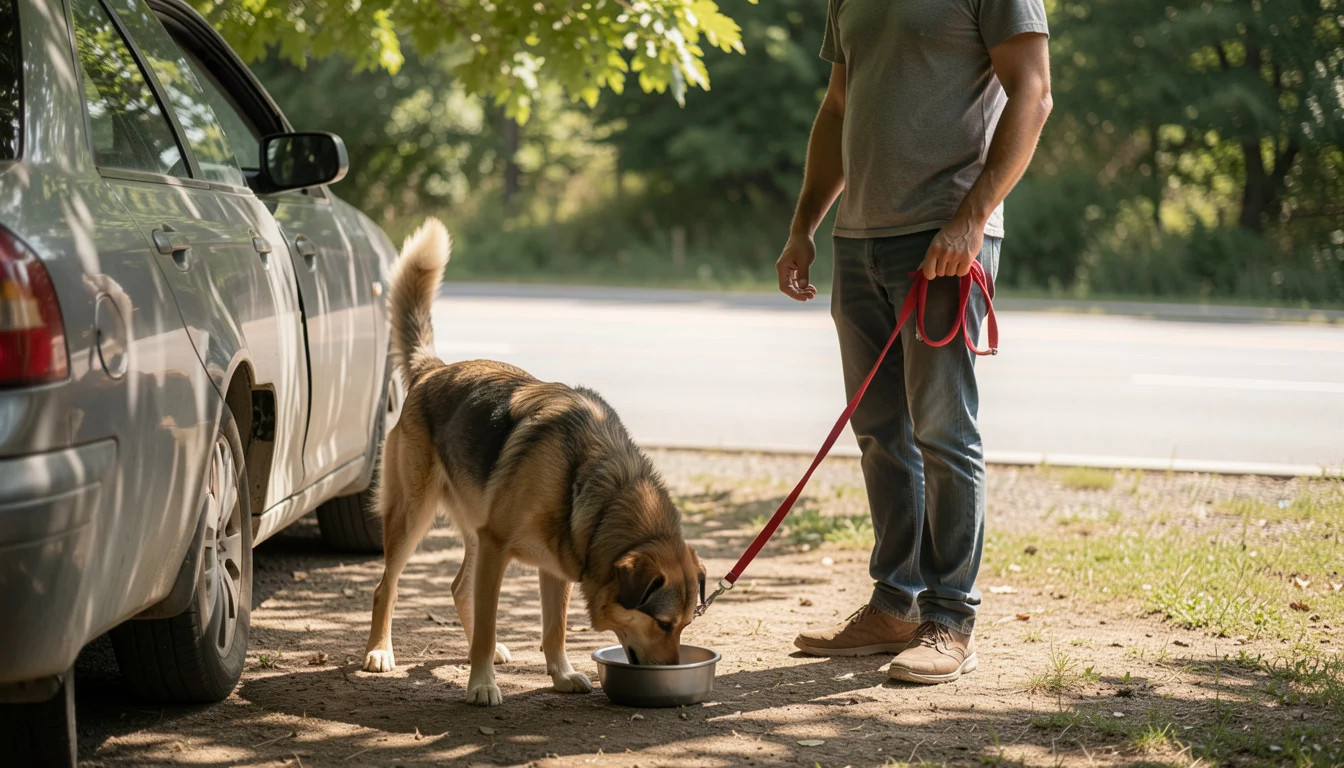
Dogs need chances to drink, relieve themselves, and move during a long drive. There is no single stop interval that suits every dog; age, health, water intake, weather, and the dog’s response to travel all affect the plan. A car ride also does not replace exercise or bathroom opportunities, even if it gives a dog new sights and smells.
Never leave a dog unattended in a parked car when heat, cold, poor ventilation, or other conditions could put the dog at risk. Cracking a window does not guarantee a safe temperature. The ASPCA’s hot-weather safety guidance explains why heat exposure requires particular care.
Can dogs travel in a car for 12 hours? Some may manage a long trip with suitable preparation and care, while others may not be ready or comfortable. A 12-hour drive is not automatically appropriate for every dog; consider health, temperament, journey conditions, and planned opportunities to stop. For dogs who need a predictable bathroom routine, these tips for teaching a puppy to use indoor potty pads may help with planning at home, though pads do not replace outdoor breaks on a road trip.
Trip situation Practical consideration When to seek help or change the plan Short local ride Secure the dog before starting, even for a brief trip. Reassess the restraint or route if the dog can move into the driver’s space or becomes distressed. Long road trip Plan opportunities for water, bathroom needs, and movement; bring supplies. Change the plan if the dog’s health, behavior, or travel conditions make the trip unsuitable. Motion sickness or distress Watch for signs such as drooling, vomiting, or persistent agitation. Stop safely and contact a veterinarian if symptoms are severe, persistent, or new.
Address Motion Sickness and Travel Anxiety
If Your Dog Gets Carsick
Recurring nausea, vomiting, or drooling during car rides warrants a conversation with your veterinarian. Those signs can have different causes, and a single symptom is not enough to identify one. Do not give medication or change feeding routines for travel without veterinary guidance.
If Your Dog is Anxious
Use gradual desensitization: begin with calm time near the parked car, then progress to short rides if your dog can stay settled. Keep trips predictable where possible, and avoid making the first longer ride the dog’s first experience with a restraint. If the distress is severe or does not improve, ask your veterinarian or a qualified behavior professional about the next step.
An emotional support animal and a pet are not automatically the same thing, and no animal is universally “best” for anxiety or depression. For car travel, the immediate question is whether this particular dog can ride safely and cope with the journey.
Use a Quick Pre-Drive Safety Check
Before each trip, take a moment to check the restraint and the plan. Small installation errors are easy to miss, especially when a harness has been used for walks and then connected to a car tether without checking its directions.
- Harness, seat, or carrier fits and is secured according to its instructions.
- Your dog is restrained in the back seat and cannot distract the driver.
- Water, a leash, and supplies for stops are available.
- Doors and windows are managed so the dog cannot escape or be exposed to unsafe conditions.
- You will not leave the dog unattended in conditions that could endanger it.
- You have considered the route and opportunities for care during the trip.
If your dog cannot settle in the chosen restraint, stop and reconsider the setup before attempting a longer journey. Restraint reduces avoidable risks, but it cannot make every product or trip risk-free.
📱 See this content as a Web Story
Frequently Asked Questions
What is the 7-Second Rule for Dogs?
It often refers to a quick pavement-temperature check: place the back of your hand on the surface for seven seconds. If it feels too hot for your hand, it may burn a dog’s paws; this is a rough check, not a guarantee of safety.
Can a Car Ride Count as a Walk for My Dog?
No. A car ride does not provide the same physical activity or bathroom opportunity as a walk. Plan separate exercise and relief breaks that suit your dog’s needs.
Can I Use a Regular Walking Harness in the Car?
Only if its manufacturer says it is appropriate for car travel and gives instructions for the vehicle attachment. A harness designed for walking should not be assumed to protect or restrain a dog in a vehicle.