
How to Choose an Outdoor Ceiling Fan for a Covered Patio
Choose a damp- or wet-rated outdoor ceiling fan based on exposure at the mounting spot, then check airflow, ceiling fit, and whether a light is properly rated.
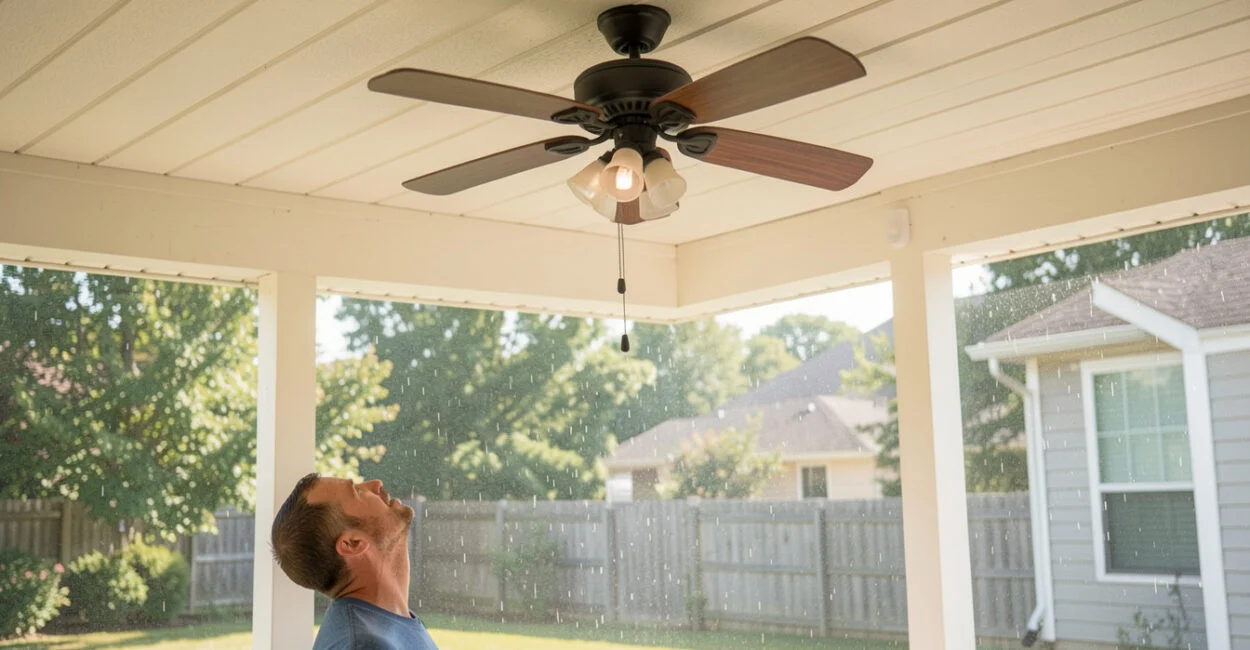 Checking a fan’s exposure beneath the roof
Choosing an outdoor ceiling fan for a covered patio starts with the conditions at the fan’s exact mounting spot. The key decision is damp-rated versus wet-rated; after that, compare airflow and coverage, mounting fit, and whether you need a light. A roof helps, but wind-driven rain and nearby water can still affect the rating you need.
Damp-Rated or Wet-Rated: Which Should You Choose?
For a protected patio where rain cannot reach the fan, choose a damp-rated model if its instructions allow those conditions. If direct or wind-driven water may reach the fan, choose a wet-rated model whose listed use covers that exposure. Then confirm the fan fits the ceiling and provides the airflow you want.
The core difference is the level of moisture exposure the product is designed and listed for. “Outdoor” alone does not establish that a fan suits every patio, and “waterproof” in a search phrase is not a substitute for the model’s rating and installation instructions.
Criterion Damp-rated fan Wet-rated fan Lighted vs. unlighted Moisture exposure Protected damp location Location that may be exposed to water Both versions need the right rating for the complete product and location Best fit Protected covered patio, if instructions allow More exposed patio, if instructions allow Choose by lighting need, not light presence alone What to verify Listed rating and installation instructions Listed rating and installation instructions Outdoor suitability of the light and fan assembly Key trade-off May not suit direct water exposure May be more than a protected location requires Added illumination versus a fan-only setup
Damp-Rated Vs. Wet-Rated: Match the Fan to Exposure
A damp-rated fan is listed for damp conditions in a location protected from direct exposure to rain or water. In everyday terms, it may suit a covered porch where the roof and layout keep the fan dry, provided the manufacturer permits that installation. A wet-rated fan is listed for locations where water may reach it, subject to the manufacturer’s stated use and installation requirements. Check the actual mounting point, not just the roofline: wind can push rain under an overhang, and a nearby hose or splash-prone area may also matter.
A common buying mistake is treating “covered patio” as proof that a damp rating is sufficient. The cause is judging the whole space instead of the fan’s precise position; avoid it by checking for wind-driven rain and other water sources before choosing a model. Never install an indoor-only fan outdoors unless its manufacturer explicitly allows that use.
For context on electrical products and outdoor conditions, consult the Electrical Safety Foundation International’s outdoor safety guidance. The product listing and installation manual remain the deciding references for a particular fan.
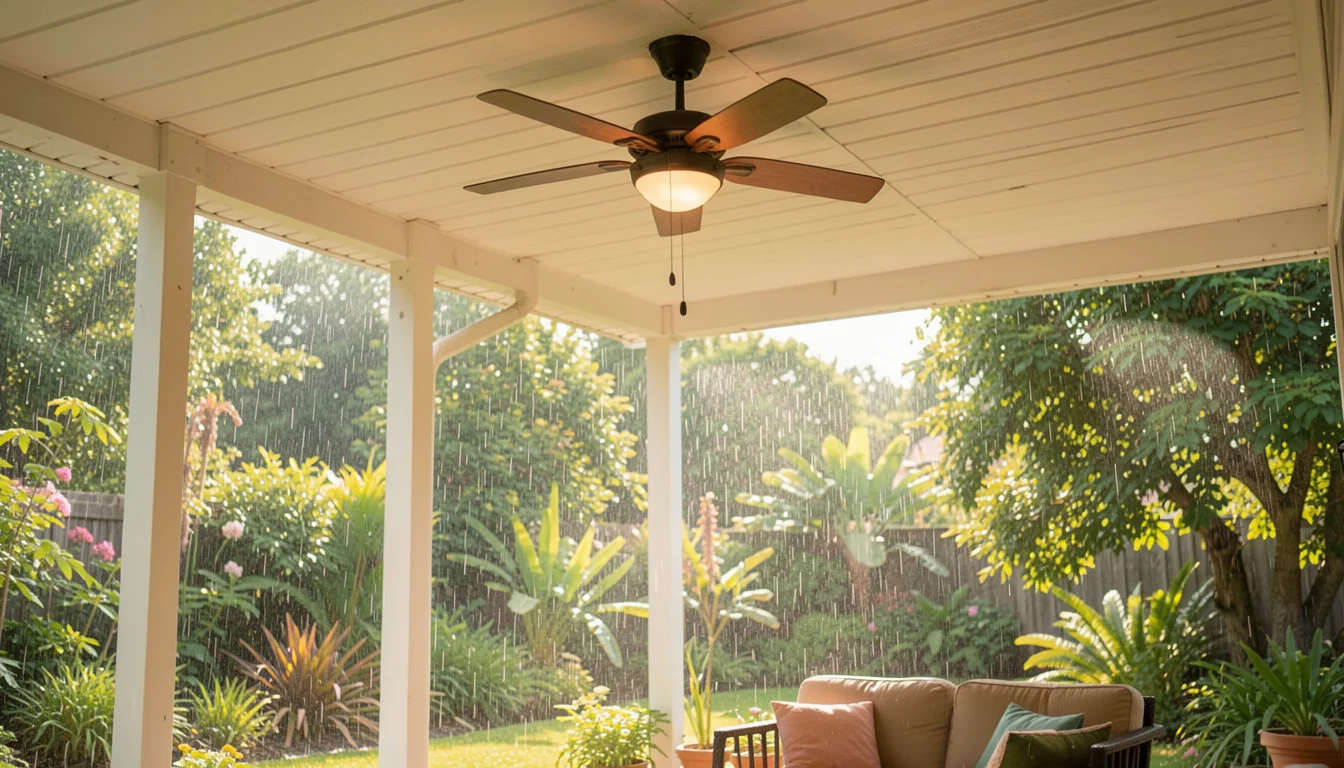
Compare the Main Outdoor Ceiling Fan Options
Damp-rated and wet-rated describe moisture suitability; lighted and unlighted describe the fixture setup. These are separate choices, so a shopper can compare a lighted damp-rated fan with an unlighted wet-rated fan, as long as each complete product is approved for the intended location.
- Damp-rated fan: Consider it for a protected covered patio when the instructions cover the expected conditions.
- Wet-rated fan: Consider it where rain or other water may reach the fan, after confirming the approved mounting and care requirements.
- Fan with a light: Useful when the fan will also provide patio illumination; verify the outdoor rating of the complete assembly.
- Fan without a light: A practical fit when separate fixtures provide lighting or you prefer a fan-only setup.
No category wins for every patio. A wet rating does not solve poor airflow or an incompatible ceiling, and a light does not make a fan suitable for outdoor exposure.
Choose the Right Size, Airflow, and Mounting
Measure the patio area and note the ceiling height, slope, beams, and nearby obstructions before comparing models. Use each manufacturer’s airflow figures and room-coverage guidance; there is no universal size or airflow threshold that determines the right fan for every patio. Flush-mount and downrod configurations are not interchangeable in every space. Check the model’s approved mounting method and clearances, particularly if the ceiling slopes or a beam limits where the fan can go. For a long or irregular patio, compare the intended seating layout with the manufacturer’s coverage guidance rather than assuming one fan will reach every area.
Fans compete with other patio features for space. If a low ceiling or seating arrangement constrains placement, compare it with the clearances needed for an outdoor umbrella on a small patio before settling on the layout. The U.S. Department of Energy explains that ceiling fans move air to create a cooling effect on people; they do not lower a room’s temperature. Its ceiling fan guidance can help set expectations, while the product maker’s coverage information is more useful for matching a specific fan to a patio.
Read also: How to Make an Outdoor Space Accessible for All Ages
Decide Whether You Need a Light
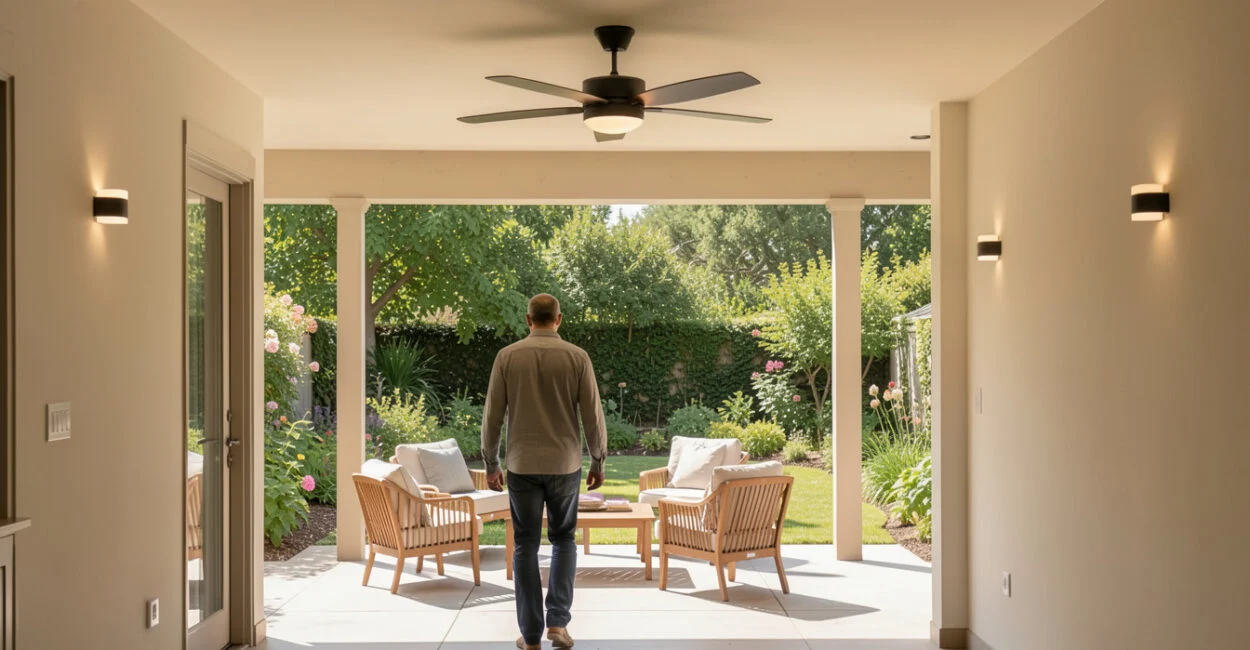
Choose a lighted model if the fan will also provide overhead patio illumination and the light components are approved for the intended outdoor conditions. Choose an unlighted model if separate lighting already serves the space or you want a fan-only fixture.
Searches such as “outdoor ceiling fan with light” and “waterproof outdoor ceiling fan with light” describe a feature combination, not proof of a product’s rating. For either search, check the complete fan-and-light assembly, not just the fan motor or the listing headline. A lighted fixture may also have specific replacement parts or control requirements, so read the product specifications before buying.
Outdoor ceiling fans without lights may suit a patio with wall fixtures or other dedicated lighting. If you are planning those fixtures, coordinate the fan location with the rest of the setup, just as you would when choosing weather-resistant outdoor speakers.
Check Controls, Materials, Maintenance, and Installation
Compare the listed speed settings, wall control or remote, and any smart features in the documentation for the exact model. Do not assume that a remote, bulb, light kit, or control from another fan will work with it.
Outdoor suitability does not mean maintenance-free. Follow the manufacturer’s instructions for cleaning, materials, and replacement parts; exposure and care requirements vary by model. Salt, dust, and moisture can also make the cleaning guidance relevant even under a roof.
Before purchase, confirm the ceiling support, wiring, control setup, and installation location meet the fan’s requirements. An existing indoor fan box or wiring is not automatically suitable for a new outdoor fan. If the support, wiring, or installation conditions are uncertain, use a qualified electrician.
The U.S. Consumer Product Safety Commission publishes guidance on household product safety, but it cannot determine whether a particular ceiling box or circuit suits a particular fan. For that, follow the model’s installation manual and have an electrician assess the site when needed.
Make the Final Choice—and Know When No Option Fits
Choose in this order: match the moisture rating to the actual exposure, confirm airflow and fit, check mounting compatibility, then decide on a light, controls, and maintenance needs. If no fan’s rating and instructions cover the patio’s exposure or ceiling conditions, do not force a match; adjust the location or look for a suitable product.
Choose a Damp-Rated Fan If:
- The mounting spot stays protected from direct rain and other water.
- The manufacturer’s instructions allow the expected conditions there.
Choose a Wet-Rated Fan If:
- Rain or water may reach the fan at its mounting location.
- The product’s instructions cover the exposure and the proposed installation.
Home Depot and other retailers may list outdoor fans, but compare the specifications and instructions for the exact model rather than relying on the retailer name, category label, or search snippet. Conditions can vary by model, so this general comparison cannot replace the manufacturer’s installation guidance.
Patio comfort also depends on the surrounding setup: consider whether outdoor curtains suited to a windy patio could affect airflow or placement.
📱 See this content as a Web Story
Frequently Asked Questions
Can an Indoor Ceiling Fan Be Converted for Outdoor Use?
Only if the manufacturer explicitly permits that use. Do not assume that changing blades, a finish, or a control changes the fan’s listed rating.
Can a Damp-Rated Fan Go Under a Deep Porch Roof?
Possibly, if the exact mounting location stays protected from direct water and the product instructions allow the conditions. Wind-driven rain can reach farther under a roof than expected, so assess the fan’s position rather than the porch as a whole.
Can I Add a Light Kit to an Outdoor Fan Later?
Only when the manufacturer lists a compatible light kit for that exact fan and the combined assembly is suitable for the location. Check the instructions before buying either part.
Does a Wet-Rated Fan Need Less Maintenance?
Not by default. Follow the maker’s cleaning and inspection guidance; a wet rating addresses the product’s intended exposure, not a promise that it needs no care.