
How to Improve Patio Drainage and Prevent Puddles
Trace patio drainage problems to their source before choosing a fix: assess slopes, downspouts and runoff, then match drains and outlets to your site.
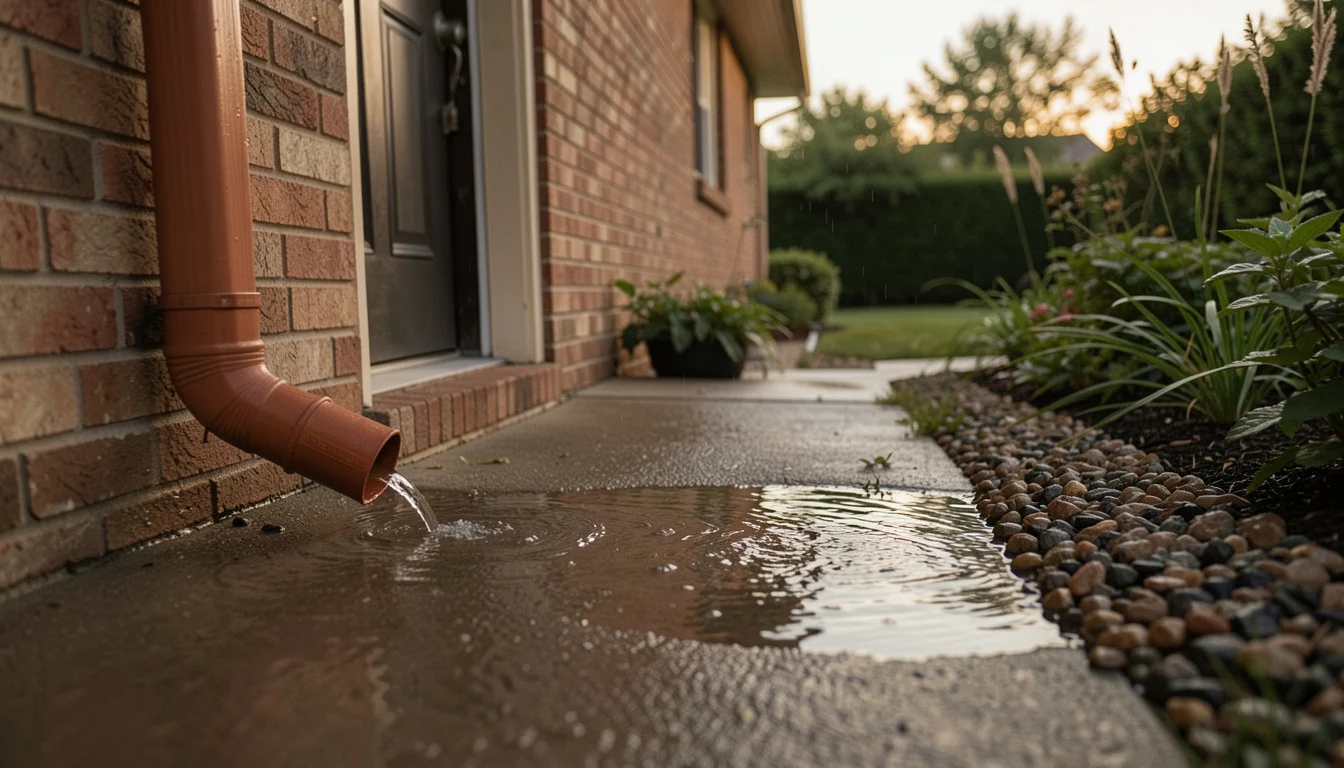 Runoff finds its route across the patio
After a storm, a puddle beside the back door can point to a patio problem, a blocked downspout, or runoff coming from higher ground. Good patio drainage directs water away from the patio and buildings to a safe, permitted destination.
The right fix depends on where the water starts, how the surface is graded, and what the soil and site can handle.
Start by tracing the water before buying a drain. A surface correction or downspout adjustment may solve a localized problem; a channel drain or buried system makes sense only when its collection point and outlet fit the site.
Key Takeaways
- A French drain collects and conveys subsurface water; a channel drain collects surface runoff.
- A patio does not automatically need a built-in drain if its slope and runoff destination work safely.
- Collected water needs a suitable outlet that will not harm the home or a neighboring property.
- Persistent water near a foundation or basement calls for a closer assessment before excavation.
Start by Finding the Source of Your Patio Drainage Problem
Effective patio drainage sends water away from the patio and buildings to a safe, permitted destination. The right correction depends on whether water pools on the surface, flows onto it from elsewhere, or rises through saturated ground. Check the patio’s slope, nearby downspouts, surrounding grade, and outlet before choosing a drain. Watch the area during rain and again after it stops. Note where water first appears, which direction it travels, where it stands, and how long the wet area lasts. A slow-drying patch at one low paver points to a different cause than a sheet of runoff entering from an uphill lawn.
Look for a blocked outlet, a settled slab or paver, and changes in the grade around the patio. On a paver patio, gaps between stones can let some water through, but they will not fix a low spot or an overwhelmed base.
For surface ideas that may affect how water moves, see these durable, budget-conscious patio flooring options.
- Where does the water first appear?
- Is it standing on the surface, flowing across it, or rising from the ground?
- Does a downspout or higher section of yard feed the area?
- Is the patio settled, blocked, or visibly uneven?
- Does water move toward the house, basement, or neighboring property?
- Is there a safe, allowed outlet for collected water?
A short-lived puddle at a visible low point is often a surface-flow issue. Water that repeatedly saturates a broad area, enters a basement, or collects beside the foundation deserves professional evaluation; the source may be deeper or tied to grading beyond the patio.
Where water begins and where it can safely go determine which patio drainage fix will work.
Should a Patio Have Drainage?
A patio needs a way for water to drain or disperse, but that does not mean it needs a built-in drain. A suitable surface slope that carries runoff to an appropriate area may be enough. Whether that works depends on the surface, soil, rainfall, surrounding grade, and the route water can legally and safely take. Concrete slabs tend to shed water across their surface; pavers may allow some infiltration through joints, depending on how the patio was built and maintained. Neither surface guarantees good drainage by itself. A permeable surface still needs a base and soil that can accept water, while a solid surface needs a clear path that does not send runoff toward a doorway or foundation.
Do not send water onto a neighbor’s property or assume any low spot is an acceptable discharge point. Local rules may limit where runoff can go. The EPA’s Rain Garden guidance explains one approach to managing runoff on a site, but a rain garden also needs suitable placement and soil conditions.
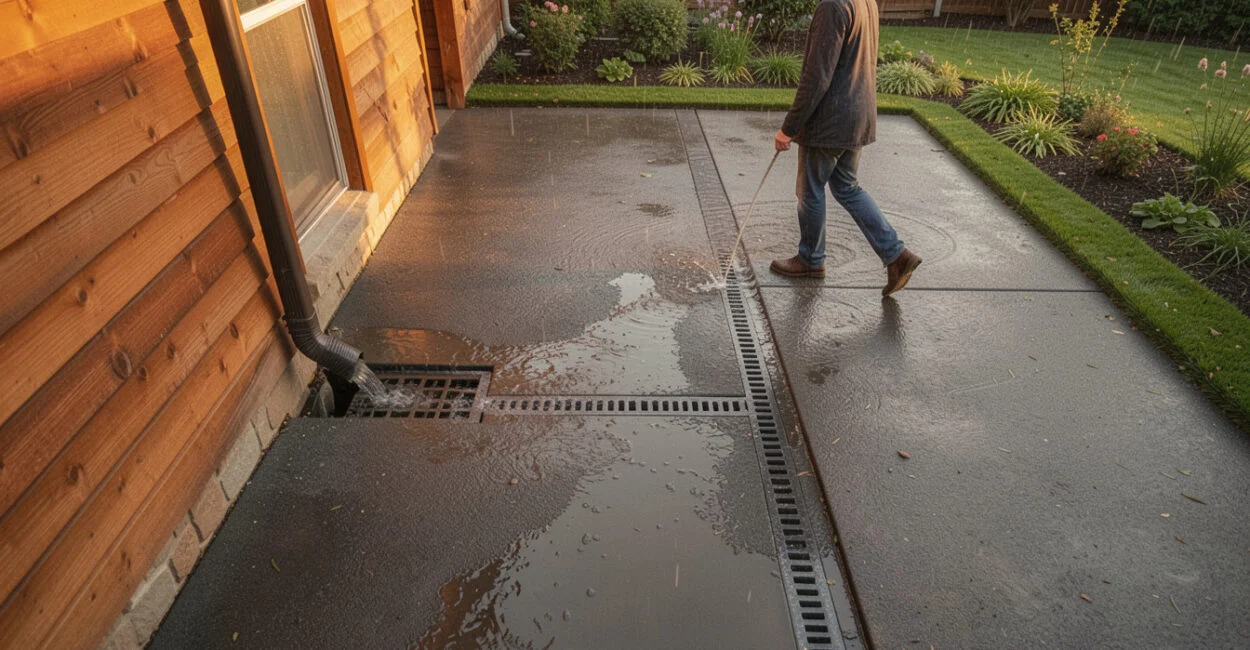
Match the Drainage Solution to the Problem
Choose the system by the water’s path, not by the product name. A channel drain intercepts water at the surface; a French drain is a buried gravel-and-perforated-pipe system designed to collect and move subsurface water. A drain installed in the wrong place can leave the original problem untouched.
Observed problem Possible approach What to check first Main limitation Puddle on the patio surface Correct settled paving or adjust surface flow; add a channel drain if the low point needs collection Find the low spot and check for blocked outlets A drain will not correct a continuing source of water below the surface Runoff crossing the patio Redirect surface flow or intercept it with a channel drain Trace the flow back to the higher ground or adjoining surface Collected runoff needs a suitable outlet Downspout discharge Manage the downspout route or discharge area Check where the water goes during heavy rain A patio drain may be overwhelmed if the roof runoff remains connected Subsurface saturation Assess whether a French drain fits the water source and site Look for recurring wet ground and identify a viable outlet Buried systems can clog and may be difficult to repair Water near the foundation or basement Arrange a professional assessment before choosing a drainage system Check for basement seepage and the pattern of wetness A patio drain alone may not address the underlying cause
A patio drainage channel, including a micro channel drain, collects surface water at a low edge or across a runoff path. It needs a connected outlet and a grate that remains accessible for cleaning. A channel drain for a driveway uses the same general collection principle, though traffic loads and product specifications differ.
Read also: How to Choose an Outdoor Ceiling Fan for a Covered Patio
A French drain pipe sits below grade within a system designed to collect and convey subsurface water. It is not a surface grate for patio puddles. A French drain kit can package some of the materials, but compare the components, capacity, site suitability, and discharge plan before treating it as a ready-made solution.
Plan a French Drain or Channel Drain Before Installing
Plan the water source, collection point, route, and outlet before selecting materials. Identify buried utilities before digging; in the United States, contact 811 or follow the applicable local utility-marking process. A route that looks convenient on the surface may conflict with utilities or send water somewhere unsuitable.
System Best-fit water problem Key planning needs Maintenance consideration Channel drain Surface runoff crossing a patio or collecting at its low edge Place it across the flow path; plan a suitable outlet and access to the grate Clear the grate and outlet of leaves and sediment French drain Subsurface water that a designed buried system can collect Plan trench location, filter fabric, gravel and pipe design, outlet, and maintenance access Watch for recurring wet areas; diagnosing or repairing buried blockage may require excavation Grading or surface-flow correction Localized pooling caused by settled paving or poor surface direction Confirm how water will move after the correction and where it will go Recheck after heavy rain for new low spots or erosion
French drain installation depends on the water source, soil, grade, and outlet. Filter fabric, gravel, and pipe need to work as a system; dimensions and installation details should come from a site-specific plan, manufacturer instructions, or a qualified professional. A generic trench depth or slope is not a reliable substitute for those specifications.
For a channel drain, place the unit where it intercepts runoff, connect it to an appropriate discharge point, and keep the grate reachable. If the outlet route, local requirements, or effect on nearby foundations is uncertain, get qualified advice before excavation.
A drainage system is only as useful as the route that carries collected water to a suitable outlet.
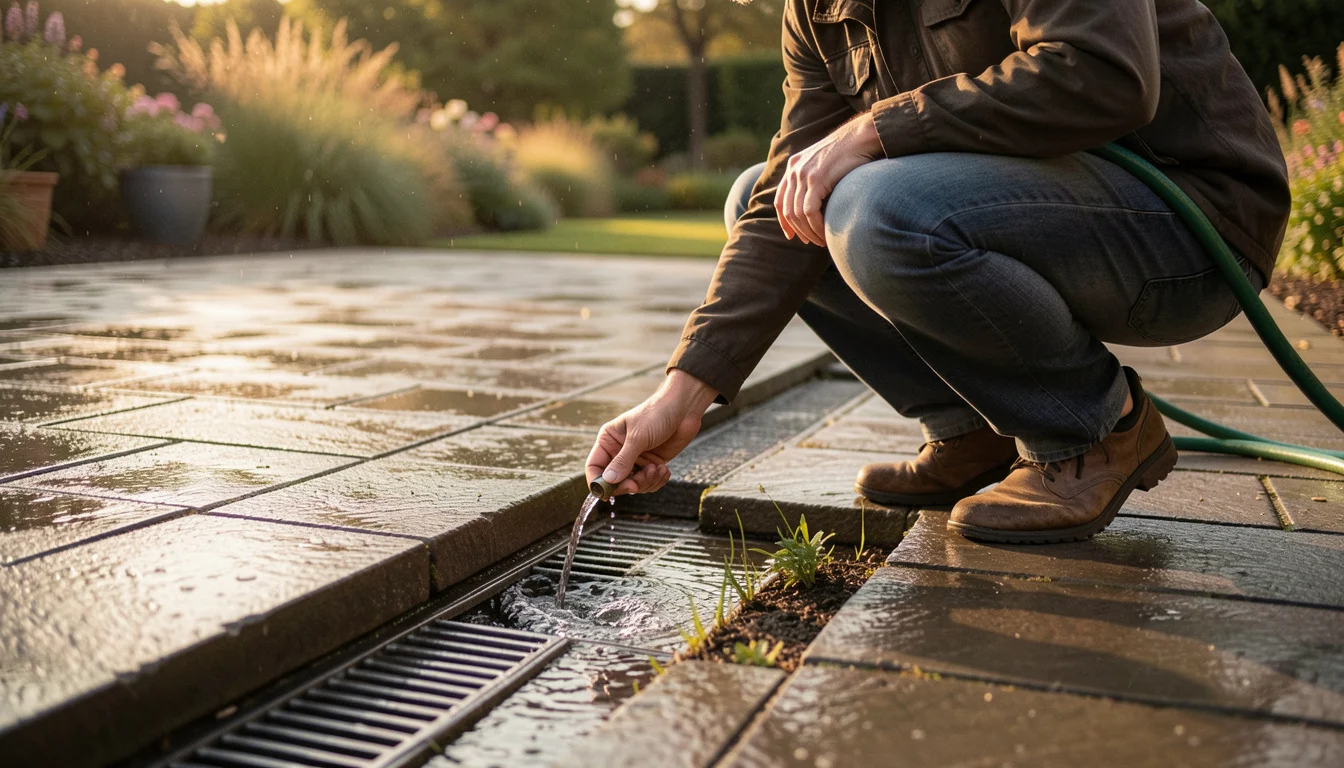
How to Install Backyard Drainage Safely
Backyard drainage installation starts with diagnosing the flow and ends with testing the system in actual rain or a controlled water test. The steps below are a planning sequence, not a substitute for system-specific instructions or local requirements.
- Trace the flow. Identify whether water comes from the patio, a downspout, higher ground, or saturated soil.
- Mark utilities. Arrange utility locating before digging and confirm any local requirements.
- Plan the outlet. Choose a lawful, suitable destination and verify that the route can carry water there.
- Prepare the area. Protect nearby structures and excavate only to the plan for the selected system.
- Install to specifications. Follow the manufacturer’s instructions for a channel drain or the site-specific design for a French drain; these systems require different excavation and construction methods.
- Test and inspect. Check connections and observe the route for standing water, leakage, or erosion after flow begins.
Do not guess at trench depth, pipe size, or slope. The right design depends on the site and system. A drainage contractor or other qualified professional is a better choice when the work affects a foundation, basement water persists, grading is complex, or permits may apply.
Common Patio and French Drain Mistakes
The most expensive error is installing a drain before identifying the source. A French drain may be a poor fit for surface water from a downspout, while a channel drain may do little for water saturating the soil beneath the patio. Correct diagnosis prevents a new system from collecting the wrong water.
Other frequent French drain mistakes include sending runoff toward a foundation or neighbor, choosing an outlet that cannot handle the flow, skipping utility locating, and burying a system without a maintenance access plan. Poor connections, unsuitable materials, or a location that misses the flow path can also lead to renewed pooling or erosion.
Drainage changes can affect neighboring land and nearby structures. Check local rules before redirecting runoff, and ask a qualified professional when the discharge route or likely effect is unclear. Keeping outdoor furnishings out of persistent wet areas can also help; these tips for protecting outdoor wood furniture from fading cover a related patio-care concern.
Maintain the System and Know When to Get Help
Clear leaves and sediment from channel grates and outlets, then inspect the area after heavy rain for fresh pooling or erosion. For a buried French drain, recurring wet patches may signal blockage or a design issue. Repair can require locating and exposing the affected section, so do not assume a buried system is easy to service.
Keep a simple record of where water appears and when, including whether it follows roof runoff, a storm, or a period of wet weather. That pattern can help a contractor distinguish surface runoff from subsurface saturation or a foundation-related problem. If a patio surface is the only issue, correcting a localized low spot may be enough; persistent building-related water needs professional assessment.
Before selecting a French drain, compare the proposed work, site access, materials, labor, system design, and local requirements. Those factors also shape French drain cost, so a generic price figure may not match the conditions at your home.
📱 See this content as a Web Story
Frequently Asked Questions
What Are the Downsides of a French Drain?
A French drain requires excavation and a suitable place to discharge collected water. It can clog, and locating or repairing a buried problem may mean digging again. It also may not solve surface pooling if the design does not address that source.
What Are Common Mistakes in Home Drainage?
Common errors include installing a drain before tracing the water, overlooking utility lines, and discharging runoff where it can damage a structure or neighboring property. Poor connections and lack of maintenance access can create problems even when the drain is placed near the wet area.
How Much Does a French Drain Cost?
French drain cost depends on site conditions, system design, access, materials, labor, and local requirements. Ask for an itemized assessment that explains the water source, proposed route, outlet, and maintenance access rather than comparing estimates by length alone.
Can a French Drain Fix a Wet Basement?
Sometimes a drainage system forms part of a broader solution, but basement seepage can have causes that a yard drain will not fix. Have a qualified professional assess the source and the relationship between the wet area, foundation, and surface runoff before digging.