
Is a Heat Pump Right for Your Home? Costs and Trade-Offs
Is a heat pump right for your home? Compare installation costs, energy prices, insulation, electrical capacity, and cold-weather performance with a furnace...
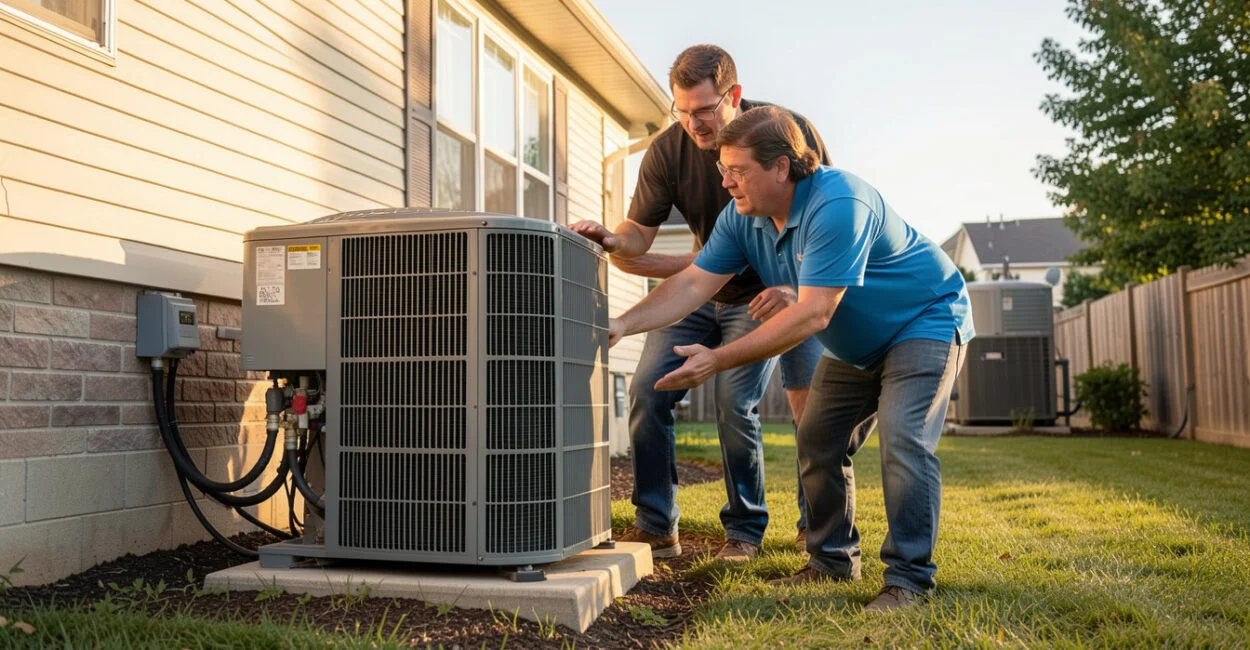 Homeowner and contractor assess a heat pump
Choosing a home heating and cooling system means weighing installation scope against local energy prices, winter conditions, and how well the house holds heat. A heat pump can provide both heating and cooling, while a conventional setup usually pairs a furnace with an air conditioner. The right comparison is between complete, properly sized systems—not equipment names alone.
Is a Heat Pump Right for Your Home?
A whole-home heat pump can suit a home when its climate, insulation, electrical service, and local energy prices support the proposed design. Compare it with a conventional furnace-and-air-conditioner system using itemized installation quotes, estimated operating costs, cold-weather output, and the home’s heating and cooling loads.
Neither option is the better choice for every household.
A heat pump is HVAC equipment that transfers heat between indoors and outdoors to provide heating and cooling. In plain terms, it moves heat rather than generating it by burning fuel. Since a heat pump is itself an HVAC system, “heat pump vs. HVAC” usually means comparing a heat-pump system with a furnace and a separate air conditioner. The main trade-off is that one heat-pump system can handle both seasons, but its cost and performance depend on the specific home and location. A furnace-and-AC setup may be a better fit where existing equipment, fuel prices, or winter conditions favor that design.
Heat Pump Vs. Conventional HVAC: What’s the Difference?
A heat pump reverses its refrigeration cycle to move heat indoors in winter and outdoors in summer. A furnace burns fuel, such as natural gas or propane, to produce heat; a separate air conditioner uses a refrigeration cycle to cool the home.
Both arrangements may use ducts, while some heat pumps use ductless indoor units.
Heat-pump output and efficiency can change as outdoor temperatures fall. In colder areas, the system design may include supplemental electric resistance heat, a furnace, or another backup source. Ask how the selected model performs at local winter design conditions and what controls determine when backup heat runs. The U.S. Department of Energy’s overview of heat pump systems explains the basic technology and system types.
One practical detail to check during a ducted-system quote is whether the contractor has measured airflow and inspected return-air paths, not just the outdoor unit location. A well-chosen unit can still perform poorly if ducts leak, airflow is restricted, or controls are set up incorrectly.
Ductless systems avoid some duct issues, but still need a room-by-room layout that distributes conditioned air effectively.
Criterion Heat pump system Furnace + air conditioner Heating method Moves heat indoors Furnace burns fuel to make heat Cooling provision Same system can provide cooling Separate air conditioner provides cooling Upfront cost factors Equipment, installation, electrical work, ductwork, and site conditions Furnace and AC equipment, installation, fuel connections, ductwork, and site conditions Operating-cost factors Electricity price, efficiency, weather, use, and home condition Fuel and electricity prices, equipment efficiency, weather, use, and home condition Cold-weather considerations Output and efficiency can change as outdoor temperatures fall Depends on furnace capacity, fuel supply, and AC design for cooling Backup-heat considerations May need supplemental heat, depending on climate and design Furnace is the heating source; backup needs depend on system design Ductwork / installation considerations Ducted or ductless; may need electrical or duct modifications Usually ducted; may need duct, fuel-line, or electrical work Maintenance and service considerations Routine service and local access to qualified heat-pump technicians matter Routine service and local access to furnace and AC technicians matter
Compare the Costs Before You Choose
Installed cost depends on the equipment, capacity, configuration, labor, ductwork, electrical work, and site conditions. A heat pump may require electrical upgrades or new indoor units; a furnace-and-AC replacement may involve duct repairs, fuel connections, or two pieces of equipment. Broad estimates cannot replace quotes for the actual home.
Compare at least two written proposals with the same scope. Each should identify equipment models and capacity, included modifications, controls, backup heat, permits, and warranty terms. Separate the equipment and installation price from estimated annual energy costs so the assumptions are visible.
How much does it cost to run a heat pump per month? Estimate the heat pump’s electricity use for the period and multiply it by the utility’s electricity rate, then account for fixed charges and other items on the bill. For example, if a contractor estimates E kilowatt-hours of use and the utility charges R dollars per kilowatt-hour, the estimated energy charge is E × R. Use local rates and a clearly stated usage estimate; actual bills also reflect weather, thermostat settings, and other household electricity use.
Electricity prices can affect the comparison as much as equipment efficiency. Households assessing the emissions tied to electricity use may also find this guide to choosing a green electricity plan useful. A green plan does not, by itself, establish that a heat pump will cost less to operate.
Read also: How to Reduce Waste When Moving to a New Home
Match the System to Your Home and Climate
Floor area alone cannot determine equipment size or price. A 3,000-square-foot home needs a professional heating and cooling load calculation, and a 1,200-square-foot home does too. The calculation should account for climate, insulation, windows, air leakage, ceiling height, layout, and duct condition.
Ask the contractor to explain the load calculation and show how the proposed capacity matches it. Oversized equipment can cycle on and off too often, which may undermine comfort and humidity control. Undersized equipment may struggle to maintain the set temperature during demanding weather. Neither problem is inevitable; both can result from poor design or installation.
Read also: How to Reduce Paper Waste at Home Without Going Paperless
In a cold climate, request the proposed unit’s heating output at the local design temperature, not just its headline capacity under milder test conditions. Confirm what backup heat is included, how it is controlled, and how its use affects the operating-cost estimate. A household comparing other electric loads may also want to review its home solar options, but solar production and heat-pump demand must be evaluated for the same location and usage pattern.
Weigh the Benefits and Trade-Offs
A heat pump’s clearest practical advantage is that one system can provide heating and cooling. It may also use less energy than a conventional heating system in some conditions, but the result depends on the equipment, weather, electricity source, fuel being displaced, and home performance. The ENERGY STAR information on air-source heat pumps can help readers review certified equipment and its published specifications.
Trade-offs include the upfront price, changing output in cold weather, possible backup-heat use, and reliance on electricity. A heat pump may be a poor match if the home cannot support the proposed equipment without costly upgrades, the contractor cannot explain cold-weather performance, or local operating costs do not compare well with the alternative.
Common issues to investigate include poor sizing, installation faults, restricted airflow, and missed maintenance. These are not inevitable heat-pump defects, and conventional systems also depend on sound installation and service. Emissions are also case-specific: they depend on the electricity mix, equipment performance, and the fuel the system replaces. The U.S. Department of Energy’s guidance is useful for understanding system types, but a local quote and load calculation are needed to predict results for one house.
Compare Brands and Contractor Proposals
Brand lists and “brands to avoid” claims are a weak basis for choosing a system. Mitsubishi is one brand a homeowner may encounter, but the relevant comparison is between specific models, system configurations, published performance data, warranties, and local service access.
Check that each proposal covers equivalent capacity, indoor-unit or duct configuration, controls, backup heat, installation work, and warranty terms. Confirm that the contractor can service the exact equipment and that replacement parts are available in the area. Ask for model documentation rather than relying on a brand name or a broad efficiency claim.
Before signing, get the operating-cost assumptions in writing: expected electricity use, assumed utility rates, weather conditions, thermostat settings, and any estimated backup-heat use. These estimates are not guarantees. For a separate household hot-water decision, see this guide to choosing an energy-efficient water heater.
Make the Decision: A Homeowner’s Next Steps
Consider a heat pump if you want one system for heating and cooling and the home, climate, and local energy prices support the proposed design. Compare both options closely if winters are severe, the home needs electrical or duct upgrades, or the existing system still works. A replacement that is not urgent gives you time to gather comparable proposals.
Ask each contractor:
- Will you provide a professional heating and cooling load calculation?
- What heating output will this model deliver at my local design temperature?
- What backup heat is included, and when will it operate?
- Which electrical, duct, control, or site modifications are included in the price?
- What utility rates and usage assumptions support the operating-cost estimate?
Compare at least two itemized proposals for the same scope. Choose based on the home’s calculated needs and comparable local quotes, not floor area, brand reputation, or a generic promise of savings.
📱 See this content as a Web Story
Frequently Asked Questions
Can a Heat Pump Work with My Existing Furnace?
It can, in some designs. A dual-fuel system pairs a heat pump with a furnace, and its controls switch between them according to the system design and conditions. Ask the contractor to explain the changeover settings, compatibility, and expected operating costs.
Will I Need to Replace My Home’s Ductwork?
Not necessarily. An installer should inspect duct condition, airflow, and sizing before deciding whether repairs or replacement are needed. A ductless system may suit a home without usable ducts, but the indoor-unit placement and room coverage need a proper design.
What Should I Do If My Heat Pump Cannot Keep Up During a Cold Snap?
First, check whether the system has backup heat and whether its controls are working as designed. If comfort problems persist, have a qualified technician check the equipment, airflow, settings, and installation rather than assuming the unit needs replacement.
How Do I Compare the Environmental Impact of the Two Systems?
Compare the heat pump’s electricity source and performance with the fuel and efficiency of the furnace it would replace. The result varies by location and over time as electricity generation changes; neither system has the same emissions profile everywhere.
What If My Current System Still Works?
There may be no reason to replace it before you have a clear cost and design comparison. You can gather proposals in advance, review upgrade needs, and compare estimated operating costs using current local utility rates and fuel prices.
Before making a purchase, verify current equipment specifications with manufacturer documentation and confirm electricity rates, fuel prices, and available incentives with the relevant utility and official program sources.